
Your Guide to Health Insurance for Super Senior Citizens
Navigating health insurance for super senior citizens (those 80+) can feel complicated, but finding the right coverage is essential. The core options include:
- Original Medicare (Parts A & B): The federal program covering hospital stays (Part A) and doctor visits (Part B).
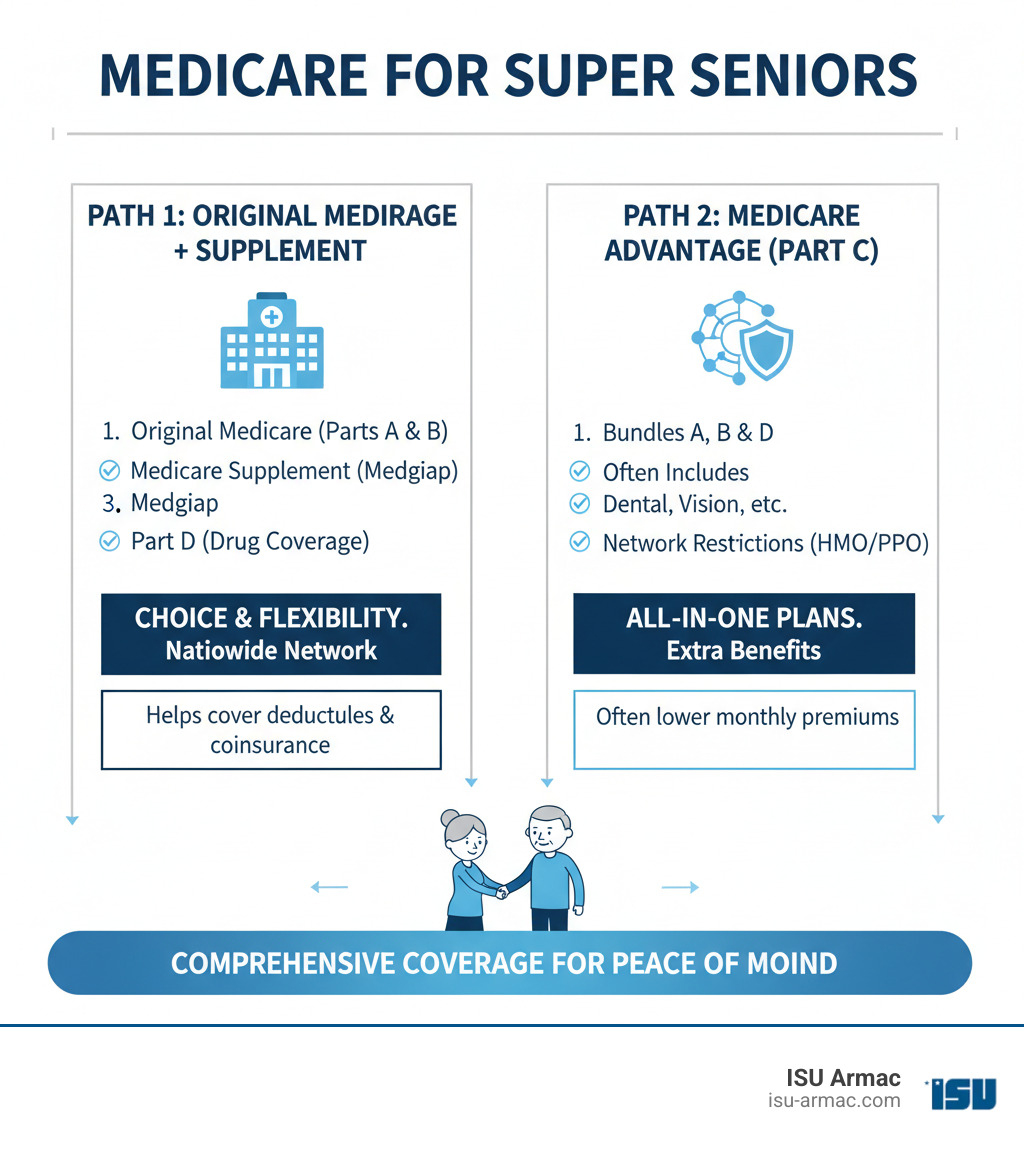
- Medicare Advantage (Part C): Private plans that bundle Original Medicare, often with drug coverage and extra benefits like dental or vision, within a network.
- Medicare Supplement (Medigap): Private plans that work with Original Medicare to pay for costs like deductibles and coinsurance.
- Medicare Part D: Standalone private plans for prescription drug costs.
As we age, healthcare needs and medical costs often increase, making good health insurance vital. This guide will help you make informed decisions for yourself or a loved one.
Ryan McEachron, CEO of ISU Insurance Services ARMAC Agency, has extensive experience navigating health insurance for super senior citizens, ensuring clients receive custom advice and optimal coverage.
Understanding Your Core Coverage: What is Medicare?
Medicare is the foundational federal health insurance program for most Americans 65 and older, providing essential coverage. It also covers younger people with specific disabilities or End-Stage Renal Disease. Understanding how this safety net works is the first step to making confident healthcare decisions.
Timing is critical. Your Initial Enrollment Period is a seven-month window around your 65th birthday. Missing it can lead to lifelong higher premiums. Different rules may apply if you have employer coverage, so check your specific situation.
For more context on how Medicare fits into the broader health insurance landscape, visit our Health Insurance for Businesses Complete Guide. You can also explore Medicare’s components at Medicare.gov.
Medicare Part A: Hospital Insurance
Medicare Part A is your hospital insurance. Most seniors qualify for premium-free Part A if they or their spouse worked and paid Medicare taxes for at least 10 years (40 work credits). Part A covers inpatient hospital care, skilled nursing facility care (not long-term custodial care), hospice care, and some home health care.
Medicare Part B: Medical Insurance
Medicare Part B is your medical insurance, covering doctor visits, specialist appointments, and outpatient care. It also covers important preventive services (screenings, vaccines) and durable medical equipment like walkers or wheelchairs. Part B has a standard monthly premium ($185 in 2025), which may be higher for those with greater incomes.
Medicare Part D: Prescription Drug Coverage
Prescription drug costs can be high. Medicare Part D helps cover these costs through private, Medicare-approved insurance plans. You can get Part D as a standalone plan with Original Medicare or have it included in a Medicare Advantage Plan (Part C). Each plan has a formulary (a list of covered drugs) and its own cost structure.
Since formularies vary, compare plans to ensure your medications are covered affordably. Original Medicare doesn’t cover routine dental care, which requires separate coverage. For more on this, see our Dental Insurance Elderly Guide 2025.
Enhancing Medicare: Advantage vs. Supplement (Medigap) Plans
Original Medicare (Parts A and B) provides a solid foundation but leaves gaps like deductibles and coinsurance. Private insurance can fill these gaps. The two main paths to improve your coverage are Medicare Advantage (Part C) and Medicare Supplement (Medigap) plans. They work very differently, and the choice is a critical decision for your health insurance for super senior citizens.

For more on different benefit structures, see our Group Health Insurance Options guide.
Medicare Advantage (Part C): The All-in-One Alternative
Medicare Advantage plans, offered by private insurers, are an alternative way to get your Medicare benefits. These bundled plans replace Original Medicare and often include extra coverage. Most plans bundle Part A, Part B, and Part D coverage. Many also include extra benefits not covered by Original Medicare, such as dental, vision, hearing, and fitness programs.
The trade-off is that these plans use provider networks, typically HMOs or PPOs. HMOs require you to use in-network doctors and get referrals for specialists. PPOs offer more flexibility to see out-of-network providers at a higher cost.
Many Advantage plans have a $0 monthly premium (beyond your Part B premium), but you’ll have co-payments for services. A key benefit is the out-of-pocket maximum, which limits your annual spending and protects you from catastrophic costs.
For seniors looking for comprehensive dental coverage within a managed care framework, exploring Dental PPO Plans for Seniors can provide valuable options.
Medicare Supplement (Medigap): Filling the Gaps
Medigap plans work with Original Medicare to cover out-of-pocket costs like deductibles and coinsurance, leading to more predictable expenses. Private companies sell these standardized policies (Plan A through N). A Plan G from one company has the same benefits as a Plan G from another; only the price and service differ. For a 65-year-old woman who doesn’t smoke, Plan G typically costs around $157 per month.
Plan G is a popular choice, covering nearly all Medicare-approved costs after you meet the annual Part B deductible ($257 for 2025). This minimizes surprise medical bills. The biggest advantage of Medigap is freedom. You can see any doctor nationwide who accepts Medicare, with no network restrictions or referral requirements. This flexibility is crucial for super seniors needing specialized care. Medigap policies don’t include drug coverage; you’ll need a separate Part D plan.
Common Exclusions in Senior Health Plans
Regardless of your plan, some services are typically excluded. Understanding these gaps is key to realistic planning.
Long-term care, including extended nursing home stays or assisted living, is the biggest exclusion. Cosmetic surgery and non-emergency care outside the U.S. are also not covered.
Original Medicare and Medigap don’t cover routine dental, vision, or hearing care. Some Medicare Advantage plans offer these benefits. Always read your policy documents carefully to understand the details.
Key Financial Considerations for Super Senior Citizen Health Insurance
For health insurance for super senior citizens, financial planning is key. As healthcare expenses climb with age, protecting your retirement savings from unexpected medical bills is a top priority. Even with Medicare, costs for critical illnesses can be high, and medical inflation often outpaces general inflation. Understanding your plan’s financial structure is crucial.

According to ValuePenguin’s research on how age affects health insurance costs, premiums increase significantly as we get older. This makes proactive planning essential.
Managing Costs: Deductibles, Co-payments, and Coinsurance
Understanding cost-sharing helps you budget. Your deductible is the amount you pay for covered services before your insurance starts paying. After your deductible, you’ll pay either co-payments (a fixed fee, like $20 per doctor visit) or coinsurance (a percentage of the cost, like 20%).
Costs vary by plan. Medicare Advantage plans often have lower premiums but higher co-payments when you need care, though they include an out-of-pocket maximum. Medigap plans have higher premiums but minimal out-of-pocket costs for covered services.
If you’re a small business owner, our Small Business Health Insurance Rates Guide breaks down these concepts in more detail.
How Pre-existing Conditions Affect Health Insurance for Super Senior Citizens
Good news: pre-existing conditions are not a major barrier for seniors. Original Medicare and Medicare Advantage plans must cover your pre-existing conditions and cannot charge you more because of them.
For Medigap, timing is crucial. During your six-month Medigap Open Enrollment Period (starting when you’re 65 and have Part B), you have a “guaranteed issue right.” Insurers cannot deny you a policy or charge more for pre-existing conditions. Outside this window, insurers can use medical underwriting to deny coverage, charge more, or impose a waiting period. Enrolling when first eligible is the best way to secure coverage.
Are There Tax Benefits for Senior Health Insurance?
Yes, you may be able to deduct medical expenses, including insurance premiums, if they exceed a percentage of your Adjusted Gross Income (AGI) and you itemize deductions. Premiums for Medicare Part B, Medigap, Part D, dental, and vision can all be included. This is especially valuable for health insurance for super senior citizens due to higher healthcare costs.
Your AGI, which includes income from retirement funds like IRAs, determines both the deduction threshold and whether you pay higher Medicare Part B premiums. For details, see this IRS guide on reporting income from retirement savings funds (PDF). We recommend consulting a tax professional for personalized advice.
Choosing the Right Plan for Your Needs
Choosing the right health plan is a personal decision, especially for super senior citizens. The best fit depends on your unique health, budget, and lifestyle. At ISU Armac, we help Southern California seniors find coverage that truly works for them.

Factors to Consider When Choosing a Plan
Consider these key factors when choosing your plan:
- Your health: Consider your current health and potential future needs. A person with chronic conditions has different needs than a relatively healthy person.
- Your budget: Look beyond monthly premiums to deductibles, co-pays, and coinsurance. A higher-premium plan might save you money overall if it offers better coverage.
- Your doctors: If you want to keep your current doctors, check if they are in the plan’s network. Medicare Advantage plans have networks, while Original Medicare with Medigap offers the freedom to see any doctor who accepts Medicare.
- Your prescriptions: List your medications and use Medicare’s plan finder tool to compare how different Part D plans cover them, as costs can vary significantly.
- Your travel plans: If you travel frequently, check how your plan covers care away from home.
Understanding Health Insurance Benefits for Employees can provide helpful context.
Health Insurance for Super Senior Citizens: Special Considerations
When you reach 80 or beyond, health insurance for super senior citizens requires extra thought.
- Chronic conditions: These are more common with age, requiring ongoing care. A plan that minimizes out-of-pocket costs for regular doctor visits and medications is essential.
- Specialist care: The need for specialists often increases. Plans that allow easy access without referrals, like Original Medicare with Medigap or PPO Advantage plans, can simplify your care.
- Long-term care planning: This is not covered by standard health insurance and requires separate financial planning. It’s urgent to address this to protect your savings.
- Out-of-pocket maximums: This is crucial protection. Medicare Advantage plans have a built-in annual cap on your spending. Medigap Plan G provides similar protection by covering most of Medicare’s cost-sharing. This financial ceiling prevents catastrophic medical bills.
Frequently Asked Questions about Senior Health Insurance
We understand that choosing health insurance can bring up many questions. Here at ISU Armac, we work with clients every day who are navigating these same decisions. Let’s address some of the most common questions.
What is the best health insurance for a senior over 80?
For seniors over 80, the “best” plan depends on your personal situation. The choice is between Original Medicare with a Medigap plan and a Medicare Advantage plan.
Original Medicare with a Medigap plan offers maximum freedom. You can see any doctor nationwide who accepts Medicare, with no referrals. Plan G makes costs highly predictable, which is invaluable for super senior citizens managing chronic conditions.
Medicare Advantage plans offer lower premiums (often $0) and bundled extras like dental, vision, and hearing. They include an out-of-pocket maximum for financial protection. The trade-off is being restricted to a provider network and possibly needing referrals.
Can I be denied a Medigap plan because of my health?
Yes, you can be denied, which is why timing is critical. During your 6-month Medigap Open Enrollment Period (starting when you turn 65 and enroll in Part B), you have a “guaranteed issue right.” Insurers cannot deny you or charge more for pre-existing conditions.
If you miss this window, insurers in most states can use medical underwriting to deny your application, charge higher premiums, or impose a waiting period for pre-existing conditions. There are some specific situations where you might get another guaranteed issue right, but it’s safest to enroll when you first become eligible.
How much does health insurance cost for a senior citizen?
Costs vary, but the baseline for most seniors is the Medicare Part B premium ($185 per month in 2025). Higher earners may pay more (IRMAA).
Beyond that, your costs depend on your choice:
- Medicare Advantage plans often have $0 monthly premiums, but you’ll have co-payments for services. The average plan with drug coverage is about $28 per month.
- With Original Medicare and a Medigap plan, you’ll pay a monthly Medigap premium (e.g., Plan G is around $157/month for a 65-year-old woman) in addition to your Part B premium. This provides predictable out-of-pocket costs.
- Standalone Part D plans have their own premiums, averaging $0 to over $40 per month.
At ISU Armac, we help you compare these costs against your needs to find the best value. As an independent agency, we can shop multiple carriers for you.
Conclusion
Choosing the right health insurance for super senior citizens can be straightforward. This guide has covered the essentials: Medicare as your foundation and the two main paths—bundled Medicare Advantage plans or Original Medicare with a Medigap plan.
There is no single “best” plan. Your ideal coverage depends on your priorities, whether it’s specialist access without referrals, predictable costs, or extra benefits like dental and vision.
This is where working with an independent agency like ISU Armac makes all the difference. We are not tied to a single company, so we can shop multiple carriers for you. Based in Southern California and serving Victorville, Apple Valley, Hesperia, and Oak Hills, our job is to find you the best coverage at competitive rates.
Our team, led by Ryan McEachron, has years of experience helping seniors with these decisions. We understand that health insurance for super senior citizens requires special attention, and we’re here to make the process straightforward.
Enjoy your golden years without worrying about medical bills. Let us handle the insurance details. Whether you’re new to Medicare or reviewing your current plan, we’re ready to help.
Get help choosing a Medicare Supplement plan today! Your peace of mind is just a conversation away.