
Why Understanding Dental Insurance Costs Matters
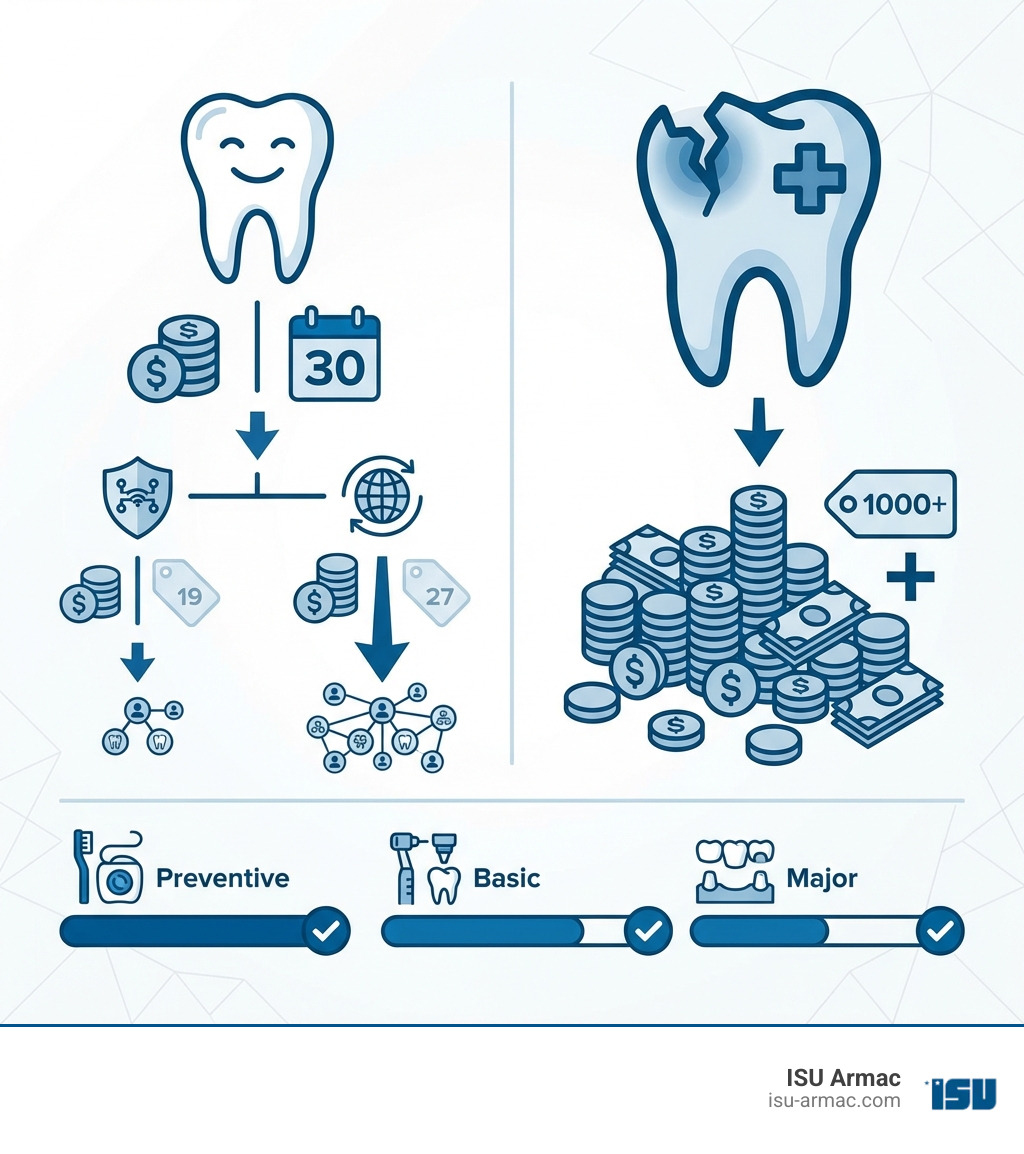
The cost of dental insurance in the United States typically ranges from $20 to $50 per month for individuals, or roughly $240 to $600 annually. Here’s what you need to know at a glance:
- Average monthly premium: $30 (varies by plan type and location)
- Typical deductible: $25-$100 per year
- Annual maximum coverage: $1,000-$2,000
- HMO plans: Average $19/month (lower cost, restricted network)
- PPO plans: Average $27/month (higher cost, more flexibility)
- Family plans: $80-$150/month
Without insurance, a single root canal can cost over $1,000. That’s more than a year’s worth of premiums for a basic plan. Yet nearly half of Americans lack dental coverage, often avoiding routine care until problems become painful and expensive.
Your oral health affects more than just your smile. Poor dental care is linked to heart disease, diabetes complications, and other serious health issues. But the high cost of dental work keeps many people from getting the preventive care they need.
This guide breaks down everything you need to know about dental insurance costs. You’ll learn what influences premiums, what different plans actually cover, and how to choose coverage that protects both your teeth and your wallet.
I’m Ryan McEachron, CEO of ISU Insurance Services ARMAC Agency in Victorville. Over my decades in the insurance industry, I’ve helped countless families steer the cost of dental insurance to find coverage that fits their budget and healthcare needs. Let me walk you through the numbers so you can make a confident decision about your dental coverage.
Cost of dental insurance terms at a glance:
The Numbers Behind the Smile: Understanding the Cost of Dental Insurance
Navigating dental insurance can sometimes feel like trying to solve a puzzle with missing pieces. But understanding the fundamental components of how dental insurance works – from premiums to out-of-pocket expenses – is the first step to making smart choices for your oral health. Our goal is to explain the cost of dental insurance so you can approach your decision with confidence.
Essentially, dental insurance is designed to help you manage the costs associated with maintaining good oral health. Instead of paying the full price for every dental procedure, you pay a regular premium, and in return, the insurance company covers a portion of your dental bills. The specific amount you pay and what the insurance covers depends heavily on the plan’s structure. Some plans might cover routine cleanings completely, while others require you to pay a percentage even for preventive care. Understanding these nuances is key to finding a plan that truly benefits you.

Average Monthly Premiums: What is the Typical Cost of Dental Insurance?
When we talk about the cost of dental insurance, the monthly premium is usually the first thing that comes to mind. For individuals in the United States, the average cost hovers around $30 per month. However, this is just an average, and your actual premium could fall anywhere in the range of $20 to $50 monthly, translating to an annual cost of $240 to $600. Some plans might even be as low as $7 per month, while others reach up to $87, depending on the coverage and provider.
Why such a wide range? Several factors come into play, which we’ll dive into shortly. But broadly speaking, the more comprehensive the coverage, the higher the premium.
You’ll typically encounter two main ways to acquire dental insurance:
- Standalone Dental Plans: These plans focus solely on dental coverage and are often the most straightforward option if you only need dental benefits. Their premiums can vary significantly based on the level of coverage chosen.
- Bundled Health and Dental Plans: Some health insurance providers offer dental coverage as an add-on or as part of a larger health insurance package. While these might seem more expensive initially, bundling can sometimes lead to discounts, making them a cost-effective choice if you also need health insurance.
- Employer-Sponsored Plans: For many, dental insurance comes through their workplace. These are often the most affordable options because employers typically subsidize a portion of the premiums, and group rates are generally lower than individual plans. If you’re fortunate enough to have access to employer-sponsored dental benefits, it’s usually a wise choice to enroll. For businesses looking to offer this valuable benefit, we can help you explore competitive group dental options.
Key Factors That Influence the Cost of Dental Insurance
The cost of dental insurance isn’t a one-size-fits-all number. Several critical factors influence how much you’ll pay each month:
- Location (State): Where you live plays a significant role. Dental costs, and consequently insurance premiums, can vary considerably from one state to another, and even within different regions of California, such as Victorville, Apple Valley, or Hesperia. For instance, while some states might have average monthly costs as low as $18, others can reach up to $50. In California, for example, a 30-year-old female could see PPO plan premiums ranging from approximately $19 to over $87, and DHMO plans from around $7 to $16, depending on the specific plan and provider. These variations reflect the general cost of living, local dental fees, and the competitive landscape of insurance providers in our Southern California communities.
- Age: Generally, the older you are, the higher your premiums. This is because older adults tend to require more extensive and frequent dental care. This is a crucial consideration, especially for individuals nearing or in retirement. We have resources specifically for dental insurance for retirees and seniors.
- Coverage Level (Tiers): Dental plans often come in different tiers, from basic to comprehensive.
- Basic plans typically cover preventive care and some basic procedures. They have lower premiums.
- Comprehensive or premium plans offer more extensive coverage, including major procedures, but come with higher monthly costs.
- Individual vs. Family Plans: An individual plan will naturally be less expensive than a family plan. If you’re covering a spouse, children, or other dependents, your premium will increase. Family plans can range from $80 to $150 per month, reflecting the increased number of individuals covered and the potential for more dental needs.
Understanding these factors allows you to anticipate your potential premiums and helps us at ISU Armac guide you toward a plan that aligns with your specific situation and budget.
Beyond the Premium: Deductibles, Coinsurance, and Annual Maximums
While the monthly premium is what you pay regularly, it’s only one piece of the puzzle. To truly understand the overall cost of dental insurance, you need to grasp three other important terms: deductibles, coinsurance, and annual maximums.
- Deductible: This is the amount of money you must pay out-of-pocket for dental services before your insurance company begins to pay. Think of it as your initial contribution. Most dental plans have an annual deductible, typically ranging from $25 to $100 per year. Once you meet this amount, your insurance starts covering services according to your plan’s benefits. For example, if you have a $50 deductible and your first covered procedure costs $150, you’d pay the $50 deductible, and the insurance would then cover a percentage of the remaining $100.
- Coinsurance: After you’ve met your deductible, coinsurance is the percentage of the cost for covered dental services that you are still responsible for. Your insurance pays the rest. Dental plans often follow a “100-80-50” model:
- 100% coverage for preventive services (like cleanings).
- 80% coverage for basic services (like fillings).
- 50% coverage for major services (like crowns or root canals).
So, if your coinsurance for a basic service is 20% and the cost is $100 (after your deductible), you would pay $20, and your insurance would pay $80.
- Annual Maximum: This is the maximum dollar amount your dental insurance plan will pay for your dental care within a specific benefit period, usually a calendar year. Once your claims reach this maximum, you are responsible for 100% of any further dental costs until the next benefit period begins. Typical annual maximums for dental insurance plans range from $1,000 to $2,000. It’s crucial to be aware of this limit, especially if you anticipate needing extensive dental work.
These components work together to determine your total out-of-pocket expenses. A plan with a lower premium might have a higher deductible or lower annual maximum, and vice versa. It’s about finding the right balance for your anticipated dental needs.
What Your Premiums Actually Cover
Understanding what your dental insurance premiums cover is just as important as knowing the cost of dental insurance itself. Most dental plans categorize services into tiers, with varying levels of coverage and sometimes, waiting periods before certain benefits kick in.
A common way to categorize coverage is through the “100-80-50” rule, which we mentioned earlier. This model provides a general idea of how most plans structure their benefits, but it’s always important to check your specific policy details.
Another critical aspect to be aware of is waiting periods. These are specific timeframes you must wait after your policy’s effective date before you can receive coverage for certain services. For instance, preventive care often has no waiting period, but basic services might have a 3-6 month wait, and major services like crowns or root canals could require a 6-12 month waiting period. Some plans even have waiting periods for orthodontics, which can be up to 2 years. This is why planning ahead is so important!

Preventive, Basic, and Major Services
Let’s break down the typical coverage tiers you’ll find in most dental insurance plans:
- Preventive Care (Often 100% Covered): These are the services designed to maintain your oral health and prevent problems from developing. They are typically covered at the highest percentage, often 100%, after any deductible. This includes:
- Routine check-ups and oral exams
- Cleanings (usually one or two per year)
- X-rays (bite-wing and panoramic)
Investing in preventive care is one of the best ways to keep your cost of dental insurance low in the long run, as it helps avoid more expensive problems down the line.
- Basic Services (Often 80% Covered): These services address common dental issues that arise despite preventive efforts. After your deductible, your plan might cover around 80% of the cost, leaving you responsible for the remaining 20% (coinsurance). Examples include:
- Fillings (for cavities)
- Simple extractions (non-surgical tooth removal)
- Minor restorative procedures
- Major Services (Often 50% Covered): These are more complex and costly procedures. Coverage for major services typically kicks in after a waiting period and often at a lower percentage, such as 50%, with you paying the other half. This category includes:
- Crowns
- Root canals
- Bridges
- Dentures
- Dental implants (coverage for these can be limited or require specific dental implant insurance)
Exclusions: It’s also important to know what dental insurance typically doesn’t cover. Most plans do not cover purely cosmetic procedures, such as teeth whitening or veneers. Adult orthodontics can also be an exclusion or have very limited coverage. However, if you or a family member needs braces, it’s worth exploring specific plans or riders designed for dental insurance for braces.
The Cost of Going Without: Common Procedures Out-of-Pocket
To truly appreciate the value of dental insurance, it helps to see what you’d pay without it. The cost of dental insurance might seem like an extra expense, but it can provide significant savings when you need dental work. Here’s a glimpse at the average costs for common dental procedures in the United States without insurance:
- Teeth cleaning: A routine cleaning typically costs around $104. This can vary depending on whether it’s a basic cleaning or a deeper scaling.
- Cavity filling: The average cost for a single cavity filling is about $160. This can fluctuate based on the material used (amalgam, composite) and the size and location of the cavity.
- Tooth extraction: A simple tooth extraction starts at around $146. However, the cost can quickly climb for more complex surgical extractions, especially for impacted wisdom teeth, potentially reaching several hundred dollars. For more detailed information, you can check out how much a tooth extraction costs.
- Root canal: A root canal can cost upwards of $1,000, with molars typically being more expensive than front teeth.
- Dental crown: The average cost for a dental crown is about $1,288, but can vary widely based on the material (porcelain, ceramic, metal) and the tooth’s location.
- Bridge: A dental bridge can range from $2,000 to $5,000, depending on the number of prosthetic teeth and materials.
- Dentures: Full or partial dentures can cost around $2,000 or more.
- Braces: Orthodontic treatment like braces can be a significant investment, typically ranging from $3,000 to $7,000.
As you can see, even routine procedures can add up quickly, and major work can be financially overwhelming without the support of dental insurance. This is why, for many, the cost of dental insurance is a worthwhile investment.
Comparing Your Options: Plan Types and Considerations
When shopping for dental insurance, you’ll encounter different plan types, primarily PPO and HMO. Understanding their differences is crucial for choosing a plan that aligns with your preferences for flexibility, network access, and overall cost of dental insurance. It’s a balance between having more choices and potentially paying more.
One of the biggest factors in comparing plans is the provider network. Some plans have a vast network of dentists you can choose from, while others restrict you to a smaller group. Your preference for flexibility versus a lower premium will often guide your decision here.
PPO vs. HMO Plans
Let’s look at the two most common types of dental plans:
- PPO (Preferred Provider Organization) Dental Plans:
- Flexibility: PPO plans offer greater flexibility. You can typically choose any licensed dentist, though you’ll save money by sticking with dentists within the plan’s network. You don’t need a referral to see specialists.
- Cost: PPO plans usually have higher monthly premiums, averaging around $27 per month. They also often come with deductibles, coinsurance, and annual maximums.
- Out-of-Network Coverage: You can go out-of-network, but your coverage percentage will likely be lower, meaning higher out-of-pocket costs for you.
- Best for: Those who want the freedom to choose their dentist or have an existing dentist they want to keep, and who are willing to pay a bit more for that flexibility.
- HMO (Health Maintenance Organization) Dental Plans (also known as DHMOs):
- Lower Premiums: HMO plans are generally more affordable, with average monthly costs around $19 per month. They often have lower deductibles or even no deductible, and sometimes no annual maximums.
- Restricted Network: You must choose a primary care dentist within the plan’s network, and you’ll typically need a referral from that dentist to see a specialist (like an orthodontist or oral surgeon).
- No Out-of-Network Coverage: With an HMO, services received outside the network are generally not covered, except in emergencies.
- Best for: Those who prioritize lower premiums and are comfortable choosing a dentist from a more limited network.
Here’s a quick comparison:
| Feature | PPO (Preferred Provider Organization) | HMO (Health Maintenance Organization) |
|---|---|---|
| Average Monthly Cost | ~$27 | ~$19 |
| Network Size | Larger, more flexibility | Smaller, restricted |
| Specialist Referrals | Not usually required | Required from primary dentist |
| Out-of-Network Coverage | Yes, but at a lower rate | Generally no |
| Deductibles/Maximums | Common | Often lower or none |
Maximizing Your Dental Insurance Benefits
Getting the most out of your dental insurance isn’t just about finding the lowest premium; it’s about making smart choices and understanding your plan. Here are some tips to maximize your benefits and keep your overall cost of dental insurance manageable:
- Stay In-Network: If you have a PPO plan, always check if your dentist is in-network. You’ll receive better coverage and lower out-of-pocket costs. If you have an HMO, you must use an in-network provider.
- Understand Waiting Periods: Plan ahead for major work. If you know you’ll need a crown or other major procedure, make sure you’ve met any waiting periods before scheduling the appointment. Don’t rush into expensive treatments before your coverage kicks in.
- Monitor Your Annual Maximum: Keep track of how much your plan has paid out during the year. If you’re approaching your annual maximum, you might consider scheduling less urgent treatments for the following year to maximize your benefits across two periods.
- Prioritize Preventive Care: This is the golden rule! Most plans cover preventive services (cleanings, exams, X-rays) at 100%. Utilizing these benefits regularly helps catch problems early when they are less expensive to treat, ultimately lowering your long-term dental costs.
- Review Your Explanation of Benefits (EOB): After every dental visit, your insurance company will send an EOB. Review it carefully to ensure you’re being charged correctly and that your benefits are applied as expected.
- Work with an Independent Agent: This is where we come in. At ISU Armac, we are an independent insurance agency. This means we don’t work for one specific insurance company. Instead, we work for you. We can shop multiple carriers to compare different plans, understand their nuances (deductibles, coinsurance, waiting periods, networks), and help you find the best coverage at the lowest rates that fit your needs right here in Victorville, Apple Valley, Hesperia, and throughout Southern California. We can help you avoid common pitfalls and ensure you’re making the most informed decision.
Frequently Asked Questions about Dental Insurance Costs
We get a lot of questions about the cost of dental insurance and whether it’s truly worth it. Let’s tackle some of the most common ones.
How much are dental visits without insurance?
Without insurance, the cost of dental insurance becomes irrelevant, but the cost of dental care can be substantial. As we detailed earlier, even routine visits can add up quickly:
- A basic teeth cleaning can cost around $104.
- A single cavity filling averages about $160.
- A simple tooth extraction starts around $146.
- More complex procedures like a root canal can easily exceed $1,000, and a dental crown can be $1,288 or more.
These costs are for a single procedure. If you need multiple fillings, a crown, or a root canal, your bill could easily reach thousands of dollars out-of-pocket. This stark difference highlights the value of having coverage, as it can significantly reduce your financial burden for necessary dental care.
Is dental insurance worth it financially?
For most people, yes, dental insurance is financially worth it. Here’s why:
- Covers Preventive Care: Most plans cover 100% of preventive services like two annual cleanings and yearly X-rays. The cost of these alone (around $200-$300 without insurance) can often offset or even exceed the annual premium of a basic plan. Just two regular teeth cleanings a year can make your dental insurance pay for itself.
- Protection Against High Costs: While preventive care saves you money on routine needs, the real value often comes when you need basic or major work. A major procedure like a root canal or crown, costing over $1,000 without insurance, would only cost you a fraction of that with a good plan, even after deductibles and coinsurance. It protects you from unexpected, high-cost dental emergencies.
- Peace of Mind: Knowing you have coverage can encourage you to seek regular care, which is vital for overall health. It removes the hesitation many people feel when faced with a potentially large dental bill.
- Depends on Your Needs: Whether it’s “worth it” ultimately depends on your individual oral health and anticipated needs. If you have excellent dental health and rarely need more than routine cleanings, a very basic plan or even a dental discount plan might suffice. However, if you have a history of dental issues or anticipate needing more extensive work (like a crown or if you have children who may need braces), dental insurance provides a critical financial safety net.
Can I buy dental insurance at any time?
The ability to purchase dental insurance at any time depends on where you’re buying it from:
- Private Insurers: Yes, you can generally purchase a standalone dental insurance plan directly from a private insurance company like we offer at ISU Armac at any point during the year. These plans are not tied to specific enrollment periods. We make it easy to purchase dental insurance online.
- ACA Health Insurance Marketplace: If you’re looking to purchase dental insurance through the Affordable Care Act (ACA) Health Insurance Marketplace, it’s a bit different. You usually need to buy it during the annual Open Enrollment Period. Outside of this period, you would need a Qualifying Life Event (QLE), such as getting married, having a baby, or losing other coverage, to enroll. Additionally, dental coverage purchased through the Marketplace often needs to be bundled with a health insurance plan.
So, if you’ve missed the Open Enrollment Period or don’t have a qualifying life event, a private standalone dental plan is typically your best bet for immediate coverage.
Conclusion: Finding the Right Plan for Your Smile and Budget
We’ve covered a lot of ground today, from the average cost of dental insurance to the intricate details of deductibles, coinsurance, and annual maximums. We’ve explored the differences between PPO and HMO plans, and weighed the significant out-of-pocket costs you might face without coverage. The key takeaway is clear: understanding these factors empowers you to make informed decisions about your oral health.
Finding the right dental insurance plan is about balancing the monthly premium with the coverage you truly need. It’s about looking beyond the surface cost and considering the peace of mind and financial protection a good plan offers against unexpected dental expenses. Whether you need comprehensive coverage for major services or a basic plan for preventive care, there’s an option out there for you.
At ISU Armac, we believe everyone in Southern California—from Victorville to Apple Valley, Hesperia, and Oak Hills—deserves access to quality, affordable dental care. That’s why we pride ourselves on being an independent insurance agency. We don’t push one-size-fits-all solutions. Instead, we take the time to understand your unique needs and budget, then shop multiple top-rated carriers to find the best dental insurance coverage at the most competitive rates.
Don’t let the fear of high dental costs keep you from a healthy smile. Let us help you steer your options and find a plan that fits your life perfectly.
To explore your personal insurance options, including finding the perfect dental plan, visit our website or give us a call. We’re here to help you protect what matters most.
Explore your personal insurance options