
Why Getting Personal Auto Insurance Quotes Online Makes Financial Sense
Personal auto insurance quotes are your gateway to significant savings. Drivers who switch save an average of $658 annually, and getting quotes online offers convenience, speed, and competitive rates from multiple carriers.
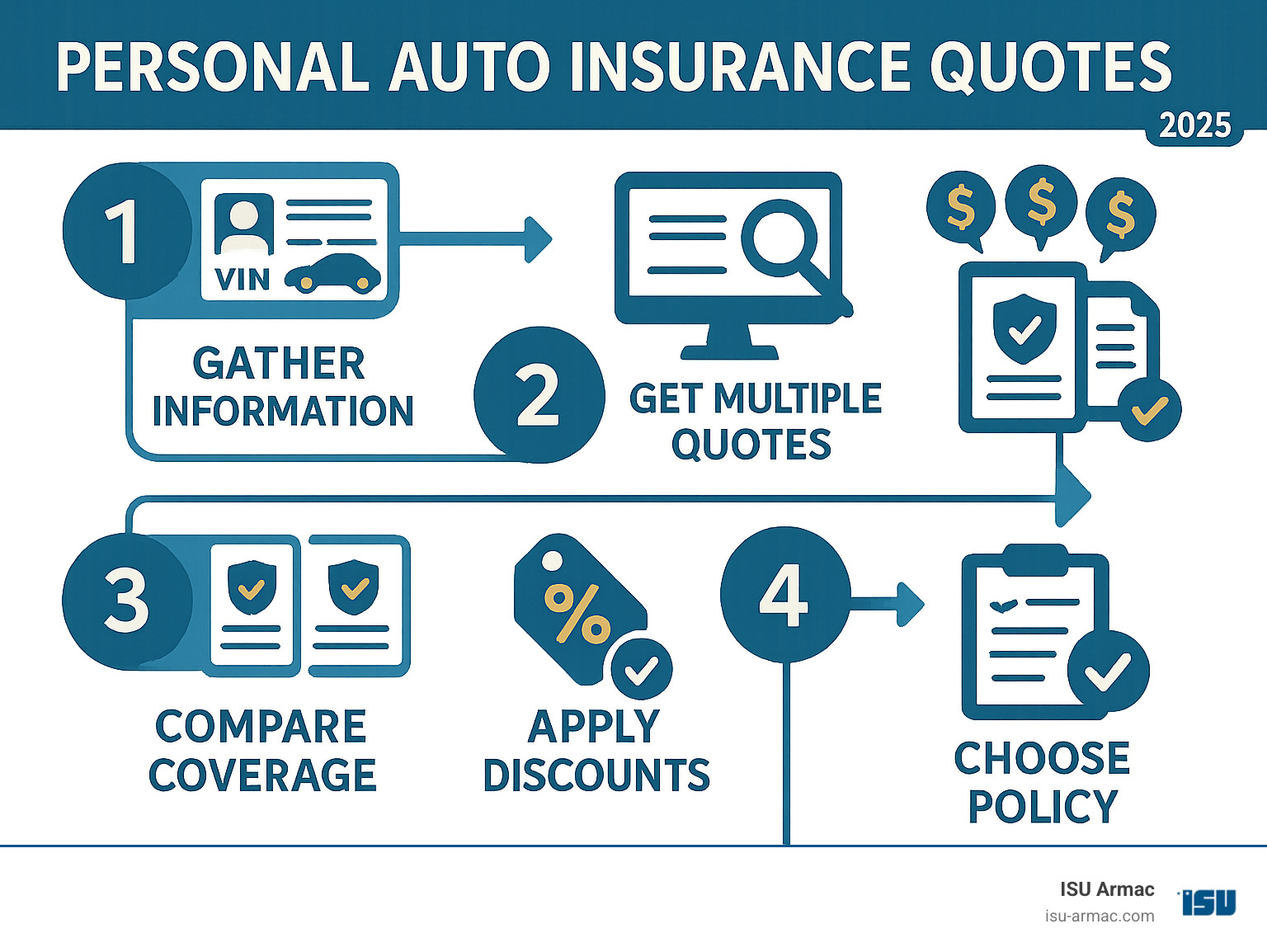
Quick Answer: How to Get Personal Auto Insurance Quotes:
- Gather your information – Driver’s license, vehicle details, current insurance info
- Compare multiple carriers – Get at least 3-5 quotes for best results
- Review coverage options – Ensure you’re comparing identical coverage levels
- Ask about discounts – Multi-policy, safe driver, and vehicle safety discounts
- Consider deductibles – Higher deductibles = lower premiums
The digital landscape makes this process faster than ever. You can get a quote in under 60 seconds and compare rates from numerous companies. Whether you’re a new driver or just looking to lower your premium, knowing how to steer the quote process can save you hundreds annually.
I’m Ryan McEachron, CEO of ISU Insurance Services ARMAC Agency in Victorville, with over 25 years of experience helping High Desert residents find the right coverage at the best price. My expertise in personal auto insurance quotes has helped countless drivers open up significant savings while ensuring they have adequate protection for their unique needs.
Essential personal auto insurance quotes terms:
Decoding Your Auto Insurance Quote: Key Factors and Coverages
Understanding what goes into your insurance quote allows you to adjust the components to get the coverage you want at a competitive price. Insurers use a complex formula to calculate your premium, but many of the factors are within your control.
What Factors Influence Your Insurance Rate?
Your premium is calculated based on statistical analysis. Even small changes in your profile can significantly impact your final price.
- Driving Record: This is the most important factor. A clean record with no accidents or tickets tells insurers you’re a responsible driver. Most insurers look back three to five years.
- Vehicle You Drive: The car’s safety ratings, theft rates, and repair costs affect your premium. A reliable sedan typically costs less to insure than a sports car.
- Location: Where you live and park your car impacts rates due to local accident statistics, crime rates, and weather patterns. Learn more about Auto Insurance Apple Valley CA specifics.
- Annual Mileage: The more you drive, the higher your chance of an accident. Low mileage can lead to lower rates.
- Age and Driving Experience: Younger, less experienced drivers face the highest premiums. Rates typically decrease with age and a demonstrated history of safe driving.
- Credit-Based Insurance Score: In many states, a good credit history can lead to lower insurance costs, as studies show a correlation between credit responsibility and fewer claims.
- Coverage Limits and Deductibles: Higher coverage limits offer more protection but increase your premium. Your chosen deductible also directly affects your cost.
Understanding Mandatory vs. Optional Coverage
Every state requires minimum insurance, but these minimums are often inadequate for full financial protection.
Mandatory liability coverage is the foundation of any policy, protecting others when you’re at fault. In California, this includes:
- Bodily Injury Liability: Covers medical expenses for people you injure. The state minimum is $15,000 per person/$30,000 per accident, but serious injuries can easily exceed this.
- Property Damage Liability: Pays for damage you cause to other people’s property. California’s minimum is just $5,000, which may not cover the cost of a modern vehicle.
We strongly recommend higher limits, as medical and repair costs have risen far beyond these minimums.
Optional coverages protect you and your vehicle. For more insight, see The ABCs of Personal Lines Insurance: Protecting Your Assets.
- Collision Coverage: Pays to repair or replace your vehicle after an accident, regardless of fault.
- Comprehensive Coverage: Protects against non-collision incidents like theft, vandalism, fire, or hail.
- Uninsured/Underinsured Motorist Coverage: Covers your expenses if you’re hit by a driver with little or no insurance—a crucial protection in California.
The Role of Deductibles and Coverage Limits
Your deductible is the amount you pay out-of-pocket before your insurance coverage begins. It applies to collision and comprehensive claims.

There is a direct trade-off: a higher deductible results in a lower premium, while a lower deductible increases your premium. Choose a deductible you can comfortably afford to pay unexpectedly. Coverage limits are the maximum amount your insurer will pay for a covered loss. Balancing cost versus protection is key. Higher limits cost more but provide greater financial security, protecting your assets in case of a major accident or lawsuit.
How to Get Accurate Personal Auto Insurance Quotes Online
The digital age has made shopping for car insurance faster and easier than ever. By preparing your information, you can efficiently gather and compare quotes from multiple providers to find the best deal.
What Information Do You Need to Get a Quote?
To get accurate personal auto insurance quotes, have the following information ready:
- Personal Details: Full name, current address, and date of birth for all drivers.
- Driver’s License Numbers: For all drivers on the policy.
- Vehicle Information: The Vehicle Identification Number (VIN) is best, but the make, model, and year are sufficient for preliminary quotes.
- Current Insurance Information: Details about your current or prior carrier can qualify you for continuous coverage discounts.
- Driving History: Be prepared to disclose any accidents, violations, or claims from the last 3-5 years for all drivers.
- Vehicle Use: Estimated annual mileage and primary use (e.g., commuting, pleasure, business).
While some services offer auto insurance quotes without personal information, providing complete details ensures you get the most precise quotes possible.
A Step-by-Step Guide to Comparing Quotes
Getting quotes is just the beginning. The key to saving money is comparing them on an “apples-to-apples” basis to make a fair price comparison.
- Gather Multiple Quotes: Use online comparison tools for a quick market snapshot or work with an independent insurance agent. As an independent agency, ISU Armac shops multiple carriers on your behalf, saving you time and hassle. Find a Car Insurance Broker Near Me to get expert help.
- Compare Identical Coverage: Ensure each quote has the same liability limits, deductibles, and optional coverages. A much lower premium often signals less coverage, not a better deal.
- Look Beyond Price: Consider the carrier’s financial stability and customer service ratings. Check online reviews to see how the company handles claims. A reputable company with good service is invaluable when you need to file a claim.
The Benefits of Using Online Tools for Personal Auto Insurance Quotes
Online platforms have transformed insurance shopping, putting the marketplace at your fingertips.
- Speed and Convenience: Get quotes in minutes, any time of day or night.
- 24/7 Access: Shop for insurance when it fits your schedule.
- Easy Comparison: See multiple quotes from various carriers side-by-side in one place.
- Online Discounts: Many insurers offer discounts for customers who get quotes and purchase policies online.
Open uping Savings: Discounts and Strategies for a Lower Premium
The advertised price for personal auto insurance quotes is just a starting point. Insurers offer numerous discounts that can significantly lower your premium without sacrificing coverage. The key is to be proactive and ask what you qualify for.
Common Car Insurance Discounts to Ask For
Every discount you qualify for is money back in your pocket. Ask your agent about these common savings opportunities:
- Multi-Policy Discount: Often the biggest saver, earned by bundling auto with home or renters insurance.
- Multi-Car Discount: Insure more than one vehicle on the same policy.
- Good Driver Discount: For maintaining a clean record free of accidents and tickets.
- Good Student Discount: For young drivers who maintain a B average or higher.
- Vehicle Safety Features: For cars with anti-lock brakes, airbags, and other safety tech.
- Anti-Theft Devices: For vehicles with alarms or GPS tracking systems.
- Low Mileage Discount: If you work from home or don’t drive often.
- Affinity/Group Discounts: Through your employer, professional associations, or alumni groups.
- Paid-in-Full Discount: For paying your entire premium upfront. Find more ways to get Cheap Car Insurance.
How Your Driving Record Impacts Your Quote

Your driving record is a primary factor in determining your insurance rate. A clean record, with no at-fault accidents or moving violations, will earn you the best rates. Conversely, at-fault accidents and traffic violations signal higher risk and will increase your premium. Most incidents affect your rates for three to five years.
Some insurers offer accident forgiveness, which prevents your rates from increasing after your first at-fault accident. This feature can be an optional add-on or a loyalty perk. Safe driving is the most effective way to keep your personal auto insurance quotes low.
The Power of Bundling: Combining Home and Auto
One of the most significant ways to save is by bundling your auto insurance with other policies like home or renters insurance. Insurers reward this loyalty with discounts that can be as high as 25%, potentially saving you hundreds of dollars annually.
Beyond the financial benefits, bundling offers convenience. You’ll have one insurance company, one bill, and a single point of contact for your needs. This simplifies managing your policies and filing claims.
At ISU Armac, we excel at finding bundling opportunities for our clients in Victorville, Hesperia, and throughout Southern California. We shop multiple carriers to identify the best combination of coverage and savings for your situation. Learn more about Insurance Victorville CA.
Navigating Special Insurance Scenarios
Your insurance needs can change dramatically based on your vehicle or how you use it. It’s important to ensure you have the right protection for your specific situation.
Insuring More Than Just Your Car
Standard auto policies are for everyday cars, but other vehicles require specialized coverage.
- Motorcycle Insurance: Addresses the unique risks of two-wheeled travel, with options to cover custom parts and riding gear.
- RV and Motorhome Coverage: Blends auto and home insurance, protecting your personal belongings and offering full-timer’s liability if the RV is your primary residence.
- Classic Car Insurance: Uses “agreed value” coverage, where you and the insurer agree on the car’s value upfront, protecting your investment from depreciation.
- ATV and Recreational Vehicles: These policies cover risks specific to their use, such as off-road hazards for ATVs or water perils for boats.
No matter what you drive, we can help you find the right specialized Personal Auto Insurance to keep you protected.
Using Your Personal Vehicle for Business: What You Need to Know
If you use your car for work—including ride-sharing or food delivery—your personal policy may not cover you in an accident. Most personal policies explicitly exclude business use.
- Ride-Sharing and Delivery: Drivers for services like Uber or DoorDash face coverage gaps. While the company provides some insurance, it’s often not active between rides. A special “rideshare endorsement” can be added to your personal policy to bridge these gaps.
- Commercial Auto Insurance: If you use your vehicle for regular business activities (e.g., a contractor visiting job sites), you likely need a commercial auto policy. It’s designed for the higher risks of business operations.
- Hired and Non-Owned Auto Coverage: This is crucial for businesses whose employees use their personal vehicles for work errands. It provides liability protection if the employee’s personal insurance is insufficient.
Don’t risk a denied claim. If you use your vehicle for business, it’s critical to confirm you have the right coverage. Find out: Does My Personal Auto Insurance Cover Business Use?
How State Regulations Affect Your personal auto insurance quotes
Insurance is regulated at the state level, so rules and requirements vary. California is an “at-fault” state, meaning the at-fault driver’s insurance is responsible for paying for damages.
California’s minimum liability requirements are 15/30/5: $15,000 for bodily injury per person, $30,000 per accident, and $5,000 for property damage. These legal minimums are often insufficient to cover the costs of a serious accident today.
Other states have different systems, such as “no-fault” systems where your own insurer pays for your medical bills regardless of fault. Some regions even have government-run insurance programs. These regulatory differences mean that personal auto insurance quotes can vary significantly based on your location and the legal framework. Learn how insurance systems can vary in other regions.
Frequently Asked Questions about Personal Auto Insurance Quotes
After 25 years in the insurance business, I’ve noticed many drivers have similar questions. Here are clear, concise answers to some of the most common ones we hear at ISU Armac.
Does auto insurance follow the car or the person?
In most cases, auto insurance follows the car. This means if you give someone permission to drive your vehicle, your policy typically covers them. However, anyone who drives your car regularly should be listed on your policy. A key exception is business use, which is often excluded from personal policies and requires separate coverage. For more details, read: Does Auto Insurance Follow the Car or the Person.
Can I get personal auto insurance if I don’t own a car?
Yes. If you frequently rent or borrow vehicles, a non-owner car insurance policy provides liability coverage. This is often more affordable than standard insurance and is a smart way to stay protected when driving a car you don’t own. It’s also useful for maintaining continuous coverage to avoid higher rates later or for filing an SR-22 if you don’t own a vehicle. Learn more about Personal Auto Insurance No Car.
How often should I shop for new auto insurance quotes?
It’s a good practice to shop for personal auto insurance quotes at least once a year when your policy is up for renewal. Insurance rates change frequently, and the best deal last year may not be the best deal today.
You should also get new quotes after any major life event, as these can significantly impact your premium. Key events include:
- Moving to a new ZIP code
- Buying a new car
- Getting married
- Adding a teen driver to your policy
- A significant improvement in your driving record or credit score
Conclusion: Your Next Step to Cheaper Car Insurance
You are now equipped with the knowledge to confidently seek and compare personal auto insurance quotes. By understanding the factors that influence your rate, asking for discounts, and comparing policies equally, you can secure the right protection without overpaying. Drivers who switch save an average of $658 per year.
The best way to ensure you’re seeing all your options is to work with an independent agency. At ISU Armac, we don’t work for one insurance company—we work for you. We shop multiple top-rated carriers on your behalf to find the perfect balance of comprehensive coverage and affordable cost for our neighbors in Victorville, Apple Valley, Hesperia, and throughout Southern California.
We’re committed to finding you the best value, so you can drive with confidence. Ready to see how much you could save?