
Why Uber Drivers Face Unique Insurance Challenges
Personal auto insurance for uber drivers requires special consideration because standard personal policies typically exclude commercial activities like ridesharing. Here’s what you need to know:
Key Insurance Requirements for Uber Drivers:
- Keep your personal auto policy – Required by Uber and provides coverage when app is off
- Inform your insurer – Failure to disclose rideshare activity can void your policy
- Understand coverage gaps – Personal policies don’t cover commercial use; Uber’s coverage has limitations
- Consider rideshare endorsements – Many insurers offer add-ons specifically for rideshare drivers
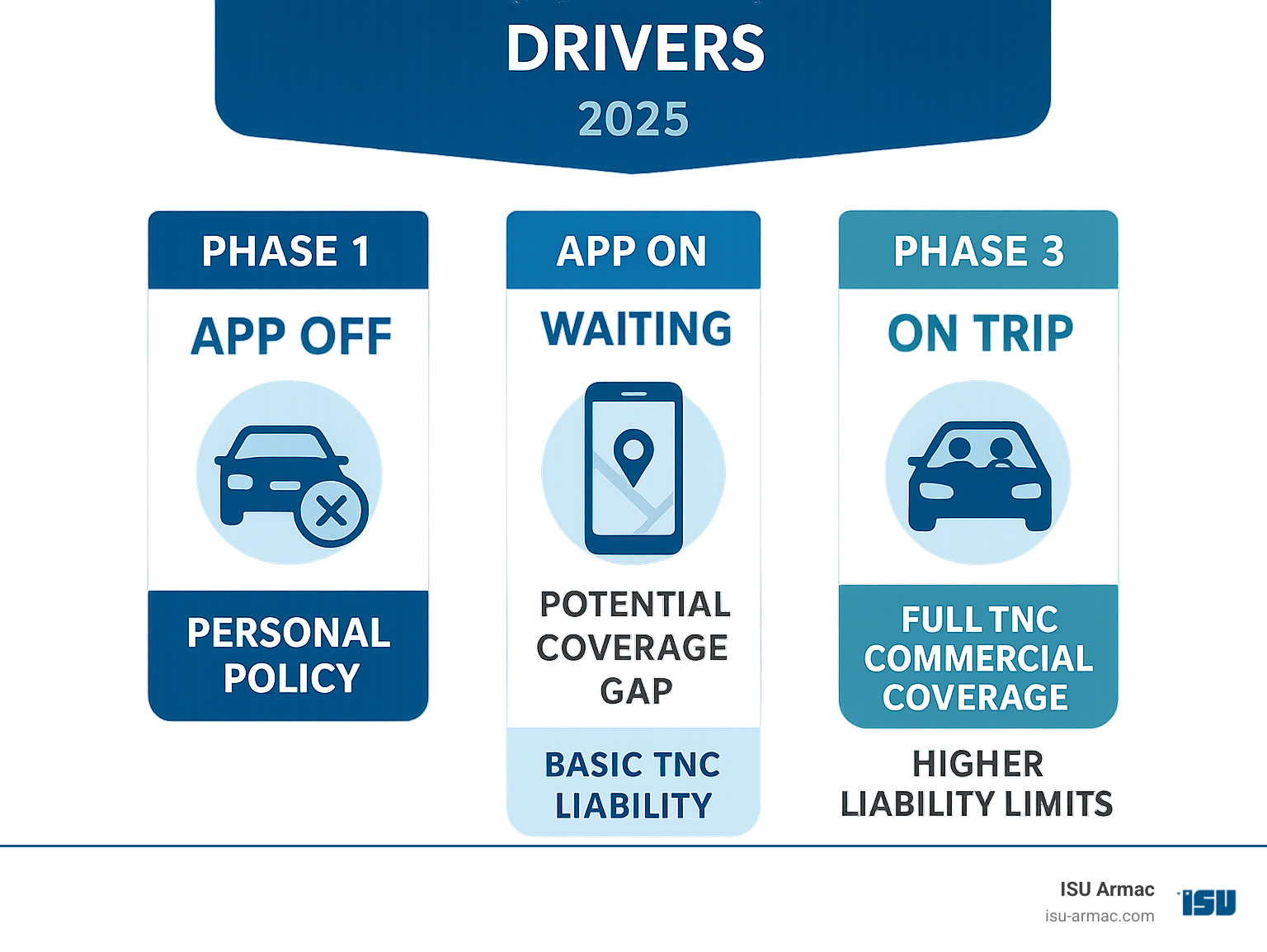
- Know the three phases – Different coverage applies when app is off, waiting for rides, or actively driving
The last quarter of 2022 saw the highest number of new driver sign-ups ever for Uber in Canada, highlighting the growing gig economy. However, many new drivers don’t realize that their standard auto insurance won’t protect them during rideshare activities. Personal policies typically contain commercial use exclusions that can leave drivers financially exposed or result in claim denials.
When you drive for Uber, you operate in a complex insurance landscape with three distinct phases: when your app is off (personal coverage), when you’re waiting for ride requests (potential coverage gap), and when you’re actively transporting passengers (Uber’s commercial policy). Understanding how these phases work together is crucial for maintaining continuous protection.
I’m Ryan McEachron, CEO of ISU Insurance Services ARMAC Agency in Victorville, where I’ve helped countless drivers steer the complexities of personal auto insurance for uber drivers over my decades in the insurance industry. My experience on the Victorville City Council has also given me insight into the local transportation and gig economy challenges our community faces.
Key terms for personal auto insurance for uber drivers:
Why Your Personal Auto Policy Is Not Enough for Uber

When you signed up for your personal auto insurance, it was designed for everyday driving – commuting to work, grocery runs, weekend trips. But the moment you turn on that Uber app and start picking up passengers for money, you’ve crossed into commercial use territory. And here’s the kicker: most personal policies contain something called a commercial use exclusion clause.
This clause essentially says “we’ll cover you for personal driving, but not for business activities.” Rideshare driving falls squarely into that excluded category. Your insurance company isn’t trying to be difficult – they’re just not equipped to handle the increased risk that comes with driving strangers around for a living.
Think about it from their perspective. When you’re driving for Uber, you’re on the road more hours, often in unfamiliar neighborhoods, and you’re responsible for passengers who could sue you if something goes wrong. That’s a completely different risk profile than someone who just drives to the office and back.
The scary part? If you have an accident while driving for Uber and your personal insurer finds you didn’t tell them about your rideshare activities, they can deny your claim entirely. Suddenly, you’re on the hook for everything – property damage, medical bills, legal fees, the works. We’ve seen this happen to drivers here in Victorville and the surrounding High Desert communities, and it’s heartbreaking.
Even worse, your insurance company might cancel your entire policy for what they consider a breach of contract. Once that happens, you’ll have a cancellation on your record, making it much harder and more expensive to get coverage anywhere else. You can learn more about how business use affects your coverage in our guide on Does My Personal Auto Insurance Cover Business Use?
The Consequences of Non-Disclosure
Let me be blunt about what happens when you don’t tell your insurance company you’re driving for Uber. The consequences aren’t just inconvenient – they can be life-changing in the worst possible way.
- Financial liability is the big one. Without proper coverage, you become personally responsible for every dollar of damage. We’re not talking about a few hundred bucks for a fender-bender. A serious accident could mean hundreds of thousands – or even millions – in medical bills and property damage. That’s mortgage-your-house, file-for-bankruptcy territory.
- Then there’s the legal trouble. When people get hurt and there’s no insurance company to handle the claim, they’re going to come after you directly. Lawsuits are expensive even when you win, and without an insurer’s legal team backing you up, you’re facing those costs alone.
- But here’s what really gets me: losing your coverage altogether. When an insurance company cancels your policy for non-disclosure, that cancellation gets reported. Other insurers see it and think, “This person hid important information from their last company.” Suddenly, you’re labeled high-risk, and good luck finding affordable coverage after that.
The solution isn’t to hide your rideshare driving – it’s to be upfront about it. Yes, being honest might cost you a bit more in premiums, but it’s nothing compared to the financial devastation of being uninsured when you need it most. Personal auto insurance for Uber drivers requires this transparency to work properly.
At ISU Armac, we help drivers in Apple Valley, Hesperia, Oak Hills, and throughout the Victor Valley understand these risks and find the right coverage. Because driving for Uber shouldn’t mean gambling with your financial future.
Understanding Uber’s Insurance: A Three-Phase System
Here’s where things get interesting. While your personal auto insurance for uber drivers won’t cover you during rideshare activities, Uber does step in with commercial coverage. But here’s the catch – it’s not a simple, always-on policy. Instead, Uber operates what I call a “three-phase insurance dance,” and knowing these steps could save you thousands of dollars.

Think of it like a traffic light system. Period 1 is yellow – you’re logged in and waiting for a ride request. This is where most drivers get caught off guard. Uber provides basic coverage here, but it’s minimal. We’re talking about $50,000 for bodily injury per person, $100,000 per accident, and just $25,000 for property damage. That might sound decent until you realize a single trip to the emergency room can easily exceed these limits.
This creates what we in the insurance world call the “coverage gap.” Your personal policy won’t help because you’re technically working, but Uber’s coverage is bare bones. It’s like being caught between two umbrellas in a downpour – you’re going to get wet.
Period 2 kicks in the moment you accept a ride and start driving to pick up your passenger. Now we’re talking serious coverage – $1 million in third-party liability. That’s the green light you want to see. This substantial increase reflects the higher risk of actively driving to a specific destination.
Period 3 continues that million-dollar coverage while you have passengers in your car. From pickup to drop-off, you’re protected by Uber’s full commercial policy. This phase also includes uninsured and underinsured motorist coverage, which protects you if the other driver doesn’t have adequate insurance.
The coverage details can shift from year to year and vary by state, so I always recommend checking Uber’s official information on Auto insurance maintained by Uber for the most current specifics.
What Uber’s Contingent Coverage Really Means
Now, let’s talk about what happens to your actual car if it gets damaged. This is where Uber’s “contingent coverage” comes into play, and frankly, it’s not as generous as many drivers hope.
Contingent collision and comprehensive coverage sounds impressive, but there’s a big “if” attached. This coverage only applies if you already carry collision and comprehensive on your personal policy. Think of it as a backup singer – it can’t perform without the lead. If you’ve dropped these coverages to save money on your personal policy, Uber’s contingent coverage disappears too.
Even when it does apply, brace yourself for a $2,500 deductible. That’s not a typo. If someone dents your car during a trip, you’re paying the first $2,500 out of pocket. For many drivers, especially those with older vehicles, this deductible might exceed the car’s value.
The payout is based on actual cash value, which factors in your car’s age and wear. Don’t expect to get enough to buy a brand-new replacement. Depreciation is real, and it bites hard when you’re filing a claim.
This is exactly why maintaining your personal auto insurance for uber drivers with comprehensive and collision coverage remains crucial. Without it, you’re essentially driving without protection for your most important business asset – your vehicle. It’s like being a chef without a knife; technically possible, but not very practical.
Bridging the Gap: The Essential Role of Personal Auto Insurance for Uber Drivers
Here’s the reality that catches many drivers off guard: even with Uber’s commercial coverage, you still face a significant insurance gap that could leave you financially exposed. This gap is most pronounced during Period 1, when you’re logged into the app but waiting for a ride request. While Uber provides some liability coverage during this phase, it’s often minimal compared to the risks you’re taking on.
Think of it this way: you’re driving around Victorville with the Uber app open, waiting for a ping. You’re not technically on a trip, but you’re also not using your car for purely personal reasons. Your personal policy won’t cover you because of that commercial use exclusion we discussed earlier. Uber’s minimal Period 1 coverage might not be enough if something serious happens. That’s where the right personal auto insurance for uber drivers becomes absolutely crucial.
The insurance landscape varies significantly from state to state, and California has its own specific requirements for rideshare drivers. What works in other states might not be the best solution here in the High Desert. That’s why understanding your local options is so important, whether you’re driving in Apple Valley, Hesperia, Oak Hills, or anywhere else in our service area.
This insurance gap isn’t just a theoretical problem. It’s a real vulnerability that could cost you thousands of dollars if you’re involved in an accident during that waiting period. The good news? There are several ways to bridge this gap and ensure you have continuous coverage throughout all phases of your rideshare driving.
For a deeper understanding of how commercial coverage fits into the picture, you can explore our comprehensive guide on Commercial Auto Insurance.
Finding the Right Personal Auto Insurance for Uber Drivers
The solution to your coverage puzzle often lies in finding the right combination of personal and specialized rideshare protection. Fortunately, the insurance industry has evolved to meet the unique needs of drivers like you, and there are several excellent options available.
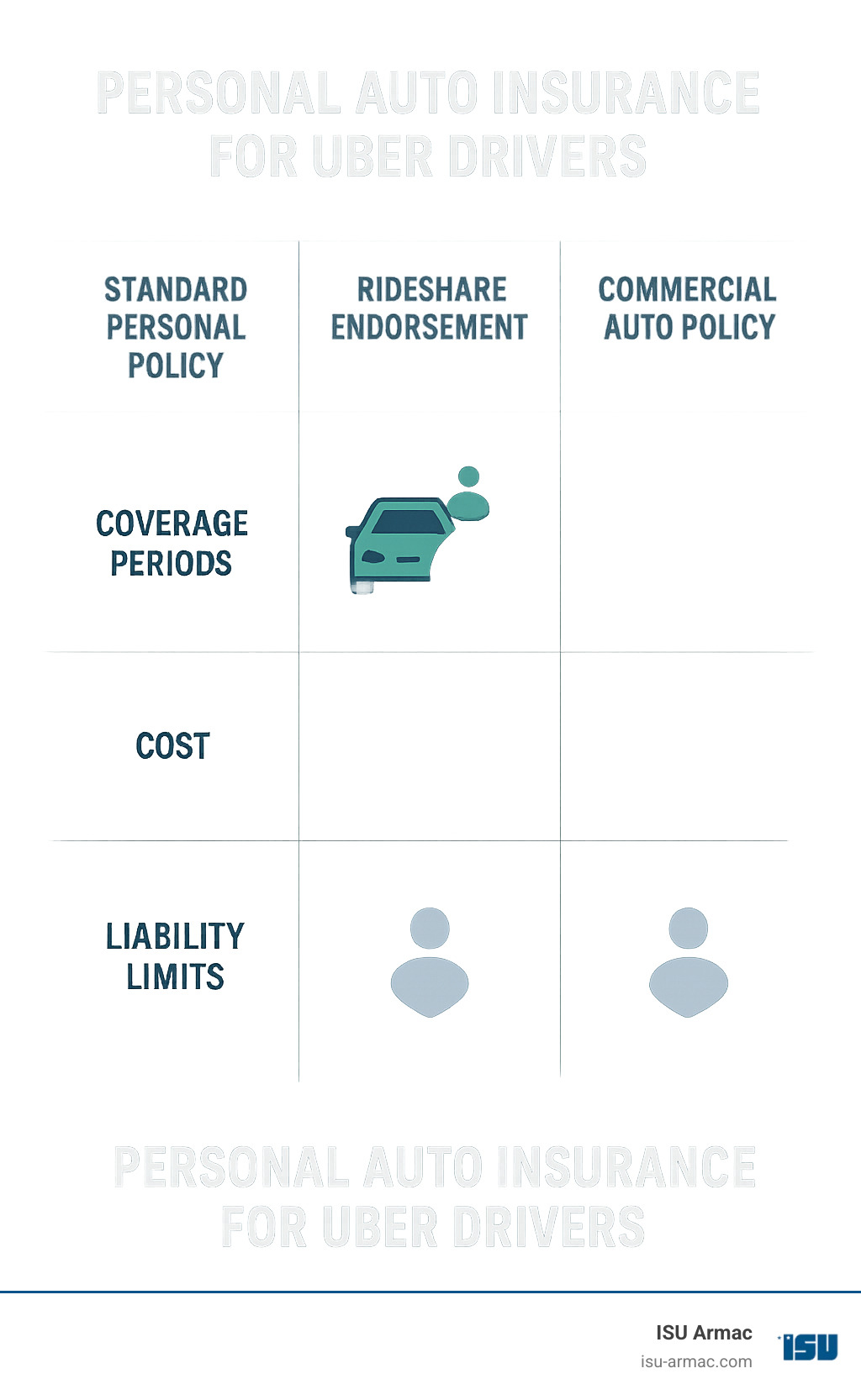
A rideshare endorsement is often the most practical and cost-effective solution for most Uber drivers. This special add-on to your existing personal policy is designed specifically to fill that Period 1 gap we’ve been talking about. When you add a rideshare endorsement, your personal coverage extends to include the time you’re logged into the app and waiting for requests. Some endorsements even help reduce Uber’s hefty $2,500 deductible, which can be a real lifesaver if you need to file a claim.
Many insurers now offer hybrid policies that blend personal and commercial coverage into one seamless package. These specialized policies for rideshare drivers address all phases of your driving, from personal use to active trips. While they might cost a bit more than a basic endorsement, they often provide the most comprehensive protection and eliminate the complexity of juggling multiple policies.
Here’s where working with an independent agency like ISU Armac really pays off. We don’t work for just one insurance company, which means we can shop multiple carriers to find the best coverage at the most competitive rates. Whether you need a simple rideshare endorsement or a comprehensive hybrid policy, we can compare options from different insurers to find what works best for your specific situation and budget.
When evaluating your options, don’t just focus on meeting the minimum legal requirements. Consider adequate policy limits for liability, uninsured motorist coverage, and physical damage protection. The peace of mind that comes with robust coverage is worth far more than the small difference in premium costs.
The question of balancing personal and commercial coverage is complex, and every driver’s situation is unique. For detailed guidance on this topic, check out our resource on Do I Need Both Commercial and Personal Auto Insurance?.
The Financials and Logistics of Rideshare Insurance
Let’s be honest about something that might sting a little: driving for Uber will almost certainly increase your auto insurance premiums. But before you close this tab and give up on your rideshare dreams, understand that this isn’t your insurance company trying to squeeze extra money out of you. It’s simply math.

When you’re out there picking up passengers, you’re spending significantly more time on the road than the average driver. More road time means more exposure to potential accidents, theft, and wear and tear. Insurance companies have decades of data showing this correlation, and they price accordingly.
Your driving record remains the biggest factor in determining your premium. A spotless record with no tickets or accidents will keep your costs as low as possible, while any blemishes will push them higher. Location plays a huge role too. Here in Southern California, including our communities in Victorville, Apple Valley, Hesperia, and Oak Hills, we see varying rates based on traffic density and local crime statistics.
The type of vehicle you drive matters more than you might think. That reliable Honda Civic will cost less to insure than a luxury sedan, not just because it’s less expensive to replace, but because repair costs and theft rates vary dramatically between models. Hours driven is where rideshare drivers really feel the impact. Insurance companies know that professional drivers face different risks than someone who only drives to work and the grocery store.
Finally, the coverage you select directly affects your premium. Higher liability limits, lower deductibles, and comprehensive coverage all add to your cost, but they also provide better protection when you need it most. Think of it as an investment in your peace of mind and financial security.
While these increased premiums might feel like a burden, they’re protecting your livelihood. As one industry analysis puts it, rideshare drivers face higher premiums because they’re “driving more hours than a normal person, which increases the risk of filing a claim or getting into an accident.” For a detailed breakdown of what you might expect to pay, check out our guide on How Much Does Commercial Auto Insurance Cost?
What to Do After an Accident While Driving for Uber
Nobody wants to think about accidents, but being prepared can make a stressful situation much more manageable. When you’re dealing with the aftermath of a collision while driving for Uber, knowing the right steps can protect both your safety and your financial interests.
Safety comes first, always. Check yourself, your passengers, and anyone else involved for injuries. Don’t hesitate to call 911 if anyone needs medical attention. Even minor injuries can become major problems later, so err on the side of caution.
Contact law enforcement if there are injuries, significant damage, or if your state requires it. Getting a police report number is crucial for insurance claims later. While you’re waiting for police, gather information from everyone involved. Names, phone numbers, insurance details, and license plate numbers are all essential. Take photos of the vehicles, damage, and the accident scene if it’s safe to do so.
Here’s where things get specifically important for Uber drivers: report the accident to Uber immediately through their app. Look for the “Accident Reporting” or “Safety” section in your driver app. Uber’s claims team is designed to guide you through their process, and they prefer to hear from you first rather than learning about incidents secondhand.
When should you contact your personal insurer? This is where many drivers get confused. Uber’s official position is that you don’t need to report accidents covered by their commercial policy to your personal insurance company. However, we at ISU Armac recommend a more cautious approach. If you’re absolutely certain the accident occurred during Period 2 or 3 (en route to pickup or with passenger), Uber’s commercial policy should handle it. But if there’s any confusion about which period you were in, or if the accident happened during personal use with the app off, you absolutely must contact your personal insurer.
Sometimes claims get mishandled or there’s confusion about coverage periods. Having your personal insurance broker in your corner can help sort out these complications and ensure you’re not left holding the bag for expenses that should be covered elsewhere.
For the most current information on Uber’s accident reporting process, you can always reference their official guide: How to report an accident to Uber.
Frequently Asked Questions about Personal Auto Insurance for Uber Drivers
After helping hundreds of drivers in Victorville, Apple Valley, Hesperia, and Oak Hills steer rideshare insurance, I’ve noticed the same questions come up again and again. Let me address the most common concerns about personal auto insurance for uber drivers that we hear at ISU Armac.
Do I have to tell my insurance company I drive for Uber?
Absolutely, yes! This is hands down the most important advice I can give you as an insurance professional. You must inform your personal auto insurer before you even think about accepting your first ride request.
I know it might feel tempting to skip this conversation, especially if you’re worried about your rates going up. But here’s the reality: your standard personal auto policy simply isn’t valid when you’re operating a vehicle-for-hire service. That commercial use exclusion we talked about earlier? It means your insurer can legally walk away from any claim related to your rideshare activities.
Full disclosure is your safety net. When you’re upfront with your insurer, they can help you find the right coverage solution, whether that’s adding a rideshare endorsement or switching to a hybrid policy. This honesty prevents the nightmare scenario where you’re left holding the bag for thousands of dollars in damages because your policy was voided due to non-disclosure.
Think of it this way: a small increase in your premium now is infinitely better than facing financial ruin later. Your insurance company isn’t your enemy here; they’re your partner in protecting your livelihood.
Does Uber’s insurance cover damage to my own car?
Yes, but there are some big catches you need to understand. Uber does provide what’s called contingent collision and comprehensive coverage, but only during the active driving periods (when you’ve accepted a trip and are either heading to pick up your passenger or actively transporting them).
The word “contingent” is crucial here. This coverage only kicks in if you already have collision and comprehensive on your personal policy. If you’ve dropped these coverages to save money, Uber’s policy won’t magically replace them. It’s more like a backup that works alongside your existing coverage.
Here’s where it gets expensive: Uber’s contingent coverage comes with a hefty $2,500 deductible. That means if your car gets damaged during a trip, you’re paying the first $2,500 out of your own pocket. For many drivers, especially those dealing with minor damage, this high deductible can wipe out weeks of earnings.
This is exactly why maintaining robust collision and comprehensive coverage on your personal policy is so important. Your personal policy typically has much lower deductibles, and it covers you during all those times when Uber’s policy doesn’t apply.
Is rideshare insurance more expensive than a standard policy?
Yes, you should expect your premiums to increase, but let me put this in perspective for you. The increase reflects the reality that you’re taking on higher risk by spending more time on the road and carrying passengers for profit.
When you’re driving for Uber, you’re not just commuting to work and running errands anymore. You’re spending significantly more driving time on busy streets, often during peak traffic hours, and frequently traveling to unfamiliar neighborhoods. All of this naturally increases your chances of being involved in an accident.
The increased liability factor is huge too. When you’re transporting paying passengers, you’re responsible not just for your own safety, but for theirs as well. Standard personal policies aren’t designed to handle this level of commercial liability exposure.
But here’s what I tell all my clients: the cost increase is absolutely worth it for the protection it provides. I’ve seen too many drivers who tried to cut corners on insurance coverage, only to face financial devastation when something went wrong. The peace of mind that comes with proper coverage is priceless, and the actual cost increase is often much less than drivers fear.
At ISU Armac, we specialize in shopping multiple carriers to find you the best rideshare coverage at competitive rates. Often, we can find solutions that provide comprehensive protection without breaking the bank.
Conclusion: Drive with Confidence by Securing the Right Coverage
Understanding personal auto insurance for uber drivers might feel overwhelming at first, but you’re now equipped with the knowledge to make smart decisions about your coverage. Think of it like learning to drive all over again – once you understand the rules of the road, everything becomes much clearer.
We’ve walked through why your standard personal auto policy simply won’t cut it when you’re earning money as a rideshare driver. Those commercial use exclusions aren’t there to make your life difficult – they exist because driving for Uber fundamentally changes your risk profile. Your insurance company needs to know about this change to properly protect you.
Uber’s three-phase insurance system provides important coverage, but it’s not a complete solution on its own. That Period 1 gap when you’re waiting for rides can leave you vulnerable, and that hefty $2,500 deductible for vehicle damage can really sting your earnings. This is exactly why maintaining your personal coverage and considering a rideshare endorsement makes so much financial sense.
The most important lesson? Honesty with your insurance provider isn’t optional – it’s essential. Yes, your premiums might increase, but that small additional cost is nothing compared to facing hundreds of thousands of dollars in damages without proper coverage. Think of it as an investment in your peace of mind and your family’s financial security.
Here in Victorville, Apple Valley, Hesperia, and Oak Hills, we see drivers every day who wish they’d sought proper coverage before starting their rideshare journey. Don’t let that be your story. At ISU Armac, we take the guesswork out of finding the right protection. Our ability to shop multiple carriers means we can find you coverage that fits both your needs and your budget.
Your rideshare driving career should be about earning extra income and enjoying the flexibility of being your own boss – not worrying about insurance gaps. Take that first step toward complete protection today.