
Why Health Insurance for Businesses is Your Key to Success
Health insurance for businesses provides group coverage plans that help companies attract top talent, reduce employee turnover, and boost workplace productivity while offering tax advantages to employers.
Key benefits of business health insurance:
- Attract and retain skilled employees – Makes your company more competitive in the job market
- Tax-deductible premiums – Group benefit costs are eligible business expenses
- Lower costs – Group plans often have better rates than individual coverage
- Improved productivity – Healthier employees take fewer sick days
- Customizable coverage – Plans can fit your budget and employee needs
- Year-round enrollment – You can start coverage any time, not just during open enrollment
As a small business owner in Victorville, you know finding and keeping good employees is a challenge. Research shows that thousands of small to mid-size businesses use group benefit plans to attract talent and support employee well-being.
Most carriers require at least two employees to qualify for small business medical insurance coverage, and employers must contribute towards their employees’ premiums – typically a minimum of 50% of the employee-only premium cost.
Whether you’re looking at basic health coverage or comprehensive packages that include dental, vision, and life insurance, the right plan can transform your workplace culture. Companies report that offering benefits helps reduce absences, boost morale, and create a more engaged workforce.
I’m Ryan McEachron, CEO of ISU Insurance Services ARMAC Agency in Victorville. With decades of experience helping local businesses find the right health insurance for businesses, I’ve seen how a great benefits package can be a game-changer for growth and employee satisfaction.
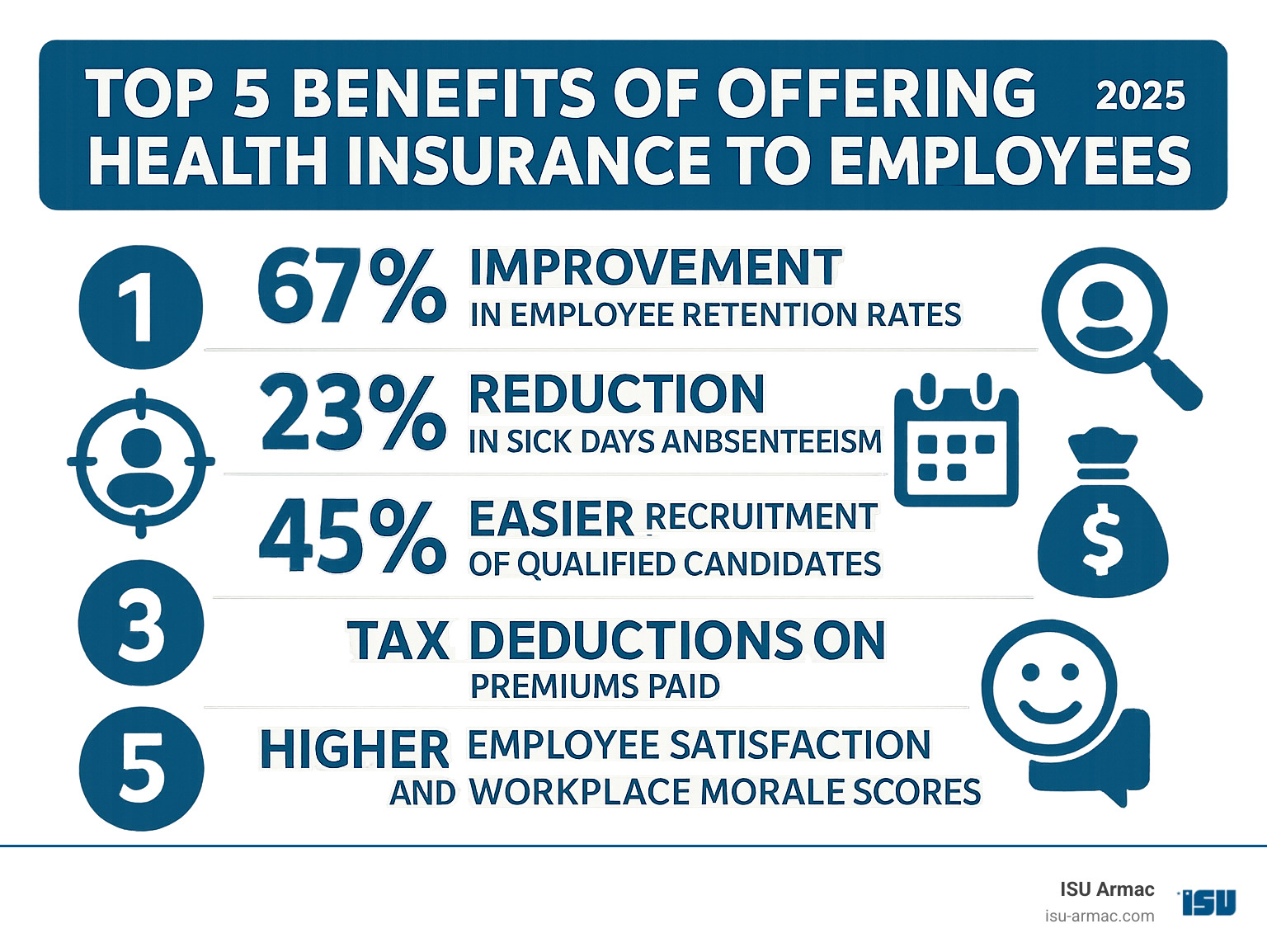
Easy health insurance for businesses word list:
The Strategic Advantage: Why Offering Health Benefits Matters
When running a small business, every decision counts. Offering health insurance for businesses is a smart investment that pays dividends in unexpected ways.

Your employees are your greatest asset. Providing quality health coverage shows them they matter, creating a positive ripple effect across your business.
The benefits go far beyond just keeping people healthy. You’ll see improved employee recruitment because job seekers know a good benefits package when they see one. Employee retention improves dramatically when people feel secure about their healthcare. Increased productivity happens naturally when your team isn’t worried about medical bills or skipping doctor visits they can’t afford.
But here’s the part that really makes business sense: those premiums you pay for group health coverage? They’re tax-deductible as a business expense. So while you’re taking care of your team, you’re also getting a break on your taxes.
Benefits of Offering Health Insurance to Employees
Boost Recruitment and Retention
Finding good people is tough. When a skilled professional chooses between job offers, benefits often tip the scale. Health insurance for businesses attracts quality candidates who want more than just a paycheck.
I’ve watched countless Victorville businesses transform their hiring success simply by adding a solid health plan. Suddenly, they’re attracting candidates they never could before. People want to work for companies that invest in their wellbeing.
The retention piece is equally powerful. When employees have good health coverage, they develop loyalty to your company. They’re not constantly browsing job boards, wondering if the grass is greener elsewhere. This stability saves you thousands in reduced turnover costs – no more endless cycles of recruiting, interviewing, and training new hires.
Small businesses with just 2 to 50 employees can access group plans that rival what big corporations offer. It’s one of the few areas where you can truly level the playing field.
Improve Productivity and Well-being
Here’s something I’ve observed after decades in this business: healthy employees simply perform better. When your team has access to preventive care, they catch problems early instead of letting them snowball into major health crises.
Reduced absenteeism is one of the most immediate benefits you’ll notice. Employees with health coverage don’t put off medical care until they’re too sick to work. They get treatment when they need it and bounce back faster.
The mental health aspect is huge too. Many health insurance for businesses plans now include counseling services and mental health support. When your employees aren’t stressed about medical bills or avoiding care they need, they can focus on their work with clear minds.
There’s also the financial security factor. Knowing they won’t face bankruptcy from a medical emergency gives employees peace of mind that translates directly into better job performance. They’re present, engaged, and committed to your company’s success.
Decoding Your Options: Types of Small Business Health Plans
Choosing the right health insurance for businesses can feel like solving a puzzle. Once you understand the main plan types, the picture becomes clearer, providing a roadmap to coverage that works for your team and your bottom line.
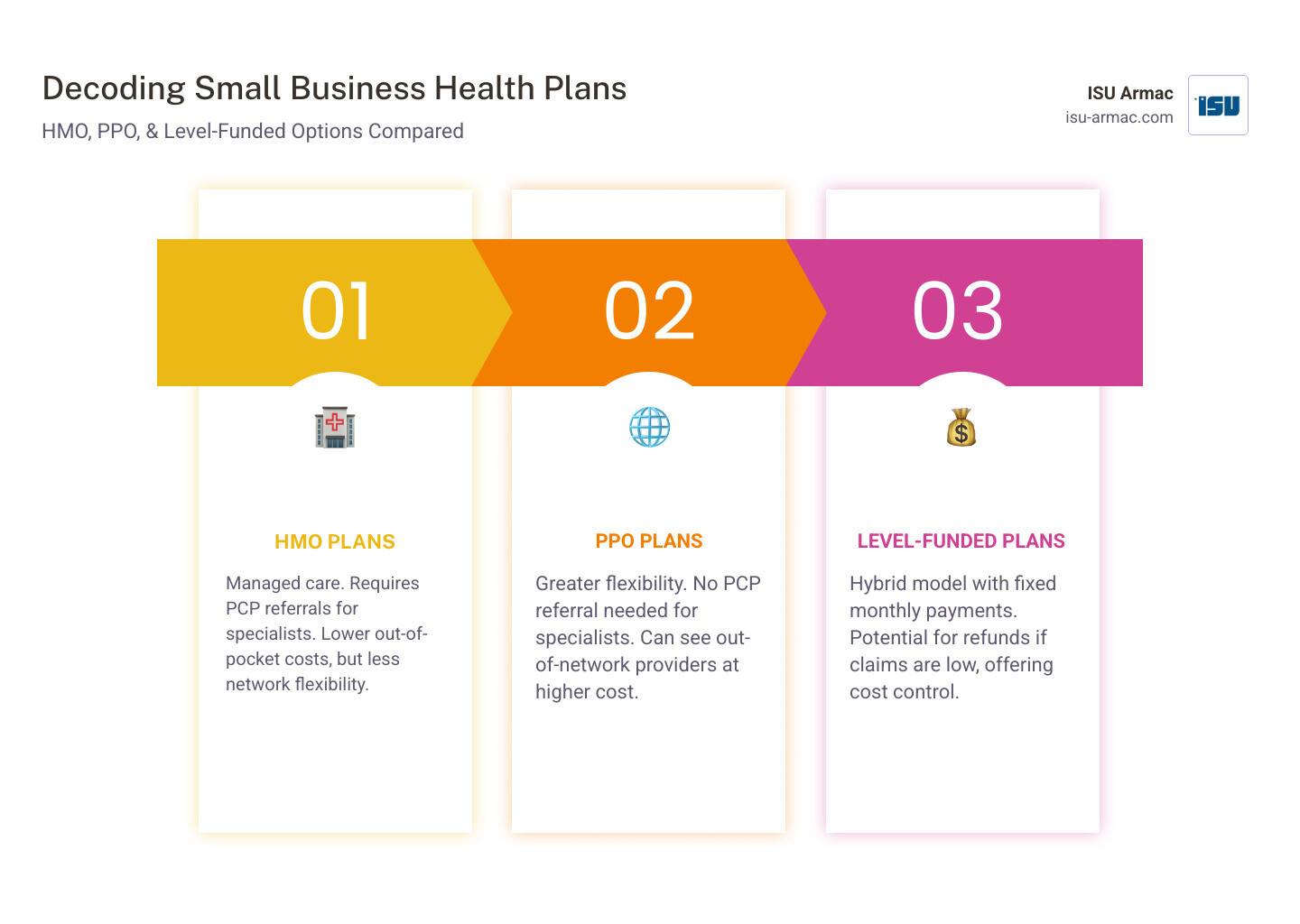
Group health insurance comes in several flavors, each with its own personality. Some are budget-friendly but a bit rigid, while others offer more freedom at a higher price. The key is finding the sweet spot that gives your employees the care they need while keeping your business financially healthy.
At ISU Armac, we’ve helped hundreds of Victorville businesses steer these waters. We know that what works perfectly for a tech startup might not be the best fit for a family restaurant. That’s why we take the time to understand your unique situation before recommending any plan.
Small Business Health Insurance Options
Understanding the Types of Health Insurance for Businesses
Let’s break down the main players in the health insurance for businesses game. Each plan type has its own approach to managing costs and providing care.
HMO plans require employees to select a primary care physician (PCP) who coordinates their care and provides referrals. The trade-off for lower premiums is less flexibility, as employees generally must stay in-network for coverage, except in emergencies.
PPO plans offer more freedom, allowing employees to see any doctor without a referral. This flexibility comes with higher premiums, and out-of-network visits have higher out-of-pocket costs.
Level-funded plans are a hybrid combining the cost control of self-funding with the predictability of traditional insurance. Your business pays a set monthly amount, and if claims are lower than expected, you may get money back at the end of the year.
Here’s something important that gives both you and your employees peace of mind: thanks to the Affordable Care Act, group health plans can’t turn away employees or charge them more because of pre-existing conditions. Whether someone has diabetes, a heart condition, or any other health issue, they’re guaranteed coverage. This protection is one of the biggest advantages of group plans over individual coverage.
Customizing Your Benefits Package
The beauty of health insurance for businesses lies in its flexibility. Your benefits package doesn’t have to look like everyone else’s – it should reflect what matters most to your team and what fits your budget.
Dental insurance is often the first add-on businesses consider, and for good reason. Nothing makes employees happier than knowing their routine cleanings and unexpected root canals won’t break the bank. Most dental plans cover preventive care at 100% and help significantly with major treatments.
Vision insurance might seem like a small thing, but ask anyone who wears glasses how much they appreciate it. Beyond covering eye exams and frames, many vision plans offer discounts on LASIK surgery, which can be a real game-changer for employees considering the procedure.
Life and disability insurance provides the kind of security that lets your employees sleep better at night. Life insurance ensures their families are protected, while short-term and long-term disability coverage protects their income if illness or injury keeps them out of work. These benefits also help your business by providing structured support for employees during difficult times.
Health Spending Accounts and Health Reimbursement Arrangements are like giving your employees a financial Swiss Army knife for healthcare expenses. HSAs let employees set aside pre-tax dollars for medical costs, while HRAs allow you as the employer to contribute funds that employees can use for approved health expenses. Some businesses even offer Personal Wellness Accounts that reimburse everything from gym memberships to massage therapy.
The goal isn’t to offer everything under the sun – it’s to create a package that shows your employees you care about their well-being while staying within your budget. We work with you to find that perfect balance, ensuring your benefits package becomes a tool for attracting great people and keeping them happy.
Small Business Employee Health Insurance Options
Navigating the Costs and Tax Advantages of Health Insurance for Businesses
Let’s be honest – when you’re running a small business, every expense matters. The thought of adding health insurance for businesses to your budget might feel overwhelming at first. But here’s what I’ve learned from working with hundreds of business owners in Victorville: the key isn’t just looking at what you’ll spend today, but understanding the incredible value and tax benefits that come with offering group coverage.

Think of it this way – you’re not just buying insurance, you’re making a strategic investment in your team’s loyalty, productivity, and your company’s future. Plus, Uncle Sam actually helps you out with some pretty generous tax breaks that many business owners don’t even know about.
When I sit down with clients across Southern California, we don’t just talk numbers – we talk about building a sustainable benefits strategy that grows with your business.
Learn about the Small Business Health Care Tax Credit
Key Cost Considerations for Your Business’s Health Insurance
Understanding how health insurance for businesses costs work doesn’t have to be rocket science. Let me break down the main pieces you’ll encounter when budgeting for benefits.
Premiums are your regular monthly payments to keep coverage active – think of them like your business rent, but for health benefits. Then you have deductibles, which is the amount your employees pay out of their own pockets before insurance kicks in for most services.
Copayments are those fixed amounts employees pay when they visit the doctor – maybe $25 for a regular checkup. Coinsurance works differently – it’s a percentage split where your employee might pay 20% of a specialist visit while insurance covers the other 80%.
Here’s something that gives employees real peace of mind: out-of-pocket maximums. Once an employee hits this annual limit, the plan covers 100% of everything else for the rest of the year. No more surprise medical bills.
Most carriers require you to contribute at least 50% of the employee-only premium cost. This isn’t just a rule – it shows your team that you’re genuinely invested in their well-being, not just checking a box.
We work with you to find creative ways to manage these costs. Maybe that means exploring different deductible levels or looking at level-funded options that offer long-term rate stability. The good news is that medical premiums come with a standard 12-month rate guarantee, so you can budget with confidence.
Medical Insurance Options for Small Business
Open uping Tax Credits and Deductions
Here’s where things get really interesting from a financial standpoint. Every dollar you spend on health insurance for businesses premiums counts as a fully deductible business expense. That means you’re reducing your taxable income dollar for dollar – it’s like getting an immediate discount on your coverage.
But wait, it gets even better. Small businesses often qualify for the Small Business Health Care Tax Credit, especially when you enroll through the SHOP Marketplace. We’re talking about a credit that can cover up to 50% of the premiums you pay – that’s real money back in your pocket.
To qualify, you generally need fewer than 25 full-time equivalent employees, pay average wages below certain thresholds, and contribute at least 50% of your employees’ premium costs. Don’t worry about calculating those full-time equivalents on your own – we handle all that math for you and help determine if you’re eligible for these valuable savings.
The beauty of working with ISU Armac is that we know exactly how to position your benefits package to maximize these tax advantages. We’ve helped countless Victorville businesses open up thousands of dollars in credits and deductions they didn’t even know existed.
Can a Small Business Pay for Individual Health Insurance?
The Step-by-Step Guide to Getting Coverage
Getting health insurance for businesses doesn’t have to be a puzzle. We’ve helped hundreds of Victorville businesses steer this process, and once you know the steps, it’s straightforward.
The journey starts with understanding what you can afford and what your team actually needs. Maybe your construction crew needs different coverage than your office staff. That’s totally normal, and it’s why we take time to really understand your business before diving into plan options.
Here’s how we guide you through the process:
Define Your Budget and Needs comes first because there’s no point falling in love with a plan you can’t afford. We help you figure out a realistic number that won’t strain your cash flow while still providing meaningful benefits to your employees.
Determine Eligibility and Employee Count is where we make sure you qualify for group coverage. Most carriers want at least two W-2 employees (not including the owner’s spouse), and we’ll help calculate your full-time equivalent employees – this matters for potential tax credits later.
Explore Plan Options is where things get interesting. HMO, PPO, Level-Funded – we’ll walk through what each one actually means for your team’s daily healthcare experience, not just the technical definitions.
Consult with an ISU Armac Insurance Advisor is honestly the most important step. This is where our unique ability to shop multiple carriers really shines. Instead of being stuck with whatever one company offers, we compare options from various providers to find your best fit.
Complete Enrollment and Educate Your Team wraps everything up. We handle the paperwork maze and help you explain the new benefits to your employees in plain English, so they actually understand what they’re getting.
The biggest challenge we see? Business owners worry about the administrative burden and ongoing costs. But here’s the thing – with the right advisor and modern digital tools, managing a group plan is actually pretty simple. We’ve streamlined the process so you can focus on running your business instead of drowning in insurance paperwork.
How to Get Health Insurance for My Small Business
The Role of an Insurance Advisor
An advisor is your secret weapon in the health insurance for businesses game. You wouldn’t buy a house without a realtor, so why steer complex group health insurance alone?
Our role goes way beyond just selling you a policy. We’re like having your own personal benefits department, except we actually know what we’re doing and we’re not learning on the job with your employees’ healthcare. We translate all that insurance jargon into normal human language, so when someone talks about “coinsurance” and “out-of-network penalties,” you’ll actually know what they mean.
What makes us different is our ability to shop multiple carriers for you. Instead of being limited to one company’s options, we compare plans from a wide range of providers. It’s like having someone check every grocery store in town to find the best price on the exact groceries you need, except the groceries are comprehensive healthcare coverage for your team.
We provide expert guidance through plan comparison, handle all the enrollment paperwork, and stick around for ongoing support. Got questions six months after enrollment? We’re still here. Need to add a new employee? We’ll walk you through it. Annual renewal time? We’ll shop the market again to make sure you’re still getting the best deal.
The best part? This service doesn’t cost you extra. We’re compensated by the insurance carriers, so our expertise comes at no additional cost to your business.
Contact an ISU Armac Advisor for personalized assistance.
Using Digital Tools to Manage Your Plan
Gone are the days of drowning in paperwork every time someone gets married, has a baby, or leaves the company. Modern health insurance for businesses comes with digital tools that make managing your plan surprisingly simple.
Most carriers now offer online portals that work like a control panel for your benefits. Need to add a new employee? Just log in and update their information. Someone’s getting divorced and needs to remove their spouse? A few clicks and it’s done. These platforms handle enrollment management, employee information updates, and even let your team access their own benefit details without bugging you with questions.
The billing side is equally streamlined. Instead of juggling separate invoices for medical, dental, and vision coverage, you get one consolidated monthly bill. It’s like having all your streaming services on one credit card statement – much easier to track and budget for.
These digital platforms also reduce the chance of errors. When everything’s connected, there’s less room for miscommunication between you, your employees, and the insurance company. Your team can log in to check their coverage details, find in-network doctors, and even access virtual care options, all without involving you in every little question.
The administrative time savings alone can be worth switching to a modern platform. Instead of spending hours each month on benefits administration, you can focus on what you do best – running your business.
Shop Small Business Health Options Program
Frequently Asked Questions about Small Business Health Insurance
As someone who’s helped hundreds of businesses in Victorville and across Southern California steer health insurance for businesses, I hear the same thoughtful questions over and over. Let me share the answers to the most common ones that keep business owners up at night.
How many employees do I need to qualify for a group plan?
The magic number is two employees for most carriers – but there’s a catch. These need to be W-2 employees, and here’s where it gets interesting: the owner’s spouse typically doesn’t count toward this minimum. So if it’s just you and your spouse running the business, you’ll likely need to look at individual coverage options instead.
Most small business medical insurance plans are designed for companies with 3 to 49 employees, though some carriers are flexible with businesses that have just two qualifying employees. The beauty of working with us is that we know which carriers are more lenient with their requirements, especially for newer businesses still building their team.
State rules can add another layer of complexity, but in California, the two-employee minimum is pretty standard. We’ve seen some creative solutions for businesses right at that threshold – sometimes hiring that second part-time employee can open doors to group coverage that actually saves money in the long run.
Small Business Medical Insurance
Are small businesses required to provide health insurance?
Here’s some good news for smaller businesses: you’re probably not legally required to offer health insurance. The Affordable Care Act’s employer mandate kicks in for “Applicable Large Employers” – businesses with 50 or more full-time equivalent employees. If you’re running a smaller operation, the choice is yours.
But here’s what I tell my clients: just because you don’t have to doesn’t mean you shouldn’t consider it. The health insurance for businesses landscape has changed dramatically, and the competitive advantage it gives you in hiring and keeping good people often pays for itself. Plus, those tax deductions we talked about earlier can make the actual cost much more manageable than the sticker price suggests.
Some states have their own quirky requirements, but California generally follows the federal guidelines. If you do cross that 50-employee threshold, the penalties for not providing adequate coverage can be substantial – another reason why having an experienced advisor helps you plan ahead.
Are Small Businesses Required to Provide Health Insurance?
How do private plans work with government health programs?
This is where things can get wonderfully complicated, but don’t worry – we handle the coordination headaches so you don’t have to. When your employees have both private health insurance for businesses and government coverage like Medicare or Medicaid, there are specific rules about which plan pays first.
For employees over 65 or those with certain disabilities who qualify for Medicare, your group health plan might be the primary payer if your business has 20 or more employees. With smaller groups, Medicare typically takes the lead. It’s like a carefully choreographed dance between the programs to make sure your employees get maximum coverage without duplication.
If you have employees who qualify for Medicaid, your private plan generally pays first, with Medicaid covering some of the remaining costs. These coordination of benefits rules exist to protect your employees and ensure they’re getting every dollar of coverage they’re entitled to. The secondary payer rules can be complex, but the bottom line is that having both types of coverage usually means better overall protection for your team.
Insurance Center/Products/Health Insurance/Medicare Supplement
Conclusion: Invest in Your Team, Invest in Your Business
When you offer health insurance for businesses, you’re not just writing another check each month. You’re making a strategic investment in the people who make your business successful. Think of it as planting seeds that will grow into a stronger, more competitive company.
Throughout this guide, we’ve seen how the right health benefits can transform your workplace. Employee well-being improves when people have access to quality healthcare. Your team becomes more productive, takes fewer sick days, and feels genuinely valued. That positive energy spreads through your entire organization, creating the kind of workplace culture that attracts top talent and keeps your best people from looking elsewhere.
The numbers don’t lie either. The tax advantages alone can make a significant difference to your bottom line, while the long-term value of reduced turnover and higher productivity often far outweighs the initial investment. When you factor in the competitive edge you gain in recruiting, it becomes clear that offering health benefits isn’t just good for your employees – it’s good for business.
Here in Victorville, Apple Valley, Hesperia, and across Southern California, we at ISU Armac have seen how the right benefits package can be a game-changer for small businesses. We know every dollar matters when you’re running a smaller operation, which is why we take such pride in our ability to shop multiple carriers and find you the best possible rates.
You don’t have to steer this complex world alone. Our expert guidance takes the confusion out of choosing plans, managing enrollment, and keeping your benefits running smoothly year after year. We’re not just here to sell you a policy – we’re here to be your trusted partner in building a thriving business.
Your employees are counting on you, and your business deserves every advantage it can get. Don’t let another day pass wondering “what if.” Take that next step toward business growth and invest in the health and happiness of your team.