
Why Small Business Employee Health Insurance Matters More Than Ever
{: .align-center data-iptc-title=”Small Business Health Insurance Options” data-iptc-creator=”ISU Armac” data-iptc-copyright=”© ISU Armac”}
Small business employee health insurance options are a critical factor for success in today’s competitive market. With civilian workers costing employers about $13-14 per hour for benefits according to 2023 U.S. Bureau of Labor Statistics data, the investment in health coverage has proven its worth.
Quick Overview of Small Business Health Insurance Options:
- Group Health Plans: Traditional PPO, HMO, and High-Deductible Health Plans (HDHP) for businesses with 1-50 employees
- Health Reimbursement Arrangements (HRAs): Flexible reimbursement options, including QSEHRA for smaller businesses
- Health Savings Accounts (HSAs): Tax-advantaged accounts paired with high-deductible plans
- SHOP Marketplace: Government program offering plans and potential tax credits for eligible small employers
- Wellness Spending Accounts: Additional benefits for employee wellness programs and preventive care
The benefits extend beyond simple coverage. Offering health insurance helps attract and retain top talent, reduces employee absences through preventive care, and can provide significant tax advantages. As one benefits expert noted, “Employee health and happiness directly impacts the prosperity of your business.”
Small businesses face unique challenges when navigating these options, from understanding eligibility to managing costs. The good news is that solutions exist for businesses of all sizes.
I’m Ryan McEachron, CEO of ISU Insurance Services ARMAC Agency. With over two decades of experience in insurance and local government, I have deep insight into the challenges Victorville area business owners face when providing quality benefits while managing costs.
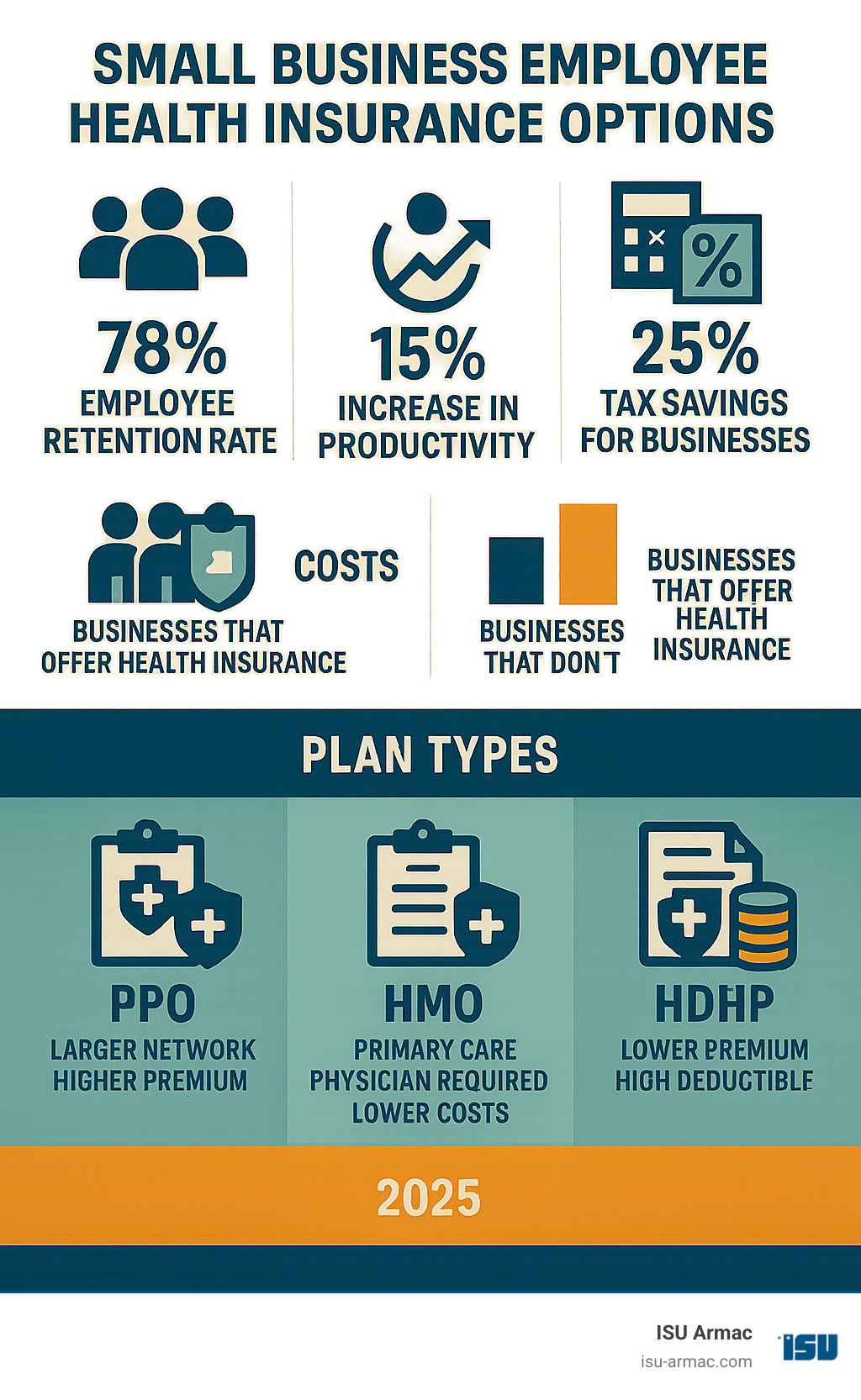
Simple small business employee health insurance options word guide:
Why Offering Health Insurance is a Smart Business Move
Offering comprehensive health insurance is a strategic move for small businesses. It’s a key ingredient for growth and success. Let’s explore why investing in small business employee health insurance options is one of the smartest decisions for your company’s future.
Attract and Retain Talent
The competition for top employees is fierce, and larger companies often have extensive benefits packages. By offering robust small business employee health insurance options, you create a more attractive workplace. Health benefits are a major draw for job seekers and send a clear message that you value your team. This helps you attract the best candidates and dramatically boosts retention. When employees feel cared for, their loyalty increases, leading to less costly turnover and a more stable team.
Increase Productivity
A healthy team is a productive team. When employees have access to quality healthcare, they are more likely to get preventive check-ups, manage ongoing health issues, and recover faster from illnesses. This means fewer sick days and improved well-being, which directly translates to better output and a smoother operation.
Improve Employee Morale
Providing health insurance fosters a positive and supportive work environment. It shows employees you are invested in their health and security, which can lead to soaring morale and greater job satisfaction. Happy employees are more motivated, collaborative, and contribute positively to your company culture.
Support a Healthier Workforce
Access to health insurance encourages preventive care, early diagnoses, and management of health issues before they become serious. This proactive approach leads to a healthier workforce, reducing long-term health risks and potentially lowering associated costs for everyone. A healthier team is more resilient and capable.
Significant Tax Advantages
One of the most compelling reasons to offer health insurance is the array of available tax benefits. Generally, premiums you pay for group health benefits are a deductible business expense for federal income tax purposes. This can significantly reduce your taxable income, making health insurance more affordable. We’ll explore these tax implications later in this guide.
Gain a Competitive Edge
In a busy market, a strong benefits package makes you stand out. It positions your small business as a desirable place to work, enhancing your reputation and brand image. This competitive edge can lead to attracting better recruits, higher retention rates, and a stronger, more successful business.
Navigating Your Small Business Employee Health Insurance Options
Understanding the landscape of small business employee health insurance options can feel complex. With the right guidance, you can find solutions that align with your budget and your employees’ needs. We’re here to simplify this journey.

{: .align-center data-iptc-title=”Small Business Health Insurance Options” data-iptc-creator=”ISU Armac” data-iptc-copyright=”© ISU Armac”}
Types of Small Business Health Insurance Plans
Traditional group health plans are a common starting point, covering services from doctor visits to hospital stays. The main types are:
- Preferred Provider Organization (PPO) plans: PPOs offer a network of preferred providers for lower-cost care. While employees can go out-of-network for a higher cost, PPOs provide flexibility in choosing providers without needing a referral to see a specialist.
- Health Maintenance Organization (HMO) plans: HMOs require employees to use a primary care physician (PCP) within the network for referrals to specialists. HMOs usually have lower premiums and out-of-pocket costs but less flexibility, as out-of-network care is generally not covered except in emergencies.
- High-Deductible Health Plans (HDHPs): These plans have lower monthly premiums but higher deductibles. Employees pay more out-of-pocket before coverage begins. HDHPs are often paired with Health Savings Accounts (HSAs) for tax-free healthcare spending.
- Understanding provider networks and costs: Each plan has its own network. It’s crucial to see if your employees’ preferred providers are included. Costs include monthly premiums, deductibles, co-pays, and co-insurance.
Here’s a quick comparison of these common plan types:
| Plan Type | Network Flexibility | Typical Costs | Referral Requirements |
|---|---|---|---|
| PPO | High (in-network and out-of-network options) | Moderate to High Premiums, Moderate Deductibles | No Referral Needed |
| HMO | Low (in-network only, except emergencies) | Low Premiums, Low Deductibles | PCP Referral Required |
| HDHP | Varies by plan (often PPO or HMO structure) | Low Premiums, High Deductibles | Varies by Plan |
Flexible Health Benefit Arrangements
Innovative arrangements can help employees with healthcare costs, offering greater cost control for small businesses.
- Health Savings Accounts (HSAs): Paired with an HDHP, HSAs are tax-advantaged savings accounts for qualified medical expenses. Employer and employee contributions are pre-tax, funds roll over, earn interest tax-free, and are portable.
- Health Reimbursement Arrangements (HRAs): These are employer-funded accounts that reimburse employees for qualified medical expenses. Employers set contribution limits, offering great flexibility and cost control. Unused funds typically revert to the employer.
- Qualified Small Employer HRA (QSEHRA): Designed for employers with fewer than 50 full-time employees who do not offer a group plan. It allows tax-free reimbursement for individual health insurance premiums and other medical expenses.
- Wellness Spending Accounts (WSAs): These employer-funded accounts support holistic well-being. Funds can be used for expenses like gym memberships, fitness classes, and mental health services, promoting a healthier workforce.
Government-Supported Programs for Small Businesses
The Small Business Health Options Program (SHOP) Marketplace, part of the ACA, is a key resource.
- Eligibility requirements (1-50 employees): SHOP is for small employers with 1 to 50 employees. You can offer health and/or dental insurance and can start coverage any time of year.
- Small Business Health Care Tax Credit: Available only through SHOP, this credit can help cover premium costs. To qualify, you generally need fewer than 25 full-time equivalent (FTE) employees with average wages of about $56,000 or less. The maximum credit is 50% of employer-paid premiums for small businesses.
- You can see if you qualify for the tax credit directly from the IRS.
Understanding the Costs and Legal Requirements
Navigating the financial and legal aspects of small business employee health insurance options is crucial. Cost is a primary concern, and we’re here to break it down in simple terms.

{: .align-center data-iptc-title=”Health Insurance Premium Factors” data-iptc-creator=”ISU Armac” data-iptc-copyright=”© ISU Armac”}
How Much Does Small Business Health Insurance Cost?
Understanding the costs helps you plan effectively. According to 2023 data from the U.S. Bureau of Labor Statistics, civilian workers cost employers about $13-14 per hour for all benefits combined. The actual cost of health insurance depends on several factors: location, employee ages, and industry all play a role. Plan type and benefit design also make a significant difference; HMOs generally cost less than PPOs, and higher deductibles usually mean lower premiums.
Most small businesses share premium costs with employees, often covering 50-100% of the employee-only premium. Cost-management strategies like HSAs and HRAs offer budget control by letting you set contribution amounts. Some solutions pool small businesses together to achieve more competitive pricing.
Mandatory vs. Optional Employee Benefits
Knowing what’s required versus optional helps you build a strategic benefits package.
Legally required benefits for all employers include workers’ compensation, unemployment insurance contributions, and Social Security/Medicare taxes. Additionally, you must provide time off for jury duty and, in many states, for voting. The Family and Medical Leave Act (FMLA) applies to businesses with 50 or more employees, requiring up to 12 weeks of unpaid, job-protected leave for specific situations.
Optional benefits are where you can differentiate your business. These include health, dental, and vision insurance, as well as life insurance, disability insurance, and retirement accounts like 401(k)s. These benefits are powerful tools for attracting and retaining employees, paying dividends through better retention and higher morale.
Tax Benefits and Credits for Your Business
Tax advantages can make coverage much more affordable.
Premium deductions provide immediate relief, as the premiums you pay are generally tax-deductible business expenses. This reduces your overall taxable income.
The Small Business Health Care Tax Credit offers more savings for qualifying businesses. To be eligible, you need fewer than 25 full-time equivalent employees earning average annual wages under about $56,000. You must contribute at least 50% of employee-only premium costs and purchase coverage through the SHOP Marketplace.
Claiming this credit is straightforward. The maximum credit covers 50% of employer-paid premiums for small businesses (35% for tax-exempt organizations). It can significantly offset your health insurance costs, turning an expense into a smart investment.
How to Choose and Implement the Right Plan
Choosing and implementing the right small business employee health insurance options requires a custom approach that fits your unique business and team. It’s not a one-size-fits-all decision.
Key Factors for Choosing the Best Small Business Employee Health Insurance Options
When evaluating plans and providers, consider these key factors:
- Budget: How much can you afford to contribute per employee? Consider monthly premiums and any administrative fees.
- Employee Needs and Demographics: What are your team’s priorities? A younger workforce might prefer lower premiums, while a team with families may need more comprehensive coverage. An anonymous survey can help you learn what matters most.
- Provider Network Access: Ensure the plan’s network includes enough doctors, specialists, and hospitals that are convenient for your employees.
- Plan Flexibility and Customization: Can the plan be custom to your needs? Some providers offer modular plans, letting you mix and match benefits so you don’t pay for unneeded coverage.
- Employee Contribution: How much of the premium will employees cover? This affects affordability and satisfaction with the benefit.
As you compare providers, ask these key questions:
- What are the monthly premiums for individual and family coverage?
- What are the deductibles, co-pays, and co-insurance percentages?
- What is the maximum out-of-pocket cost for an employee in a year?
- How large and accessible is the provider network?
- What is the process for submitting claims?
- What kind of customer support is available?
- Are HSAs or HRAs available with high-deductible plans?
- What have the renewal rates been for the past few years? (Stable rates are a good sign; for example, some pooled programs have shown rates of +2.00% in 2025, -1.00% in 2024, and +3.18% in 2023.)
- What digital administration tools are available?
Simplifying Benefits Administration for Small Business Employee Health Insurance
Administering benefits can be overwhelming, but solutions exist to simplify the process.
- Work with an insurance broker: A knowledgeable broker acts as your guide, shopping multiple carriers to find the best coverage at competitive rates. They can explain plan details, help with enrollment, and assist with administration. You can find an agent or broker in your area through the official Marketplace website.
- Use online administration portals: Many modern providers offer user-friendly online platforms to manage enrollment, update information, and access documents, which dramatically reduces paperwork.
- Consider third-party administrators (TPAs): For more complex arrangements, a TPA can manage the day-to-day operations of your benefits plan, including claims processing, customer service, and compliance. This helps keep costs and resources in check.
Frequently Asked Questions about Small Business Health Insurance
It’s normal to have questions when exploring small business employee health insurance options. Here are answers to some of the most common ones.
What are the eligibility requirements for a small business group plan?
To qualify for a small business group health plan, your company typically needs 1 to 50 employees, though this can vary by state and insurer. A crucial requirement is having at least one W-2 employee who is not the business owner or their spouse. This allows you to establish a true group plan. Programs like the Small Business Health Options Program (SHOP) are designed for this size, and many plans are available for teams as small as two employees.
Can I offer health insurance if I only have a few employees?
Yes. Many excellent small business employee health insurance options are designed for smaller teams. For very small businesses, flexible arrangements like Health Reimbursement Arrangements (HRAs) are an excellent choice. An HRA allows you to reimburse employees for qualified medical expenses up to a set amount, giving you budget control while empowering your team. Some providers offer basic packages for businesses with just 3 to 15 employees.
Do I have to wait for open enrollment to offer a plan?
No, you do not have to wait for an open enrollment period. Unlike individual insurance, small businesses generally have the flexibility to start a new group health plan at any time of the year. This allows you to implement benefits when it makes the most sense for your company, whether you’re hiring new talent or responding to growth.
Conclusion: Invest in Your Team’s Health and Your Business’s Future
Choosing the right small business employee health insurance options is a strategic investment in the people who make your business successful. As we’ve explored, offering health insurance helps attract and retain talent, boosts productivity and morale, and provides significant tax advantages. It’s a smart move that gives your company a competitive edge.
When you empower your workforce with access to quality healthcare, you foster a healthier, happier, and more engaged team. It shows them you care about their well-being, which creates a positive environment where employees feel valued and secure. This commitment builds loyalty and a more stable, thriving business.
While navigating the options can seem complex, finding the right partner to guide you is key. At ISU Armac, we are dedicated to helping businesses like yours. We have a deep understanding of the local market in Southern California, serving communities like Victorville, Apple Valley, Hesperia, and Oak Hills. Our unique approach is to shop multiple carriers to find you the best coverage at the lowest rates, customized to your needs and budget. We simplify the complexities so you can focus on running your business.
Ready to take the next step? We invite you to explore our small business medical insurance solutions today. Let us help you craft a benefits package that works for you and your employees.