
Navigating Medical Insurance for Your Small Business
High-resolution header photo depicting a diverse small business team discussing health insurance options; includes IPTC metadata and clear alt text for Southern California context.
Finding the right medical insurance options for small business can feel like a big puzzle. But offering health benefits is a smart move. It helps you find and keep great employees. It also shows you care about your team’s well-being.
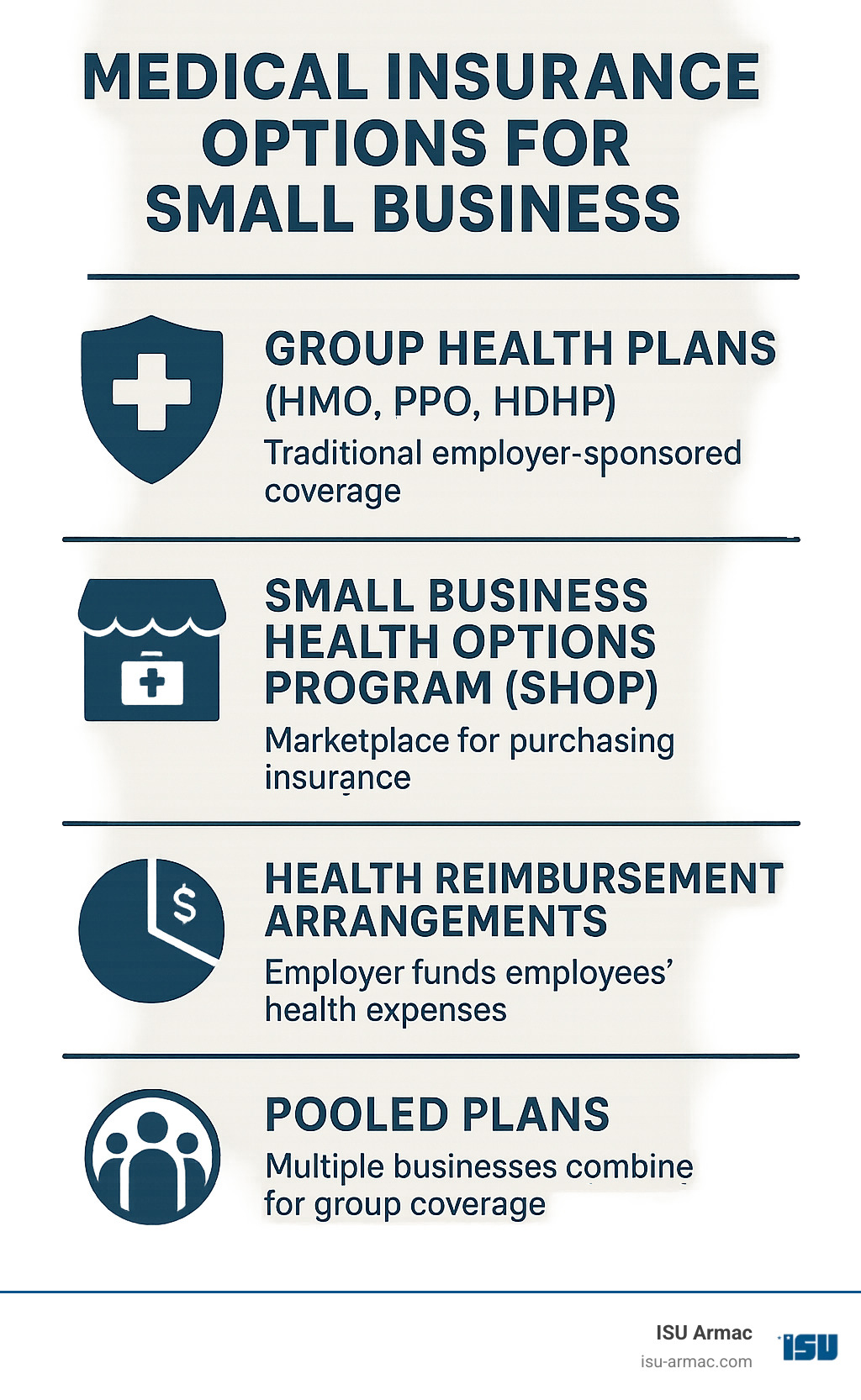
Before we dive deep into all the details, here’s a quick look at the main types of medical insurance options available for small businesses:
- Traditional Group Health Plans: These include common choices like HMOs (Health Maintenance Organizations) and PPOs (Preferred Provider Organizations).
- Small Business Health Options Program (SHOP): A marketplace for small employers to buy health coverage, often with tax credits.
- Health Reimbursement Arrangements (HRAs): Employers give money to employees to pay for health costs.
- Pooled Plans: Multiple small businesses join together to get better rates.
- Association Health Plans (AHPs): Groups of employers in the same industry or region team up for coverage.
This guide will walk you through these choices. You’ll learn what each means for your business and your employees. We’ll help you pick a plan that fits your budget and your team’s needs.
I’m Ryan McEachron, CEO of ISU Insurance Services ARMAC Agency in Victorville. My experience as a City Council member and Chamber of Commerce Board Director has given me deep insights into the challenges and opportunities for medical insurance options for small business owners in Southern California.
Glossary for medical insurance options for small business:
- association health plans for small business
- can a small business pay for individual health insurance
- shop small business health options program
The Strategic Advantage of Offering Employee Health Benefits
One of the smartest ways for your small business to thrive is by offering great health benefits to your team. A strong benefits package is a powerful tool that can level the playing field, helping you attract the best people even when competing with bigger companies. A thoughtful benefits plan can change a workplace, making everyone happier and more productive.
Let’s look at some eye-opening numbers. Nearly 80% of employees would rather have good benefits than a pay raise, and their top pick is healthcare insurance. This is a clear message from your potential team members. Plus, employees are about 70% more likely to stick with a company if they’re happy with their benefits. This means less money spent on hiring and training new staff and a team that knows your business inside and out. We’ve seen how tough it can be when small businesses lose great employees because other companies offer better health benefits, which shows how vital it is to get this right.
Offering medical insurance options for small business shows your team you genuinely care. It builds a workplace where people feel appreciated and looked after. This naturally leads to them being more engaged and doing their best work. That’s why we see it as one of the smartest moves any small business can make.

Benefits of Offering Health Insurance to Employees
Why Benefits Matter More Than Ever
The way we work has really shifted, especially after recent global events. Employees are now more focused on their health and financial peace of mind than ever. This means that a good benefits package isn’t just a nice extra anymore; it’s something people expect when they look for a job. For small businesses, this presents both a unique challenge and a wonderful opportunity.
The challenge? Making sure your benefits stand out, even against bigger companies. But here’s the exciting part: as a small business, you have the flexibility and close-knit team culture to offer benefits that truly fit your employees. Giving them access to quality healthcare makes them much happier, which creates a more positive and energetic workplace. When your team is happy, they’re more productive, and that’s a fantastic outcome for everyone involved.
Tangible Business Benefits
Beyond just bringing in and keeping great people, offering medical insurance options for small business also helps your wallet directly. For starters, the money you spend on group health insurance premiums can often be counted as a business expense for tax purposes. This means you can lower your taxable income, which in turn reduces how much you owe in taxes. It’s a smart financial move that many business owners don’t fully realize.
Secondly, it’s simple: healthy employees are happy and productive employees! When your team has good healthcare, they’re more likely to get regular check-ups, manage any ongoing health issues, and bounce back quicker from sickness. This means fewer sick days (less absenteeism) and more focus when they are at work (less presenteeism, where people are at work but not feeling their best). A healthy team is a team that’s engaged and works better, directly helping your business succeed.
And finally, providing benefits helps build a truly positive company culture. It sends a clear and strong message: you value your employees as people, not just for the work they do. This builds trust, creates loyalty, and helps everyone feel like they truly belong. These feelings are priceless for any small business looking to grow.
Exploring Medical Insurance Options for Small Business
Navigating medical insurance options for small business doesn’t have to be daunting. We’re here to guide you through the available paths, from classic group plans and government programs to clever new alternatives. There’s a great fit out there for your unique business.
Group Health Insurance Benefits
Traditional Group Health Insurance Plans
These are often the first options small businesses explore, and for good reason! They involve a single agreement between an insurance company and your business, covering all your eligible employees. Let’s take a peek at the main types you’ll likely come across:
First up are Fully-Insured Plans. With these, your business pays a set monthly premium to an insurance carrier. In return, the carrier takes on the financial responsibility for your team’s healthcare costs. It’s a bit like having a predictable monthly bill, giving you peace of mind about your budget. This is a super straightforward choice, especially for businesses with anywhere from 2 to 50 employees.
Then there are Preferred Provider Organization (PPO) plans. These are known for offering a lot of flexibility. Employees can choose almost any doctor or hospital they like, though they’ll usually save money by staying within the plan’s “preferred” network. A big plus is that they typically don’t need a referral from a primary care doctor to see a specialist, which many employees really appreciate.
Next, we have Health Maintenance Organization (HMO) plans. These often come with lower monthly premiums compared to PPOs but do have a few more rules. Employees usually need to pick a primary care physician (PCP) within the plan’s network, and that PCP will refer them to specialists. This structure can lead to really well-coordinated care and lower out-of-pocket costs, though it means a bit less choice in providers.
Another popular choice is a High-Deductible Health Plan (HDHP). As the name suggests, these plans have higher deductibles than traditional options, but they often come with lower monthly premiums. They’re frequently paired with a Health Savings Account (HSA). An HSA is a fantastic tax-advantaged savings account that can be used for qualified medical expenses. It’s only available if you have an HDHP. Both you and your employees can contribute to an HSA, and the money rolls over year after year, creating a long-term savings pot for healthcare needs. HDHPs can be a very attractive option, especially for a younger, healthier team or those who prefer to manage their healthcare spending directly.
The Small Business Health Options Program (SHOP)
The Small Business Health Options Program, or SHOP, is a special marketplace created under the Affordable Care Act (ACA) just for small employers. Think of it as a dedicated online store that makes it easier for small businesses to offer health and/or dental insurance to their employees.
To qualify for SHOP insurance, your business or non-profit usually needs to have between 1 and 50 employees. This program offers wonderful flexibility, allowing you to decide how much you contribute to premiums and whether you want to cover dependents. A major advantage of SHOP is that it’s often the only way for eligible small employers to qualify for the Small Business Health Care Tax Credit, which can help significantly reduce your premium costs. We’ve seen that enrolling in SHOP plans can be done directly through an insurance company or with the friendly help of a SHOP-registered agent or broker.
Learn about the Small Business Health Options Program
Shop Small Business Health Options Program
Other Innovative Medical Insurance Options for Small Business
Beyond the traditional group plans and SHOP, there are even more creative and flexible medical insurance options for small business owners to explore! As healthcare keeps evolving, these innovative models can be especially appealing.
One exciting option is Association Health Plans (AHPs). These plans allow small businesses that are in the same industry or geographic area to team up and purchase health coverage together. The big idea here is that by forming a larger group, they gain more negotiating power with insurance companies. This can potentially lead to lower premiums and even more comprehensive benefits. It’s like getting the ‘bulk discount’ that larger corporations often enjoy!
Another flexible choice is Health Reimbursement Arrangements (HRAs). These are special accounts funded by the employer that reimburse employees for qualified medical expenses and, in some cases, even health insurance premiums. As the employer, you set the amount of money available, and employees simply submit their receipts for reimbursement. This puts more control over healthcare spending directly into your employees’ hands, while allowing you to clearly define your contribution limits. There are a couple of popular types of HRAs:
- The Individual Coverage HRA (ICHRA) is super versatile! It allows employers of any size to reimburse employees for their individual health insurance premiums and other medical expenses.
- The Qualified Small Employer HRA (QSEHRA) is designed specifically for small businesses with fewer than 50 full-time equivalent employees that don’t offer a traditional group health plan. It lets you reimburse employees for individual health insurance premiums and medical expenses.
These innovative HRA options provide more ways for businesses to contribute to their employees’ healthcare costs, offering flexibility that traditional plans might not.
Association Health Plans for Small Business
Decoding the Costs: Budgeting for Health Insurance
Understanding the financial side of offering medical insurance options for small business is crucial. It’s not just about the monthly premium; it’s about setting a sustainable budget that works for your business and your employees. We help our clients break down these costs, from premiums to deductibles and copayments, and explore potential tax benefits that can make health insurance more affordable than you might think.

How Much Does a Small Business Plan Cost?
The cost of a small business medical insurance plan can vary widely, depending on several factors. Our research shows that typical costs for a very basic plan can range between $80-$200/month/employee, a more improved plan between $100-$250/month/employee, and comprehensive coverage between $150-$350/month/employee.
What influences these costs?
- Employee Demographics: The age, gender, and health status of your workforce play a significant role. Generally, a younger, healthier group will have lower premiums.
- Plan Design: The type of plan (HMO, PPO, HDHP), the deductible levels, copayments, and coinsurance amounts all impact the premium. More comprehensive plans with lower out-of-pocket costs for employees will naturally have higher premiums for the employer.
- Location: Healthcare costs and insurance markets vary by region. In Southern California, we understand the local market dynamics and can help you find competitive rates.
- Industry: Some industries may have higher risk factors, which can influence premium costs.
- Participation Rates: Insurers often require a minimum percentage of eligible employees to participate in the plan (often 50% or more, with some requiring 2-3 members minimum) to spread the risk and keep premiums stable.
When we help you compare plans, we look at all these factors to ensure we’re finding a solution that offers the best value for your investment.
Opening up Tax Benefits and Savings
One of the most compelling reasons for a small business to offer health insurance is the significant tax advantages available. We want to make sure you’re aware of every opportunity to save!
Firstly, as mentioned before, premiums paid for group benefits are generally tax-deductible for your business. This means the money you spend on employee health insurance reduces your taxable income, effectively lowering your tax bill. It’s a win-win: you provide a valuable benefit to your employees, and the government helps you do it.
Secondly, the Small Business Health Care Tax Credit is a fantastic incentive for qualifying small employers. You may qualify for this credit if you have fewer than 25 full-time equivalent (FTE) employees making an average of about $56,000 or less. This credit can cover up to 50% of the premiums you pay for your employees’ health insurance (35% for non-profits). To take advantage of this credit, you generally must purchase a plan through the Small Business Health Options Program (SHOP) Marketplace. This credit is designed to make offering health insurance more affordable for the smallest businesses, and we can help you determine if you qualify.
Can a Small Business Pay for Individual Health Insurance?
How to Choose the Right Plan for Your Team
Choosing the right medical insurance options for small business is a pivotal decision. It impacts your budget, your employees’ well-being, and your ability to attract and retain talent. We approach this process methodically, helping you assess your needs, analyze your budget, and compare carriers to find the perfect fit.

How to Get Health Insurance for My Small Business
Key Factors to Consider
When we sit down with you to discuss your options, we look at several important things. These critical elements help us find the best plan for your unique team.
First, we consider your Employee Demographics. Who are your employees? What are their ages, family situations, and healthcare needs? A younger team might prefer a high-deductible plan with a Health Savings Account (HSA). Employees with families, however, might want lower out-of-pocket costs and more complete coverage. Asking your employees what’s important to them about healthcare can give you great insights.
Next, we look at your Budget and Cost-Sharing. How much can your business truly afford to put towards health insurance? Will your employees share in the premium costs? We’ll work with you to create a smart contribution plan. This plan will balance what your business can afford with what’s valuable for your employees.
Don’t forget about Coverage Needs (Medical, Dental, Vision). While medical insurance is super important, think about adding dental and vision benefits too. Employees truly value these extras, and they help with overall health. Many insurance companies offer packages that include all three, which can make things simpler to manage.
Network Access is another big one. Do your employees have favorite doctors or hospitals? Is it important for them to have a wide choice of providers? Or are they okay with a smaller network if it means lower costs? We’ll help you understand the network options for each plan we review.
Consider Plan Flexibility. Can your employees choose from a few different plan options? Some employers offer a “cafeteria plan” approach. This lets employees pick the coverage that best fits their individual lives. This kind of flexibility really makes employees happy.
Finally, think about the Ease of Administration. How simple will the plan be to manage day-to-day? Look for insurance companies that offer good online tools for signing up, handling claims, and supporting employees. This can really cut down on the paperwork and stress for your team.
Common Mistakes to Avoid When Selecting a Plan
Even with the best intentions, small businesses can sometimes make mistakes when choosing a group health insurance plan. We want to help you avoid these common pitfalls.
One big mistake is Ignoring Employee Needs. Don’t just guess what your employees want. A plan that looks perfect on paper might not actually work for them in real life. As we said before, surveying your employees about their healthcare needs is key. When you tailor plans based on their age, family situation, and health, you’ll see much higher satisfaction.
Another common issue is Not Understanding Policy Terms. Health insurance policies can be pretty complex. It’s easy to get confused by words like deductibles, copayments, coinsurance, and out-of-pocket maximums. We’ll walk you through all the fine print. We’ll make sure you fully understand what each plan covers, what it doesn’t, any waiting periods, and how claims work.
You should also avoid Overlooking Administrative Burden. Some plans just need more work to manage than others. Think about how much time and effort your business can realistically put into handling the plan. Using digital platforms for administration can greatly reduce this workload.
Lastly, a frequent mistake is Not Reviewing Options Annually. The insurance market changes, and so do your employees’ needs. It’s easy to just renew the same plan every year without looking at other choices. We really recommend checking your plan every year. This helps you see if employee needs have changed, compare what’s new in the market, adjust to your team’s growth, and find ways to save money while still offering great benefits. It’s super important to compare enough providers to get the best rates and coverage.
Frequently Asked Questions about Small Business Health Insurance
We often hear similar questions from small business owners looking to provide health benefits. Let’s address some of the most common ones to help clarify the landscape of medical insurance options for small business.
Are small businesses required to provide health insurance?
It’s a common question, and we’re happy to clear it up! For most small businesses in the U.S., you’re generally not required by federal law to offer health insurance. The rule about offering coverage, known as the employer mandate under the Affordable Care Act (ACA), usually applies to larger companies with 50 or more full-time equivalent (FTE) employees.
So, if your team is smaller than 50 FTEs, providing medical insurance options for small business isn’t a legal must-do. However, it’s definitely a smart business move! While federal law might not require it, some states could have different rules or offer special incentives. But for the vast majority of small businesses, offering health insurance is a strategic choice – a fantastic way to attract top talent, keep your team happy, and even enjoy some great tax benefits.
Are Small Businesses Required to Provide Health Insurance?
What are the participation requirements for a group plan?
When you’re looking into group health plans, insurers usually have a few ground rules. These rules help make sure the plan is financially sound and that the risk is spread out fairly among participants.
First, there’s often a minimum number of eligible employees who need to sign up. For most small business plans, this is usually around 2 to 3 eligible employees. You might come across some plans that require more, even up to 50 people, but that’s less typical for what we generally consider a ‘small’ business plan.
Then, there’s the participation requirement. This means a certain percentage of your eligible employees need to enroll in the plan. This percentage often falls between 50% to 75%. Why is this important? It helps prevent a situation where only employees with high healthcare needs sign up, which would drive up costs for everyone. Insurers want to see a balanced group.
When considering group medical insurance options for small business, we’ll guide you through these requirements. We’ll make sure your business meets the criteria for the plans that best fit your team, ensuring a smooth process from start to finish.
How often should we review our company’s health plan?
Think of your company’s health plan like a garden – it needs regular tending to thrive! We really encourage you to review and possibly adjust your plan every single year. The perfect time to do this is usually around your open enrollment period.
Why is an annual check-up so important for your medical insurance options for small business?
Your team changes: People join, families grow, and healthcare needs shift. What worked last year might not be the best fit this year. An annual review helps you make sure your plan still serves everyone well.
The market moves fast: The world of health insurance is always evolving. Premiums can change, new plan designs pop up, and different carriers offer new benefits. A yearly look ensures you’re getting the most competitive rates and the best value for your money.
Keep costs in check: Nobody likes surprise premium hikes! An annual review gives us a chance to explore ways to keep costs down, whether it’s by tweaking your plan, looking at new carriers, or adjusting how costs are shared.
Stay compliant: Healthcare rules and regulations can change, and it’s important your plan keeps up. An annual review helps make sure everything is compliant with federal and state laws.
By taking a proactive look each year, you can ensure your health plan continues to be a truly valuable and budget-friendly benefit for both your amazing employees and your growing business.
Conclusion: Partnering for a Healthier Future
As we’ve explored throughout this guide, offering medical insurance options for small business isn’t just another item on your to-do list; it’s a powerful, strategic investment in the heart of your company – your employees. When you invest in their well-being, you’re investing in your business’s financial health and setting the stage for long-term success. It’s how you attract the very best talent, build deep loyalty, boost productivity, and ultimately, cultivate a thriving company culture that everyone wants to be a part of.
We know that navigating health insurance can feel like trying to solve a complicated puzzle. There are so many options, so many terms, and it can quickly become overwhelming. But here’s the good news: you don’t have to go it alone. That’s exactly where we come in.
At ISU Armac, we pride ourselves on making this process simple and straightforward for small businesses like yours, especially right here in Southern California, including our neighbors in Apple Valley, Victorville, Hesperia, and Oak Hills. What makes us different? We roll up our sleeves and shop multiple carriers, ensuring we find the very best coverage at the most competitive rates for our clients. Think of us as your expert guide, helping you understand your unique needs, explore all your options, and put a plan in place that genuinely fits your business like a glove.
Please, don’t let the complexities of health insurance keep you from providing this incredibly vital benefit to your team. Let’s partner together. We’re ready to help you build a healthier, more secure future for your business and for all the dedicated people who make it great.