
Why Small Business Health Benefits Matter More Than Ever
Offering health insurance benefits for small businesses is a powerful tool for attracting top talent, boosting retention, and fostering a healthier, more productive workforce. From traditional group plans to flexible Health Reimbursement Arrangements (HRAs), small businesses have options to fit their unique needs and budget.
Key Benefits of Offering Health Insurance:
- Boost Retention: Over 70% of small businesses say health benefits are key to employee loyalty.
- Attract Talent: Health insurance is the #1 benefit job seekers want.
- Gain Tax Advantages: Eligible businesses can get tax credits for up to 50% of premium costs.
- Increase Productivity: A healthy team means less absenteeism and better performance.
- Gain a Competitive Edge: Stand out from competitors by offering comprehensive benefits.
For Victorville area business owners, navigating plan types, compliance, and costs is a major challenge. Since businesses under 50 employees have no federal mandate, offering coverage is a strategic choice. I’m Ryan McEachron, CEO of ISU Insurance Services ARMAC Agency. I specialize in helping High Desert employers design health insurance benefits for small businesses that balance employee needs with budget realities.
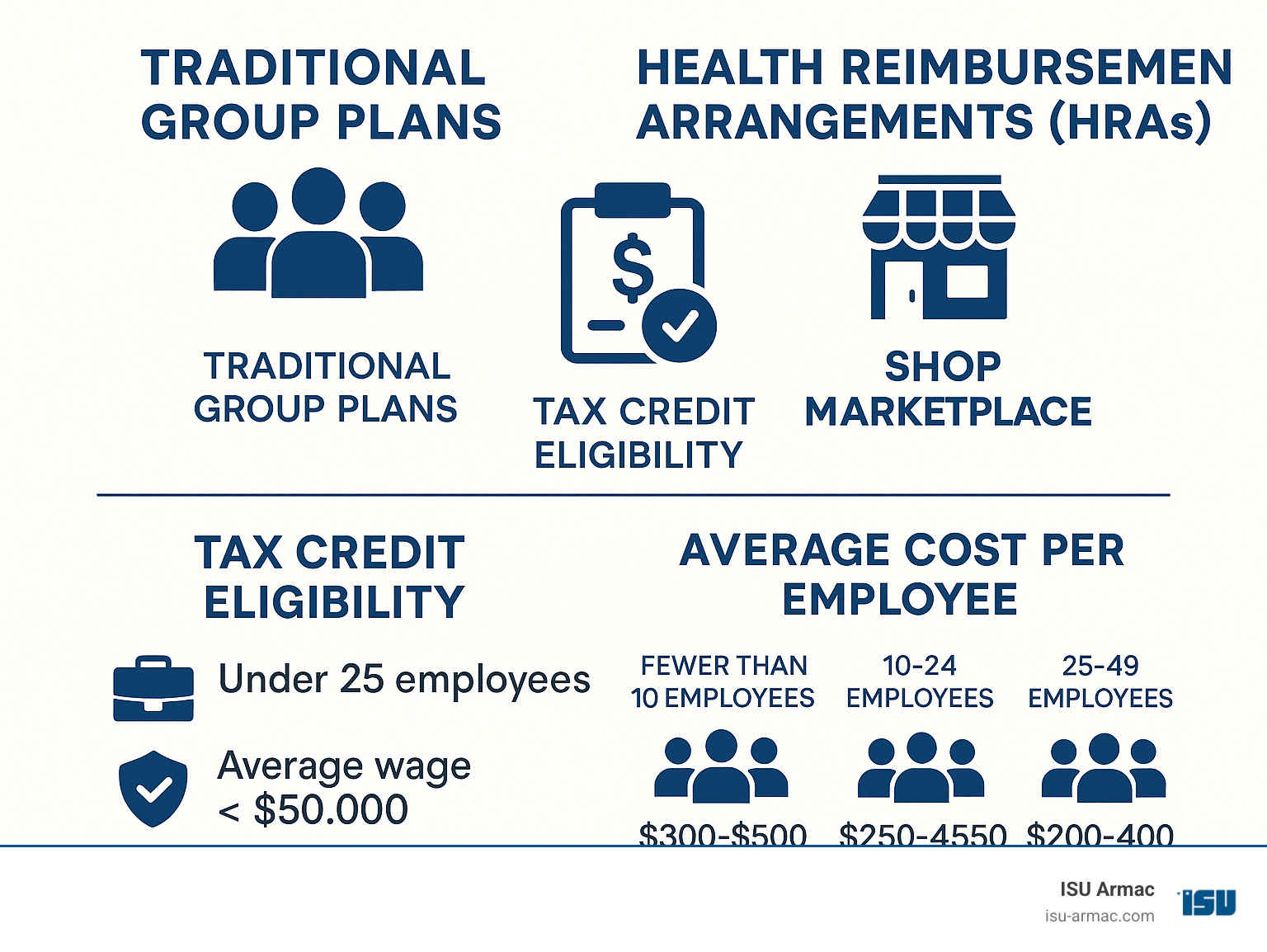
Simple guide to health insurance benefits for small businesses:
The Strategic Advantage of Offering Employee Health Benefits
In today’s competitive market, offering health insurance benefits for small businesses is no longer a perk—it’s a strategic tool for growth. This investment pays dividends by helping you build a thriving company.

How do health insurance benefits for small businesses impact recruitment and retention?
Talented people have choices, and health benefits often tip the scales. To compete for skilled workers in the High Desert, you need more than a good salary; you need to offer security and peace of mind. A solid benefits package sends a clear message that you value your people.
The retention benefits are just as compelling. Research shows that 70% of small businesses report that health benefits significantly impact employee loyalty. Loyal employees mean reduced turnover, saving you the high costs of recruiting and training new staff. The Benefits of Offering Health Insurance to Employees are clear: investing in health coverage is often more cost-effective than repeatedly replacing employees.
Beyond Recruitment: A Healthier, More Productive Workforce
Health insurance benefits for small businesses create a ripple effect across your entire operation. When employees have access to quality healthcare, they use it for preventative care, catching issues early and managing chronic conditions. This leads directly to reduced absenteeism, keeping your projects on track.
Beyond fewer sick days, the peace of mind from being covered boosts increased productivity and improved morale. Employees who aren’t worried about medical bills can focus on their work, contributing to a more collaborative and creative healthy workplace culture.
Investing in Employee Health Coverage is an investment in a stronger, more resilient business.
A Guide to Small Business Health Insurance Plan Types
Navigating the many types of health insurance plans is key to choosing the right health insurance benefits for small businesses. At ISU Armac, we simplify this for businesses in Oak Hills and beyond by shopping multiple insurance companies to find the perfect fit for your team and budget.

Traditional Group Health Plans: HMO, PPO, and HDHP
These are the most common employer-sponsored plans.
- Health Maintenance Organization (HMO): HMOs typically have lower monthly premiums but require members to use a specific network of doctors and get referrals from a Primary Care Physician (PCP) to see specialists. Out-of-network care is generally not covered except in emergencies.
- Preferred Provider Organization (PPO): PPOs offer more flexibility, allowing members to see specialists without a referral and go outside the network (though at a higher cost). This freedom usually comes with higher monthly premiums.
- High-Deductible Health Plan (HDHP): HDHPs have lower premiums in exchange for a higher deductible—the amount paid out-of-pocket before insurance kicks in. They are often paired with a Health Savings Account (HSA), a tax-advantaged account for medical expenses, making them a smart choice for healthy individuals who want more control over their spending.
Here’s a quick overview of how these common plans stack up:
| Feature | HMO | PPO | HDHP (with HSA) |
|---|---|---|---|
| Network | Restricted to network providers | Broader network, out-of-network options (higher cost) | Broad network, often with out-of-network options |
| PCP Required? | Yes | No | No |
| Referral Needed? | Yes, for specialists | No | No |
| Out-of-Network? | No coverage (except emergencies) | Yes, with higher cost sharing | Yes, with higher cost sharing (after high deductible) |
| Premiums | Generally lower | Generally higher | Generally lower |
| Deductible | Generally lower | Moderate | High |
| Savings Account | N/A | N/A | HSA eligible |
For a more complete look at your choices, explore our Small Business Employee Health Insurance Options page.
Alternative Funding Models: Fully-Insured vs. Level-Funded
Understanding how your plan is paid for is key to managing financial risk.
- Fully-Insured Plans: You pay a fixed monthly premium to an insurance company, which assumes all the financial risk for employee claims. This offers predictable costs, making it a popular choice for small businesses.
- Level-Funded Plans: A hybrid model where you pay a fixed monthly amount that covers administrative fees, stop-loss insurance (for high claims), and a claims fund. If your group’s claims are lower than expected, you can get a refund at the end of the year. This offers potential savings for healthier groups.
- Self-Funded Plans: Typically for larger companies, the employer pays for claims directly. While it offers the most control and savings potential, it also carries the highest financial risk.
Learn more about Group Health Insurance Benefits and how these models can work for your business.
Flexible Alternatives: HRAs and QSEHRAs
For businesses seeking more flexibility, HRAs are an excellent alternative.
- Health Reimbursement Arrangement (HRA): An HRA is an employer-funded account that reimburses employees for qualified medical expenses, including individual health insurance premiums. Contributions are tax-deductible for the business and tax-free for employees. This gives you cost control while offering employees choice. See the ICHRA guide for more on Individual Coverage HRAs.
- Qualified Small Employer HRA (QSEHRA): Designed for businesses with fewer than 50 employees that don’t offer a group plan, a QSEHRA provides a tax-free allowance for employees to buy their own coverage or pay for medical costs. The IRS sets annual contribution limits. Get more QSEHRA details from official resources.
The Rules of the Road: ACA, Eligibility, and Enrollment
Understanding the regulatory landscape is crucial when considering health insurance benefits for small businesses. Knowing your eligibility and compliance duties will ensure a smooth process.

How the Affordable Care Act (ACA) Affects Your Business
The Affordable Care Act (ACA) has shaped the rules, but the employer mandate only applies to businesses with 50 or more full-time equivalent employees. For most small businesses in the High Desert, offering health insurance is a strategic choice, not a legal requirement. This gives you the flexibility to offer benefits on your own terms. The Small Business Health Options Program (SHOP) was created to simplify this process, offering a selection of qualified plans that include essential health benefits. This ensures you’re providing quality, comprehensive coverage. Learn more about the ACA impact on businesses from official sources.
Eligibility and Participation Requirements
If you choose to offer a group plan, insurers have certain rules. You’ll need to calculate your full-time equivalent employees (full-time plus part-time hours). Most insurers require minimum participation (often 70% of eligible employees) and employer contributions (typically at least 50% of the employee’s premium). You must also have a physical worksite in the state where you’re buying coverage. Our guide on Are Small Businesses Required to Provide Health Insurance? breaks this down further.
Key Compliance Duties for Employers (COBRA, HIPAA, SBC)
Once you offer a plan, you must follow a few key federal regulations.
- COBRA: For businesses with 20+ employees, COBRA allows former employees to temporarily continue coverage at their own expense. Smaller businesses are generally exempt.
- HIPAA: The HIPAA privacy rules require you to protect employees’ health information with basic safeguards.
- Summary of Benefits and Coverage (SBC): You must provide employees with a clear, standardized SBC document that explains plan costs and coverage. The Department of Labor provides official SBC disclosure rules.
- 90-Day Waiting Period: You cannot make new employees wait more than 90 days for their health coverage to begin.
At ISU Armac, we help Southern California businesses steer these requirements smoothly.
Maximizing the Financial Health insurance benefits for small businesses
Understanding the true cost of health insurance benefits for small businesses is crucial for making smart decisions that protect both your employees and your bottom line. While cost concerns exist, the right approach can make quality coverage surprisingly affordable.

What Are the Average Costs and What Influences Them?
Health insurance costs have been rising, and for 65% of small employers who don’t offer insurance, cost is the main reason. However, your specific costs depend on several factors:
- Employee Demographics: The age and health of your team.
- Location: Rates in Victorville differ from other parts of California.
- Plan Design: HMOs are typically cheaper than PPOs, and high-deductible plans have lower premiums.
- Industry: Some industries have higher average claims.
Finding the right Health Insurance for Employees Small Business solution requires careful planning to manage these variables.
Smart Strategies to Lower Your Insurance Costs
You can control your health insurance benefits for small businesses expenses without sacrificing quality.
- Offer Choices: Provide both a traditional plan and a high-deductible option with an HSA to let employees choose what fits them best.
- Adjust Cost-Sharing: Higher deductibles or co-pays can lower your monthly premiums.
- Promote Wellness: Simple wellness programs can improve employee health, leading to fewer claims and better renewal rates.
- Use Telemedicine: Virtual visits are a cost-effective alternative to in-person appointments for routine care.
- Review Plans Annually: The market changes constantly. We shop multiple carriers every year to ensure you get the best value.
- Consider Level-Funded Plans: If your group is healthy, these plans can return unused premium dollars at the end of the year.
These strategies help you offer competitive Employee Healthcare Plans that fit your budget.
The Small Business Health Care Tax Credit: Are You Eligible?
The federal government offers a significant tax credit to help you provide health benefits. The Small Business Health Care Tax Credit can cover up to 50% of your premium contributions (35% for non-profits). It’s a dollar-for-dollar credit that directly reduces your tax bill.
To qualify, your business generally needs:
- Fewer than 25 full-time equivalent employees.
- Average annual wages below the inflation-adjusted threshold (around $62,000).
- To contribute at least 50% of employee premium costs.
- To purchase coverage through the SHOP Marketplace.
Many business owners assume they don’t qualify but are surprised to find they do. We can help you steer the SHOP enrollment process and maximize your eligibility. Don’t leave money on the table—review the current IRS Tax Credit Information to see if you qualify.
Frequently Asked Questions about Small Business Health Insurance
After years of helping business owners across the High Desert steer health insurance benefits for small businesses, we’ve noticed the same questions come up time and again. Here are the most common ones we hear at ISU Armac.
When can my small business enroll in a health insurance plan?
Unlike individual plans with strict open enrollment periods, small group plans offer year-round enrollment. Once you select a plan and submit your application (typically by the 15th of the month), coverage can begin on the first day of the following month. This flexibility allows you to offer health insurance benefits for small businesses whenever it aligns with your business needs, such as after a new hire or at company launch.
What is the difference between a fully-insured and a level-funded plan?
This choice comes down to risk and potential savings.
A fully-insured plan is traditional insurance. You pay a fixed monthly premium to a carrier, who assumes all the financial risk for claims. This offers predictable costs and straightforward budgeting.
A level-funded plan is a hybrid. You still pay a fixed monthly amount, but part of it goes into a claims fund. If your group’s actual claims are lower than projected, you can receive a refund from the unused funds at the end of the year. This can lead to significant savings for healthier groups.
Can I offer health insurance if I only have one employee?
The rules vary, but options exist. In most states, including California, you typically need at least one W-2 employee besides the business owner to qualify for a group plan. If you’re a sole proprietor with one employee, you likely qualify. Some states are also expanding options for “groups of one,” allowing single-owner businesses to access group-style coverage. If a group plan isn’t an option, Health Reimbursement Arrangements (HRAs) or individual marketplace plans are excellent alternatives. At ISU Armac, we can evaluate your specific structure to find the best path for offering health insurance benefits for small businesses, no matter your size.
Conclusion
Offering health insurance benefits for small businesses is a strategic investment in your company’s future. The right benefits package helps you attract top talent, reduce turnover, and build a more productive, engaged workforce.
While navigating plan types and compliance can seem complex, you don’t have to do it alone. Having the right partner makes all the difference. At ISU Armac, we specialize in helping business owners in Victorville, Apple Valley, and Hesperia find the best value. We shop multiple carriers to find coverage that fits your team’s needs and your budget.
From traditional group plans to flexible HRAs and level-funded options, we use practical tools to make quality health benefits affordable. Your employees’ well-being and your company’s growth are worth the investment.
To explore your options and find the perfect fit, review our comprehensive employee benefits services or visit our page on Group Medical for more details.