
Why Family Dental Coverage Matters More Than You Think
Family dental coverage is insurance that helps pay for your family’s dental care, from routine cleanings to major procedures like crowns or braces. Here’s a quick look at your options:
- Private Insurance (PPO/DHMO): Choose your own dentist (PPO) or use a network for lower costs (DHMO).
- Covered California Dental Plans: Available for families buying health insurance through the state marketplace.
- Government Programs: Medicaid and CHIP for eligible lower-income families.
- Employer-Sponsored Plans: Often the most affordable option if offered through your job.
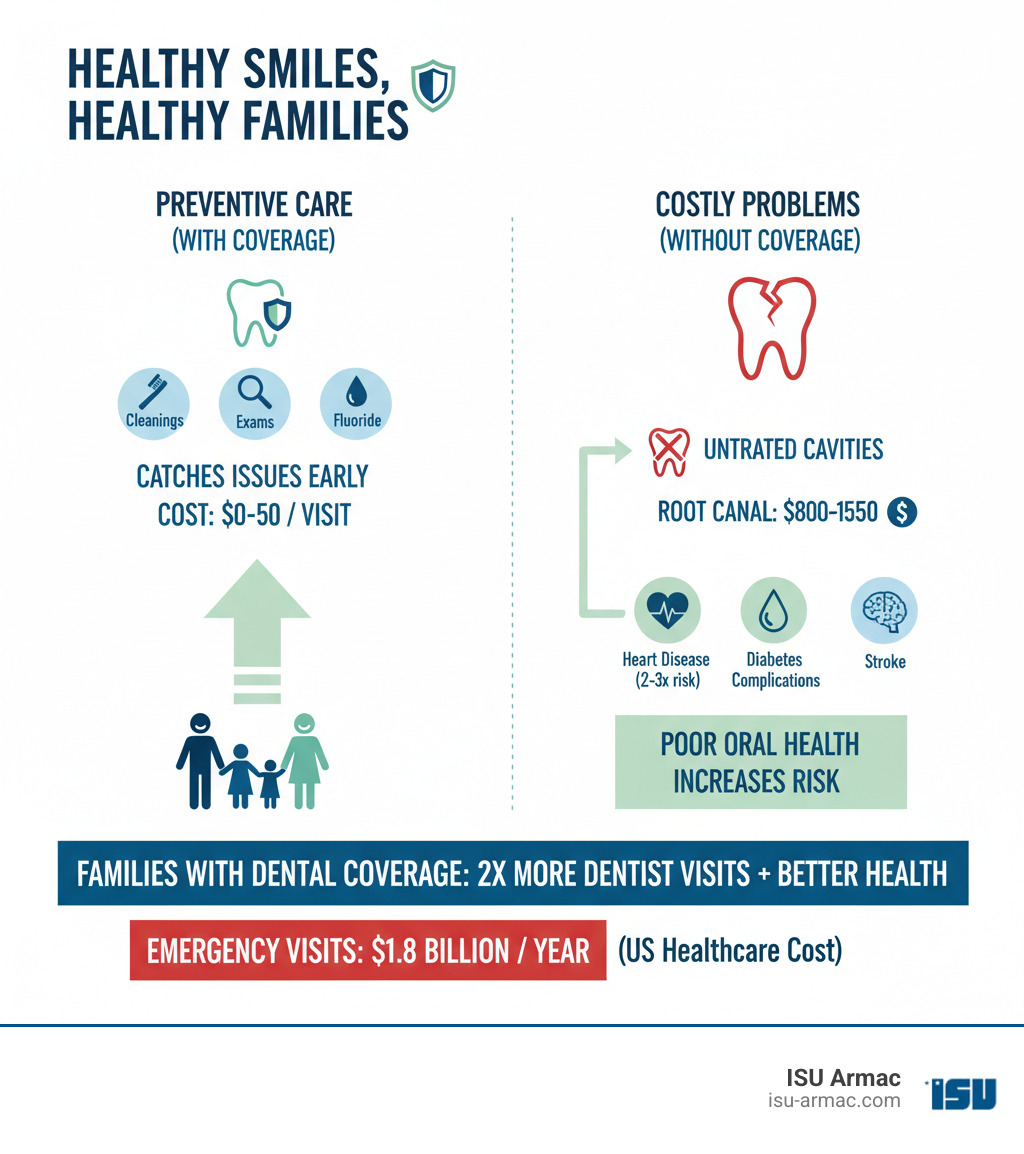
Your family’s oral health is directly linked to overall wellness, affecting conditions like heart disease, diabetes, and stroke. Yet, one in four Canadians and Americans avoid the dentist because of cost, a barrier that can lead to preventable health problems and expensive emergency room visits.
The right dental insurance makes quality care affordable. Whether you’re covering a child’s first cleaning or planning for braces, understanding your options protects your family’s health and budget.
I’m Ryan McEachron, CEO of ISU Insurance Services ARMAC Agency in Victorville. With over two decades of experience, I’ve helped countless High Desert families find family dental coverage that fits their needs. This guide will break down everything you need to know to choose a plan with confidence.
Decoding Dental Insurance: Key Terms You Need to Know
Understanding dental insurance terminology makes choosing the right family dental coverage much simpler. Here are the key terms you’ll encounter:
Premium: The fixed monthly fee you pay to keep your dental plan active.
Deductible: The amount you pay out-of-pocket for services before your insurance begins to pay. It’s often around $50 per person annually, but many plans waive it for preventive care like cleanings.
Co-insurance: After meeting your deductible, you share the cost of services with your insurer. If your plan covers 80% of a filling, your co-insurance is the remaining 20%.
Co-payment: A flat fee (e.g., $20) you pay for a visit or service. Co-payments are common in DHMO plans and are paid instead of co-insurance.
Annual Maximum: The total amount your insurance will pay for your care in a benefit year, typically between $1,000 and $2,000 per person. Once you hit this limit, you are responsible for 100% of costs until the plan renews.
Waiting Period: A delay before certain services are covered. While preventive care is usually available immediately, you might wait 3-12 months for basic or major procedures like fillings or crowns.
In-Network vs. Out-of-Network: In-network dentists have pre-negotiated rates with your insurer, resulting in lower costs for you. Out-of-network dentists can charge their full fees, and you’ll pay the difference between their price and what your plan considers a reasonable charge.
To avoid surprise bills, always review your Explanation of Benefits (EOB) and call your insurance provider with any questions about your specific family dental coverage.

Types of Family Dental Coverage Plans
When shopping for family dental coverage, you’ll primarily choose between private insurance and government-assisted programs. Understanding the structure of each will help you find the best fit for your family’s needs and budget.
Private Insurance: PPO vs. DHMO
Most families will choose between a PPO or a DHMO plan, which differ in flexibility and cost.
PPO (Preferred Provider Organization): These plans offer the flexibility to see any dentist, though you’ll save money by staying with in-network providers. PPOs typically involve a monthly premium, an annual deductible, and co-insurance for services. They are ideal if you want to keep your current dentist or need the freedom to see specialists without a referral.
DHMO (Dental Health Maintenance Organization): These plans operate like a membership, requiring you to use a primary care dentist from the plan’s network for all care and referrals. DHMOs usually have lower premiums, no deductibles or annual maximums, and use fixed co-payments for services. They are a budget-friendly option if you are comfortable with a more limited network of dentists.
Other private options include indemnity plans, which let you see any dentist and get reimbursed after paying upfront, and discount plans, which are non-insurance memberships that offer reduced rates at participating dentists for an annual fee.
Government-Assisted Programs for Families
For families who don’t have access to affordable private insurance, several government programs can help. While ISU Armac specializes in private and marketplace plans, it’s good to be aware of all options.
Medicaid and CHIP: Medicaid provides dental benefits to eligible low-income families, with comprehensive coverage for children. The Children’s Health Insurance Program (CHIP) offers low-cost dental coverage for children in families who earn too much for Medicaid but cannot afford private plans.
Dental plans via Covered California: When purchasing health insurance through the marketplace, you can add family dental coverage for adults. Children’s preventive dental care is often included with health plans, but you can enroll in a separate, more comprehensive dental plan for them as well. Both DHMO and DPPO options are available.
Medicare and Veterans (VA) Benefits: Traditional Medicare does not cover routine dental care, but some Medicare Advantage (Part C) plans do. Eligible veterans may receive dental care through the Department of Veterans Affairs. Eligibility for these programs depends on factors like income, age, and service history.
What’s Covered? A Breakdown of Common Dental Services
Understanding what your family dental coverage includes is key to managing your budget. Plans typically group services into three categories, each with a different level of coverage.
Here’s a general breakdown:
| Service Category | PPO Plans (Typical Coverage) | DHMO Plans (Typical Co-payment) |
|---|---|---|
| Preventive Care | 80-100% | $0 – $20 |
| Basic Services | 70-80% | $20 – $50 |
| Major Services | 50% | $50 – $200+ |
These are typical ranges; always check your specific policy. At ISU Armac, we can help you review your plan and find better options if needed.
Preventive Care (Typically 80-100% Coverage)
Preventive care aims to stop problems before they start, saving you money and discomfort. Most plans cover these services at a high percentage with no waiting period and often waive the deductible. Key services include:
- Routine exams and bi-annual cleanings to monitor health and prevent plaque buildup.
- X-rays to detect hidden issues like cavities between teeth.
- Fluoride treatments and sealants to provide an extra shield against decay, especially for children.
Basic Services (Typically 70-80% Coverage)
When dental problems arise, basic services are needed. Your plan typically covers 70-80% of these costs after your deductible is met. These include:
- Fillings to repair cavities.
- Simple extractions to remove severely damaged or crowded teeth.
- Periodontal care, such as scaling and root planing, to treat gum disease.
- Emergency pain relief for acute dental pain.
Major Services (Typically 50% Coverage)
Major services are complex, expensive procedures. Your plan usually covers about 50% of the cost, providing significant financial relief. These services often have a waiting period of 6-12 months. Examples include:
- Root canals to save an infected tooth.
- Crowns to restore a tooth’s function and appearance.
- Bridges and dentures to replace missing teeth.
Regarding dental implant insurance, most standard plans offer limited or no coverage. If you are considering implants, we can help you review your policy to understand what’s available.
Special Considerations like Orthodontics
If your family needs braces, finding a plan with orthodontic coverage is critical, as many basic plans don’t include it. When looking for dental insurance for braces, keep these points in mind:
- Coverage is often limited to dependent children under a certain age (e.g., 19).
- Benefits are paid up to a lifetime maximum, not an annual one.
- Long waiting periods of one to two years are common.
If orthodontic treatment is in your future, let us know. We can compare plans to find one that offers meaningful benefits for your family.
How to Choose the Best Plan for Your Family
Selecting the right family dental coverage means matching a plan to your family’s specific oral health needs and budget. Consider your priorities: keeping your current dentist, managing monthly costs, or preparing for anticipated treatments like braces.

Key features to compare in a family dental coverage plan
When comparing plans, assess your family’s dental history and future needs. Here’s what to look for:
- Annual Maximums: A higher cap (often $1,500-$2,000+) is better if you anticipate major work. For routine care, a lower maximum may be sufficient.
- Deductible Levels: Choose a plan with a manageable deductible. Many waive it for preventive care, reducing your out-of-pocket costs for routine visits.
- Provider Network Size: If you want to keep your dentist, ensure they are in-network. A large network offers more choice, which is useful for families with different dental needs.
- Waiting Periods for Major Work: If you need a crown or bridge soon, look for a plan with short or no waiting periods. Many plans require a wait of up to 12 months for these services.
Finding the Best Dental Insurance Coverage means finding the plan that aligns with your family’s unique situation. We specialize in shopping multiple carriers to identify that ideal match.
Special considerations for children and teens
Children’s dental needs change rapidly, so your family dental coverage should adapt. Key considerations include:
- Pediatric Dental Benefits: In California, preventive care for children is often included with health plans, but you’ll want a dental plan that also covers fillings and other restorative work.
- Sealant Coverage: This is crucial for preventing cavities in molars. Good plans cover sealants for permanent molars with reasonable frequency limits.
- Orthodontic Treatment Needs: If braces are likely, prioritize plans with orthodontic benefits. Remember to check for lifetime maximums, age limits, and waiting periods.
- Wisdom Teeth Removal: Check how the plan covers extractions, as some distinguish between simple and surgical removal, which may have different coverage levels and waiting periods.
Dental coverage options for seniors
Seniors often face more complex dental needs, making robust coverage essential.
- Medicare Limitations: Traditional Medicare doesn’t cover most dental care, so seniors should seek private dental plans or Medicare Advantage plans that include dental benefits.
- Coverage for Dentures and Bridges: Look for plans with solid coverage (typically 50%) for major restorative work. Be mindful of waiting periods and frequency limitations on replacements.
- Periodontal Disease Management: As gum disease is more common with age, ensure your plan covers treatments like scaling and root planing to help maintain oral health.
We understand that Dental Insurance for Retirees requires a specific focus. We can help you find a plan that provides the robust coverage you need in retirement.
Frequently Asked Questions about Family Dental Coverage
Navigating dental insurance can be confusing. Here are straightforward answers to some of the most common questions we hear from families in our Victorville office.
Is private dental insurance worth it if my family is healthy?
Yes, absolutely. Think of it as proactive protection. Family dental coverage is valuable for three main reasons:
- It encourages preventive care. With cleanings and exams covered at 80-100%, you’re more likely to catch problems early, when they are less expensive and easier to treat.
- It provides a financial safety net. Accidents happen. A cracked tooth or sports injury can cost thousands without insurance. A dental plan turns a potential budget crisis into a manageable expense.
- It offers peace of mind. Knowing you’re covered allows your family to get the care they need without making decisions based on fear of the cost.
Can I get a dental plan that covers pre-existing conditions like a missing tooth?
Yes, most dental plans cover pre-existing conditions. If you have a missing tooth, a plan will typically help pay for a bridge, denture, or implant (coverage varies).
The key thing to be aware of is the waiting period. For major work like replacing a missing tooth, most plans require you to be enrolled for 6 to 12 months before they will cover the procedure. However, preventive care like cleanings and exams is usually covered immediately, with no waiting period.
How do I find a dentist that accepts my insurance?
Finding an in-network dentist for your family dental coverage is simple. Follow these steps:
- Use the insurer’s online directory. Most insurance companies have a searchable database on their website. This is the most up-to-date resource.
- Call member services. The phone number on your insurance card connects you with representatives who can provide a list of local providers.
- Confirm with the dental office. This is the most important step. When you book an appointment, tell the receptionist your insurance plan and ask them to verify they are in-network. This quick call can save you from unexpected bills.
As your agent at ISU Armac, we can also help guide you toward plans with strong provider networks in the High Desert area.
Conclusion: Secure Your Family’s Oral Health Today
Protecting your family’s smiles is an investment in their overall health and financial security. We’ve seen how oral health connects to systemic diseases and how cost can be a barrier to care. The right family dental coverage removes that barrier.
Understanding your options—from the flexibility of a PPO to the budget-friendliness of a DHMO—empowers you to make the best decision. For California families, plans through Covered California offer another affordable pathway. Whether you have young children, a teen needing braces, or a senior requiring restorative work, there is a plan designed to meet your needs.
Navigating these options can feel overwhelming, but you don’t have to do it alone. At ISU Armac, we are an independent agency serving families throughout the High Desert—from Victorville and Apple Valley to Hesperia and Oak Hills. Because we’re independent, we shop multiple carriers on your behalf to find the best coverage at the lowest rates. We cut through the confusion to find a plan that fits your family’s needs and your budget.
Your family deserves quality dental care without financial stress. Let us help you find the right protection.