
Why Dental Insurance Matters for Your Overall Health
Dental insurance helps make oral care affordable by covering preventive services, basic treatments, and major procedures. Here’s what you need to know:
Quick Answer: What is Dental Insurance?
- Coverage Type: Insurance that helps pay for dental care costs
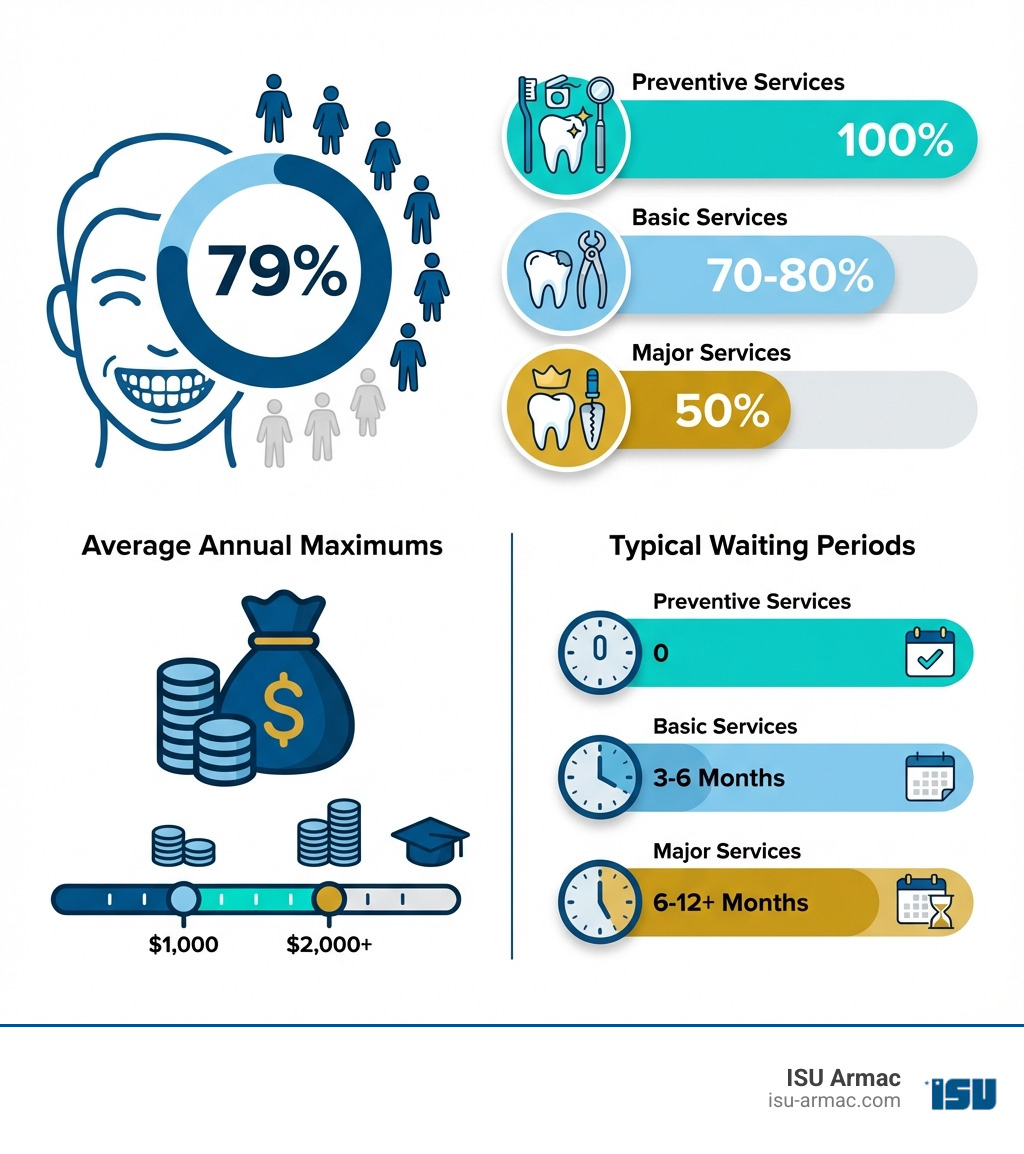
- Who Has It: 79% of Americans have dental benefits
- What It Covers:
- Preventive care (cleanings, exams): Often 100%
- Basic services (fillings, extractions): Typically 70-80%
- Major services (crowns, root canals): Usually 50%
- How to Get It: Through employers, Health Insurance Marketplace, or private purchase
- Key Costs: Premiums, deductibles, copayments, and annual maximums
Your oral health is directly linked to your overall wellness. Problems in your mouth can impact your heart, immune system, and general health, but dental care costs often create a barrier for families.
Most Americans recognize this, which is why nearly 8 in 10 people have some form of dental coverage. Dental insurance focuses on preventive and routine care to catch problems early—before they become expensive emergencies.
This guide will help you understand dental insurance options, compare plan types, and choose coverage that fits your needs and budget. We’ll break down terminology, explain what’s covered, and show you how to find the right plan.
I’m Ryan McEachron, CEO of ISU Insurance Services ARMAC Agency in Victorville. With years of experience helping High Desert residents steer insurance options, I’ve guided countless families in finding dental insurance plans that protect their smiles and their wallets. Let’s explore how the right dental coverage can work for you.
Know your dental insurance terms:
Explaining Dental Coverage: Insurance and Benefits

It’s important to understand the distinction between dental insurance and dental benefits. Though often used interchangeably, their subtle differences can impact your out-of-pocket costs and coverage expectations.
A true dental insurance plan is designed to absorb risk. It acts as a safety net, covering costs for unexpected dental issues and helping manage expenses for routine care. Think of it as a contract to lower your out-of-pocket costs for services like cleanings, fillings, and root canals.
On the other hand, a dental benefits plan might cover some services fully, others partially, and some not at all. It’s typically structured to provide specific benefits rather than absorbing the broader financial risk of all potential dental needs. The National Association of Dental Plans (NADP) reports that 79% of Americans have some form of dental benefits, highlighting their importance.
Regardless of the term, these plans help manage high dental care costs, making them more accessible. Understanding your plan’s fine print is crucial to know what is covered and to what extent.
Types of Dental Plans Offered
At ISU Armac, we understand that everyone’s needs are unique, which is why we work with a variety of carriers to provide diverse dental plan options. Our goal is to find the best coverage at the lowest rates for our clients in Victorville, Apple Valley, Hesperia, Oak Hills, and throughout Southern California.
We help individuals and families access plans through several avenues:
- Employer-Sponsored Group Plans: Many employers offer dental insurance as part of their benefits package. These plans often provide comprehensive coverage at competitive group rates. If you’re employed, checking with your HR department is usually the first step.
- Individual and Family Plans: If your employer doesn’t offer dental coverage, or if you’re self-employed, retired, or looking for additional coverage, we can help you explore individual and family plans. These are purchased directly from an insurance provider or through the Health Insurance Marketplace.
- Direct Reimbursement Programs: Some plans operate on a direct reimbursement model. These programs pay a predetermined percentage of the total amount you spend on dental care, regardless of the treatment category. This approach often allows you the freedom to choose any dentist and can be very flexible.
Key Financial Terms You Need to Know
Navigating dental insurance requires understanding key financial terms that determine your costs and what your plan pays:
- Premiums: This is the regular, set amount you pay to your dental insurance provider for coverage. It’s typically a monthly fee, but can sometimes be paid semi-annually or annually.
- Deductibles: The deductible is the amount you must pay out-of-pocket for dental expenses before your insurance plan begins to cover costs. For example, if you have a $50 deductible, you’ll pay the first $50 of covered services, and then your insurance will start to pay its share. Deductibles usually reset annually.
- Copayments (Copays): A copay is a fixed amount you pay for a covered dental service at the time you receive care. For instance, you might have a $20 copay for a routine cleaning, and your insurance covers the rest.
- Coinsurance: Once you’ve met your deductible, coinsurance is the percentage of costs for covered services that you are still responsible for. Your insurance pays the remaining percentage. For example, if your plan covers a basic service at 80% after deductible, you’ll pay 20% coinsurance. A filling costing $100 might be covered by insurance at 80% ($80), leaving a coinsurance amount of $20 (20%) for you.
- Annual Maximums: Most dental insurance plans have an annual maximum, which is the highest amount your insurance company will pay for your dental care within a plan year. Once this limit is reached, you are responsible for 100% of any further costs until the next plan year begins.
Understanding these terms is essential for budgeting your dental care and making informed decisions about your dental insurance plan. For more detailed information on what dental insurance covers and what it doesn’t, we recommend exploring resources like Dental Insurance: What’s Covered, What’s Not.
Exploring the Main Types of Dental Insurance Plans
Choosing the right dental insurance plan involves balancing cost, flexibility, and access to your preferred dentists. Different plan structures cater to different priorities, and understanding them is key to making an informed decision for your oral health. Our team at ISU Armac can help you steer these options to find a plan that works best for your family in Southern California.
PPO (Preferred Provider Organization) Plans
PPO plans offer a good balance of flexibility and cost savings. With a PPO, you have the freedom to choose any licensed dentist you want. However, you’ll typically pay less out-of-pocket if you choose a dentist within the plan’s network of “preferred providers.”
- Flexibility in Choosing Providers: You’re not restricted to a specific group of dentists. You can visit in-network dentists for lower costs or go out-of-network, though you’ll generally pay a higher percentage of the cost.
- In-network vs. Out-of-network Dentists: In-network dentists have agreed to provide services at pre-negotiated rates, leading to lower costs for you. Out-of-network dentists can charge their usual fees, and your plan will cover a smaller portion, potentially leaving you with a larger bill.
- Premium and Cost Considerations: PPO plans often have higher premiums than HMO plans due to their greater flexibility. You’ll also have deductibles and coinsurance payments to consider.
For those interested in specific PPO options, especially for a particular demographic, you might find more information on Dental PPO Plans for Seniors.
HMO (Health Maintenance Organization) Plans
HMO dental plans, sometimes called Dental Health Maintenance Organizations (DHMOs) or capitation programs, generally offer lower premiums but come with more restrictions on provider choice.
- Network-Based Care: You must choose a primary care dentist (PCD) from a specific network. This PCD manages all your dental care, including referrals to specialists.
- Primary Care Dentist Selection: All your dental treatments will originate from your chosen PCD.
- Referral Requirements: If you need to see a specialist (like an orthodontist or oral surgeon), your PCD must provide a referral within the network.
- Lower Premiums: Because of the network restrictions and managed care model, HMO plans typically have lower monthly premiums compared to PPOs, making them a cost-effective option for many.
- Capitation Programs: In these models, dentists receive a fixed amount per patient enrolled in their care, regardless of how many services they provide. This incentivizes efficient care but means you must use a network provider.
Direct Reimbursement and Other Plan Options
Beyond traditional PPO and HMO models, other options exist that might better suit certain needs or preferences:
- Direct Reimbursement Programs: As mentioned earlier, these plans pay a percentage of your total dental care spending directly to you, rather than the dentist. This offers immense freedom as you can choose any dentist, and the coverage often isn’t limited by treatment category. It encourages a direct relationship with your dentist without insurance company interference in treatment decisions.
- Membership-Based Dental Plans: These are not dental insurance but rather discount programs. You pay an annual membership fee, and in return, you get discounted rates on dental services from a network of participating dentists. These plans can be a great option for individuals without traditional insurance who want to save on routine and major dental work. We can help you explore these types of programs available in our Southern California service areas like Victorville and Hesperia.
- Freedom of Choice within Available Plan Options: Our team at ISU Armac prides itself on shopping multiple carriers to ensure you have a range of choices, whether you prioritize network flexibility, lower premiums, or specific coverage types.
Here’s a quick comparison of the key features of the two most common types of dental insurance plans:
| Feature | PPO (Preferred Provider Organization) | HMO (Health Maintenance Organization) |
|---|---|---|
| Network Size | Larger network, includes out-of-network options | Smaller, restricted network |
| Dentist Choice | Choose any dentist (lower cost in-network) | Must choose a Primary Care Dentist (PCD) |
| Cost | Higher premiums, but more flexibility | Lower premiums, but less flexibility |
| Referral | Not usually required for specialists | Required for specialists (within network) |
Understanding Your Coverage: What’s Included and Excluded

When selecting a dental insurance plan, understand what services are covered and under what conditions. Most comprehensive plans categorize services into tiers, often following a “100-80-50” rule, and also list specific exclusions and limitations. Our goal at ISU Armac is to ensure you have a clear picture of your coverage so there are no surprises.
The “100-80-50” Rule: Preventive, Basic, and Major Services
This common rule provides a general guideline for how most dental insurance plans cover different types of services:
Preventive Care (Often 100% Coverage): These are the services designed to maintain your oral health and prevent problems from developing or worsening. Most plans cover preventive services at 100%, sometimes with frequency limits (e.g., two cleanings per year). This typically includes:
- Routine cleanings
- Oral exams
- X-rays
- Fluoride treatments (especially for children)
These services are crucial because they help us avoid more significant health issues down the road. Catching problems early means less invasive and less costly treatments.
Basic Services (Typically 70-80% Coverage): Once you’ve met your deductible, your plan will usually cover a significant portion of basic services. These address common dental problems and typically include:
- Fillings
- Simple extractions
- Periodontal care (gum disease treatment)
- Emergency pain relief
Minor dental treatments like restorations are often covered at 80%, leaving a 20% coinsurance as your patient liability.
Major Services (Usually 50% Coverage): These are more complex and often more expensive procedures. After your deductible, plans typically cover around 50% of the cost for major services. This category includes:
- Crowns
- Bridges
- Dentures
- Root canals (for more on this, see root canal)
- Oral surgery
Major dental treatments are more often covered at 50% of the fee, meaning you would pay the other 50% as coinsurance.
Specific percentages can vary by plan, so always review your policy documents for exact figures.
Common Exclusions in a Dental Insurance Policy
While dental insurance is a fantastic tool for managing costs, it’s equally important to know what typically isn’t covered. Understanding these exclusions can help you avoid unexpected bills.
Cosmetic Procedures: Services primarily for aesthetic improvement are usually excluded from coverage. This includes:
- Teeth whitening
- Veneers
- Cosmetic bonding
However, if a procedure has a restorative purpose (e.g., a veneer to repair a chipped tooth from trauma), it might receive partial coverage if deemed medically necessary.
- Pre-existing Conditions: Some plans may have limitations or exclusions for conditions that existed before your coverage began, especially for major work.
- Experimental Procedures: Any new or unproven dental treatments are generally not covered.
- Orthodontia Limitations: While some policies offer orthodontic coverage, it often comes with specific limitations. Some plans may only cover orthodontics for individuals up to a certain age (e.g., 12 or 13 years), while more comprehensive policies might include adult orthodontics. For those considering braces, it’s wise to investigate Dental Insurance for Braces to understand potential coverage and limitations.
- Implants: Dental implants may have specific limitations, such as a lifetime maximum benefit (e.g., $2,000) and a waiting period before coverage begins. For more information on this, refer to Dental Implant Insurance.
- Services Not Performed by a Dentist: Procedures not performed by or under the direct supervision of a licensed dentist are typically excluded.
Always obtain a copy of your specific policy and read through its limitations and exclusions. This will give you the clearest understanding of your benefits.
How to Find and Select the Best Dental Insurance for Your Needs
Finding the right dental insurance plan is simpler with a clear strategy. The key is to assess your needs, understand your budget, and compare available options thoughtfully. As your local Southern California insurance experts, we’re here to help you steer this important decision.
Where to Get Coverage: Employer, Marketplace, and Private Plans
There are several common avenues for obtaining dental insurance, each with its own advantages:
- Employer-Sponsored Coverage: For many, the easiest way to get dental insurance is through their employer. These group plans often offer comprehensive benefits at a lower cost due to the pooled risk of many employees. If available, this is usually a great place to start.
- Health Insurance Marketplace Options: The Health Insurance Marketplace (healthcare.gov) offers options for dental coverage, either bundled with a health plan or as a stand-alone plan. For children 18 and younger, dental coverage is considered an essential health benefit and must be available. For adults, however, dental coverage is not an essential health benefit, so health plans are not required to offer it. If you choose a stand-alone plan, you’ll pay a separate premium. You can explore these options and more at Health benefits & coverage.
- Private Purchase through ISU Armac: If employer plans or Marketplace options don’t fit your needs, you can purchase a private dental insurance plan directly from an insurance provider or through an agency like ISU Armac. We specialize in shopping multiple carriers to find the best coverage and rates for individuals and families in our service areas of Victorville, Apple Valley, and Hesperia. You can learn more about how to Purchase Dental Insurance Online through our convenient services.
Critical Factors to Consider When Choosing a Plan
When comparing dental insurance plans, look beyond just the monthly premium. A truly cost-effective plan is one that meets your dental needs without breaking the bank on out-of-pocket expenses.
- Provider Network Size and Access: Do you have a preferred dentist? Make sure they are in the plan’s network, especially if you’re considering an HMO or a PPO where in-network care is more affordable. For our clients in Southern California, we can help verify local network availability.
- Total Costs (Premiums, Deductibles, Copays): Calculate the estimated total annual cost, including premiums, your deductible, and potential copays or coinsurance for services you anticipate needing. Don’t just focus on the lowest premium.
- Waiting Periods: Many plans have waiting periods before certain benefits become active, especially for basic or major services. These can range from a few months to a year. For example, major treatments might have waiting periods of 6-12 months. Ensure you understand these periods, as you’ll pay premiums during this time without full coverage.
- Annual Maximums: Be aware of the annual maximum, the cap on how much the insurance company will pay in a year. If you anticipate extensive work, a higher annual maximum might be beneficial.
- Coverage Levels: Review the “100-80-50” breakdown for preventive, basic, and major services. Does it align with your expected dental needs? For a deeper dive into optimal coverage, check out Best Dental Insurance Coverage.
Navigating Special Clauses: Waiting Periods, Dual Coverage, and Pre-Treatment Estimates
Understanding these specific aspects of dental insurance can help you maximize your benefits and avoid unexpected costs.
- Explanation of Waiting Periods and How They Work: As mentioned, waiting periods are common. For basic and major services, these periods typically range from a few months to a year. However, some plans may waive waiting periods for basic and major services if you can provide proof of 12 or more months of prior dental coverage that included major restorative services, provided there hasn’t been a significant lapse (e.g., more than 63 days) between policies. It’s crucial to check with your insurer about their specific waiver policies. Waiting periods for orthodontia and implants are generally not eligible for waiver.
- Coordination of Dual Coverage: If you have coverage under two dental insurance plans (e.g., through your employer and your spouse’s employer), this is called dual coverage. The plans work together, with one designated as the primary plan and the other as secondary. The primary plan pays its share first, and the secondary plan may cover some or all of the remaining costs, reducing your out-of-pocket expenses. It’s important to notify both plan administrators to ensure proper coordination of benefits.
- Importance of Pre-Treatment Estimates for Cost Transparency: Before undergoing any significant dental procedure, we highly recommend requesting a pre-treatment estimate (sometimes called pre-authorization) from your dentist. Your dentist submits the proposed treatment plan to your dental insurance provider, which then sends back an estimate detailing what they expect to cover and your patient responsibility. This helps you understand costs upfront, prevents unexpected bills, and allows you to budget accordingly.
Frequently Asked Questions About Dental Insurance
We often hear similar questions from our clients in Southern California as they explore their dental insurance options. Here are some of the most common ones, answered to help you make informed decisions.
What options are available for individuals without dental insurance?
If you don’t currently have dental insurance, don’t despair! There are still several ways to access affordable dental care:
- Dental Discount Programs available through ISU Armac: As discussed, these are not insurance, but membership programs where you pay an annual fee to receive discounted rates from a network of dentists. We can help you explore these programs in our local areas like Victorville and Apple Valley.
- Dental Schools and Public Clinics: Dental schools often offer treatments at reduced rates because students, supervised by experienced faculty, perform the work. Public dental clinics, sometimes funded by government programs, also provide care on a sliding scale based on income.
- Free Clinics: Some charitable organizations or community health centers offer free or low-cost dental services.
- Payment Plans for Dental Care: Many dental offices offer in-house payment plans, allowing you to pay for services over time. Don’t hesitate to discuss financial options directly with your dentist.
- Government Programs: Depending on your income and employment status, you might qualify for government programs like Medicaid, which often includes dental benefits for children and sometimes for adults.
For more comprehensive guidance on managing dental expenses, regardless of your insurance status, check out Handling dental costs.
How does dental coverage differ for adults and children?
The distinction in dental insurance coverage for adults and children, particularly within the Health Insurance Marketplace, is significant:
- Essential Health Benefit for Children (Under 18): For anyone 18 years or younger, dental coverage is considered an essential health benefit. This means that if you’re getting health coverage for a child through the Marketplace, dental coverage must be available for them. It can be either part of a health plan or offered as a separate dental plan. While it must be available, you are not always required to purchase it.
- Adult Coverage as Optional: For adults, dental insurance is generally not considered an essential health benefit. Therefore, health plans in the Marketplace are not required to include it. If you’re an adult seeking dental coverage through the Marketplace, you’ll typically have to purchase it as a stand-alone plan, which means paying a separate premium.
Understanding these differences is crucial when evaluating plans for your entire family. We can help you find suitable plan availability for both adults and children in Southern California.
How does dental insurance contribute to overall health and wellness?
The connection between oral health and overall health is undeniable. Dental insurance plays a vital role in promoting our overall wellness by making dental care more accessible and affordable:
- Focus on Preventive Care: Most dental insurance plans emphasize preventive services by covering them at 100%. Regular cleanings, exams, and X-rays help catch dental issues early, often before they become painful, expensive, or lead to more serious health problems.
- Early Detection of Dental Issues: Your mouth is a window to your overall health. Early detection of oral health problems can prevent them from escalating into more complex and costly treatments. It also allows dentists to spot signs of other systemic diseases.
- Link Between Oral Health and Systemic Diseases: Poor oral health has been linked to various systemic conditions, including heart disease, diabetes, and even complications during pregnancy. By maintaining good oral hygiene and receiving regular dental care, we reduce inflammation and infection in the mouth, which can positively impact our entire body. Dental insurance removes financial barriers, making it easier to keep your mouth healthy and, by extension, your whole body.
Conclusion
Navigating dental insurance is a vital step for your smile, overall health, and financial well-being. We’ve covered what dental insurance is, the types of plans, key terms, what’s covered and excluded, and how to choose a plan that fits your needs.
The value of dental insurance extends beyond covering costs; it empowers you to prioritize preventive care, catch issues early, and invest in your long-term health. Whether you need employer-sponsored coverage, a Marketplace plan, or a private policy, making an informed choice is key.
At ISU Armac, we are your local experts in Victorville, Apple Valley, Hesperia, Oak Hills, and throughout Southern California. We’re dedicated to helping you find the best coverage at the lowest rates, ensuring you and your family can smile with confidence. Don’t hesitate to reach out for personalized assistance.
Contact us for help with your group dental insurance needs and let us help you find the perfect dental insurance solution.