
Why Driving Without Insurance Puts Your Vehicle at Risk
Can your car be towed for no insurance? Yes. In California, police have the legal authority to impound your vehicle immediately if you’re caught driving without valid insurance.
Here’s what you need to know:
- Traffic stops are the most common trigger: Officers verify insurance during any traffic stop.
- Immediate impoundment is standard: Your car can be towed on the spot.
- Expired insurance counts: Even a one-day lapse puts your vehicle at risk.
- You’ll face multiple costs: Expect towing fees, daily storage charges, fines, and license suspension penalties.
- Proof of insurance is required for release: You can’t get your car back without new coverage.
The consequences go far beyond an inconvenient tow. Officers may impound vehicles on the spot, leaving you stranded and facing hundreds or thousands of dollars in fees and penalties. Driving uninsured can also lead to driver’s license suspension, SR-22 filing requirements, and much higher insurance rates. If you cause an accident, you are personally responsible for all damages and medical bills, which can be financially devastating.
I’m Ryan McEachron, CEO of ISU Insurance Services ARMAC Agency. For decades, I’ve helped High Desert residents avoid having their car towed for no insurance. I’ve seen how severe these consequences can be for local families.
Why Your Car Can Be Towed for No Insurance: The Legal Reasons
Driving without insurance is illegal in California. It’s a firm requirement designed to protect everyone on the road. When you drive, you must carry proof of financial responsibility, which for most people is a valid auto insurance policy. Without it, you pose a financial risk to others in an accident.
This is why law enforcement has the immediate authority to tow and impound your vehicle on the spot. This power is granted by California Vehicle Code 22651 VC, which specifies when a vehicle can be removed from public roads. Operating without insurance is a key reason on that list. This isn’t about punishment; it’s about enforcing state law and removing uninsured vehicles before they cause harm.
Auto insurance typically follows the person driving the car, not just the vehicle. This means even if you’re driving someone else’s car, you must be properly insured. You can learn more about this on our page explaining whether auto insurance follows the car or the person.
What happens during a traffic stop?

During any traffic stop, an officer will ask for your driver’s license, vehicle registration, and proof of insurance. These are legal requirements. Using modern technology, officers can verify your insurance status almost instantly through real-time databases.
If you can’t provide valid proof of insurance, or if their system shows your coverage has expired, the officer has the discretion to decide what’s next. While a ticket is possible, it’s rare. For no insurance violations, most officers initiate a tow immediately. They are following the law by removing a non-compliant vehicle from public roads. The officer will call a tow truck, and your car will be taken to an impound lot, leaving you to find another way home.
Can your car be towed for expired registration or insurance?
Yes. In fact, expired registration and expired insurance often lead to a guaranteed tow. Driving with expired tags is a violation on its own. But when an officer finds you have no insurance as well, your chances of avoiding a tow are almost zero. Law enforcement takes this double violation very seriously.
These two issues are often linked. California requires proof of insurance to renew your vehicle registration. If your insurance lapses, you can’t legally renew your registration. This creates a cycle: no insurance leads to no registration, and now you’re driving with two violations. I’ve seen this scenario many times in the High Desert. A driver delays renewing their insurance, their registration expires, and they end up with a towed car, impound fees, and multiple fines.
The takeaway is clear: whether it’s just expired insurance or both expired insurance and registration, your car can and likely will be towed.
The Full Consequences of Driving Uninsured
Watching your car get towed is just the start of a financial and logistical nightmare. The consequences of driving without insurance can impact your finances, driving privileges, and peace of mind for years.

The immediate consequences include:
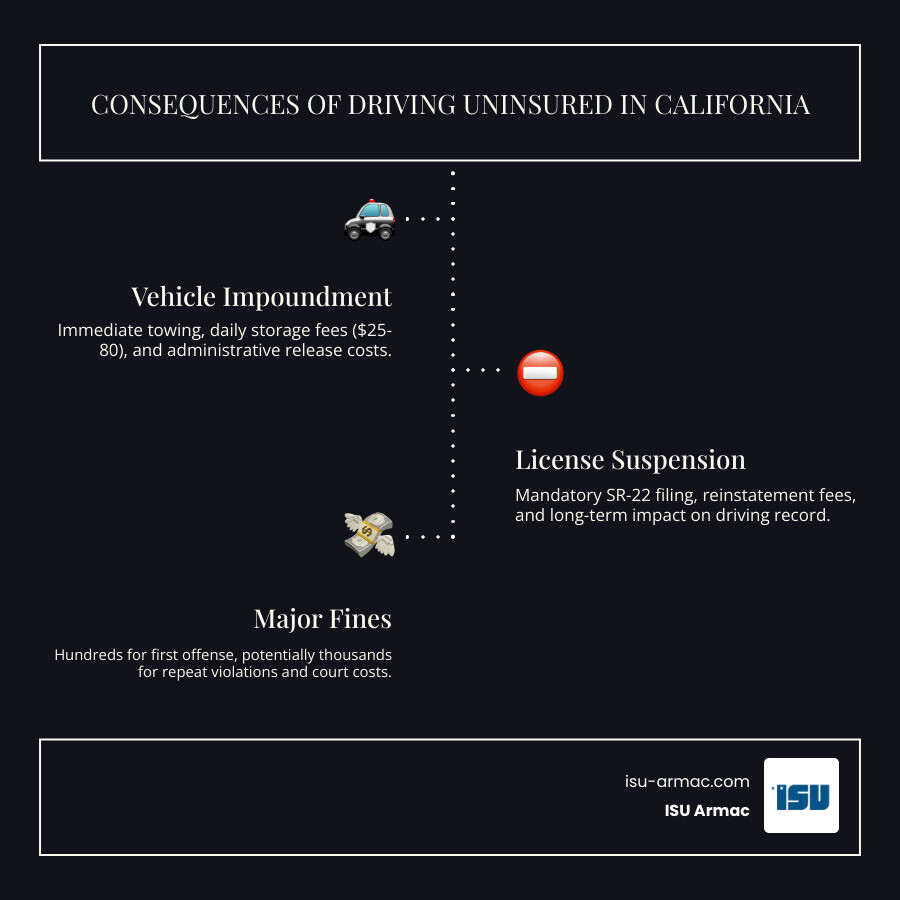
- Fines and Penalties: A first-time offense in California costs several hundred dollars. Repeat offenses can lead to thousands in fines, plus court fees.
- Driver’s License Suspension: Losing your license in the High Desert can impact your job and daily life. Reinstatement often requires filing an SR-22 form, a certificate of insurance for high-risk drivers that makes your premiums much more expensive.
- Higher Future Insurance Rates: An uninsured driving citation stays on your record, causing all insurance companies to charge you significantly more for years.
- Personal Liability: If you cause an accident while uninsured, you are personally liable for all costs. This includes vehicle repairs, medical bills, lost wages, and legal fees, which can easily reach tens or hundreds of thousands of dollars and lead to bankruptcy.
The consequences of having your car towed for no insurance are severe. That’s why we encourage High Desert residents to explore affordable Personal Auto Insurance options. Protection is always cheaper than the alternative.
Towing vs. Impounding: What’s the Difference?
While often used interchangeably, these terms have different meanings.
- Towing is the physical act of moving your car with a tow truck.
- Impounding is the legal action that follows. Your vehicle is taken into legal custody by law enforcement and held at a secure lot.
When police find you driving without insurance, your vehicle is both towed and impounded. The impoundment means you must meet specific legal requirements to get it back, and you’ll face daily storage fees during the holding period.
The Financial Fallout: A Breakdown of Costs
The total cost to retrieve your car is often much higher than people expect. Here’s a breakdown:
- Towing Fees: A flat charge of $110 to $245, plus per-mile fees.
- Daily Storage Fees: Impound lots charge $25 to $80 per day. These fees add up quickly.
- Administrative Release Fees: Around $55 to process the release paperwork.
- Court Fines: Several hundred to several thousand dollars for the citation itself.
- License Reinstatement Fees: Charged by the DMV to restore your driving privileges.
- Higher Insurance Premiums: An SR-22 filing can double or triple your rates for years.
When combined, these costs can easily total $2,000 to $5,000 or more. Compared to this, a monthly insurance premium is a small price to pay for protection.
How to Get Your Car Back After It’s Towed
If your car has been towed and impounded, you can get it back, but you must follow specific steps. The most critical requirement is this: you cannot retrieve your car without proof of insurance.

First, locate your vehicle. The police officer should have given you a Notice of Impoundment with the tow yard’s location. If not, contact the local police department that initiated the tow. Once you know where it is, call the tow yard to confirm their hours, required documents, and the total fees you owe. Daily storage charges add up fast, so act quickly. If you need affordable coverage to get your car back, check our options for Cheap Auto Insurance in Victorville, CA.
Step 1: Obtain Proof of Insurance
This is your first and most important task. The impound lot will not release your vehicle without current, valid proof of insurance. If your car was towed for no insurance, you must get a new policy immediately.
We specialize in helping drivers in this situation. We can shop multiple carriers to find a policy that meets California’s legal requirements quickly, even with a lapse in coverage. You can often get digital insurance cards instantly, which most impound lots accept. We can typically provide you with proof of insurance the same day. For more information, see our Personal Auto Insurance Quotes Guide.
Step 2: Gather Your Documents and Pay the Fees
With proof of insurance in hand, gather the rest of your paperwork. You will need:
- A valid driver’s license.
- The vehicle registration to prove ownership.
- The Notice of Impoundment from the police.
- Your new proof of insurance.
Finally, you must pay all outstanding fees, including towing, daily storage, and administrative charges. Most lots accept cash and major credit/debit cards, but call ahead to confirm. Be prepared to pay in full before they release your vehicle. The cost and hassle of this process underscore why maintaining continuous, affordable coverage is so important.
How to Avoid This Situation Entirely
The best way to deal with having your car towed for no insurance is to prevent it from happening. Maintaining continuous auto insurance is your shield against financial and legal problems.
Life gets busy, but a lapsed policy can cost you thousands. Here are simple ways to stay covered:
- Set up automatic payments for your premiums. This is the easiest way to ensure your policy never lapses due to a missed payment.
- Understand your coverage needs. Knowing California’s minimum requirements helps you budget, but you should also consider if those minimums are enough to truly protect you.
At ISU Armac, we shop multiple carriers to find you the best coverage at affordable rates. We know the High Desert market and help drivers in Victorville, Apple Valley, and Hesperia find budget-friendly solutions. Explore our Car Insurance Victorville, CA options to see how we can help.
Maintaining coverage is far cheaper than the alternative. The cost of towing, impound fees, fines, and higher future premiums far outweighs a basic policy’s premium.
What are the minimum insurance requirements in California?
California law requires all drivers to carry minimum liability coverage. These limits are:
- $15,000 for bodily injury or death to one person.
- $30,000 for bodily injury or death to two or more people.
- $5,000 for property damage.
This is often called 15/30/5 coverage. Frankly, these minimums are very low. A $5,000 property damage limit won’t cover the cost of most modern cars in an accident, and medical bills can easily exceed the bodily injury limits. If your coverage runs out, you are personally responsible for the remaining costs.
For this reason, we almost always recommend higher liability limits for better financial protection. We also strongly suggest adding Uninsured Motorist (UM) coverage. If an uninsured driver hits you, UM coverage pays for your medical bills and vehicle repairs. It’s an affordable and crucial safety net.
Frequently Asked Questions about Vehicle Towing and Insurance
Here are answers to some of the most common questions we receive from drivers.
Can my car be towed from private property for no insurance?
Yes, though the circumstances matter. A property owner can tow your car for violating parking rules (e.g., at an apartment complex or shopping center). While lack of insurance isn’t the direct reason for a private tow, law enforcement can also get involved. If an officer identifies your uninsured vehicle on private property—perhaps by running your plates and seeing a lapsed registration—they may have the authority to have it towed and impounded, especially if it’s considered abandoned or a public nuisance.
What happens if the driver isn’t the registered owner?
The registered owner of the vehicle is legally responsible for all towing and impoundment costs, regardless of who was driving. The impound lot will typically only release the vehicle to the registered owner, who must provide the required documents and payment. While you could try to recover costs from the driver in civil court, the immediate financial burden falls on you. This is why it’s critical to ensure anyone driving your car is properly insured.
Is it legal for a tow truck driver to operate without insurance?
No. Tow trucks are commercial vehicles and must carry substantial insurance, including liability, consumer vehicle, and cargo liability coverage. These regulations, which include carrying proper commercial auto insurance, protect your vehicle from damage during towing and ensure there is coverage if the tow truck causes an accident. Operating without this insurance is illegal and puts everyone at risk.
The Smartest Move Is to Stay Insured
Driving without insurance is a costly risk that never pays off. As we’ve covered, having your car towed for no insurance is just the beginning. The true cost includes storage fees, court fines, a suspended license, and the risk of financial ruin if you cause an accident.
Avoiding this nightmare is simple: maintain continuous auto insurance. At ISU Armac, we make this protection accessible and affordable for families throughout Victorville, Apple Valley, Hesperia, and Southern California. We shop multiple carriers to find you the best coverage at rates that fit your budget.
Finding affordable coverage is far easier than dealing with the penalties. The stress, cost, and inconvenience of getting an impounded car back can all be avoided with one conversation about your insurance needs.
Don’t wait until you see flashing lights in your rearview mirror. Protect your finances and driving privileges today. We invite you to reach out for a no-pressure conversation about your options. Get a quote for Personal Auto Insurance and find how affordable peace of mind can be.