
Why Employee Benefits Are Your Secret Weapon for Business Success
Business employee benefits packages are comprehensive offerings beyond basic wages, including health insurance, retirement plans, and paid time off. In today’s competitive job market, they are essential tools for attracting and retaining top talent.
Key Components of Business Employee Benefits Packages:
- Health & Wellness: Medical, dental, and vision insurance, plus wellness programs.
- Financial Security: Retirement plans (401k), life insurance, and disability coverage.
- Time Off: Vacation days, sick leave, holidays, and parental leave.
- Work-Life Balance: Flexible schedules, remote work options, and professional development.
- Supplemental Benefits: Pet insurance, commuter benefits, and tuition assistance.
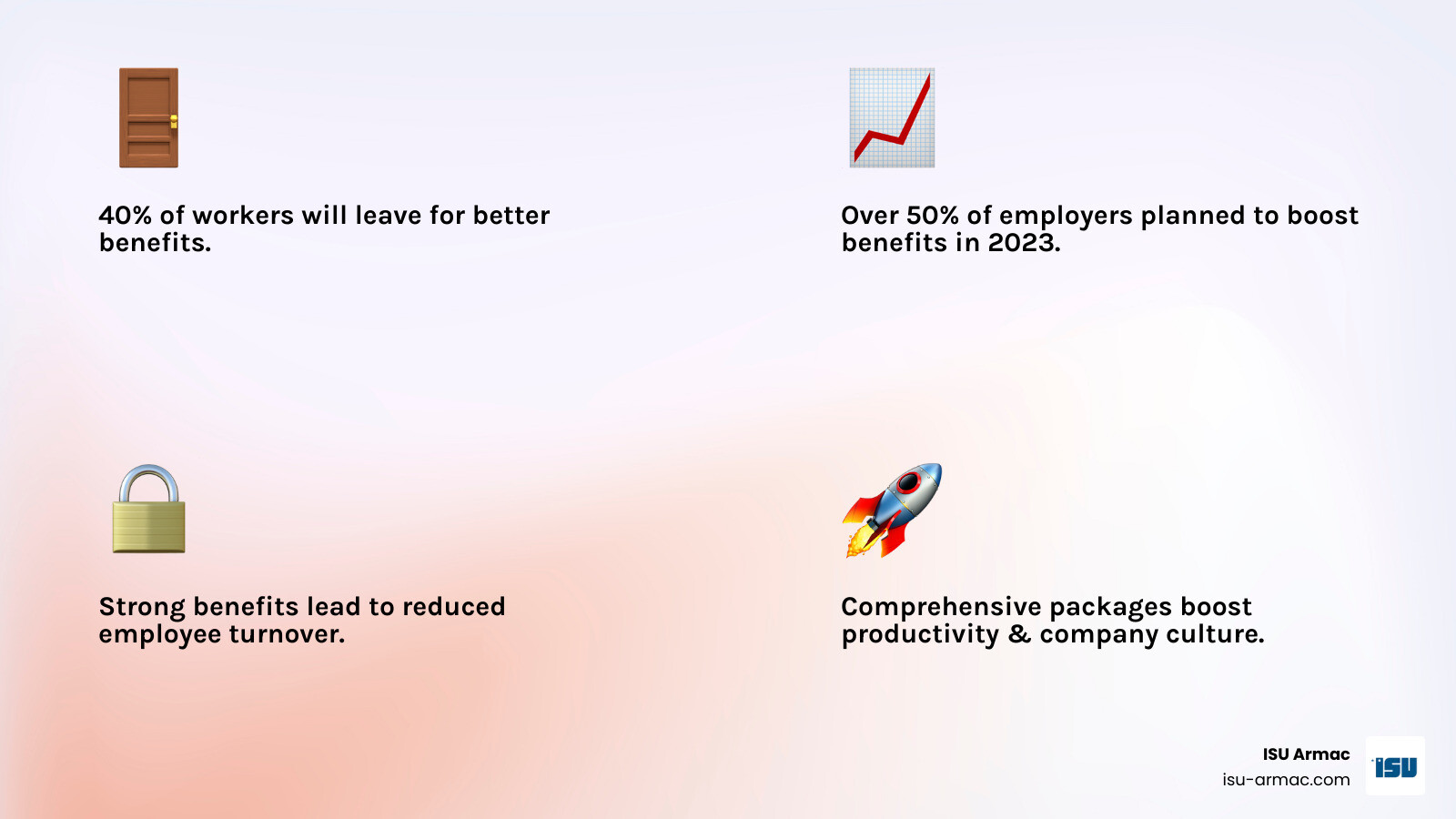
The data shows why these packages matter: 40% of employers report that workers will leave their job for a position with better benefits. Recognizing this, 70% of large employers and 53% of small employers planned to boost their benefits packages in 2023. Comprehensive benefits have shifted from perks to must-have competitive advantages.
For Victorville business owners, balancing employee needs with budget constraints is a major challenge. Rising healthcare costs and complex regulations can feel overwhelming, but successful benefits planning yields reduced turnover, higher productivity, and a stronger company culture.
I’m Ryan McEachron, CEO of ISU Insurance Services ARMAC Agency. I’ve helped countless Victorville businesses design business employee benefits packages that fit their budgets while attracting quality talent. My experience on the Victorville City Council and with local business organizations gives me a unique understanding of the challenges facing High Desert employers.
Basic business employee benefits packages vocab:
- benefits of offering health insurance to employees
- employee benefits consulting firm
- employee life insurance benefits
Why a Strong Benefits Package is Your Ultimate Business Asset
Business employee benefits packages are a secret weapon in a competitive hiring landscape. When salaries are similar, a strong benefits package that shows employees they’re valued often tips the scales.
Companies with strong benefits see higher employee engagement, which translates directly into better productivity and lower turnover costs. When employees feel secure about their health, finances, and work-life balance, they stop job hunting and start building careers with you. This creates a competitive advantage that’s hard to replicate.
The data backs this up. Research on retaining great employees and attracting good talent shows benefits are often the deciding factor. A Mercer survey found that 70% of large employers and 53% of small employers planned to improve their benefits in 2023, recognizing this critical need.
The Core Components of a Comprehensive Employee Benefits Package
Effective business employee benefits packages need a solid foundation. Each component supports your employees’ lives and helps retain great people.

Health and wellness benefits are the cornerstone. This includes medical, dental, and vision coverage, wellness programs, and mental health support. When employees aren’t worried about medical bills, they can focus on their work. Our Employee Benefits Insurance solutions help businesses find the right coverage mix.
Financial security benefits address long-term concerns. Retirement plans like 401(k)s, life insurance, and disability coverage create a financial safety net, showing you’re invested in your employees’ futures.
Work-life balance benefits have become crucial. Paid time off, flexible scheduling, and hybrid work options show you respect employees’ lives outside the office. This pillar often includes parental leave and professional development opportunities.
Legally Required Benefits vs. Voluntary Offerings
Benefits can be mandatory or voluntary. Required benefits are the baseline; voluntary benefits are where you can differentiate your company.
Federal and state laws mandate several benefits, including:
- Workers’ compensation insurance for workplace injuries.
- Social Security and Medicare contributions that match employee payments.
- Unemployment insurance contributions.
The Family and Medical Leave Act (FMLA) requires unpaid leave for certain situations at businesses with 50+ employees. Some states, like California, add their own mandates like paid sick leave. You can find details on federal and state labor requirements through the Department of Labor.
Everything else is a voluntary benefit and your opportunity to stand out. While we help businesses determine if they must provide health insurance (see Are Small Businesses Required to Provide Health Insurance), offering it voluntarily is almost always a smart business decision. These choices become your competitive edge.
Building Your Benefits Plan: The Essential Pillars
A winning business employee benefits package needs a solid foundation. Without core elements like health insurance, retirement plans, paid time off, and disability insurance, even the best perks won’t prevent turnover.

Health and Wellness Benefits
Health coverage is often the top priority for employees. Offering comprehensive health and wellness benefits can be a make-or-break factor in recruitment.
Medical insurance is the heart of most packages, covering everything from routine visits to major hospital stays. Navigating plan types—HMOs, PPOs, and High-Deductible Health Plans—is complex, but we help businesses find the right balance of coverage and cost. Our Group Health Insurance Plans are designed to fit your team and budget.
Dental coverage is crucial. Plans typically cover preventative care (cleanings, X-rays) and procedures like fillings. Importantly, routine dental exams can detect early signs of serious health issues. Check out our Group Dental options.
Vision coverage keeps your employees productive. It typically covers eye exams, glasses, and contact lenses—small costs that make a big difference in daily comfort.
Health Savings Accounts (HSAs) and Flexible Spending Accounts (FSAs) boost your health benefits. HSAs pair with high-deductible plans, allowing pre-tax savings for medical expenses. FSAs work similarly but generally have a “use it or lose it” rule. We specialize in creating Employee Healthcare Plans that make sense for your business.
Financial Security and Retirement Benefits
Benefits that address long-term financial security show you care about your employees’ entire future.
401(k) plans are the standard for retirement. They allow pre-tax contributions, and many employers offer matching contributions—a powerful incentive to save. Our 401k setup process simplifies getting started.
Life insurance provides invaluable peace of mind. Group policies are affordable and offer a tax-free death benefit to beneficiaries. Learn more about our Employee Life Insurance Benefits options.
Disability insurance is a critical safety net. Short-term disability covers brief absences, while long-term disability replaces a percentage of lost wages for extended periods. This coverage can be a financial lifesaver.
Tuition assistance shows you’re invested in employee growth. Section 127 plans allow you to provide up to $5,250 annually in tax-free education benefits.
Paid Time Off and Work-Life Integration
Today’s workforce values flexibility and time to recharge. As of 2023, 28.2% of employees work hybrid schedules, and 12.7% are fully remote.
Vacation days are essential for preventing burnout. Sick leave keeps ill employees home, protecting everyone’s health. Paid holidays are a standard expectation.
Parental leave has become a major differentiator, creating incredible loyalty. Flexible work arrangements, such as adjusted start times or remote options, can dramatically improve job satisfaction.
Don’t overlook mental health benefits. This can include access to therapy, wellness apps, or mental health days, all of which are necessary for long-term employee success and retention.
Designing Competitive Business Employee Benefits Packages on a Budget
Creating outstanding business employee benefits packages on a budget is a common concern for High Desert business owners. Benefits are an investment, costing employers around $13-14 per hour per civilian worker. However, not offering competitive benefits leads to hidden costs like recruitment, training, and lost productivity. Strategic benefits planning is a long-term saving.
The secret is understanding what employees value and finding creative ways to deliver it. This involves employee needs assessments and strategic cost management. We’ve helped many Victorville businesses design Small Business Health Insurance solutions that fit tight budgets.
Smart Health Insurance Solutions for Small Businesses
Health insurance is the largest benefits expense, so getting it right is crucial. Small businesses have more options than ever.
Traditional group health insurance remains popular. The business purchases a plan covering all eligible employees, offering predictable costs and a structure employees understand.
High-Deductible Health Plans (HDHPs) paired with Health Savings Accounts (HSAs) are a game-changer for cost-conscious businesses. They feature lower premiums and offer powerful tax advantages for both employers and employees.
Health Reimbursement Arrangements (HRAs) offer maximum cost control. Instead of buying a group plan, you set aside a fixed amount to reimburse employees for their qualifying medical expenses. This provides flexibility for employees and predictable costs for you.

Group plans offer familiar structure, while HRAs provide high budget control and employee flexibility. Both have tax advantages, but HRAs often give employers more cost predictability. The best choice depends on your team and budget. We specialize in recommending the right Medical Insurance Options for Small Business in Southern California.
Creative & Low-Cost Perks That Make a Big Impact
Some of the most appreciated benefits cost very little but have an outsized impact on employee satisfaction.

Wellness programs don’t need expensive gyms. Consider local gym discounts or mindfulness app subscriptions. Professional development funds, even modest ones, boost morale and skills. Pet insurance can be offered as a voluntary benefit where employees pay the premium, creating big emotional impact for a low cost.
For commuters, commuter benefits using pre-tax dollars create real savings. Flexible schedules might be the highest-impact, lowest-cost benefit available.
Here are five unique, budget-friendly ideas:
- “Giving back” days for volunteering.
- Employee resource groups to build community.
- Financial wellness workshops to reduce money-related stress.
- “Bring your pet to work” days to boost morale.
- Company-sponsored social events to build team cohesion.
The key is spending smarter, not just spending more, to show genuine care for your team.
Administration, Taxes, and Communication
Designing your business employee benefits packages is the first step. Proper administration, tax management, and clear communication are crucial to its success. A benefits package is useless if misunderstood; clear communication and smooth administration open up its value.
Navigating the Tax Implications of Business Employee Benefits Packages
The tax treatment of benefits is generally favorable. The government provides tax incentives to encourage employers to offer them.
For employer tax deductions, most spending on employee benefits is tax-deductible. This includes premiums for health, life, and disability insurance, as well as contributions to retirement plans. Every dollar you invest in benefits reduces your taxable income.
From the employee’s perspective, most traditional benefits are not considered taxable income. Health insurance premiums paid by the employer or contributions to a retirement plan are like a tax-free bonus. However, some benefits, like life insurance coverage above $50,000, can be taxable.
Pre-tax contributions through payroll deduction for health insurance, 401(k)s, or HSAs reduce an employee’s taxable income, saving them money.
Some contributions use post-tax dollars. For example, Roth 401(k) contributions are made after taxes, but the money grows and can be withdrawn tax-free in retirement.
For detailed guidance, the IRS provides comprehensive resources to ensure compliance.
Effectively Managing and Communicating Your Plan
Clear communication and smooth administration transform your investment into real value for your team.
- Benefits administration software streamlines enrollment, tracking, and compliance, reducing paperwork.
- Insurance brokers like our team at ISU Armac take the complexity off your shoulders. We negotiate with carriers, manage renewals, and act as your advocate. When you’re ready, get a Group Benefits Quote and let us handle the heavy lifting.
- Open enrollment is your annual opportunity for benefits education. Provide clear materials and support to help employees make the best choices.
- Your employee handbook should be a clear, accessible guide to all benefits, written in plain English.
- Regular updates and feedback surveys help you understand what’s working and adjust your offerings strategically.
- A dedicated benefits portal gives employees 24/7 access to their plan information.
- Make benefits education a key part of your onboarding process. Explaining the full value of their compensation package reinforces their decision to join your team.
Frequently Asked Questions about Business Employee Benefits Packages
After helping dozens of Victorville and High Desert businesses design their business employee benefits packages, I’ve noticed the same questions come up. Here are the answers to some of the most common ones.
How do I determine which benefits my employees value most?
The best way is to ask them directly using anonymous surveys. This allows for honest feedback. Also, analyze your team’s demographics and life stages—younger employees might prioritize student loan aid, while those with families may value comprehensive health coverage. Focus groups can reveal challenges that surveys miss. Make this an ongoing conversation, not a once-a-year task.
Can a business change its benefits package offerings?
Yes, and it’s common. Most businesses review and adjust their business employee benefits packages annually during open enrollment, driven by rising costs or changing workforce needs.
The key is transparent communication. Employees understand that business conditions change, but they dislike being blindsided. Give plenty of advance notice, explain the reasoning behind any changes, and, if possible, offer alternatives or improvements in other areas. Involving employees in the process can lead to greater acceptance of necessary adjustments.
What is the difference between a fully-insured and a self-funded plan?
This question is about who takes on the financial risk for employee medical care.
In a fully-insured plan, you pay a fixed monthly premium to an insurance company, which then assumes the financial risk. This model offers predictable costs, which is why it’s the traditional choice for most small to medium-sized businesses. Your costs are stable, making budgeting straightforward.
A self-funded plan means the employer pays for employee medical claims directly, essentially acting as the insurer. The main appeal is potential cost savings and greater control; if claims are low, the company saves money. However, the employer is also responsible for high-cost claims. To mitigate this, most self-funded plans include stop-loss insurance, which caps the financial exposure. This model typically makes sense for larger employers with the financial resources to handle claim volatility.
Conclusion
Effective business employee benefits packages are a smart investment, not just an expense. When your employees—the heart of your business—feel valued and secure, it boosts performance, loyalty, and overall success.
We’ve seen how the right benefits mix can transform your workplace. From essential health coverage and retirement plans to flexible work arrangements, each component works together to attract top talent and reduce costly turnover. When an employee feels genuinely cared for, they are far less likely to leave for a small salary increase elsewhere.
We understand that navigating benefits can feel overwhelming for business owners in Victorville, Apple Valley, and the High Desert. The insurance landscape is complex and constantly changing. That’s why we’re here.
As an independent agency, ISU Armac cuts through the complexity to find solutions that work for you. We partner with you to design business employee benefits packages that fit your budget and deliver real value. By shopping multiple carriers, we find the best coverage at rates that make sense for your business.
Your employees will notice the difference, your bottom line will reflect the improved retention, and you’ll have the satisfaction of building a company that supports both your business goals and your team’s well-being.
Ready to take the next step? Contact us to explore your employee benefits options and find how the right benefits package can become your greatest competitive advantage.