
Table of Contents
- What people mean when they search for storage unit insurance GEICO
- Does GEICO renters insurance cover items in a storage unit?
- Check the limit for belongings stored away from home
- What storage-unit insurance may not cover
- GEICO policy versus insurance offered by a storage facility
- California storage insurance: what renters in Victorville should know
- A practical checklist before you store belongings
- If something is stolen or damaged in storage
- When to ask for a coverage review
- Verify the policy, not just the search result
Before you move furniture, clothing, or family keepsakes into a storage unit, I recommend checking what your insurance will actually do if something is stolen or damaged. A search for “storage unit insurance GEICO” often starts with a practical question: Does a renters or homeowners policy you already have protect belongings stored somewhere else?
The answer depends on your policy, the property you store, and the cause of the loss. GEICO’s general guidance can help you identify what to ask, but it cannot confirm the terms of your individual coverage. If you live in Victorville, Apple Valley, Hesperia, or another California community, you also need to understand the insurance terms in your storage rental agreement. I’ll walk through how to compare your existing policy with any coverage offered at the facility, so you can make a decision before you lock the unit.
What people mean when they search for storage unit insurance GEICO
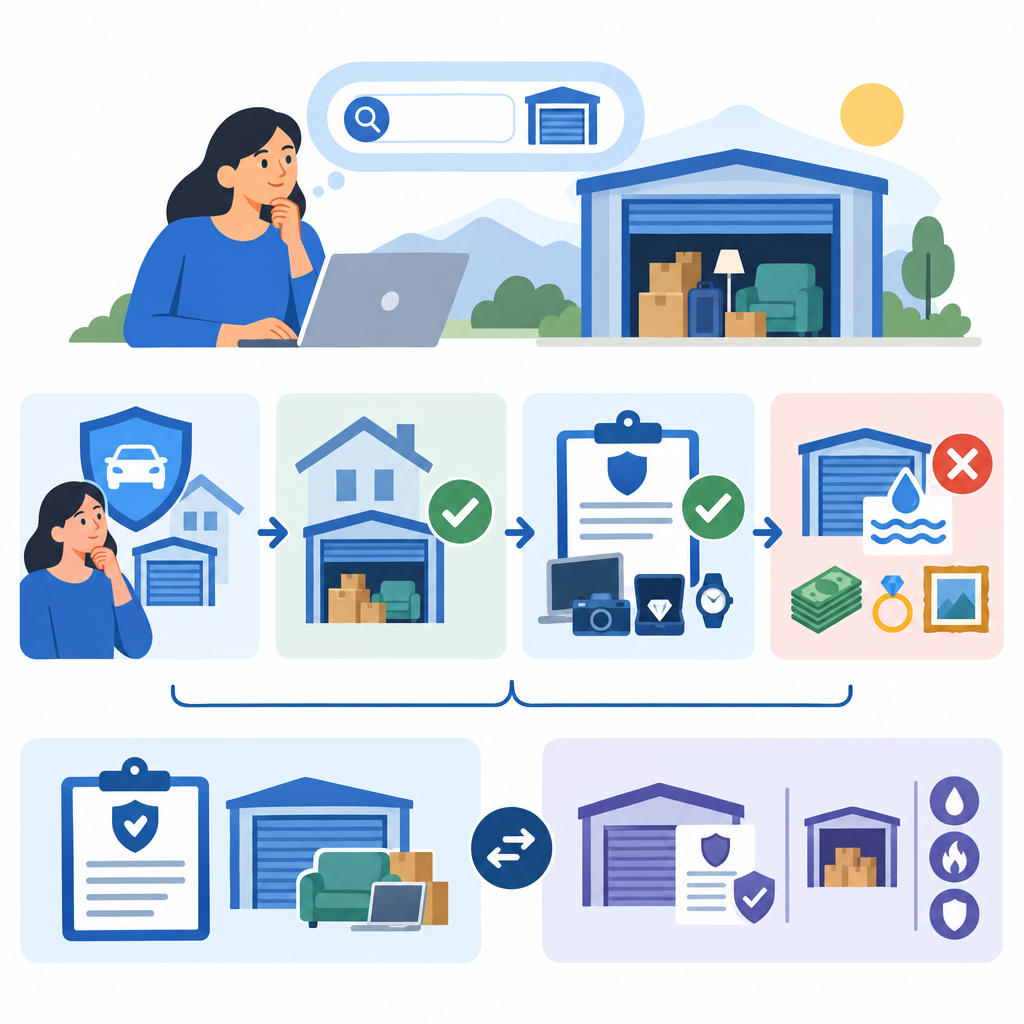
People use this phrase to ask two different questions. The first is whether their existing GEICO-branded renters or homeowners policy covers personal belongings kept in a storage unit. The second is whether they need to buy a separate product from the storage facility or another insurer. Those questions have different answers: an existing policy may provide some off-premises protection, but that does not mean its limit or terms will meet every storage need.
I would start with the declarations page and policy documents rather than the insurer’s name alone. The declarations show key limits and deductibles; the policy and endorsements explain how coverage applies, including restrictions that may not appear in a brief summary. If you cannot find a provision addressing property away from your residence, ask the insurer or the agent who services that policy to explain it.
It also helps to distinguish your belongings from the facility’s building. The coverage you need as a renter generally concerns property you put inside the unit. Do not assume a facility’s insurance for its premises protects your boxes, or that your personal-property coverage insures the storage building. Ask who insures what, in writing, before relying on either arrangement.
Does GEICO renters insurance cover items in a storage unit?
GEICO’s published guidance on renters insurance and storage units says renters coverage may apply to personal belongings in storage for certain covered losses. That is a useful starting point, not a promise that every policy purchased through GEICO responds in the same way. I would not treat an online example as confirmation that a particular theft, fire, or other event is covered.
The term off-premises personal property describes belongings kept away from the insured residence. A storage unit is one setting where those terms may matter. To assess your protection, check whether the policy extends to that location, which causes of loss it covers there, and whether an endorsement changes the standard terms. A policy can cover one kind of damage while excluding another, even when both affect the same unit.
Claim decisions also depend on the circumstances and documentation. The type of property, the cause of damage, the applicable limit, and the deductible can all affect the result. If you have a renters policy associated with GEICO, contact the insurer or servicing agent for your specific documents. I can help you frame the right questions and compare other available options, but I cannot confirm or change the terms of a GEICO policy I do not service.
Check the limit for belongings stored away from home
Even when off-premises property is covered, its available limit may be lower than the personal-property limit shown on your declarations page. GEICO gives 10% of the personal-property coverage limit as a common example of how an off-premises limit might work. It is an example, not a universal GEICO limit or a California rule. Your actual policy could have different wording, limits, and conditions.
To see why the distinction matters, imagine a policy with $40,000 in personal-property coverage and an applicable off-premises limit of 10%. The amount available for qualifying property away from home would be $4,000, subject to all other policy terms. That would not necessarily replace $12,000 worth of belongings in a unit. Nor does a stated limit guarantee a $4,000 payment: the loss must qualify, and the deductible and method of valuing property also matter.
I suggest estimating what it would take to replace everything you plan to store, not just the largest furniture item. List boxes of clothing, tools, electronics, kitchenware, and seasonal possessions; small items can add up quickly. Then ask whether the policy has separate limits for particular categories of property. The California Department of Insurance’s residential insurance guide notes that special limits can apply to some categories and that additional coverage or scheduling may be appropriate. If you are putting valuable items in storage, check their terms individually rather than assuming the general limit applies in full.
What storage-unit insurance may not cover
Before storing property, I would ask about causes of loss that are easy to overlook. Flood, earthquake, moisture, mold, pests, and gradual deterioration raise different coverage questions from a sudden covered event. I am not saying every policy excludes every one of these losses; I am saying you should not assume they are included. Ask for the relevant policy language and whether separate coverage is available when a risk matters to you.
Also review exclusions or limitations involving wear, neglect, and losses that do not fit the policy’s covered causes. A damaged item does not automatically produce a covered claim simply because it was inside an insured unit. How the damage happened matters. Consider the storage conditions and the sensitivity of what you are putting away, particularly if items could deteriorate while stored.
Personal household property and business property deserve separate attention. If you store equipment you use to earn income or inventory you intend to sell, tell your insurer exactly what it is and how you use it. Do not assume a renters or homeowners policy will treat it like ordinary household contents. A business policy or other coverage may be worth discussing, but eligibility and terms depend on the insurer and the property involved.
GEICO policy versus insurance offered by a storage facility
A facility may offer insurance for stored belongings, and its rental paperwork may ask you to show that you have coverage. GEICO advises storage customers to check their existing homeowners or renters coverage and notes that operators may request proof of insurance. I recommend comparing the actual documents before adding a monthly charge or deciding your current policy is sufficient.
Put the options side by side. What property is eligible? Which causes of loss are covered? What are the overall and item-specific limits? Is there a deductible, and does it apply to each claim? Ask how a loss is valued. Actual cash value generally accounts for depreciation, while replacement cost refers to the cost of replacing property under the applicable policy terms. The Insurance Information Institute recommends checking how facility-offered coverage settles losses, as well as confirming limits under your existing policy.
Do not assume the facility’s offer covers every stored item or every kind of damage. Likewise, do not assume it is unnecessary because you already pay for renters insurance. The California Department of Insurance’s required storage disclosure warns that coverage offered at a facility may duplicate insurance available from another source. A comparison can reveal duplication, a genuine gap, or both: one option might cover a cause of loss the other does not while overlapping elsewhere.
California storage insurance: what renters in Victorville should know
California makes an important distinction between buying the insurance offered at a self-service storage facility and meeting the terms of a rental agreement. The state’s required disclosure says you are not required to buy the facility-offered insurance to rent storage space. It also says the rental agreement may require you to provide insurance. In other words, declining the facility’s offer does not necessarily eliminate an insurance requirement in your contract.
The California Department of Insurance also explains that licensed self-service storage facilities or franchisees may offer or sell hazard coverage for tangible personal property in storage or in transit during the rental period. That does not tell you what a particular facility offers or what your agreement accepts. Before move-in, ask the operator what proof it requires, when it must be supplied, and whether your existing policy documentation meets its stated requirements. Do not assume the facility must accept a particular policy.
For Victorville-area residents moving between homes, downsizing, or clearing space, I would also consider the details of the planned storage. How long will the belongings remain there? What will you store, and how will you protect items that are sensitive to the unit’s conditions? These questions help you evaluate both insurance and storage arrangements without relying on assumptions about a particular facility or local loss rates.
A practical checklist before you store belongings
I find a short, written checklist more useful than a quick verbal assurance that “storage is covered.” Before you sign the rental agreement or fill the unit, take these steps:
- Locate your documents. Read the declarations page, personal-property provisions, exclusions, and endorsements. Look for terms governing property away from your residence.
- Confirm location and timing. Ask whether your planned unit qualifies for off-premises coverage and whether any conditions apply to how long property is stored.
- Check the numbers. Verify the applicable off-premises limit, deductible, and any special limits for valuables or other categories.
- Ask about losses and property types. Identify covered causes of loss and ask separately about business equipment, inventory, and anything unusually valuable.
- Compare the facility’s documents. Review its limits, exclusions, deductible, and loss-valuation terms alongside your existing policy. Ask what proof of outside insurance the facility accepts.
- Make an inventory. Photograph belongings before packing and, where practical, keep receipts, descriptions, serial numbers, and estimated replacement values somewhere outside the unit.
The Insurance Information Institute recommends making an inventory of stored property. I suggest saving the questions you send to the insurer or agent and the written answers you receive, along with the policy documents you relied on. If an answer is unclear, ask which provision supports it. This preparation gives you a clearer basis for deciding whether to keep existing coverage, request a change, or compare another option.
If something is stolen or damaged in storage
If you discover a loss, first take reasonable steps to secure the unit and prevent further damage without putting yourself at risk. Photograph the condition of the unit and affected property before cleanup where it is safe and practical to do so. Preserve damaged items and relevant records until you have received instructions about them.
For suspected theft, contact law enforcement and retain the report information. Notify your insurer promptly and follow its instructions and your policy’s reporting requirements. Tell the facility what happened and request any records it can provide under its procedures, such as incident documentation or rental records. Your inventory, photographs, receipts, and a list of missing or damaged items can help you describe the loss accurately.
I would avoid predicting the outcome of a claim before the insurer reviews the facts. Reporting a loss does not establish that it is covered, and a covered loss may still be subject to limits, deductibles, and valuation terms. Keep copies of what you submit and note the dates and names associated with important conversations.
When to ask for a coverage review
I recommend a review before move-in if the unit will hold most of your household, a collection of high-value belongings, or property you cannot readily replace. An inventory can reveal that the applicable off-premises limit is much smaller than the value you intend to store. A review is also worthwhile if the unit will contain business equipment or inventory, since personal and business property may be treated differently.
Another reason to pause is uncertainty about the facility’s offer. If you cannot tell whether it duplicates your existing protection or fills a gap, compare the documents rather than choosing based on the monthly price alone. At ISU Armac Insurance Services, I help customers in Victorville, surrounding High Desert communities, and throughout California review insurance questions and compare available options. If your current policy is serviced elsewhere, I can help you identify questions to take to that insurer; only its documents and authorized representatives can confirm its terms.
Verify the policy, not just the search result
The useful answer to “storage unit insurance GEICO” is not a blanket yes or no. GEICO’s guidance indicates that renters coverage may protect belongings in storage for certain covered losses, but your policy’s off-premises terms, limits, exclusions, and treatment of specific items determine what protection you actually have. California renters should also read the facility’s disclosure and rental agreement before assuming they must buy the offered insurance—or that an existing policy satisfies the agreement.
If you want a broader introduction to the topic, read my related guide, Storage Unit Insurance GEICO: What to Know. When you are ready to compare documents or discuss a possible gap, contact ISU Armac. I can help you work through the questions before your belongings go into storage.