
Why Finding the Right Retiree Health Insurance Matters
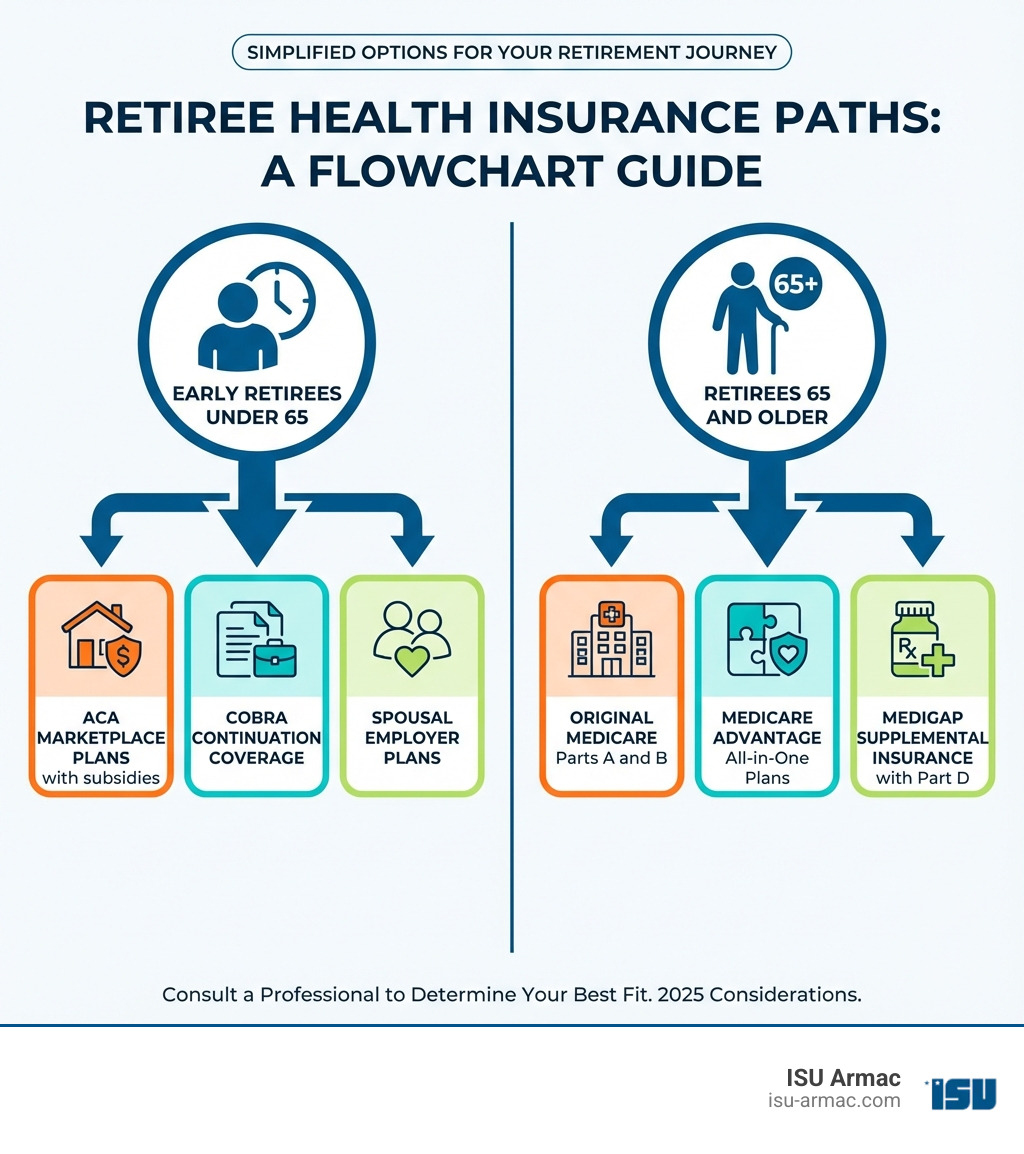
The best medical insurance for retirees depends on your age, income, and health needs—but the stakes are high. Without proper coverage, a single hospital stay or chronic condition can drain your retirement savings. Retirees aged 65 and older typically rely on Medicare as their primary coverage, often supplemented with Medicare Advantage, Medigap, or Part D prescription drug plans. Those retiring before age 65 need to bridge the coverage gap with ACA Marketplace plans, COBRA continuation, or spousal coverage.
Quick Answer: Best Medical Insurance for Retirees
- Age 65+: Original Medicare (Part A & B) + Medigap Plan G for comprehensive coverage, or Medicare Advantage for bundled benefits
- Under Age 65: ACA Marketplace plans with potential subsidies, COBRA for temporary continuation, or spousal employer coverage
- Low Income: Medicaid or Medicare Savings Programs to reduce costs
- Best Medicare Advantage: AARP/UnitedHealthcare for nationwide availability and strong ratings
- Best Part D: Wellcare for low-cost prescription drug coverage
- Best Under-65 Marketplace: Blue Cross Blue Shield for wide network and plan options
Planning ahead is crucial. Most people become eligible for Medicare at age 65, but enrollment timing matters—late signup can trigger permanent penalties. If you retire earlier, losing employer coverage qualifies you for a Special Enrollment Period to buy Marketplace insurance, potentially with income-based subsidies that lower your monthly premiums and out-of-pocket costs. Meanwhile, retirement account withdrawals from IRAs or 401(k)s count as income, affecting your eligibility for financial assistance.
The insurance landscape for retirees involves navigating enrollment periods, understanding how different plans coordinate with each other, and evaluating trade-offs between premiums and coverage. Original Medicare covers hospital and medical services but leaves gaps in costs. Medicare Advantage plans bundle everything together but limit you to specific networks. Medigap policies fill Original Medicare’s cost gaps but require separate prescription coverage. For early retirees, Marketplace plans offer different metal tiers (Bronze, Silver, Gold, Platinum) with varying cost structures.
I’m Ryan McEachron, CEO of ISU Insurance Services ARMAC Agency in Victorville, and I’ve spent over two decades helping Southern California residents steer complex insurance decisions, including finding the best medical insurance for retirees that balances comprehensive coverage with affordability. Through my work with community organizations and the Victorville City Council, I’ve seen how proper retirement planning—especially health insurance—protects families from financial hardship during their golden years.
Navigating Health Insurance for Early Retirees (Under 65)
Retiring before age 65 can be an exciting chapter, but it often means navigating a significant health insurance gap. Since Medicare eligibility generally starts at 65, early retirees need alternative coverage to ensure their health is protected. This transition period requires careful planning to avoid lapses in coverage and unexpected medical bills. Fortunately, several options exist, including the Health Insurance Marketplace (ACA), COBRA, enrolling in a spouse’s plan, Medicaid, and short-term health insurance. Each option has its own benefits and considerations, and we’re here to help you understand them.

The Health Insurance Marketplace (ACA) as a Primary Option
If you retire before 65 and lose your job-based health plan, the Health Insurance Marketplace, established by the Affordable Care Act (ACA), becomes a crucial resource. Losing your employer-sponsored health coverage is considered a “major life change,” which triggers a Special Enrollment Period (SEP). This means you don’t have to wait for the annual Open Enrollment Period (typically November 1 to January 15) to sign up for a new plan. You can enroll in a Marketplace plan up to 60 days before or 60 days after your separation date.
Marketplace plans are offered by private insurance companies and come in different types, such as Health Maintenance Organizations (HMOs) and Preferred Provider Organizations (PPOs). HMOs generally have lower premiums but restrict you to a network of doctors and hospitals. PPOs offer more flexibility to see out-of-network providers, though often at a higher cost. These plans cover essential health benefits, including doctor visits, prescription drugs, hospital care, and mental health services.
For residents of Southern California, the state-specific exchange, Covered California, is where you’ll find these plans. Covered California offers well-rated and widely available private health insurance plans. It’s a great place to explore your options. You can find more information on Navigating the Health Insurance Marketplace and specifically for California residents, you can shop and compare plans on Covered California.
Understanding Financial Assistance and Income Rules
One of the most significant advantages of the ACA Marketplace for early retirees is the availability of financial assistance programs. Many individuals and families qualify for premium tax credits and cost-sharing reductions, which can substantially lower your monthly premiums and out-of-pocket costs (like deductibles, copays, and coinsurance).
Eligibility for these subsidies is based on your income and household size. The lower your income, the more financial help you may receive. This is particularly beneficial for early retirees whose income may decrease significantly after leaving their jobs. For example, individuals with an annual household income at or below 150% of the federal poverty level may qualify for Medi-Cal (California’s Medicaid program) or year-round enrollment through Covered California with significant subsidies.
It’s vital to understand how your retirement savings withdrawals factor into this. Generally, withdrawals from retirement accounts like IRAs and 401(k)s are counted as income for Marketplace eligibility. This means that while these funds are essential for your retirement, they can also influence the amount of financial assistance you receive for health insurance. We recommend checking the IRS guidance on reporting retirement income to understand how these withdrawals are calculated. Strategic withdrawal planning can be key to maximizing your subsidies.
Comparing COBRA, Spousal Plans, and Other Alternatives
While the Marketplace is a strong contender, early retirees have other options to consider:
COBRA Continuation Coverage: The Consolidated Omnibus Budget Reconciliation Act (COBRA) allows you to continue your employer-sponsored health coverage for a limited period (usually 18 months, sometimes longer) after leaving your job. The major downside? You’ll pay the full premium, plus an administrative fee (typically 2%). This can be very expensive, as employers usually cover a large portion of employee health insurance premiums. However, COBRA can be a good temporary bridge if you need immediate, identical coverage and can afford the cost, especially if you anticipate Medicare eligibility or other coverage soon. If your COBRA coverage runs out outside of Open Enrollment, you qualify for a Special Enrollment Period to switch to a Marketplace plan. However, you cannot voluntarily drop COBRA outside Open Enrollment to enroll in a Marketplace plan; this SEP only applies if COBRA runs out. During the annual Open Enrollment Period, you can drop COBRA and replace it with a Marketplace plan.
Joining a Spouse’s Employer Plan: If your spouse or significant other is still working and has employer-sponsored health insurance, you might be able to join their plan as a dependent. This is often a more affordable option than COBRA, as employers typically subsidize a portion of the premium for dependents. However, adding you to their plan may increase their monthly premium, so compare costs carefully.
Medicaid (Medi-Cal in California): For early retirees with limited income and resources, Medicaid offers free or low-cost health coverage. In California, this program is called Medi-Cal. Eligibility is based on income level and household size, and enrollment is available year-round. Medicaid can even be dual-enrolled with Medicare once you turn 65 to further lower medical costs.
Short-Term Health Insurance: These plans can offer temporary coverage for a few months to a year. They often have lower premiums than Marketplace plans but typically provide worse coverage and fewer protections. They may not cover pre-existing conditions, essential health benefits, or prescription drugs, and can have high deductibles. We generally recommend these as a last resort or for very specific, very short gaps in coverage. For more comprehensive individual options, explore our Individual Medical plans.
The Gold Standard: Understanding Medicare at Age 65+
Once you reach age 65, Medicare generally becomes your primary health insurance option. It’s a federal health insurance program for people 65 or older, and some younger people with disabilities or specific conditions. Medicare is often considered the best medical insurance for retirees in this age group, offering substantial benefits at affordable rates. Understanding its structure, particularly the different “Parts,” is crucial for making informed decisions.

Original Medicare (Part A & B) vs. Medicare Advantage (Part C)
Medicare is divided into several parts:
Original Medicare (Part A & Part B): This is the traditional federal program.
- Part A (Hospital Insurance): Covers inpatient hospital stays, skilled nursing facility care, hospice care, and some home health care. Most people don’t pay a monthly premium for Part A if they or their spouse paid Medicare taxes for a certain number of years (typically 10 years or 40 quarters).
- Part B (Medical Insurance): Covers services from doctors and other healthcare providers, outpatient care, durable medical equipment, and some preventive services. Most people pay a monthly premium for Part B ($185 in 2025), and there’s an annual deductible ($257 in 2025).
With Original Medicare, you can see any doctor or hospital nationwide that accepts Medicare. However, it doesn’t cover all costs, leaving you responsible for deductibles, coinsurance, and copayments.
Medicare Advantage (Part C): Also known as “MA Plans,” these are offered by private insurance companies approved by Medicare. They provide all your Part A and Part B benefits and often include prescription drug coverage (Part D) and extra benefits like dental, vision, and hearing. Many plans also include gym memberships like SilverSneakers®. The average cost of Medicare Advantage with prescription drug coverage is $28 per month.
While Medicare Advantage plans can offer more comprehensive benefits and often have lower out-of-pocket costs than Original Medicare, they typically operate within networks (HMO, PPO) and may require referrals for specialists. AARP/UnitedHealthcare offers many Medicare Advantage plans with low prices and good coverage, available nationwide, and is a popular choice for many retirees. You can learn more about Getting started with Medicare coverage.
Filling the Gaps: Medigap and Prescription Drug Plans (Part D)
Original Medicare leaves gaps in coverage, such as deductibles, coinsurance, and copayments. To cover these out-of-pocket costs, many retirees choose:
Medigap (Medicare Supplement Insurance): These plans are sold by private companies and work with Original Medicare. They help pay some of the healthcare costs that Original Medicare doesn’t cover. Medigap policies are standardized, meaning plans with the same letter (e.g., Plan G) offer the same basic benefits, regardless of the insurance company.
- Medigap Plan G is widely considered one of the best Medicare Supplement plans for new enrollees (those eligible for Medicare on or after January 1, 2020). It covers all costs with Original Medicare except for the Medicare Part B deductible. This means once you meet your Part B deductible, Plan G typically covers 100% of your remaining Medicare-approved Part A and Part B costs, including coinsurance and copayments. AARP/UnitedHealthcare is a top provider for Medigap plans.
Prescription Drug Plans (Part D): Original Medicare generally doesn’t cover most outpatient prescription drugs. Part D plans are offered by private insurance companies approved by Medicare and help cover the cost of prescription medications. If you have Original Medicare, you’ll typically enroll in a separate Part D plan. If you have a Medicare Advantage plan, prescription drug coverage is usually included.
- It’s crucial to enroll in a Part D plan when you’re first eligible (or have other “creditable” prescription drug coverage, meaning it’s at least as good as Medicare’s). Failing to do so can result in a permanent late enrollment penalty. Wellcare offers Medicare Part D plans with low average monthly rates, some starting at $0 per month, and $0 copays for generic drugs, making them an excellent choice for many.
Choosing a Medicare Supplement plan is a significant decision, and we can help you compare options from various carriers to find the one that best suits your needs and budget.
Finding the Best Medical Insurance for Retirees: A Comparison Guide
When evaluating the best medical insurance for retirees, whether you’re under or over 65, several key factors come into play. It’s a bit like buying a car – you need to consider not just the sticker price, but also fuel efficiency, maintenance costs, and whether it fits your lifestyle. For health insurance, these factors include:
- Premiums: Your monthly payment for coverage.
- Deductibles: The amount you pay out-of-pocket before your insurance starts to pay.
- Out-of-Pocket Maximums: The most you’ll have to pay for covered services in a plan year.
- Provider Networks: Which doctors, hospitals, and specialists are covered (HMO, PPO, EPO).
- Prescription Formularies: The list of drugs covered by the plan and their cost tiers.
- Special Group Plans: Exclusive options available through former employers, unions, or specific associations.
How to Choose the Best Medical Insurance for Retirees Over 65
For those aged 65 and older, your choices primarily revolve around Medicare. The decision between Original Medicare (with Medigap and Part D) and Medicare Advantage (Part C) is fundamental.
- Evaluating Medicare Advantage Plans: If you prefer an all-in-one plan with potentially lower monthly premiums and extra benefits (like dental, vision, and hearing), a Medicare Advantage plan might be for you. These plans can be a great value, but they often come with network restrictions. We recommend making a list of your preferred doctors and specialists to ensure they are in the plan’s network before enrolling. AARP/UnitedHealthcare offers many well-regarded Medicare Advantage plans.
- Comparing Medigap Plan Benefits: If you value the freedom to see any doctor or hospital that accepts Medicare, and want predictable, lower out-of-pocket costs, Original Medicare combined with a Medigap policy is often the best medical insurance for retirees. Plan G, in particular, is a popular choice for new enrollees because it covers nearly all the gaps in Original Medicare, protecting you from unexpected bills. While Medigap premiums can be higher than Medicare Advantage premiums, your out-of-pocket costs for services are typically much lower and more predictable.
- Assessing Your Healthcare Needs vs. Plan Costs: If you anticipate frequent doctor visits, specialist care, or significant prescription drug needs, a plan with lower out-of-pocket costs (like Original Medicare + Plan G) might be more cost-effective in the long run, despite higher premiums. If you’re generally healthy and prefer a lower premium with bundled benefits, a Medicare Advantage plan could be a good fit.
How to Choose the Best Medical Insurance for Retirees Under 65
For early retirees, the ACA Marketplace is likely your main avenue for health coverage.
- Comparing ACA Marketplace Tiers: Marketplace plans are categorized into metal tiers: Bronze, Silver, Gold, and Platinum.
- Bronze plans have the lowest monthly premiums but the highest deductibles and out-of-pocket costs. They’re best if you don’t expect to use much medical care.
- Silver plans have moderate premiums and moderate out-of-pocket costs. They’re particularly valuable if you qualify for cost-sharing reductions, which significantly lower your deductibles, copays, and coinsurance.
- Gold and Platinum plans have the highest monthly premiums but the lowest deductibles and out-of-pocket costs. They’re ideal if you anticipate frequent medical care.
- Balancing Monthly Premiums with Potential Out-of-Pocket Costs: Your choice of tier should reflect your expected healthcare usage and financial comfort with potential out-of-pocket expenses. Premium tax credits can significantly reduce your monthly premium, especially for Silver plans.
- Verifying Doctor and Hospital Networks: Always verify that your preferred doctors, specialists, and hospitals are in the network of any plan you consider. Blue Cross Blue Shield offers well-rated and widely available private health insurance plans through HealthCare.gov or state marketplaces like Covered California.
Special Considerations for Couples and Group Plans
Retirement planning for health insurance becomes even more nuanced for couples or those with access to employer/union benefits.
- Coordinating Coverage for Couples: When one spouse is 66 and Medicare-eligible, and the other is 62 and has retired early, you’ll need separate insurance strategies. The Medicare-eligible spouse should enroll in Medicare. The younger spouse can then explore ACA Marketplace plans (potentially with subsidies), COBRA, or join the Medicare-eligible spouse’s former employer plan if that option exists. Coordinated planning is essential to ensure continuous coverage for both individuals.
- Evaluating Group-Sponsored Retiree Plans: Some unions or former employers, particularly in California’s public sector, offer continued healthcare benefits to retirees. For instance, AFL-CIO Medicare Advantage plans are available exclusively to retired union members and their spouses/partners, offering benefits like prescription drug coverage, telehealth, and hearing/vision coverage. Similarly, for public employees in California, CalPERS (California Public Employees’ Retirement System) offers extensive plans and rates for retirees. These plans often have specific rules and eligibility requirements. We recommend comparing these group benefits carefully against private plans (like Medigap or Medicare Advantage) to determine which offers the best value and coverage for your unique situation.
Frequently Asked Questions about Retiree Health Insurance
What are the options for couples where one spouse is on Medicare and the other isn’t?
This is a common scenario we encounter in Southern California. The solution involves a two-pronged approach:
- Medicare for the Eligible Spouse: The spouse aged 65 or older should enroll in Medicare Part A and Part B when eligible. They can then choose between Original Medicare (supplemented with a Medigap plan and Part D) or a Medicare Advantage plan.
- Coverage for the Non-Eligible Spouse: The younger spouse (under 65) will need separate coverage until they reach Medicare eligibility. Their options include:
- Health Insurance Marketplace (ACA): This is often the most cost-effective option, especially if they qualify for premium tax credits. Losing job-based coverage due to retirement qualifies them for a Special Enrollment Period.
- COBRA: If available from their former employer, this can offer temporary continuation of their old plan, though it’s typically expensive.
- Spousal Employer Plan: If the Medicare-eligible spouse’s former employer offers retiree benefits that extend to younger spouses, this could be an option. Alternatively, if the younger spouse’s former employer offers a group plan, they might be able to stay on it.
Coordinated planning is key to ensure continuous, affordable coverage for both individuals. We can help you steer these separate insurance strategies to find the best medical insurance for retirees in your unique situation.
How do my 401(k) or IRA withdrawals affect my health insurance costs?
This is a critical point for early retirees seeking financial assistance on the ACA Marketplace. Generally, withdrawals from your retirement savings accounts (like 401(k)s and IRAs) are counted as taxable income by the IRS. For the purpose of calculating eligibility for premium tax credits and cost-sharing reductions on the Marketplace, this income is included.
This means that substantial withdrawals could potentially:
- Reduce your subsidies: Higher income means lower or no premium tax credits.
- Impact your income bracket: Pushing you into a bracket where you qualify for less assistance or even disqualify you from certain programs like Medi-Cal.
Strategic withdrawal planning is therefore crucial. You might consider consulting a financial advisor to understand how different withdrawal strategies could affect your eligibility for health insurance subsidies, helping you find the best medical insurance for retirees without prematurely depleting your savings. Remember to refer to the IRS guidance on reporting retirement income for detailed information.
Where can I get free, unbiased help with my decision?
Navigating the complexities of retiree health insurance can feel overwhelming, but you don’t have to do it alone. Several reliable resources offer free and unbiased assistance:
- State Health Insurance Assistance Programs (SHIP): These programs offer free, personalized counseling to Medicare beneficiaries and their families. They can help you understand your options, compare plans, and enroll. You can Find your local SHIP office for free counseling.
- Licensed Insurance Agents: Reputable, independent agents, like us at ISU Armac, are licensed professionals who can explain various plans from multiple carriers. We can help you compare options, understand the fine print, and apply for coverage that aligns with your needs and budget. Our goal is to find you the best coverage at the lowest rates.
- Non-Profit Enrollment Assisters: Organizations like local aging services agencies often have trained counselors who can provide guidance on Medicare, Medicaid, and Marketplace plans.
Conclusion: Securing Your Health and Wealth in Retirement
Finding the best medical insurance for retirees is one of the most important aspects of a secure and enjoyable retirement. It’s a journey that requires planning, understanding your options, and making informed decisions custom to your unique circumstances.
We’ve explored the diverse landscape of retiree health insurance, from bridging the gap before Medicare eligibility with ACA Marketplace plans, COBRA, or spousal coverage, to delving into the intricacies of Original Medicare, Medicare Advantage, Medigap, and Part D for those aged 65 and older. We’ve highlighted the importance of understanding financial assistance, how retirement withdrawals impact eligibility, and the special considerations for couples.
The key takeaways are clear: plan ahead before retiring, understand your age-based options, and review your plan annually to ensure it continues to meet your evolving health needs and budget. The value of professional guidance cannot be overstated. We understand that this can all feel like a maze, but you don’t have to steer it alone.
At ISU Armac, we are committed to helping our Southern California community find comprehensive and affordable health insurance solutions. For personalized assistance in finding the right coverage from multiple top-rated carriers, explore our Medicare Supplement insurance options. We’re here to help you secure your health and wealth in retirement, so you can enjoy your golden years with peace of mind.