
Why Vacant Home Insurance is Critical for Property Owners
Vacant home insurance protects empty properties from risks that standard homeowners policies won’t cover. Here’s what you need to know:
Key Facts:
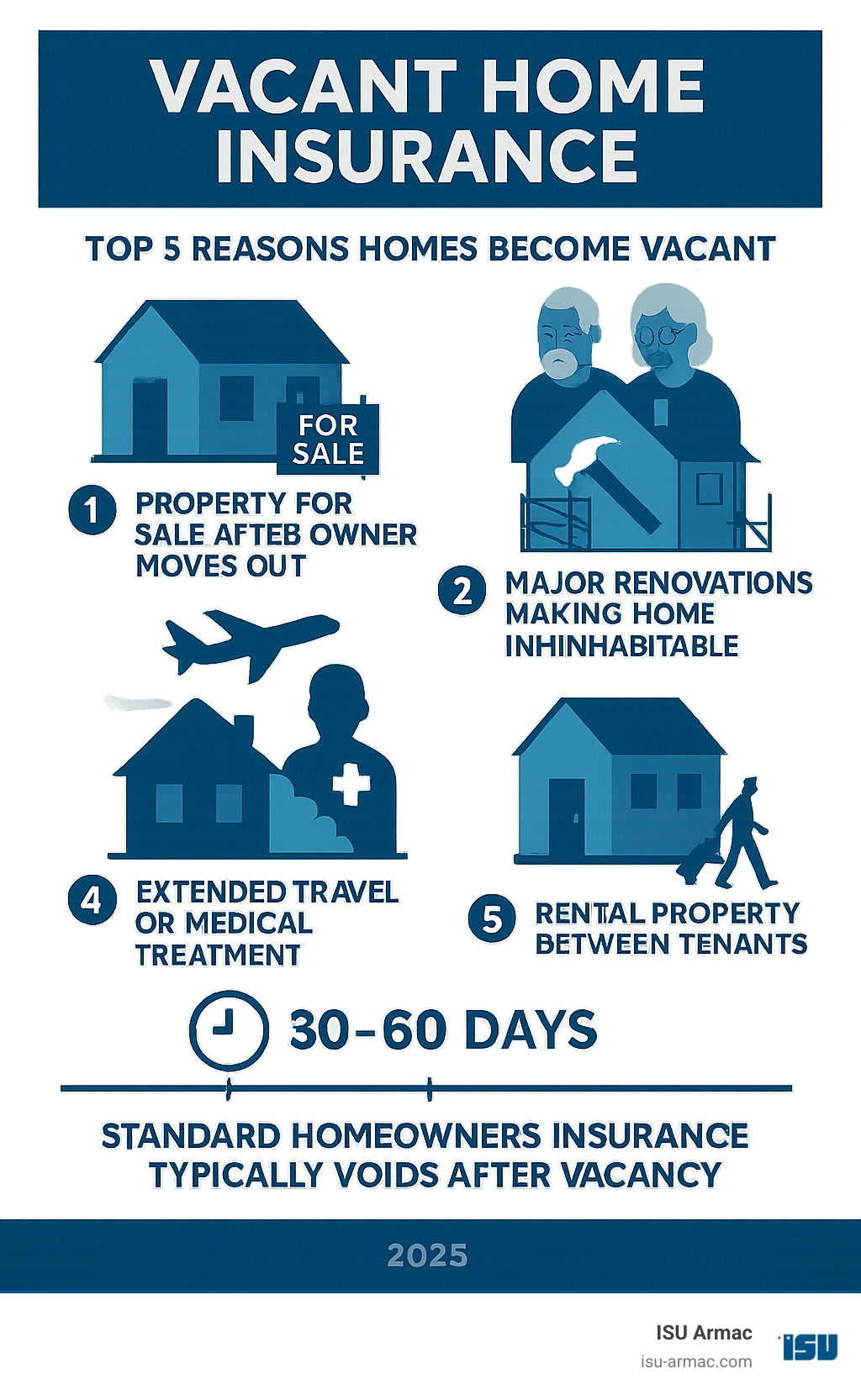
- Standard homeowners insurance typically voids coverage after 30-60 days of vacancy
- Vacant homes face higher risks of vandalism, theft, and undetected damage
- Coverage can cost 1.5 to 3 times more than regular home insurance
- You need specialized coverage whether the home is for sale, under renovation, or inherited
When You Need It:
- Home empty for more than 30-60 days
- Property undergoing major renovations
- House for sale with no occupants
- Inherited property awaiting decision
- Extended travel or hospitalization
Nearly 1.3 million property crimes were reported in Canada in 2022, making vacant properties especially vulnerable targets. Standard policies simply aren’t designed for the unique risks empty homes face.
The bottom line: Don’t assume your regular homeowners policy covers a vacant property. Most insurers will deny claims if they find your home was unoccupied when damage occurred.
I’m Ryan McEachron, CEO of ISU Insurance Services ARMAC Agency. With over 25 years of experience in Victorville, I’ve helped High Desert residents steer complex insurance needs, including vacant home insurance. My community involvement provides deep insight into the unique property risks facing our region.
Vacant home insurance helpful reading:
Understanding the Key Difference: Vacant vs. Unoccupied Homes
To an insurer, not all empty houses are the same. The difference between “vacant” and “unoccupied” might seem minor, but it can make or break your coverage. Getting the classification wrong can lead to a denied claim and a hefty repair bill. Let’s clear up the confusion.

What Makes a Home ‘Vacant’?
A home is ‘vacant’ when it has no occupants, no personal belongings, and often no utilities. Crucially, there is no clear intent for anyone to return soon. This status applies when you’re selling after relocating, have inherited an empty property, or are doing major renovations that make it unlivable. Insurers view vacant homes as high-risk properties because small issues like leaks or vandalism can go unnoticed and become major disasters.
What Makes a Home ‘Unoccupied’?
An ‘unoccupied’ home is temporarily empty, but the furniture stays, utilities are on, and you intend to return. This applies during extended vacations, hospital stays, or short-term work assignments. Your belongings remain, maintaining a lived-in appearance. Seasonal properties are also typically considered unoccupied, not vacant. These situations may qualify for secondary home insurance, which is designed for intermittent occupancy.
Comparing Vacant vs. Unoccupied Property Characteristics
| Criteria | Vacant Home | Unoccupied Home |
|---|---|---|
| Occupancy Status | No occupants present | No occupants currently |
| Personal Belongings | None or very few items | Furnished with personal property |
| Utilities | Often disconnected | Usually remain connected |
| Owner’s Intent | No intent to return soon | Clear intent to return |
| Insurance Risk Level | Higher risk profile | Moderate risk increase |
Understanding these distinctions helps you communicate accurately with your insurance provider. Misclassifying your property’s status can lead to coverage gaps or claim denials when you need protection most. When in doubt, contact your agent to discuss your specific situation and ensure you have the right coverage in place.
Why Standard Homeowners Insurance Falls Short for Empty Properties
Your standard homeowners policy assumes someone is living in the house. When that’s no longer true, your coverage is at risk. A burst pipe or break-in that occurs after the home has been empty for a few weeks could result in a denied claim, leaving you with devastating repair costs.
Vacant home insurance exists because regular policies fall short when properties sit empty. The insurance industry knows that empty houses face dramatically different risks than occupied ones. A home can be left vacant for some time for several reasons, such as listing it for sale or conducting extensive repairs. But no matter the cause, an unoccupied property is always open to risks like theft, with nearly 1.3 million property crimes reported in Canada in 2022.

Specific Risks Facing Vacant Homes
Empty houses are magnets for trouble. When no one’s around, small problems become big ones fast.
- Vandalism and theft: An empty house is an easy target for criminals who may steal copper pipes and appliances. The damage from the break-in can be more costly than the stolen items.
- Arson and fire: Fires in empty homes, whether accidental or intentional, often cause more damage because no one is present to report them quickly. A minor electrical issue can become a total loss.
- Water damage from burst pipes: This is a common and costly risk. In the High Desert, temperature swings can cause pipes to burst. Without anyone present, water can run for weeks, causing massive damage.
- Weather-related damage: A small roof leak from a storm can become a major structural problem when no one is there to make emergency repairs.
- Squatters and liability: Squatters create legal nightmares that require lengthy court processes to resolve. You also remain liable for injuries that occur on your property, even if it’s empty.
These risks are exactly why you might want to understand does homeowners insurance cover wildfires? and other perils that could affect any property, vacant or occupied.
The 30-60 Day Rule and Policy Invalidation
Most standard homeowners policies include a vacancy clause. This fine print typically states that if your home is empty for 30 to 60 consecutive days, your coverage for certain types of damage may be reduced or eliminated. The exact timeframe varies by insurer, but the consequences are universally harsh.
This means fire, theft, vandalism, or water damage occurring after your home crosses that vacancy threshold might not be covered. Your insurance company can legally deny your claim, leaving you with massive repair costs.
Notifying your insurer about vacancy isn’t just a good idea—it’s essential. If you don’t, you risk denied claims and policy cancellation. Once an insurer cancels your policy for non-disclosure, finding new coverage becomes much more difficult and expensive.
The bottom line is simple: don’t assume your regular homeowners policy covers a vacant property. That assumption could cost you everything.
A Closer Look at Vacant Home Insurance Coverage
Vacant home insurance provides focused protection when your standard policy no longer applies. It’s different from standard coverage. Most policies are “named perils,” meaning they only cover risks explicitly listed. Claims are often paid at Actual Cash Value (ACV), which includes depreciation, not full replacement cost.
The primary focus is protecting the dwelling (the structure) and providing liability coverage for injuries on the property. Depending on your needs, this coverage can be an endorsement to an existing policy or a standalone policy. An ISU Armac agent can help you decide which is best.
What Does Vacant Home Insurance Typically Cover?
Vacant home insurance focuses on the big-ticket disasters that could devastate an empty property. While every policy is different, most cover these essentials:
- Fire and lightning protection is typically your foundation coverage.
- Wind and hail damage is another crucial protection, especially in the High Desert.
- Explosions from gas leaks or other events are often included.
- Vandalism coverage may be optional but is highly recommended.
- Liability coverage remains important if someone is injured on your property, even a trespasser.
For more comprehensive protection options, you might want to explore our vacant building insurance coverage.
Common Exclusions and Limitations
Understanding what’s not covered can save you from unpleasant surprises. Vacant home insurance policies often have significant gaps compared to standard homeowners coverage.
- Personal property coverage is usually minimal or nonexistent.
- Theft of contents is often excluded, though vandalism to the structure may be covered.
- Glass breakage from unknown causes often isn’t included.
- Water damage from freezing is frequently excluded unless you’ve taken precautions like draining pipes or maintaining heat.
- Earthquakes and floods almost always require separate coverage.
- Mold and fungus damage that develops over time may also be excluded.
The key is reviewing your specific policy details with one of our experienced agents. We’ll make sure you understand exactly what’s covered and help identify any gaps that need addressing.
The Cost of Vacant Home Insurance and How to Manage It
Vacant home insurance costs significantly more than a standard policy due to increased risks like vandalism, theft, and undetected damage. Insurers see an empty home as a much higher liability.
Expect to pay 1.5 to 3 times your standard premium. For example, a $1,800 annual policy could cost between $2,700 and $5,400 with vacant home coverage. Fortunately, there are strategies to manage these costs and get the best possible rate.

Factors That Influence Your Premium
Several key factors determine what you’ll pay:
- Location: A home in a high-crime area or far from a fire station will cost more to insure. We understand how local factors in Victorville, Apple Valley, and Hesperia impact rates.
- Duration of vacancy: A home empty for three months is a different risk than one vacant for two years, and pricing reflects that.
- Home’s condition and age: Older properties with outdated systems are riskier and cost more to insure, as problems can go unmonitored.
- Security measures: Installing alarms, deadbolts, and monitored security systems demonstrates you’re proactive, which can lower premiums.
- Coverage choices: Higher coverage limits mean higher premiums, while a larger deductible can reduce your payments.
- Claims history: Past claims can influence what you’ll pay for vacant home coverage.
- Reason for vacancy: Insurers view a home under renovation differently than one that’s abandoned.
Steps to Protect Your Property and Lower Costs
The best way to manage costs is to actively reduce risk. Insurers reward homeowners who take these steps:
- Install security systems: A comprehensive setup with alarms and cameras protects your property and can lower insurance costs. According to Forbes, having security systems in place can potentially lower your insurance premiums.
- Create the illusion of occupancy: Use timed interior lights and motion-sensor exterior lights. Keep the lawn mowed and walkways clear to show the property is cared for.
- Prevent water damage: Shut off the main water supply and drain all pipes, including water heaters and toilets. If you can’t drain them, maintain heat at 55°F to prevent freezing.
- Monitor the property regularly: Have a trusted person check the home every few days, as some insurers require. They should collect mail, remove flyers, and inspect for problems.
- Remove valuables and stop deliveries: Eliminate theft temptation and prevent the telltale accumulation of mail that signals an empty house.
- Unplug unnecessary appliances: This reduces fire risk and saves on utility costs.
These measures show insurers you’re a responsible property owner, which often translates to better rates. If you’re looking for the most cost-effective options, we can help you find the cheapest vacant home insurance that still provides the protection your property needs.
Frequently Asked Questions about Vacant Home Insurance
Over my 25 years in the insurance business, I’ve noticed that vacant home insurance questions tend to follow predictable patterns. Homeowners find themselves in unexpected situations and suddenly need answers fast. Let me share the most common concerns we hear at ISU Armac and provide you with the clarity you need.
Do I need vacant home insurance for renovations?
It depends on the scope of your renovation. If the work makes your home uninhabitable for more than 30 days (e.g., gutting a kitchen or major plumbing work), you will likely need specialized coverage. For major renovations, you may need both vacant home insurance for the structure and a builder’s risk insurance policy to protect materials and the work in progress. The most important step is to inform your provider before you begin. This ensures you have the right protection and avoid coverage gaps.
Can I get insurance for a vacant lot?
Yes, but it’s a different type of policy than vacant home insurance. Vacant lot insurance focuses primarily on liability protection. It shields you from claims if someone is injured on your property, even a trespasser. This is crucial because you can be held responsible for medical and legal costs. This coverage is especially important if you’re holding the land for investment or future development. Our land liability insurance specialists can help you find the right protection.
How do I get the best vacant home insurance policy?
Finding the best policy means balancing cost with the right protection for your investment. Here are key steps:
- Compare quotes: Work with an independent agency like ISU Armac to shop multiple carriers, as rates and options vary widely.
- Review policy details: Understand exactly which perils are covered, whether claims are paid at actual cash value or replacement cost, and what’s excluded.
- Ask about endorsements: A vacancy endorsement on your existing policy might be more cost-effective than a standalone policy for temporary situations.
- Be transparent: Fully disclose the reason for vacancy, its expected duration, and the property’s condition to avoid denied claims.
- Consider specialized insurers: Some companies focus on vacant properties and may offer better-suited coverage.
Our team can guide you through this process to secure the best vacant home insurance for your specific needs.
Conclusion
When your home is empty, your standard homeowner’s insurance is likely insufficient. The unique risks of vacant properties—from vandalism to burst pipes—require specialized protection. Vacant home insurance is essential, not optional.
Understanding the difference between “vacant” and “unoccupied” and being aware of the standard policy’s 30-60 day rule can save you from a denied claim and devastating financial loss. While vacant home insurance costs more, the premium is a wise investment in your financial security.
At ISU Armac, our independent agency has over 25 years of experience helping High Desert residents find the best coverage at competitive rates. We understand the risks in Victorville, Apple Valley, and Hesperia. Don’t gamble with your property. Securing the right coverage is the difference between a minor issue and a major financial disaster.
Find the right protection for your vacant property by exploring our Home Insurance options.