
Your Quick Guide to Insurance and License Plates
When you ask, “do i need insurance to get license plates?”, the answer is almost always yes. In most places, including Ontario, Canada, and the majority of U.S. states, having valid car insurance is a fundamental requirement. It’s not just a good idea; it’s the law.
Here’s the quick truth:
- Yes, for vehicle registration: You need insurance to register a vehicle and get permanent license plates.
- Yes, for temporary plates: Even for temporary paper tags, insurance is typically required.
- Yes, for renewal: To renew your license plate registration, you’ll need active insurance.
- It’s mandatory for driving: All states and provinces require insurance to legally operate a vehicle on public roads.
This means you can’t typically get those shiny new plates for your car without first proving you have an active insurance policy.
I’m Ryan McEachron, CEO of ISU Insurance Services ARMAC Agency. Over the years, I’ve seen countless individuals steer the process of vehicle registration, and understanding the core question, “do i need insurance to get license plates,” is always the first step. I’m here to help clarify these essential requirements so you can get on the road legally and safely.
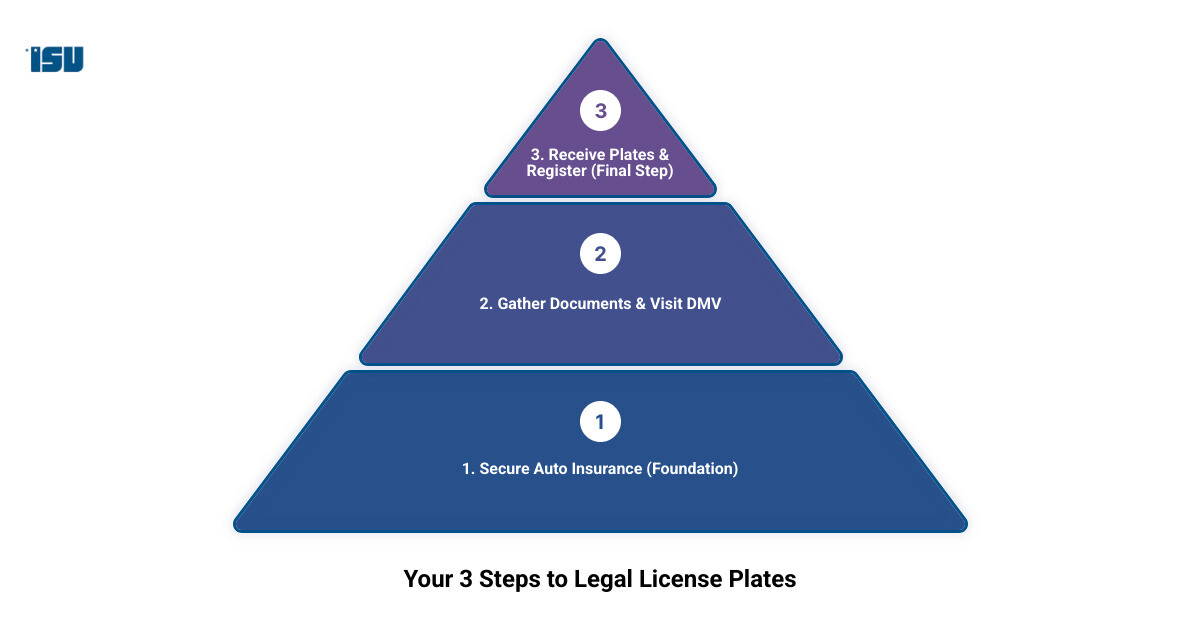
Why Insurance Is the First Step to Getting Your Plates
Alright, let’s talk about getting those shiny new license plates for your car. It might seem like a simple task, but there’s a very important first step that many folks wonder about: insurance. The truth is, your journey to legally driving your vehicle starts not with the plates themselves, but with securing the right auto insurance.
This isn’t just a tiny hoop to jump through. It’s a huge part of being a responsible car owner and, frankly, it’s the law in almost every place. We know that dealing with vehicle registration can feel a bit like a maze, but our goal here is to make it as clear and simple as possible for you.
When you buy a car, whether it’s brand new or new-to-you, the idea is that you’ll be driving it on public roads. And let’s be honest, driving comes with its own set of risks. Auto insurance is like your personal shield. It’s there to protect you, other drivers on the road, and your bank account if something unexpected happens. Proof of insurance, which usually comes as a digital or physical card, is simply your way of showing that you meet the basic financial responsibility rules set by your state or province. This proof is almost always a must-have before you can put those license plates on your car, renew your registration, or even get a temporary permit.
Driving without insurance, or without showing that you can cover potential damages, comes with some pretty serious downsides. We’re talking about big fines, community service, having your driver’s license taken away, your vehicle being impounded, and in some cases, even jail time. For example, in Ontario, if you get pulled over and can’t show your insurance card, you could be looking at fines up to $400. And it’s not just about legal trouble. If you happen to get into an accident without insurance, you’d be personally on the hook for all the costs of damages and injuries, which could be financially devastating.

The “Chicken and the Egg” Problem: Insurance or Plates First?
Ah, the classic head-scratcher: “How can I insure a car if I don’t have plates yet?” or “How can I get plates if I don’t have insurance?” It’s a common question, and the answer is usually quite clear: insurance almost always comes first.
Most insurance companies are happy to set up a policy for you using your car’s Vehicle Identification Number (VIN), even before you have the actual license plate number. Think of your VIN as your car’s unique fingerprint. When you buy a new or used car, especially from a dealership, they’ll typically ask for proof of insurance before you can drive it off the lot. This makes sure that your vehicle is covered from the very moment you take ownership.
Once you have that VIN, getting an insurance quote is super easy. We at ISU Armac can even help you compare options from many different carriers to find you the best coverage at the best price, making this first step smooth and simple. After you’ve secured your policy, you’ll get your proof of insurance. This is what you’ll show during the vehicle registration process to finally get your permanent license plates. And don’t worry, once those official plates are in your hands, you just give the license plate number to your insurance company, and they’ll update your policy details. Easy peasy!
For our friends in Victorville, CA, and the surrounding Southern California areas, knowing the ins and outs of local auto insurance is a big advantage. We specialize in Auto Insurance in Victorville, CA and are always ready to help you get the coverage you need, quickly and affordably. So, if you’re asking, “do i need insurance to get license plates?”, remember: insurance is your trusted co-pilot on this journey.
The Step-by-Step Guide to Vehicle Registration
Alright, so you’ve got your insurance sorted – great job! Now for the exciting part: getting your vehicle officially registered and those shiny new license plates. This step can feel a little different depending on where you are. Are you in a sunny U.S. state like California, or perhaps one of Canada’s beautiful provinces, such as Ontario? And did you buy a brand-new car or a trusty used one? These details will slightly change your path.
In the U.S., you’ll typically head to your local Department of Motor Vehicles (DMV) or a similar state agency. Up in Canada, places like ServiceOntario handle registrations, and Quebec has its own Société de l’assurance automobile du Québec (SAAQ). If you bought your car from a dealership, especially a new one, they often lend a helping hand with much of the paperwork, sometimes even giving you temporary plates on the spot. But if you snagged a used car from a private seller, the ball’s usually in your court. Just keep an eye on those deadlines! In Ontario, for example, you have a quick six days to register after buying a car. Quebec gives you a bit more breathing room, up to 30 days. Knowing your local rules saves you from any unexpected surprises.

What Documents Do I Need to Get License Plates?
Think of this as your “treasure hunt” list. Gathering all your documents before you go can save you a ton of time and a headache or two at the DMV or service center. While the exact list can vary a little, here’s what you’ll very likely need to get those plates:
- Your Valid Driver’s License or ID: This proves who you are! (In Ontario, if you don’t have a driver’s license, you’ll need a Registrant Identification Number, or RIN).
- Proof of Insurance: Remember how we talked about do i need insurance to get license plates? This is where that proof comes in handy! Whether it’s your “pink card” in Canada or your insurance ID card in the U.S., you’ll need to show that you’re covered.
- Proof of Purchase / Bill of Sale: This is your receipt, showing you’re the car’s rightful owner.
- Vehicle Title or Original Vehicle Permit: For used cars, the person you bought it from should give you the original title (U.S.) or vehicle permit (Canada), with their signature to transfer ownership.
- Completed Application for Vehicle Registration Form: You can often fill this out beforehand to speed things up. For our friends in Ontario, here’s the Application for Vehicle Registration form (SR-LV-006).
- Used Vehicle Information Package (UVIP): If you’re buying a used car in Ontario, the seller must provide this package.
- Safety Standards Certificate: Many places require a safety check for used cars to make sure they’re safe to drive.
- Smog Certification: In certain areas, like California, most gas-powered cars need a smog check certificate.
- Odometer Disclosure: This confirms how many miles (or kilometers) are actually on the car, which is important for used vehicle sales.
Having everything neatly organized will make your visit a breeze!
Understanding the Costs
Getting your vehicle registered and grabbing those license plates isn’t usually free. These fees help keep our roads in good shape and cover the paperwork involved. Think of it as your contribution to keeping things running smoothly!
Here’s a look at the common costs you might encounter:
- Vehicle Permit Fee: This is the charge for your car’s official registration document. In Ontario, for instance, this permit costs $32.
- License Plate Fee: This covers the actual metal plates you put on your car. A new license plate with a permit in Ontario runs about $59. If you ever lose a plate or it gets damaged, getting a replacement usually costs the same.
- Retail Sales Tax (RST): Many places collect sales tax on the car’s purchase price right when you register it, especially if you bought it from a private seller.
- Renewal Fees: Your car’s registration and plates need to be renewed every so often (usually every year or two). These renewals come with their own fees, though Ontario recently made things a bit easier by getting rid of the annual sticker fee for most passenger vehicles.
- Other Fees: Depending on what kind of vehicle you have – maybe it’s a commercial truck, a trailer, or a motorcycle – there might be different or extra fees. For example, registering a trailer in Ontario costs $72, and a commercial vehicle license plate (under 3,000 kg) is $59.
To avoid any surprises, it’s always a smart move to hop onto the official website of your local DMV or provincial service center. They’ll have the most up-to-date info on all the current fees!
Do I need insurance to get license plates in every state?
The short answer is: almost always, yes. But like many things in life, the details matter, and there are a few quirks depending on where you live. Most U.S. states, including California where we’re based, require proof of insurance before you can register a vehicle and get your license plates. This makes sense when you think about it—registering a car signals that you intend to drive it, and driving without insurance is illegal everywhere.
That said, the insurance landscape across America isn’t completely uniform. Some states have carved out slight variations or offer brief grace periods. In a handful of places, you might technically be able to register a vehicle without showing proof of insurance upfront, but you’ll still need to obtain coverage within a specific window—often 30 to 45 days—before you can legally drive.
A few states are notable exceptions to the standard “insurance first” rule. New Hampshire doesn’t mandate car insurance for most drivers to register or operate a vehicle, though you must still prove you can cover damages if you cause an accident—what’s called “financial responsibility.” Wisconsin doesn’t always demand proof of insurance for initial registration, but you’re legally required to have coverage the moment you start driving. States like Mississippi, North Dakota, Tennessee, Washington, and Arizona may allow registration without immediate proof of insurance, but you’re still obligated to obtain coverage to drive legally, and you’ll likely need to provide proof later.
Even in these exception states, we strongly recommend getting insurance from day one. Why take the risk? The moment you turn that key and pull onto the road, you’re exposed to potentially devastating financial consequences. A single accident, even a fender-bender, could leave you personally liable for thousands—or even hundreds of thousands—of dollars in damages and medical bills if you’re uninsured.
Here’s a simple way to think about the difference:
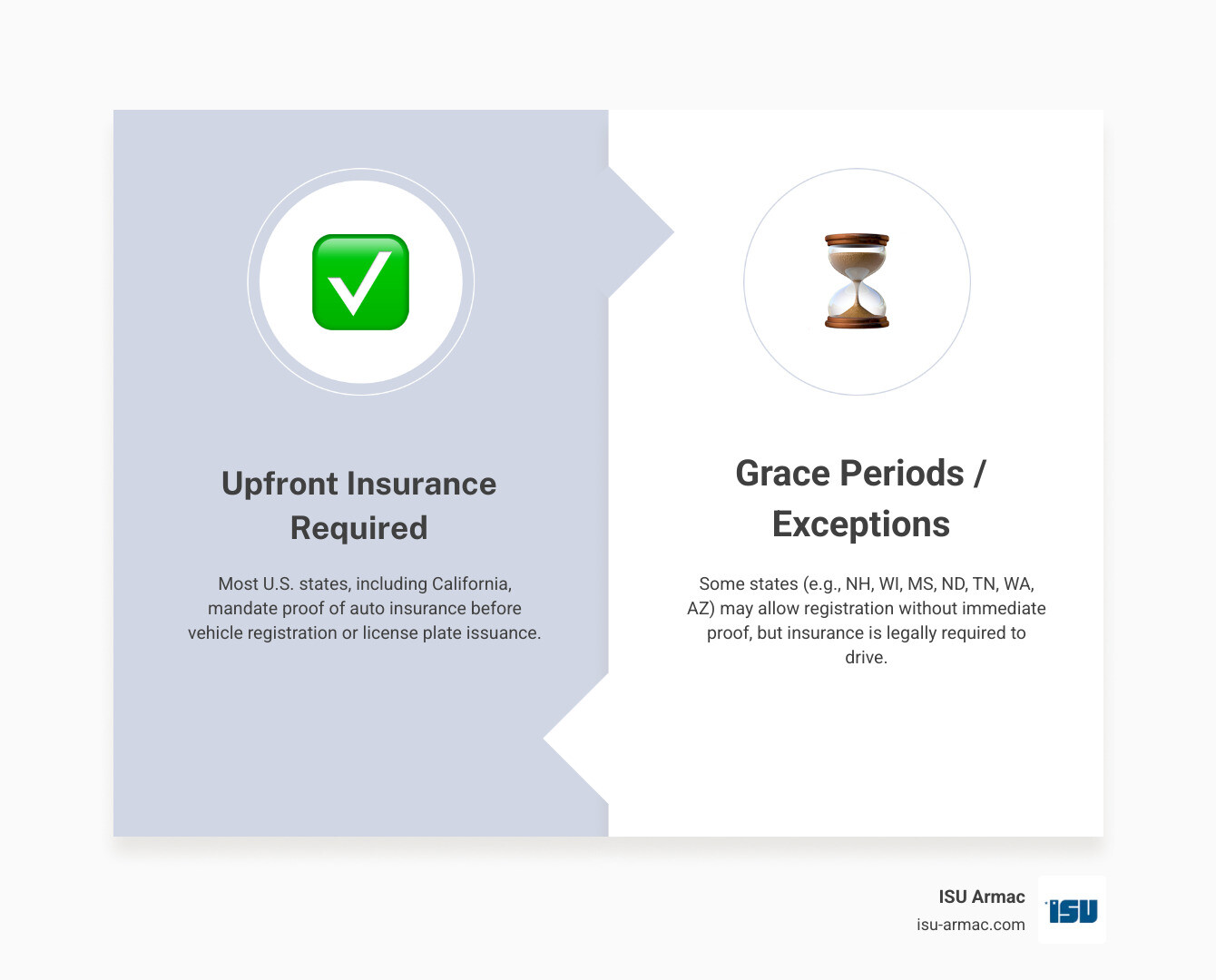
Most states require insurance before they’ll issue plates. A small handful allow registration first but require insurance before you drive. Either way, you need coverage to legally operate your vehicle.
California’s Specific Insurance Requirements
Here in California, where ISU Armac serves communities throughout Southern California, there’s no wiggle room: you absolutely need proof of financial responsibility—which means auto insurance—to register a vehicle and obtain license plates. The California DMV doesn’t mess around with this requirement.
When you visit the DMV to register your vehicle, you’ll need to present proof of insurance from a company authorized to do business in California. This is typically your insurance card or a policy declaration page. The DMV takes this seriously because California law mandates that every driver carry minimum liability coverage.
California’s minimum liability coverage requirements are:
- Bodily Injury Liability: $15,000 for injury or death to one person, and $30,000 for injury or death to two or more persons in a single accident.
- Property Damage Liability: $5,000 for damage to property.
These are the bare minimums—just enough to satisfy the legal requirement. While they’ll get you through the registration process, we often encourage our clients to consider higher limits. Medical costs and property damage can quickly exceed these minimums, leaving you personally responsible for the difference. For the complete details straight from the source, check out the Insurance Requirements for Vehicle Registration – California DMV.
What are the mandatory insurance coverages I need?
Understanding the types of mandatory insurance coverages goes beyond just answering “do I need insurance to get license plates?” It’s about knowing what protection you’re legally required to carry every time you drive. These requirements exist to ensure that if you cause an accident, you can cover at least the basic costs of the damage and injuries.
Liability insurance is the foundation of any auto insurance policy and is mandatory everywhere. It protects others when you’re at fault in an accident. Liability coverage splits into two parts: bodily injury liability pays for medical expenses, lost wages, and pain and suffering for anyone injured in an accident you cause, while property damage liability covers repairs or replacement of another person’s vehicle or property—like a fence, mailbox, or building—that you damage. In Ontario, for example, the provincial minimum for third-party liability is $200,000, though insurance experts typically recommend at least $1,000,000 for adequate protection against today’s medical and repair costs.
Uninsured and underinsured motorist coverage protects you when the other driver is at fault but doesn’t have insurance or doesn’t have enough coverage to pay for your damages. This coverage typically handles your medical expenses and, depending on your state, may also cover property damage. It’s a safety net for situations where you did everything right, but the other driver wasn’t properly insured.
In states with “no-fault” insurance laws, personal injury protection (PIP) or medical payments coverage (MedPay) becomes mandatory. PIP covers medical expenses for you and your passengers regardless of who caused the accident, and often includes lost wages and other expenses. MedPay is similar but typically offers lower limits and covers only medical bills.
If you’re in Ontario or another Canadian province, you might also encounter direct compensation-property damage (DCPD), which pays for damage to your vehicle when another insured driver is at fault, without affecting your own collision coverage or premium.
These mandatory coverages represent the legal minimums, but they’re just the starting point. Many drivers choose to add collision coverage (for damage to your own vehicle in an accident) and comprehensive coverage (for theft, vandalism, weather damage, and other non-collision events) to fully protect their investment. The right coverage depends on your vehicle’s value, your financial situation, and your comfort with risk.
If you’re operating business vehicles, the coverage requirements become even more specific. You might find it helpful to explore what does commercial auto insurance cover? to understand how business use changes your insurance needs.
At ISU Armac, we help you steer these requirements by shopping multiple carriers to find the coverage that meets your legal obligations while also protecting your financial future—all at the best possible rates.
Temporary Plates and Special Permits
Sometimes, you might not immediately get permanent license plates. This is where temporary plates, often called paper plates or temporary tags, come into play. These permits allow you to legally drive a newly purchased vehicle for a short period while you complete the full registration process or transport the vehicle for necessary inspections.
Temporary plates are particularly common when:
- Buying from a Dealership: Dealerships often issue temporary paper plates that are valid for a set number of days (e.g., 30-90 days) until your permanent plates arrive.
- Private Sale: If you buy a car from a private seller, you might need a temporary permit to drive it home or to a mechanic for a safety inspection before full registration. In Ontario, temporary license plate stickers are valid for ten days and are often used for “as-is” vehicles that need to be made road-worthy.
- Transporting a Vehicle: If you need to move a vehicle that isn’t yet fully registered or insured (e.g., to a repair shop, out of state), a temporary trip permit might be issued.

Can you get a temporary license plate without insurance?
Generally, no. Even for temporary license plates, most states and provinces require proof of insurance. The temporary plates are simply a placeholder until your permanent ones are issued, and the same underlying registration rules, which include insurance, usually apply.
Our research indicates that “most states require car insurance to register a vehicle, even if you just bought it and have only paper or temporary plates.” This is because the moment the vehicle is driven, even with temporary tags, it poses a risk on the road.
Furthermore, even if a state’s law doesn’t explicitly require you to show proof of insurance for temporary tags, dealerships often have their own policies. They will likely demand proof of insurance before allowing you to drive the car off their lot with paper plates. Moreover, when you sign registration paperwork, you’re often attesting that the car is insured. Providing false information can lead to serious legal consequences.
Driving with temporary plates without insurance is just as risky and illegal as driving with permanent plates without insurance. The penalties for driving uninsured still apply, and you’d be fully exposed to financial liability in case of an accident. It’s always best to secure at least short-term coverage or ensure your existing policy extends to the new vehicle before driving it, even with temporary tags.
Frequently Asked Questions about Insurance and License Plates
Over the years, I’ve noticed that many of our clients have similar questions when they’re navigating the vehicle registration process. The good news is that you’re not alone in wondering about these details. Let’s tackle some of the most common questions we hear at ISU Armac.
Can I use my old license plates on my new car?
This is one of the most frequent questions we get, and the short answer is: usually, yes. In many jurisdictions, you can transfer your existing license plates to a new vehicle, as long as those plates are in good standing and you follow the proper transfer process.
The process is typically straightforward. You’ll need to inform the DMV or your provincial service center about the vehicle change and pay any associated transfer fees. For instance, if you’re in Ontario, you can absolutely use your current plates on your new vehicle. You’ll just need to bring the plate ownership portion of your vehicle permit when you register your new vehicle at a ServiceOntario center.
The most important thing to remember is that the registration must be properly updated to reflect your new vehicle. You’ll also need to maintain continuous insurance coverage throughout the transfer. Your insurance company will need to know about the vehicle change too, so they can update your policy with the new vehicle’s information.
What happens if my insurance lapses after I get my plates?
This is a situation you definitely want to avoid. Even though you’ve already obtained your license plates, do I need insurance to get license plates becomes less relevant than the fact that you need insurance to keep driving legally. If your insurance lapses, you’re breaking the law, plain and simple.
The consequences can be severe. Many states and provinces now use electronic verification systems that automatically check insurance status. If your insurance lapses, the system catches it quickly. Your registration could be suspended without warning. You’ll likely face fines that can range from hundreds to thousands of dollars, depending on your location. On top of that, you might have to pay reinstatement fees to get your license and registration back in good standing.
In some cases, law enforcement could impound your vehicle if they find you’re driving without insurance. Beyond the legal penalties, there’s the financial risk. If you’re involved in an accident while uninsured, you’re personally liable for all damages and injuries, which could be financially devastating.
The bottom line is simple: maintain continuous insurance coverage from the day you get your plates until the day you no longer own the vehicle. It’s not worth the risk to let your policy lapse.
Can I register a car for someone else?
This question comes up frequently, especially when family members are helping each other with vehicle purchases or when someone is buying a car as a gift. The answer is that it’s possible, but it requires specific authorization.
Generally, the person registering the vehicle must be the owner listed on the title or bill of sale. However, if you need a third party to handle the registration on your behalf, you’ll typically need to provide a Letter of Authorization or a Power of Attorney document.
This authorization letter needs to be properly formatted. If it’s for a business, it should be on company letterhead. If it’s from a vehicle owner, it must include an original signature by an individual listed in the Articles of Incorporation or by the owner themselves. The letter should clearly state what actions the authorized person can take on your behalf.
The requirements for this authorization can vary depending on your location, so I always recommend calling your local DMV or service center ahead of time to confirm exactly what documentation you’ll need. This is especially important if you’re gifting a car, as that involves specific transfer procedures and additional documentation to properly transfer ownership.
If you’re unsure about any of these processes or need help ensuring your insurance is properly in place before registration, we’re here to help. At ISU Armac, we make it our mission to simplify these processes for our clients.
Conclusion: Secure Your Coverage, Then Get Your Plates
So, let’s circle back to that big question: “do I need insurance to get license plates?” After exploring all the ins and outs, the answer is crystal clear and almost universally a resounding yes. Car insurance isn’t just a pesky piece of paperwork; it’s a foundational block of responsible vehicle ownership. Think of it as your financial safety net, protecting not just you, but everyone else on the road too. Whether you’re excitedly picking up a brand-new car, grabbing those temporary permits, or simply renewing your trusted plates, having valid auto insurance is almost always the very first step you need to take.
We get it – navigating vehicle registration and insurance can feel a bit like a maze. But that’s exactly why we at ISU Armac are here. Our mission is to make this whole process as straightforward and stress-free as possible for you. We pride ourselves on being your trusted guide, helping you find the perfect coverage that not only meets all those legal requirements but also comfortably fits your budget. We do the heavy lifting, shopping around with various carriers to pinpoint the best rates for you. That way, you’re not just legally compliant, but you also hit the road with genuine peace of mind.
So, don’t let the details overwhelm you. Take that crucial first step: secure your coverage. Once that’s in place, gather up your documents, and you’ll be all set to confidently head to the DMV or ServiceOntario to get those plates. It’s a simple, logical sequence that sets you up for safe and legal driving.
Ready to take that first step and get your vehicle legally registered and on the road? We’re here to help. Get a quote for your personal auto insurance today and let’s get you covered!