
Why Every Business Needs Financial Protection from Lawsuits
Liability insurance for businesses is essential coverage that protects your company from third-party claims of bodily injury, property damage, or personal and advertising injury. Whether you’re a contractor in Victorville or run a retail shop in Apple Valley, unexpected accidents and lawsuits can threaten your business’s financial stability.
Key reasons businesses need liability insurance:
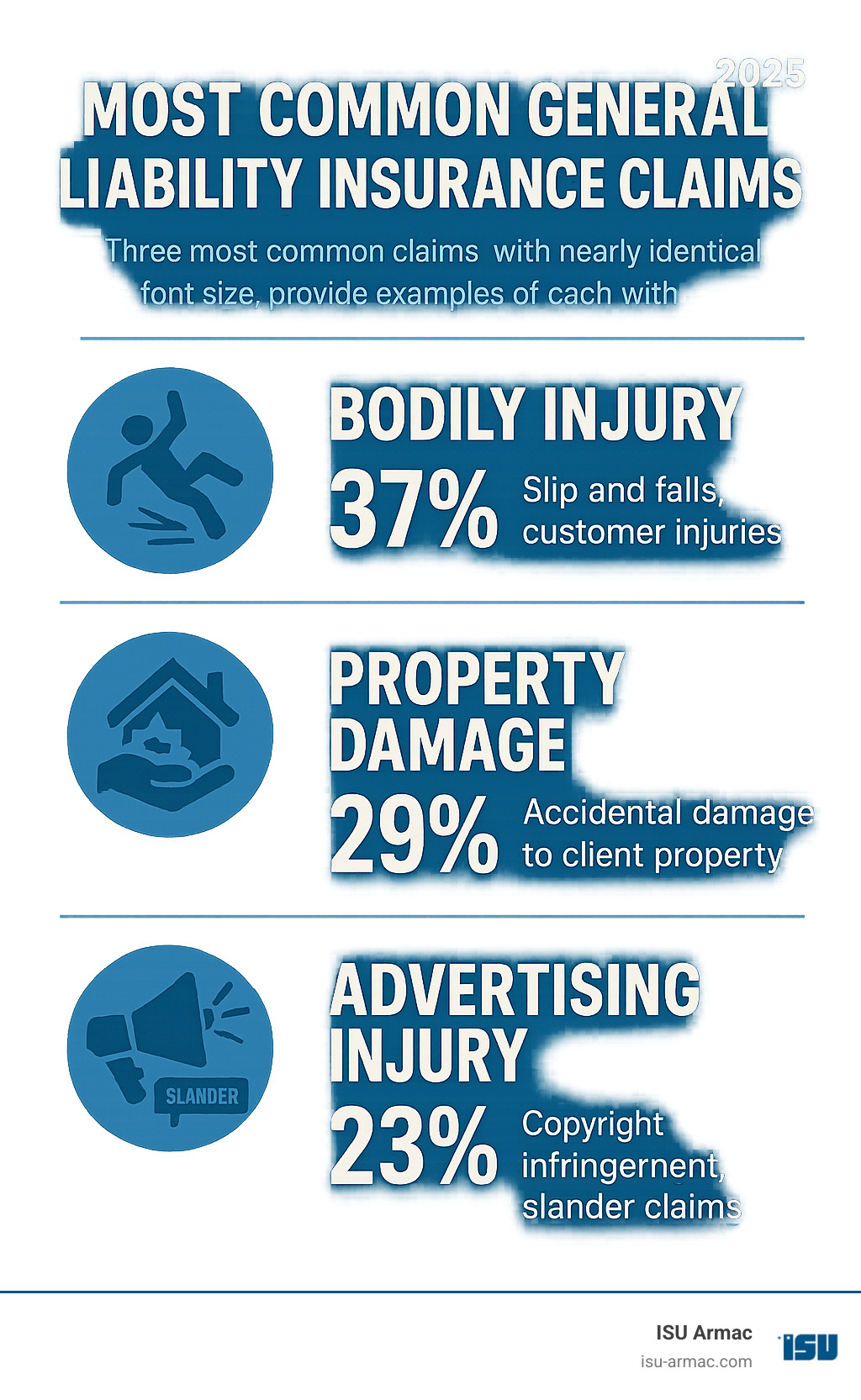
- Bodily Injury Claims – Customer slip-and-fall accidents, injuries on your premises
- Property Damage – Accidentally damaging client property during work or service calls
- Legal Defense Costs – Attorney fees and court costs, even for frivolous lawsuits
- Personal/Advertising Injury – Claims of slander, libel, or copyright infringement
- Medical Payments – Immediate medical expenses for injured third parties
The reality is stark: a single lawsuit can cost tens of thousands in legal fees alone, even if you win. According to recent data, general liability insurance costs businesses a median of just $60 per month – a small price compared to the average lawsuit that can easily exceed $50,000.
Many business owners mistakenly believe their LLC status or business structure provides adequate protection. While these structures offer some personal asset protection, they don’t shield your business assets from claims. That’s where liability insurance becomes your financial safety net.
I’m Ryan McEachron, CEO of ISU Insurance Services ARMAC Agency, and I’ve helped Victorville area businesses secure liability insurance for businesses for over two decades. My experience on the Victorville City Council and with local business organizations has shown me how proper insurance coverage can mean the difference between a minor setback and business closure.
Liability insurance for businesses terms at a glance:
What is General Liability Insurance and Why Is It Essential?
General liability insurance, often known as commercial general liability (CGL) or simply business liability insurance, is a foundational policy designed to protect your business from claims arising from everyday operations. Think of it as your business’s primary shield against the slings and arrows of outrageous fortune – or, more accurately, against common accidents and allegations of negligence.
At its core, general liability insurance safeguards your business against third-party claims. Who are these “third parties”? They’re anyone who isn’t you, your business, or your employees. This includes customers, clients, vendors, delivery personnel, or even passersby. If one of these individuals alleges that your business caused them bodily injury, property damage, or reputational harm, your general liability policy steps in to cover the associated costs.
Why is this so essential? Because even the most careful business can face unforeseen incidents. A customer might slip on a wet floor, an employee could accidentally damage a client’s expensive equipment, or a seemingly innocent marketing slogan might inadvertently infringe on someone else’s copyright. Without general liability insurance, your business would be solely responsible for covering legal defense costs, settlements, or judgments – expenses that could quickly drain your bank account and, in severe cases, force you to close your doors.
For us, it’s about providing a financial safety net and, most importantly, peace of mind. Knowing that you’re protected allows you to focus on what you do best: running and growing your business, whether it’s in Hesperia, Oak Hills, or anywhere else in Southern California. It’s about ensuring business continuity, even when the unexpected happens.

What Claims Does General Liability Insurance Cover?
General liability insurance is surprisingly comprehensive in the types of claims it covers. Let’s break down the main categories:
- Bodily Injury: This is perhaps the most common type of claim. It covers medical expenses, pain and suffering, and lost wages if a third party is injured on your business premises or due to your business operations. Think of a customer tripping over a loose rug in your retail store or a delivery person slipping on ice outside your office.
- Property Damage: This covers the cost of repairing or replacing property belonging to a third party that your business or an employee accidentally damages. For instance, if your landscaping crew accidentally drives a mower through a client’s fence, or an IT consultant spills coffee on a client’s server, this coverage would kick in.
- Personal and Advertising Injury: This less intuitive but crucial coverage protects your business against claims of non-physical injury resulting from your business activities or advertising. This can include:
- Slander and Libel: False statements that harm someone’s reputation, whether spoken (slander) or written (libel).
- Copyright Infringement: Using copyrighted material (like an image or song) in your advertising or business operations without permission.
- Trademark Infringement: Using a trademarked name or logo that belongs to another business.
- False Arrest, Detention, or Imprisonment: If you’re accused of wrongfully detaining someone in your business.
- Malicious Prosecution: If you are accused of initiating a lawsuit without probable cause.
- Wrongful Eviction or Entry: If you, as a landlord, are accused of wrongfully evicting a tenant or entering their premises.
- Medical Payments: This coverage can pay for immediate medical expenses for a third party injured on your premises, regardless of who was at fault. It’s often used for minor injuries to prevent larger lawsuits.
- Damage to Rented Premises: If you rent your business location and accidentally cause damage to the property (e.g., a fire caused by your equipment), this coverage can help pay for the repairs.
Real-World Scenarios: How General Liability Protects You
Let’s look at some specific examples where liability insurance for businesses would come to your rescue:
- Customer Slip-and-Fall: Imagine a customer at your bakery in Hesperia slips on a spilled drink, breaks their arm, and incurs significant medical bills and lost wages. Your general liability policy would cover their medical expenses and legal defense costs if they sue, as well as any settlement or judgment.
- Employee Damages Client Property: Our team is working at a client’s office in Victorville, installing new equipment. An employee accidentally knocks over an expensive antique vase. Your general liability policy would cover the cost to repair or replace the vase.
- Libelous Social Media Post: A disgruntled employee, perhaps in a moment of frustration, posts a false and damaging statement about a former client on your company’s social media page. The client sues your business for libel. General liability insurance would cover your legal defense and any resulting settlement.
- Copyright Infringement in an Ad: You launch a new marketing campaign for your business in Apple Valley, using an image you found online, unaware it was copyrighted. The photographer finds it and sues your business for copyright infringement. Your general liability policy would cover the legal fees and any damages awarded.
These scenarios highlight why general liability isn’t just a good idea; it’s a critical component of responsible business ownership. It helps us protect your hard work and financial future.
Play video about General Liability Insurance
The Cost of Liability Insurance for Businesses
When business owners ask me about the cost of liability insurance for businesses, I always start with the good news: it’s probably more affordable than you think. The challenging part is that every business is unique, which means there’s no universal price tag.
Let me share some real numbers to give you a realistic picture. According to recent industry data, most small businesses pay between $60 and $85 per month for general liability coverage. That breaks down to roughly $810 annually for solid protection against potentially devastating lawsuits.
If you’re looking at a standard $1 million coverage limit, you’re typically looking at around $69 monthly, or about $824 per year. Some low-risk businesses might find coverage starting as low as $19 per month, while others seeking higher limits of $2 million might start around $450 annually.
The median cost across different providers tends to hover around $42 to $60 per month, which translates to $500 to $720 per year. These figures give you a ballpark, but your actual premium will depend on your specific situation.
Think of it this way: for less than what many people spend on their monthly phone bill, you can protect your business from claims that could easily cost tens of thousands of dollars.

Key Factors That Influence Your Premium
Insurance companies don’t pull premium numbers out of thin air. They carefully evaluate several key factors to determine your business’s risk level and, consequently, what you’ll pay for liability insurance for businesses.
Industry risk is the biggest factor. A roofing contractor faces very different risks than a bookkeeper working from home. Construction companies, restaurants, and retail stores typically pay more because they have more opportunities for accidents. Meanwhile, consultants and freelancers often enjoy lower premiums.
Your business location plays a significant role too. Operating in Victorville versus Apple Valley might result in different premiums based on local factors like crime rates, population density, and regional claim frequencies. Even natural disaster patterns in Southern California can influence pricing.
The number of employees on your payroll matters because more people generally means more potential for incidents. Whether you have full-time staff, part-timers, or contract workers all factors into the equation.
Your claims history is like your business credit score for insurance. A clean record often translates to better rates, while past claims might increase your premium. This is why maintaining good safety practices isn’t just smart business – it’s financially beneficial.
Coverage limits directly impact cost. Standard coverage of $1 million per occurrence and $2 million aggregate provides solid protection for most businesses. Higher limits offer more security but come with higher premiums.
Your deductible amount gives you some control over costs. Choosing a higher deductible lowers your monthly premium, though you’ll pay more out-of-pocket if you need to file a claim.
Is General Liability Insurance Tax-Deductible?
Here’s some welcome news that makes the cost even more manageable: your general liability insurance premiums are typically tax-deductible as a business expense.
The IRS generally considers insurance premiums to be “ordinary and necessary” business expenses. This means you can usually deduct the full cost of your premiums from your taxable income, effectively reducing your overall tax burden.
However, tax laws can be complex and change over time. I always recommend consulting with a qualified tax professional who can provide guidance specific to your business situation. They’ll ensure you’re taking advantage of all eligible deductions while staying compliant with current IRS guidelines.
When you factor in the tax deduction, your actual out-of-pocket cost for this essential protection becomes even more reasonable. It’s one of those rare situations where protecting your business also provides a tax benefit.
General Liability vs. Other Key Business Insurance Policies
While liability insurance for businesses serves as the cornerstone of your company’s protection, it’s important to understand that it’s just one piece of a much larger puzzle. Think of general liability as the foundation of your business insurance house – essential and sturdy, but you’ll need additional coverage to create a complete structure.
Many business owners in Victorville and the High Desert region find they need multiple policies working together to truly safeguard their operations. Just as you wouldn’t build a house with only a foundation, relying solely on general liability leaves significant gaps in your protection.
The key is understanding what general liability covers exceptionally well, and more importantly, what it doesn’t cover at all. This knowledge helps you build a comprehensive insurance portfolio that matches your specific business risks and industry requirements.
Here’s how general liability stacks up against other essential business insurance types:
| Insurance Type | What It Covers | Best-Fit Businesses |
|---|---|---|
| General Liability | Bodily injury, property damage, personal/advertising injury from third-party claims | Nearly all businesses, especially those with customer interaction or physical locations |
| Professional Liability | Errors, omissions, negligence, and failure to deliver promised services | Consultants, IT firms, accountants, lawyers, architects, and service-based businesses |
| Business Owner’s Policy (BOP) | Combines general liability + commercial property + business interruption coverage | Small to medium businesses seeking comprehensive, cost-effective protection |
Common Exclusions in Liability Insurance for Businesses
Understanding what general liability doesn’t cover is just as crucial as knowing what it does. These common exclusions explain why many businesses need additional policies to fill the gaps.
Employee injuries fall under workers’ compensation insurance, not general liability. If your delivery driver gets hurt on the job, general liability won’t help – but workers’ comp will. This distinction surprises many new business owners who assume general liability covers everyone.
Professional mistakes require separate professional liability coverage. If you’re an IT consultant in Apple Valley and accidentally delete a client’s database, general liability won’t cover the resulting financial losses. Professional liability insurance, however, would step in to handle these costly errors.
Commercial auto accidents need their own dedicated coverage. Your general liability policy won’t cover accidents involving company vehicles, whether it’s a delivery truck or a sales rep’s company car. Commercial auto insurance handles these situations.
Intentional damage is never covered under any liability policy. If you or an employee deliberately damages property or harms someone, insurance companies won’t provide protection. This exclusion exists to prevent moral hazard and fraud.
Your own property damage isn’t covered by general liability – that’s what commercial property insurance handles. If a fire damages your inventory or equipment, you’ll need property coverage, not liability coverage.
Data breaches and cyber attacks require specialized cyber liability insurance. This exclusion has become increasingly important as hackers target businesses of all sizes.
Bundling Policies for Savings: The Business Owner’s Policy (BOP)
Smart business owners often find that bundling insurance policies can save both money and headaches. The Business Owner’s Policy, commonly called a BOP, represents the most popular bundling option for small to medium businesses.
A BOP cleverly combines liability insurance for businesses with commercial property insurance and business interruption coverage into one streamlined policy. Instead of managing three separate policies with different renewal dates, deductibles, and insurance companies, you get comprehensive protection under one roof.
The cost savings can be substantial. Insurance companies typically offer discounts when you bundle multiple coverages, often saving businesses 15-25% compared to buying individual policies. For a business in Hesperia paying $800 annually for general liability and $1,200 for property insurance, a BOP might cost only $1,600 – saving $400 per year.
Business interruption coverage, included in most BOPs, provides crucial protection that many business owners overlook. If a covered event forces you to temporarily close – like fire damage to your storefront – this coverage helps replace lost income and pays ongoing expenses like rent and payroll.
The streamlined policy management appeals to busy business owners who prefer dealing with one insurance company, one renewal date, and one deductible structure. When you need to file a claim or make policy changes, you have just one point of contact instead of juggling multiple insurers.
At ISU Armac, we help Victorville area businesses evaluate whether a BOP makes sense for their unique situation. Our ability to compare multiple carriers means we can find the most competitive BOP rates while ensuring you get the coverage combinations that best protect your specific business model.