
You just bought a box truck, or you're about to. The truck is lined up, the business plan feels real, and then the insurance questions start coming fast. Do you need a DOT number? Is $750,000 enough? Why is one quote nowhere near another? What does cargo coverage do if a shipper says they need it before they'll release a load?
That confusion is normal, especially in California. A new owner-operator in Victorville might run local deliveries through the High Desert one day, then head toward Los Angeles, the Inland Empire, or Las Vegas the next. The route changes. The contracts change. The insurance requirements change with them. A policy that looks fine on paper can still leave a big gap once a broker asks for certificates, filings, higher liability limits, or proof of cargo coverage.
Most new operators start with the wrong question. They ask, "What's the cheapest policy I can get?" The better question is, "What policy keeps me legal, gets me loads, and doesn't leave me exposed if something goes wrong?" Commercial box truck insurance isn't just a registration expense. It's part compliance tool, part contract requirement, and part asset protection.
The basics still matter. If you want a plain-language refresher on the general principles of vehicle insurance, that overview is useful before you get into the commercial side. But a box truck used for business needs a different level of analysis than a personal vehicle.
In the High Desert, I see the same pattern often. A driver gets the truck first, then tries to bolt insurance on afterward. That usually costs more, takes longer, and creates avoidable problems with filings and startup timing. The better approach is to treat insurance as part of the operating plan from day one.
Introduction Your Road to the Right Box Truck Coverage
Starting a box truck business in California feels straightforward until the paperwork catches up with you. You know what work you want to do. You know what truck you're buying. Then someone asks whether you're operating under your own authority, what your gross vehicle weight rating is, whether you'll cross state lines, and what limits your broker requires.
Those details aren't minor. They shape the entire insurance decision.
In Victorville, that matters more than many operators expect. You're not tucked into an isolated service area. You're positioned between local delivery work, warehouse corridors, interstate routes, and dense urban markets. A box truck based in the High Desert can serve a wide range of clients, but that flexibility also creates more insurance complexity.
What new owner-operators usually get wrong
Some operators assume commercial auto insurance is just personal auto coverage with a higher price tag. It isn't. A personal policy isn't built for business hauling, shipper contracts, cargo obligations, or federal filing requirements.
Others focus only on the legal minimum. That's understandable when cash is tight, but it's usually where problems begin. Minimum compliance and practical protection aren't the same thing.
Practical rule: Buy the policy for the work you will actually perform, not the work you hope the underwriter assumes.
What matters most early
A solid box truck insurance setup usually starts with four questions:
- How the truck operates: Local delivery, regional runs, interstate freight, moving work, or scheduled contract service all create different underwriting profiles.
- Who drives it: Clean driving history, commercial experience, and prior claims history carry real weight.
- What the truck carries: General freight is different from refrigerated goods, higher-value loads, or anything that triggers specialized requirements.
- Who needs proof of insurance: The state, FMCSA, brokers, shippers, and lenders may all ask for different documents.
If you get those four areas right, the rest of the policy conversation becomes much easier.
Understanding the Core of Your Box Truck Insurance Policy
The starting point is primary auto liability. That's the coverage that responds when your box truck causes bodily injury or property damage to someone else. Think of it as the financial shield around your business. If your driver rear-ends another vehicle, damages a loading dock, or injures a third party during a crash, liability coverage is what stands between that claim and your business assets.

IPTC metadata for the header image should identify the subject as commercial box truck insurance, location context as Victorville and California, and keywords such as box truck, commercial auto liability, cargo coverage, owner-operator, and High Desert trucking.
What liability actually protects
Liability coverage usually gets discussed in abstract terms, but the practical distinction is simple:
- Bodily injury liability: Pays when another person claims injury from an accident your truck caused.
- Property damage liability: Pays when your truck damages another person's vehicle, building, equipment, fence, or other property.
This doesn't pay to repair your own truck. It doesn't replace stolen cargo. It doesn't fix a broken liftgate after a collision with a loading area wall. It protects against claims made by others.
For a clear overview of how commercial policies are structured, ISU's guide to what commercial auto insurance covers is a useful reference point when you're comparing forms and exclusions.
Why personal auto insurance doesn't work
A personal auto policy is built around private use. Once the vehicle is used in a business operation, especially for freight, delivery, or contract hauling, the gaps become obvious. The insurer may not accept the exposure, the policy form may exclude the use, and the certificate requirements you need for brokers or shippers won't be there.
That's why commercial box truck insurance isn't optional in any meaningful sense. It's the actual operating policy. Without it, you're trying to run a business with the wrong contract.
The paperwork side matters too
A lot of startup frustration comes from documentation, not the coverage itself. Agents and insureds both spend time chasing vehicle schedules, declarations pages, driver lists, and loss histories. That's one reason businesses have started using tools for insurance claims extraction and policy document organization. Clean records make quoting faster and renewals less painful.
A strong policy isn't just about limits. It's about whether the documents, filings, and endorsements line up with the work you're actually doing.
The practical test
If you're reviewing a policy, ask three blunt questions:
- Will this satisfy the contracts I need to sign?
- Will this satisfy the regulators that apply to my operation?
- Will this protect my business if an ordinary bad day turns into a large claim?
If the answer to any one of those is no, the policy needs work.
Navigating California and Federal Insurance Requirements
Compliance gets complicated fast for box truck operators because the rules depend on how the truck runs, what it carries, and whether the operation crosses state lines. A Victorville business might stay intrastate for months, then take a job that changes the regulatory picture overnight.
Interstate rules and FMCSA filings
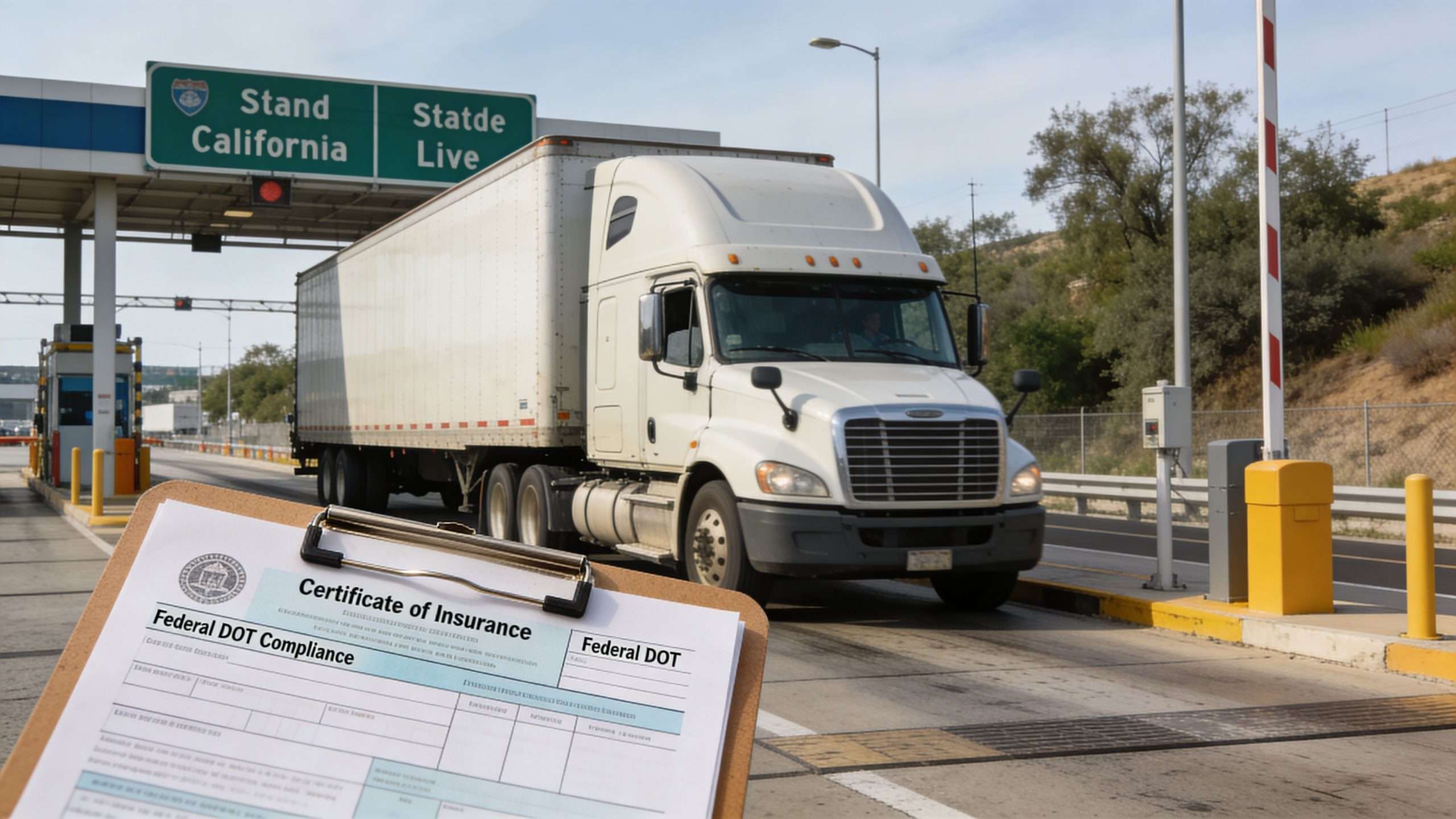
For interstate commerce, the baseline rule is clear. FMCSA requires a minimum of $750,000 Combined Single Limit for non-hazardous general freight on vehicles over 10,001 lbs GVWR, while brokers and shippers commonly require $1 million CSL, and California intrastate operations can add another layer of complexity according to this review of box truck liability coverage essentials.
That difference between legal minimum and market expectation matters. A policy can be technically legal and still unusable for the freight you want to haul if the broker won't accept the certificate.
You'll also hear about filings such as BMC-91 or BMC-91X. Those are proof-of-financial-responsibility filings tied to federal authority. If you're running under your own authority, the filing piece matters just as much as the policy language. The state and federal systems don't care that you "have insurance" if the proper filing isn't on record.
Intrastate California operations
California adds its own layers for operators who stay inside the state. That doesn't always mean the requirements are lower or simpler. In practice, intrastate work often creates its own certificate requests, state-specific compliance steps, and contracting hurdles.
The common mistake is assuming "I only run in California" means "I have fewer issues to worry about." Often it's the opposite. California contracts, urban delivery zones, warehouse access rules, and client requirements can be stricter than what an owner-operator expected.
A local example from Victorville
A Victorville operator hauling general freight into Los Angeles and back may think of the business as local or regional. But if that truck is set up for interstate commerce, or if the contracts involve clients who apply interstate-style requirements, the paperwork must match that reality.
The truck's route matters. The authority matters. The cargo matters. The certificate wording matters.
Don't separate compliance from operations. If your dispatch plan changes, your insurance review should change with it.
Minimum legal limit versus working limit
There are really two limits to think about:
- The legal limit: What you must carry to operate lawfully in the category that applies to you.
- The working limit: What your broker, shipper, or contract requires before they'll do business with you.
For many box truck operators, the second number controls the primary buying decision.
What non-compliance looks like in practice
Problems usually show up in one of three ways:
- A load falls through: The certificate doesn't show the required limit or endorsement, so the shipper won't release freight.
- A filing issue stops operations: The policy exists, but the filing isn't complete or accurate.
- A claim exposes a gap: The operator met a minimum rule but didn't buy enough coverage for the actual risk.
Many new owner-operators lose time. They think insurance is a one-time purchase, but for commercial trucking it's an active operating requirement. Every change in authority, territory, commodity, or vehicle can affect compliance.
Decoding the Cost of Commercial Box Truck Insurance
Price is where most operators focus first, and for good reason. Commercial box truck insurance can be one of the larger fixed expenses in the business, especially in the first year.
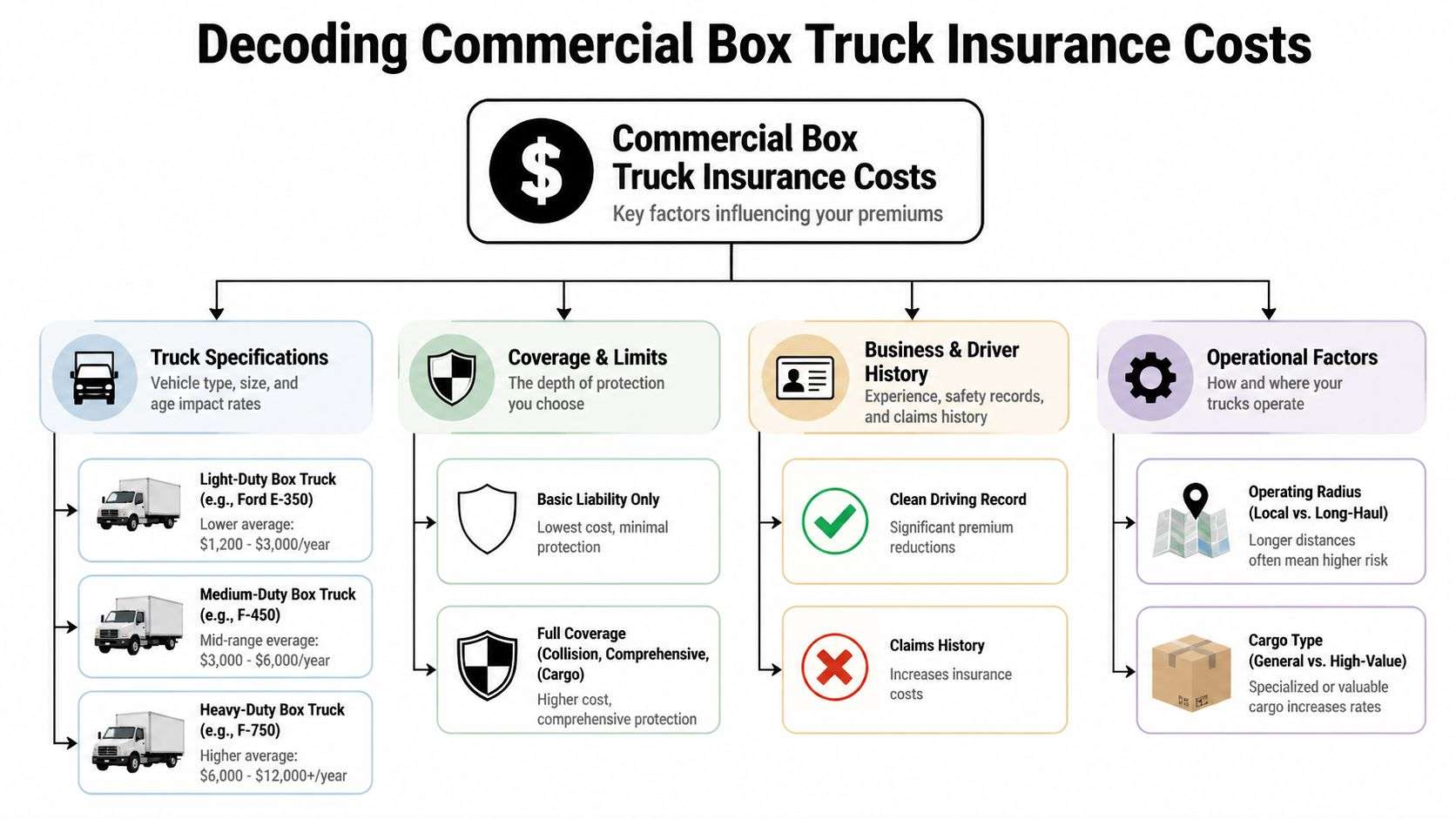
According to FreightWaves, the average box truck insurance cost typically ranges from $3,000 to over $10,910 annually, while a first-year operator with a 26-foot truck can expect $18,000 to $31,000 annually. The same source notes that an at-fault accident can raise rates by 25 percent to 50 percent, and urban California locations can see premiums that are 15 percent to 20 percent higher in denser risk zones, as outlined in this breakdown of box truck insurance costs.
That range tells you something important. There is no single "normal" premium for a box truck. The underwriting variables are too different from one operation to another.
If you want a broader sense of how underwriters evaluate pricing across classes and coverages, ISU's commercial auto insurance rates guide is a practical companion when you're reviewing quotes.
Why one truck gets a much higher quote than another
A quote isn't built from the truck alone. Underwriters price the whole operating profile.
Driver history
A clean motor vehicle record helps. New ventures with limited operating history usually pay more because the carrier has less evidence to rely on. If the file includes prior violations or at-fault accidents, the premium moves quickly in the wrong direction.
This is one of the few factors an operator can partly control before applying. If your driver roster isn't solid, the quote won't be either.
Truck size and configuration
A larger truck creates a different loss profile than a smaller one. Weight, body size, repair complexity, and how the truck is used all affect pricing. A 26-foot box truck gets looked at differently than a smaller local delivery unit.
That matters in California because many operators start with a truck that can handle "a little bit of everything." Flexibility is useful, but insurers still rate the actual exposure. Bigger trucks, wider operating uses, and heavier GVWR classes don't get priced like a light local van.
Location and operating territory
Victorville and the High Desert don't underwrite the same way as dense urban cores. But many High Desert operators don't stay in the High Desert. They run into busier markets, park in mixed locations, and work contracts that expose the truck to theft, traffic density, and more frequent claim conditions.
A business based in Victorville but delivering regularly into Southern California congestion won't get treated like a truck that stays in a quieter local radius.
Cargo changes the whole conversation
Cargo type is often underappreciated. General freight is one thing. Refrigerated food, specialized equipment, higher-value goods, or contract loads with strict cargo requirements are another.
The insurer doesn't just ask what you haul because they're curious. They're pricing spoilage exposure, theft appeal, handling risk, and the likelihood of a cargo claim that creates a customer dispute even when there wasn't a highway crash.
First-year operators feel the most pressure
The startup year is where sticker shock hits hardest. No prior commercial insurance history, limited operating experience, and uncertain load mix make underwriters cautious. That's why two operators with similar trucks can see very different results if one has established history and the other doesn't.
The first quote isn't always a verdict on your business. Often it's a reflection of limited history, not a reflection of long-term insurability.
How to read a quote the right way
Don't compare quotes by premium alone. Compare them by:
- Liability limit: A cheaper quote may carry a lower limit than your contracts require.
- Physical damage inclusion: Some quotes look attractive because they leave your truck unprotected.
- Cargo terms: If the policy doesn't meet broker expectations, the lower number may not help you.
- Driver assumptions: A quote based on one listed driver can change once the actual roster is added.
If you only compare annual premium, you're not comparing the same product.
Essential Endorsements to Customize Your Policy
A basic liability policy gets you into the conversation. It doesn't solve every risk your business faces. Most of the effective protection comes from the endorsements and added coverages that match how the truck is used.
The Hartford notes that physical damage coverage is important because major frame repair can run from $15,000 to $50,000, and high-value loads often require $100,000 or more in cargo coverage because brokers and shippers may make it a condition of payment, as described in its guide to box truck insurance coverage.
That last point catches new operators by surprise. Cargo coverage often isn't just about reimbursing a loss. In practice, it can determine whether a load is available to you at all.
The endorsements that usually matter most
The right endorsements depend on what you haul, who you contract with, and whether the truck is financed, rented, dispatched by others, or handled by employees. But several coverages show up repeatedly in real box truck operations.
| Endorsement | What It Covers | Example Scenario |
|---|---|---|
| Physical Damage | Damage to your truck from collision or other covered causes, depending on policy terms | Your box truck strikes a barrier and needs major body and frame repair |
| Motor Truck Cargo | Loss or damage to the freight you're hauling, subject to the policy form and exclusions | A shipper's goods are damaged in transit and the contract requires cargo coverage |
| Hired and Non-Owned Auto | Liability for rented vehicles or employee-owned vehicles used in business | You rent a replacement truck while your regular unit is down for repairs |
| Additional Insured and Certificate-Related Endorsements | Contract-driven policy changes tied to customer requirements | A broker requests specific certificate wording before tendering a load |
For operators hauling freight under contract, cargo insurance coverage deserves close review because exclusions, commodity limits, and contract language matter just as much as the stated limit.
What works and what doesn't
Buying only liability works if your goal is the narrowest legal compliance and your operation can survive truck damage, cargo disputes, and contract rejection. Most small operators can't.
What works better is matching endorsements to the actual failure points in the business:
- If the truck is financed or hard to replace: Physical damage usually isn't optional in practical terms.
- If brokers control your freight access: Cargo coverage often becomes operationally necessary.
- If you rent equipment during downtime: Hired auto exposure needs to be addressed.
- If employees use their own vehicles for business tasks: Non-owned auto exposure can exist even when the box truck itself is properly insured.
A box truck policy should answer the question, "What breaks my business if this isn't covered?"
A common blind spot
A lot of operators assume cargo claims only matter if the freight is destroyed in a major wreck. That's too narrow. Customer disputes can start from handling damage, theft allegations, temperature issues in specialized operations, or missing goods at delivery. The exact outcome depends on the form and exclusions, but the business interruption starts long before the legal argument ends.
Practical Strategies to Lower Your Insurance Premiums
You can't control every underwriting factor, but you can influence more of the premium than most new operators realize. Better results usually come from operational discipline, not from squeezing coverage down to the cheapest possible form.

Build a better risk profile before renewal
A cleaner submission gets better attention from underwriters. That means current driver information, accurate vehicle details, a realistic cargo description, and clear operating territory. If your application says one thing and your contracts suggest another, expect delays and higher scrutiny.
Some practical moves help consistently:
- Hire carefully: Drivers with clean records are easier to place and usually cheaper to insure.
- Document maintenance: A truck that shows regular upkeep presents differently than one with scattered repair records.
- Control the load profile: Taking every load that comes along may create revenue, but it can also create underwriting issues.
- Use safety technology where it makes sense: Dashcams and telematics can strengthen the story you present to carriers.
Choose savings that don't create new problems
Not every premium-saving decision is smart. Raising a deductible can reduce cost, but only if the business can absorb that deductible during a claim. Stripping out key endorsements often saves money in the short term and creates larger costs later.
Better savings usually come from reducing avoidable risk, not from weakening the policy.
Why the local agency relationship matters
For California operators, especially around Victorville, the quoting process often depends on clear communication about where the truck really goes, what it really hauls, and what certificates it needs. ISU Insurance Services is one local option that helps businesses compare commercial coverage through multiple markets and align the policy with the operation rather than just issuing a generic quote.
Good premium management starts long before the invoice arrives. It starts with cleaner drivers, tighter operations, and fewer surprises in the submission.
Your Checklist for a Fast and Accurate Quote
The fastest way to get a usable quote is to bring complete information the first time. Missing details slow everything down, and vague answers often produce a number that changes later.
Gather the business information first
Have these items ready:
- Legal business name and address: The policy has to match the entity that owns or operates the truck.
- DOT and MC details if applicable: Authority status affects filings and market options.
- Business start date and operating description: The underwriter needs to understand whether this is a startup, a rollover from prior coverage, or an expansion.
Then collect the truck and driver details
The vehicle file should include:
- VIN, year, make, and model: Basic, but essential for rating and physical damage review.
- Stated value or loan information if relevant: This affects how the truck is insured and what protections may be needed.
- Use description: Local delivery, moving, freight hauling, refrigerated work, or another use category.
For drivers, prepare:
- Full names and license details: Every regular driver should be disclosed.
- Birth dates and experience information: Underwriters use these details to evaluate eligibility and pricing.
- Any known violations or accidents: It's better to disclose them upfront than have the motor vehicle report surface surprises later.
Don't forget prior insurance records
If you've had prior coverage, bring your loss runs and current declarations page. This is one of the biggest time savers in commercial quoting. It shows what you've carried, how claims have developed, and whether there is prior insurance history that can help the application.
A good quote starts with accurate inputs. If the file is organized, the policy discussion gets more productive fast.
Get Your Custom California Box Truck Insurance Quote
Many new operators try to save money by buying only the minimum they think they need. That approach creates trouble in California. The underinsurance problem is real. As noted by E360 Insurance, operators often choose minimum required coverage to save money, but in a high-litigation state like California, a major accident can exceed a $750,000 liability limit and leave the business owner responsible for hundreds of thousands of dollars, which is why working with an advisor who matches limits to the actual operation matters in this discussion of box truck insurance coverage gaps.
That doesn't mean every operator needs the same policy. It means your limits, endorsements, filings, and certificates should fit your routes, your cargo, and your contracts.
If you're based in Victorville or anywhere in California, get a quote built around the work you plan to do. A box truck policy should do three jobs at once. Keep you compliant, keep you insurable for the freight you want, and keep one claim from becoming a business-ending problem.
If you need help sorting out commercial box truck insurance in California, contact ISU Insurance Services for a quote review or a new policy comparison. A local Victorville agency can help you line up the truck, the filings, the limits, and the endorsements before you start taking loads.