
Why Auto Insurance for Commercial Vehicles is Critical for Your Business
Auto insurance for commercial vehicles is specialized coverage that protects business-owned or leased vehicles. It provides higher liability limits than personal auto policies and is often required by law if you use vehicles for business purposes, such as delivering goods, transporting equipment, or visiting clients.
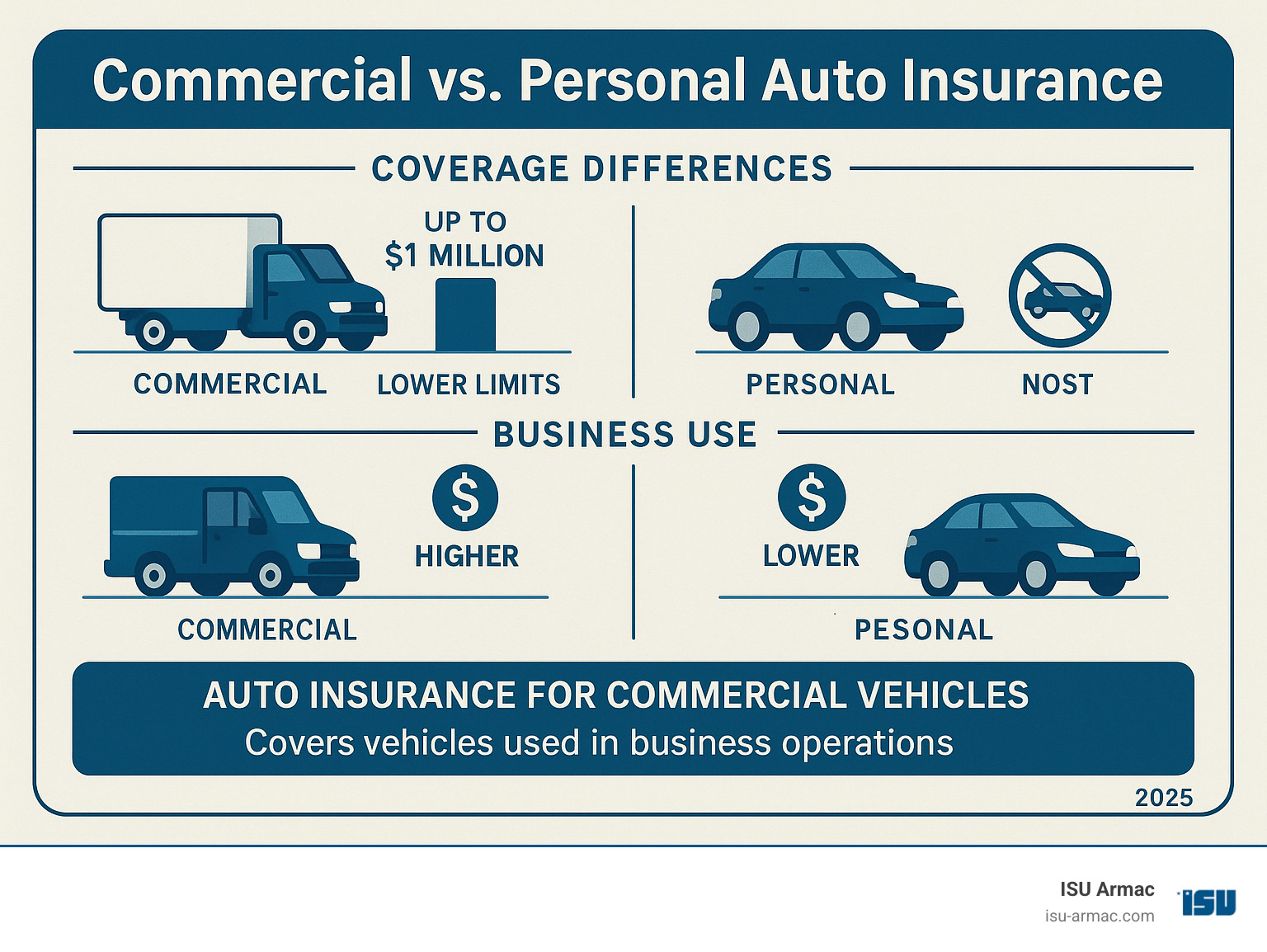
Key Differences Between Personal and Commercial Auto Insurance:
- Coverage Limits: Commercial policies typically offer up to $1 million in liability coverage.
- Business Use: Covers vehicles used for deliveries, hauling equipment, and transporting goods.
- Driver Coverage: Protects business owners and employees driving company vehicles.
- Legal Requirements: Required in most states for vehicles used in business operations.
- Cost: Generally more expensive due to higher risk exposure and coverage limits.
Driving for business involves different risks than personal driving. An accident during a delivery could lead to expensive liability claims that a personal auto policy won’t cover. Using a personal vehicle for business could even void your personal coverage, leaving you unprotected. Commercial auto insurance fills this critical gap by covering vehicle damage, driver injuries, and third-party liability during business operations, protecting your business from financial disaster.
I’m Ryan McEachron, CEO of ISU Insurance Services ARMAC Agency in Victorville. With decades of experience in the insurance industry and as a member of the Victorville City Council, I understand the unique risks that commercial vehicle operators face in Southern California and have helped countless business owners steer the complexities of auto insurance for commercial vehicles.
Easy auto insurance for commercial vehicles glossary:
- automobile insurance
- commercial general insurance
- do i need both commercial and personal auto insurance
Understanding the Basics: What is Commercial Auto Insurance?
Think of auto insurance for commercial vehicles as your business’s financial safety net on wheels. It’s designed to protect vehicles that are used to generate income or directly support your business operations.

The key distinction is business use versus personal use. While personal auto insurance covers commuting and errands, commercial auto insurance is for when your vehicle becomes a working tool. If your car, truck, or van is used for client meetings, deliveries, or hauling equipment, it has likely crossed into commercial territory.
Other factors that typically require commercial coverage include:
- Vehicle ownership: Vehicles owned by a business entity usually need commercial insurance.
- Gross vehicle weight: Vehicles over 10,000 pounds almost always require commercial policies.
- High-risk industries: Businesses in construction, delivery, or transportation face unique risks and often have specific insurance requirements. ISU Armac works with multiple carriers to find coverage that fits your industry and budget.
| Feature | Personal Auto Insurance | Commercial Auto Insurance |
|---|---|---|
| Coverage Limits | Lower limits, designed for individual risk | Higher limits (often up to $1 million+), reflecting greater business risk and potential liability |
| Covered Uses | Commuting, personal errands, recreational use | Transporting goods/equipment, making deliveries, client visits, hauling for business |
| Who is Insured | Policyholder and household members | Business owner, employees, and authorized drivers operating company vehicles |
| Cost | Generally lower, less complex risk factors | Generally higher, due to increased risk exposure, vehicle types, and usage |
Who Needs Commercial Auto Insurance?
Many business owners mistakenly assume their personal policy covers occasional business use, a costly misconception. You likely need commercial auto insurance if you are a:
- Contractor: Electricians, plumbers, or general contractors hauling tools and materials.
- Delivery Service: Florists, restaurants, or package delivery operations.
- Food Truck Operator: Mobile restaurants with specialized equipment and high liability exposure.
- Landscaper: Hauling mowers, trimmers, and other equipment.
- Real Estate Agent: Regularly transporting clients to property showings.
Ask yourself these questions: Do you transport goods or people for a fee? Do you haul tools or equipment for work? Do you make regular business-related deliveries? If you answered yes to any of these, you probably need commercial protection.
Personal Vehicles for Business: The Risks and Implications
Using a personal vehicle for business is a financial gamble. The biggest danger is coverage gaps, where your personal policy won’t pay for an accident that occurs during business use. This could leave you responsible for medical bills, vehicle replacement, and lawsuits.
There is also a policy cancellation risk. If your insurer finds undisclosed commercial use, they could terminate your policy. This leads to massive personal liability, as a serious accident could exceed personal policy limits and put your personal assets, including your home, at risk.
A personal policy might suffice for occasional trips to a meeting, but regular business use almost always requires commercial coverage. For businesses that use vehicles they don’t own (e.g., employees’ personal cars), hired and non-owned auto coverage is crucial. This protects your business from liability when you rent vehicles or when employees drive their own cars for work. Learn more in our guide: Does My Personal Auto Insurance Cover Business Use?
The bottom line is that auto insurance for commercial vehicles is about protecting the financial foundation of your business. At ISU Armac, we help you find the right coverage for your unique situation.
Core Coverages and Optional Add-Ons
Commercial auto policies are flexible, offering standard coverages for the essentials plus optional endorsements to tailor protection to your unique business risks. At ISU Armac, we help businesses in Apple Valley, Victorville, and Hesperia find the right mix of coverages to prevent a minor inconvenience from becoming a major financial setback.

For a comprehensive look at what’s included, see our guide: What Does Commercial Auto Insurance Cover
Common Coverages in a Standard Policy
These essential protections are the backbone of your policy.
- Liability Coverage: This is the most critical component. It pays for injuries to others or damage to their property when you’re at fault, including medical expenses, property repair, and legal defense fees. Commercial policies offer higher limits due to greater business liability exposure.
- Collision Coverage: Pays to repair or replace your business vehicle after an accident, regardless of who is at fault. This is vital for businesses that depend on their vehicles daily.
- Comprehensive Coverage: Protects your vehicle from non-collision events like theft, vandalism, fire, hail, floods, or hitting an animal.
- Medical Payments (MedPay) & Personal Injury Protection (PIP): Covers medical expenses for you, your employees, and passengers after an accident, regardless of fault. In some states, PIP also covers lost wages.
- Uninsured/Underinsured Motorist Coverage: Protects you if you’re in an accident with a driver who has little or no insurance. It covers your medical bills and vehicle repairs when the at-fault driver cannot.
Popular Optional Coverages for Improved Protection
These endorsements address specific risks not covered by basic policies.
- Rental Reimbursement: Pays for a rental vehicle while your commercial vehicle is being repaired after a covered accident, preventing business downtime.
- Towing and Labor Coverage: Covers roadside emergencies like tows, battery jumps, tire changes, or fuel delivery.
- Inland Marine Insurance: Your commercial auto policy does not cover tools, equipment, or cargo. Inland marine insurance fills this gap, protecting your business property while it’s being transported or is at a job site.
- Gap Coverage: If your financed or leased vehicle is totaled, this covers the difference (the “gap”) between what you owe on the loan and the vehicle’s actual cash value.
- Hired and Non-Owned Auto Coverage: Extends your business liability protection to vehicles you use for work but don’t own, such as rented vehicles or employees’ personal cars.
For businesses with larger vehicles, specialized coverage is necessary. Semi-trucks require specific physical damage coverage for their unique risks. Learn more here: Semi Truck Physical Damage Insurance
As an independent agency, ISU Armac can shop multiple carriers to find the perfect combination of coverages for your business and budget.
The Essential Guide to Auto Insurance for Commercial Vehicles
Getting the right auto insurance for commercial vehicles is a straightforward process when you have the right guidance. It involves understanding legal requirements, getting a proper quote, and knowing how to file a claim.

To dive deeper into how commercial auto insurance functions, check out our guide: How Does Commercial Auto Insurance Work?
Legal Requirements for Auto Insurance for Commercial Vehicles
California, like all states, has minimum liability coverage requirements for commercial vehicles. However, these state minimums are often insufficient to cover the costs of a serious accident, leaving your business financially vulnerable.
If your business operates across state lines, you must also comply with federal regulations. The Federal Motor Carrier Safety Administration (FMCSA) sets insurance requirements based on vehicle weight, cargo type, and travel distance. You can find details on the Federal Motor Carrier Safety Administration (FMCSA) requirements website.
You will need to provide proof of insurance in various situations. This can be an insurance card for traffic stops or a Certificate of Insurance (COI), which many clients require before they will work with you.
How to Get a Commercial Auto Insurance Quote
An accurate quote depends on providing the right information. To get started, you’ll need to have these details ready:
- Business Operations: Your industry, years in business, and how your vehicles are used.
- Vehicle Information: The VIN, make, model, year, and primary use for each vehicle.
- Driver Information: License numbers, driving history, and experience for all drivers.
- Desired Coverage: The liability limits and optional coverages you need.
The easiest way to begin is with our online form: Commercial Auto Insurance Quote Online. You can also call or visit our offices in Victorville, Apple Valley, Hesperia, or Oak Hills.
Filing a Claim: A Step-by-Step Process
Knowing what to do after an accident makes the claims process smoother.
- Safety and Documentation: First, ensure everyone is safe. Then, document the scene thoroughly. Take photos of vehicle damage, the accident scene, and license plates. Exchange contact and insurance information with other drivers, but do not admit fault.
- Notify Your Insurer: Report the accident to your insurance agent or company as soon as possible. At ISU Armac, you can call us directly to get the process started. Prompt reporting is key.
- The Investigation: Your insurer will assign a claims adjuster to investigate the accident. The adjuster will review police reports, photos, and witness statements to determine fault and the extent of the damages.
- Repairs and Settlement: Once the investigation is complete, the repair process begins. You can typically choose your own repair shop. If your vehicle is a total loss, the adjuster will determine its actual cash value. The final settlement will be based on your policy terms and deductibles.
Thorough documentation and prompt reporting are the keys to a fast and accurate claim resolution.
Smart Strategies for Managing Your Policy
Managing your auto insurance for commercial vehicles strategically involves more than just having a policy. It’s about actively controlling costs while ensuring your business is protected. The most successful companies treat their insurance as a managed investment.
Your premiums are influenced by your business operations, fleet size, location, claims history, and driver records. Understanding these factors helps you manage risk effectively. For a detailed breakdown, see our guide on the Cost of Commercial Auto Insurance.
How to Save Money on Auto Insurance for Commercial Vehicles
Saving money doesn’t mean cutting protection. It means being smart about structuring your coverage and managing risk.
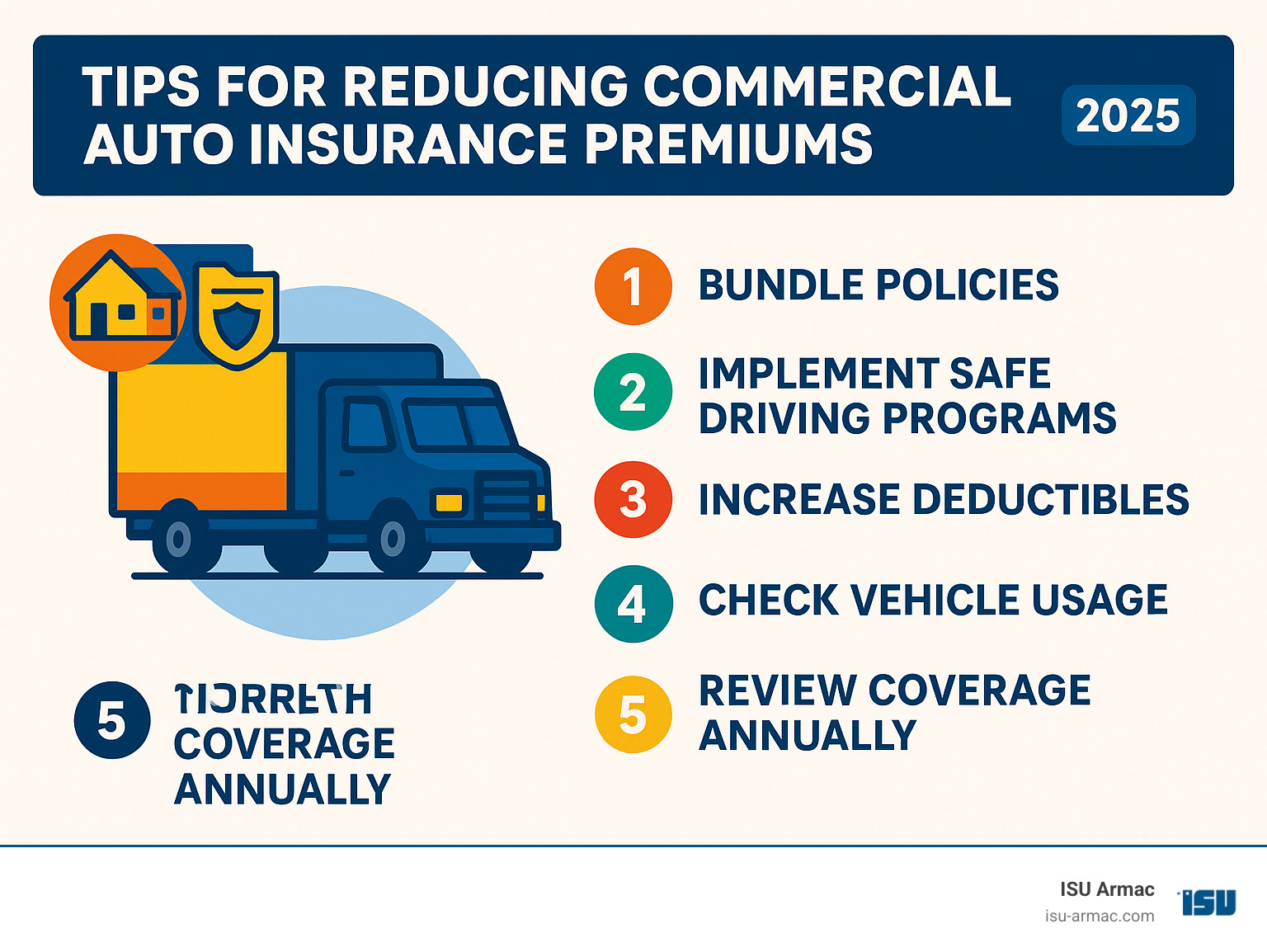
- Bundle Your Policies: Combine your commercial auto with other business policies like general liability for a multi-policy discount.
- Maintain Safe Drivers: Clean driving records are one of the best ways to lower premiums. Invest in driver safety programs.
- Use Telematics Programs: Usage-based insurance monitors driving habits and rewards safe driving with lower rates, often saving 10% or more.
- Manage Your Deductibles: Choosing a higher deductible lowers your premium. Ensure you can comfortably pay the deductible if a claim occurs.
- Pay Annually: Paying your premium in full for the year often eliminates installment fees and can earn you a discount.
To see which carriers offer the most competitive rates, read our guide: Who Has the Cheapest Commercial Auto Insurance?
The Impact of Telematics and Safe Driving Programs
Telematics technology has changed how auto insurance for commercial vehicles is priced. These systems reward businesses for their commitment to safety.
Usage-based insurance programs use real-time data on speed, braking, and mileage to price policies on actual performance, not just traditional factors. This can lead to significant savings for businesses with safe drivers.
Beyond insurance discounts, telematics offers fleet management benefits like route optimization, idle time monitoring, and maintenance alerts, which can lead to operational cost savings. By monitoring driver behavior, you can create a culture of safety and correct risky habits before they cause an accident. Potential premium discounts from telematics range from 5% to 30%.
At ISU Armac, we work with multiple carriers offering advanced telematics programs. We can help you find an option that aligns with your operational needs and safety goals.
Frequently Asked Questions about Commercial Vehicle Insurance
We often get questions from business owners in Victorville, Apple Valley, and Hesperia about auto insurance for commercial vehicles. Here are answers to some of the most common ones.
What types of vehicles are covered?
Commercial auto insurance is flexible and can cover a wide range of vehicles used for business. This includes:
- Cars: Used by sales representatives or real estate agents.
- Vans and Pickup Trucks: Driven by tradespeople, contractors, and delivery services.
- Box Trucks: Used by moving companies and larger delivery operations.
- Service Utility Trucks: Vehicles with specialized equipment for repair or maintenance.
Larger vehicles, like those covered by our Big Rig Insurance, require specialized policies. Some vehicles, such as motorcycles or mobile businesses like food trucks, may also need customized coverage due to their unique risks.
Are trailers and tools covered?
This is a critical point. Your auto insurance for commercial vehicles protects your vehicle, but there are important limitations.
Trailers: Liability coverage from your truck may extend to a small trailer, but physical damage to the trailer itself is usually not covered unless it is specifically listed on your policy. Larger trailers almost always need to be explicitly added. For more details, read our guide: Are Trailers Covered Under Commercial Auto Insurance?.
Tools and Cargo: Your commercial auto policy does not cover the tools, equipment, or goods you transport. If tools are stolen from your van or cargo is damaged in an accident, you need a separate inland marine insurance policy. This protects your business property while it’s in transit or at a job site.
How does coverage work in different states or provinces?
Insurance laws vary by location, which is important if your business crosses state lines.
State-Specific Laws: States have different minimum coverage requirements and operate under either no-fault or at-fault systems, which affects how claims are handled. As California insurance specialists, we know the state’s requirements thoroughly. If you operate in other states, like Florida, you’ll need to meet their unique requirements. Learn more in our guide to Commercial Auto Insurance Florida.
Cross-Border Coverage: Most U.S. commercial auto policies extend coverage into Canada and Puerto Rico. However, Mexico is not covered. If your business operates in Mexico, you must purchase a separate Mexican auto insurance policy.
Working with an experienced agency like ISU Armac ensures you have the right protection wherever your business takes you.
Conclusion
Protecting your business with the right auto insurance for commercial vehicles is essential for your financial security and peace of mind. As we’ve covered, this insurance is fundamentally different from personal coverage and is a necessity if you use a vehicle for business.
The key takeaways are:
- Commercial vs. Personal: A personal policy will not cover business activities, creating a massive financial risk.
- Proactive Risk Management: Adequate insurance, combined with safety programs and proper vehicle maintenance, is your best defense.
- Custom Coverage: Your policy should be custom to your specific business, whether you’re a contractor, a delivery service, or a real estate agent.
At ISU Armac, we understand that shopping for insurance can be complex. That’s why we do the heavy lifting for you. As an independent agency, ISU Armac shops multiple carriers to find the right protection for your unique business needs. We know the commercial auto requirements in California and have helped countless businesses across Victorville, Apple Valley, Hesperia, and Oak Hills find comprehensive, affordable coverage.
Don’t wait for an accident to find gaps in your policy. Take action today to protect your business, employees, and livelihood. Protect your business with the right Business Auto Insurance policy today and drive forward with confidence.