
Why Truck Insurance is Essential for Your Business
Truck insurance is a specialized form of commercial auto insurance that protects trucking businesses from the significant financial risks of operating heavy commercial vehicles. Whether hauling cargo across state lines or making local deliveries, this coverage is a legal requirement and a critical business necessity.
Key Components of Truck Insurance:
- Liability Coverage – Required by federal law, with minimums from $750,000 to $5,000,000 depending on cargo.
- Physical Damage Coverage – Protects your truck and trailer from collision, theft, fire, and vandalism.
- Cargo Insurance – Covers the goods you’re transporting if damaged, lost, or stolen.
- Non-Trucking Liability – Protection when using your truck for personal purposes.
- Bobtail Insurance – Coverage when driving without a trailer attached.
Legal Requirements by Cargo Type:
- Non-hazardous cargo over 10,000 lbs: $750,000 minimum
- Hazardous materials (non-explosive): $1,000,000 minimum
- Explosives: $5,000,000 minimum
The consequences of driving without proper truck insurance are severe. Penalties can include fines up to $50,000, license suspension, and vehicle impoundment for up to three months.
I’m Ryan McEachron, CEO of ISU Insurance Services ARMAC Agency. With over 25 years of experience serving the High Desert transportation industry since 1995, I help Southern California trucking businesses secure comprehensive truck insurance by navigating the unique risks and regulatory requirements they face daily.
Common truck insurance vocab:
- commercial vehicle insurance
- what does commercial auto insurance cover
- are trailers covered under commercial auto insurance
The Fundamentals of Commercial Truck Insurance
Understanding what commercial truck insurance is and why it’s essential is your first step toward protecting your trucking business. This isn’t just another policy; it’s the financial foundation that keeps your operation running when the unexpected happens.
Unlike your personal vehicle’s policy, truck insurance is built for the heavy-duty world of commercial transportation. It’s designed to handle the unique risks of operating large, valuable vehicles that generate your income.
What is Commercial Truck Insurance?
Commercial truck insurance is your business’s financial safety net. When your livelihood depends on keeping trucks on the highway, a standard personal auto policy is not built for the job.
Commercial use is the key distinction. Whether you’re hauling freight or making local deliveries, your truck is a business asset needing specialized protection. This coverage goes beyond fixing a dented fender; it protects your entire operation from financial catastrophe.
The financial protection aspect can’t be overstated. A single accident can result in millions of dollars in damages and legal claims. Your truck insurance policy acts as a buffer between these devastating costs and your business’s survival.
Legal compliance is equally critical. Federal regulations from agencies like the Federal Motor Carrier Safety Administration (FMCSA) mandate that commercial motor carriers maintain specific insurance minimums. These federal law requirements are the price of admission for operating legally. Our comprehensive Commercial Auto Insurance guide breaks down what you need to stay compliant.
Consequences of Driving Uninsured
Operating without proper truck insurance is a massive gamble with your business. The penalties are swift, severe, and can shut down your operation.
This is a serious offense across North America. Fines up to $50,000 can hit your business immediately. But the financial pain doesn’t stop there.
License suspension means you’re out of business until you can get back on the road legally. Meanwhile, vehicle impoundment takes away your income-generating asset. In extreme cases, jail time can result from repeat offenses.
The business risk extends beyond legal penalties. Without insurance, you’re personally liable for any damage or injuries caused by your truck. A single accident could bankrupt you.
Commercial Truck Insurance vs. Personal Auto Insurance
The difference between commercial truck insurance and personal auto coverage is significant. Only one is built for the job site.
Coverage Limits represent the most dramatic difference. While personal policies might offer $25,000 in liability, commercial policies start at $750,000 and can reach $5,000,000 or more, reflecting the greater potential for damage.
Covered Vehicles under commercial policies include everything from delivery vans to semi-trucks. These are purpose-built machines designed to haul heavy loads and generate income.
Covered Uses is where many truckers get caught off guard. The moment you use your vehicle for business purposes, your personal policy likely won’t cover you. Commercial policies are specifically designed for revenue-generating activities.
Cost differences reflect the increased risk. Yes, commercial truck insurance costs more, but it’s covering assets worth hundreds of thousands of dollars and potential liabilities in the millions.
Tax Deductibility provides a silver lining. Unlike personal auto insurance, your commercial truck insurance premiums are typically deductible as a business expense, reducing the real cost of coverage.
The bottom line is simple: if your truck makes you money, you need commercial coverage. Personal policies contain business use exclusions that can leave you unprotected when you need it most.
Building Your Policy: Essential Coverages
A robust truck insurance policy is custom-built from various coverages to match your specific operations. It starts with mandatory liability and can be improved with optional protections for your vehicle, cargo, and business.
Building your truck insurance policy involves starting with a solid foundation of mandatory coverages, then adding layers of protection based on your unique needs. Some truckers need basic coverage for local hauling, while others require comprehensive protection for cross-country operations.
An experienced agent helps you avoid both over-insuring and under-insuring, ensuring you have the right protection without dangerous gaps. Let’s walk through the essential building blocks of a well-constructed policy.
Mandatory Coverages
These coverages aren’t optional; they’re the legal foundation that keeps you on the road and compliant with regulators.
Public liability insurance is the cornerstone of every commercial truck insurance policy. Federal law mandates this coverage for all DOT-regulated commercial motor vehicles. When an 80,000-pound truck is in an accident, the potential for catastrophic damage is enormous.
Bodily injury liability covers medical bills, lost wages, and legal costs if your truck is involved in an accident that injures someone. Without adequate limits, a single serious accident could be financially devastating.
Property damage liability pays for fixing or replacing things your truck damages, such as other vehicles, buildings, or guardrails. This coverage is critical, as commercial trucks can cause extensive property damage.
State minimums vary, but federal requirements often supersede them for interstate commerce. We ensure every policy meets or exceeds all applicable state and federal standards.
Uninsured and underinsured motorist coverage protects you when you’re hit by a driver with little or no insurance. This coverage ensures you’re not left paying for damages caused by someone else.
Optional Coverages for Your Truck and Business
While mandatory coverages protect others, optional coverages protect your business assets and income. This is where we customize your policy to match your operation.
Physical damage coverage protects your truck. Semi Truck Physical Damage Insurance includes collision coverage for accidents and comprehensive coverage for theft, vandalism, fire, and weather damage.
For owner-operators, Bobtail insurance covers you when driving your truck without a trailer. Non-trucking liability goes a step further, covering personal use of your truck, like running errands.
Trailer interchange coverage is essential if you use trailers owned by other carriers. It protects you from damage to trailers you’re responsible for while hauling. For more details, see our guide on What Does Commercial Auto Insurance Cover?.
Specialized and Cargo Coverages
Beyond protecting your truck, many operations need specialized coverages for the goods they transport and other business risks.
Motor truck cargo insurance is essential for any for-hire trucker. You’re legally responsible for cargo from pickup to delivery, and this coverage protects you if goods are damaged, destroyed, or stolen.
Loss of use coverage provides income when your truck is out of commission for repairs after a covered incident. It can reimburse lost income or pay for a rental.
Reefer breakdown coverage protects drivers hauling temperature-sensitive cargo. If your refrigeration unit fails, this coverage pays for the spoiled load.
Contractor’s equipment coverage protects tools and equipment you transport to job sites from theft and damage.
Different cargo types require different insurance. Hazardous materials demand higher liability limits. Produce and refrigerated goods need reefer coverage. High-value goods require increased cargo limits. Automotive hauling needs specific coverage for the vehicles being transported. The key is matching your coverage to your actual operations.
Understanding the Cost of Your Truck Insurance
The premium for your truck insurance policy is not a one-size-fits-all number. Insurers weigh several risk factors to determine your final cost. By understanding these factors, you can take proactive steps to manage your expenses and secure more affordable rates.
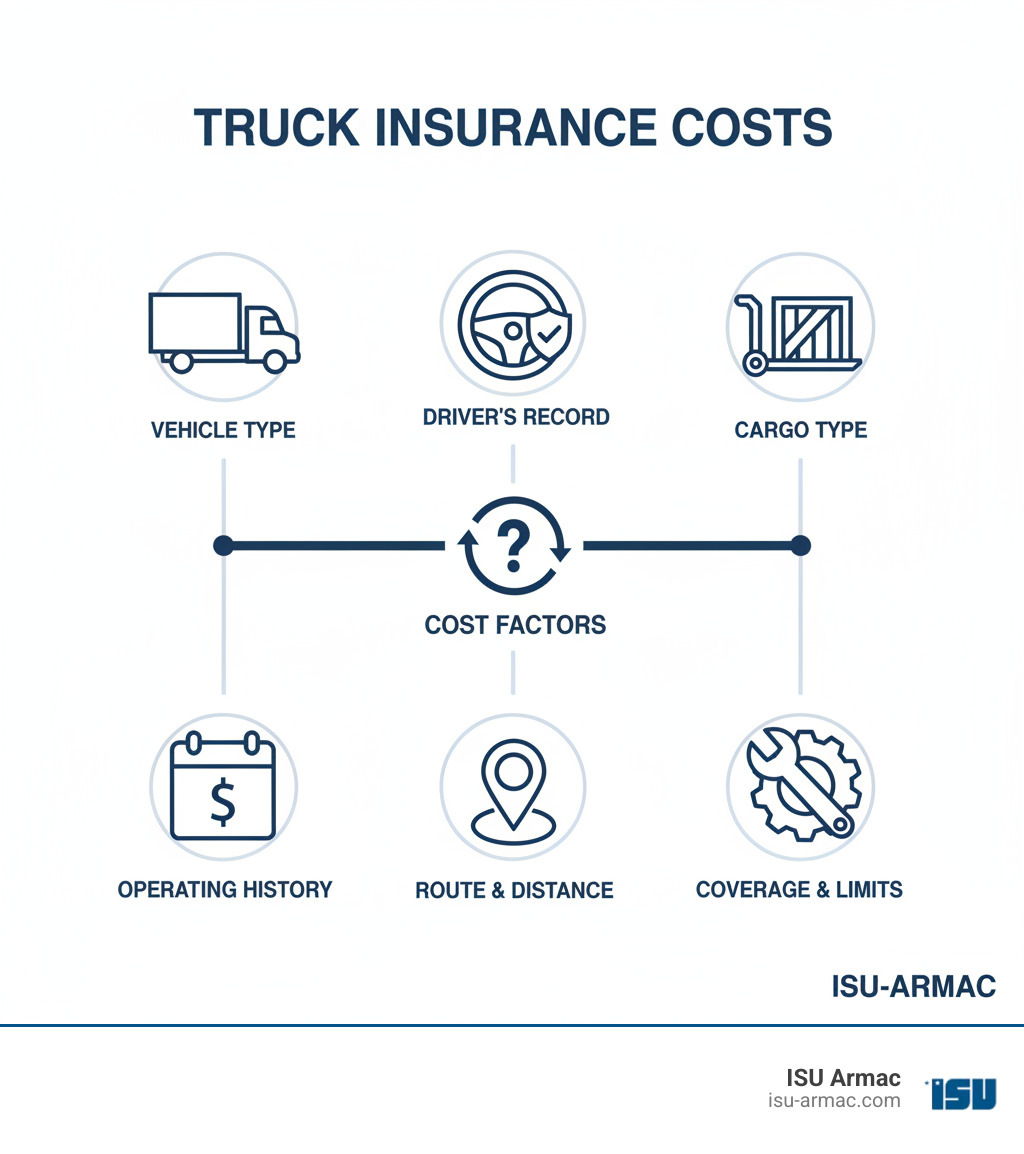
Key Factors That Influence Your Premium
Every trucking operation is unique, so insurers evaluate dozens of factors to calculate your premium. Understanding these can help you manage costs.
Your vehicle type is a major factor. A new Peterbilt will cost more to insure than a local box truck because larger, more powerful vehicles can cause more damage and are more expensive to repair. That’s why Big Rig Insurance premiums are often higher. However, trucks 10 years old or less may get better rates due to modern safety features.
Your driving records carry enormous weight. A clean record with no accidents or violations can save you thousands annually, while a history of tickets or accidents can significantly increase your premium.
The operating radius of your business plays a crucial role. Local delivery trucks face different risks than long-haul operators crossing multiple states. Long-distance trucking typically means higher premiums due to increased exposure.
Your cargo type impacts both liability and cargo insurance costs. Hauling general freight is different from transporting hazardous materials or high-value electronics, which carry unique risks.
Your claims history signals your business’s risk level to insurers. A business with years of claim-free operation often enjoys preferred pricing.
Your chosen coverage limits and deductibles also affect your premium. Higher limits cost more, while higher deductibles can reduce your monthly payments.
For a detailed breakdown, our guide on the Cost of Commercial Auto Insurance provides more insights into managing insurance expenses.
How to Save Money on Your Truck Insurance Premiums
The good news is that truck insurance costs aren’t entirely out of your control. You can reduce your premiums through smart strategies without compromising protection.
Maintaining clean driving records is your most powerful tool for controlling costs. A culture of safety, free from speeding tickets and accidents, pays for itself through lower insurance costs.
Safety programs show insurers you’re serious about risk management. Installing dash cams, using telematics, and maintaining regular vehicle maintenance schedules can qualify you for substantial discounts.
Choosing higher deductibles is a quick way to reduce your premium. If you can handle a $5,000 deductible instead of $1,000, the annual savings can be significant. Just ensure you have the cash flow to cover it if a claim occurs.
Paying your premium in full rather than in installments often earns a discount and eliminates processing fees.
Bundling your policies, such as combining your truck insurance with general liability or workers’ compensation, often reduces the total cost.
Anti-theft devices like GPS trackers and alarm systems not only protect your truck but can also qualify you for premium reductions.
Vehicles known for lower repair costs and higher safety ratings typically cost less to insure.
Finally, shopping around annually ensures you get competitive rates. As an independent broker, ISU Armac shops multiple carriers to find Who Has the Cheapest Commercial Auto Insurance? while ensuring you maintain quality coverage.
Getting Your Quote and Choosing a Provider
Securing the right coverage starts with getting an accurate quote and selecting a partner who understands the trucking industry. Knowing what information to have ready and what to look for in a broker can streamline the process and lead to a better policy.
Information Needed for a Truck Insurance Quote
To get a fast, accurate truck insurance quote, having key information ready makes the process much smoother. We’ve streamlined our quoting process, but we’ll need these essential details to assess your risk and find the best rates.
- Driver information: Full names, dates of birth, and license numbers for all drivers, including their experience and any violations or accidents.
- Vehicle details: The year, make, model, and VIN for each truck, along with its Gross Vehicle Weight.
- Radius of operation: Whether you operate locally or long-haul.
- Cargo: The types of goods you typically haul.
- Business information: Your legal business name, DOT/MC numbers, and how long you’ve been in business.
- Claims history: A record of past claims for both the business and individual drivers.
You can get started quickly by visiting our Commercial Auto Insurance Quote Online page. Having this information ready allows us to shop multiple carriers and present competitive options faster.
Choosing the Right Truck Insurance Partner
Selecting the right insurance broker is like choosing a co-pilot for your business. You want a partner who knows the route, understands the challenges, and has your back. The trucking industry has unique complexities that require specialized knowledge.
- Industry expertise: Your broker must understand federal regulations, from FMCSA requirements to DOT compliance, and be fluent in trucking terminology.
- Access to multiple carriers: Independent brokers like us work for you, not the insurance company. We shop your coverage with numerous top-rated carriers to find the best combination of coverage and price.
- Customer service: You need a responsive broker who returns calls promptly and explains things in plain English, especially when dealing with tight schedules and DOT inspections.
- Claims support: An experienced advocate can make a huge difference during a claim. We guide our clients through the entire claims process to ensure a fair and smooth resolution.
If you’re looking for local expertise, you can find a local agent in your area through our network. We understand the challenges of operating in Southern California.
Fleet Insurance vs. Individual Policies
When your operation grows beyond one truck, you must decide whether to insure each vehicle separately or bundle them under a fleet policy. Fleet insurance typically offers better value and convenience for multi-truck operations.
Most insurers define a fleet as five or more commercial vehicles, though some write policies for as few as three. The cost savings alone make fleet insurance attractive, as insurers pass on the efficiency of managing one policy to you.
Simplified management is a huge benefit. Instead of juggling multiple renewal dates and documents, everything is consolidated. Scalability is also easier; adding a new truck to a fleet policy is simpler than getting a new individual policy.
With a single policy, you have one point of contact and consistent coverage terms across all vehicles. For more information, explore our guide to Commercial Vehicle Insurance. We can help you determine the most cost-effective approach for your operation.
Conclusion: Secure Your Business for the Long Haul
Navigating commercial truck insurance can feel overwhelming, but it’s the foundation of a successful and secure trucking operation. It’s the safety net that keeps your business running when the unexpected happens. After 25 years in this industry, I’ve seen how vital this protection is.
By understanding your legal obligations, evaluating your risks, and building a policy with the right mandatory and optional coverages, you’re protecting your livelihood. A well-structured truck insurance policy can be the difference between a minor setback and a business-ending catastrophe.
The key is working with someone who truly gets the trucking industry. At ISU Armac, we’ve been serving the High Desert transportation community since 1995, from Victorville to Apple Valley, Hesperia, and Oak Hills. We understand the specific challenges you face, from navigating the busy I-15 corridor to dealing with California’s strict regulations.
Our team takes pride in shopping multiple top-rated carriers to build a customized policy that fits your unique needs and budget. We focus on finding the right protection at a competitive price, so you can spend less time worrying about insurance and more time focusing on what you do best: keeping America’s goods moving.
The road ahead doesn’t have to be uncertain when you have the right protection in place. Let us help you secure your business for the long haul.