
Why Public Liability Insurance Cover Is Essential for Your Business
Public liability insurance cover protects your business when customers, clients, or members of the public suffer injury or property damage due to your business activities. Here’s what you need to know:
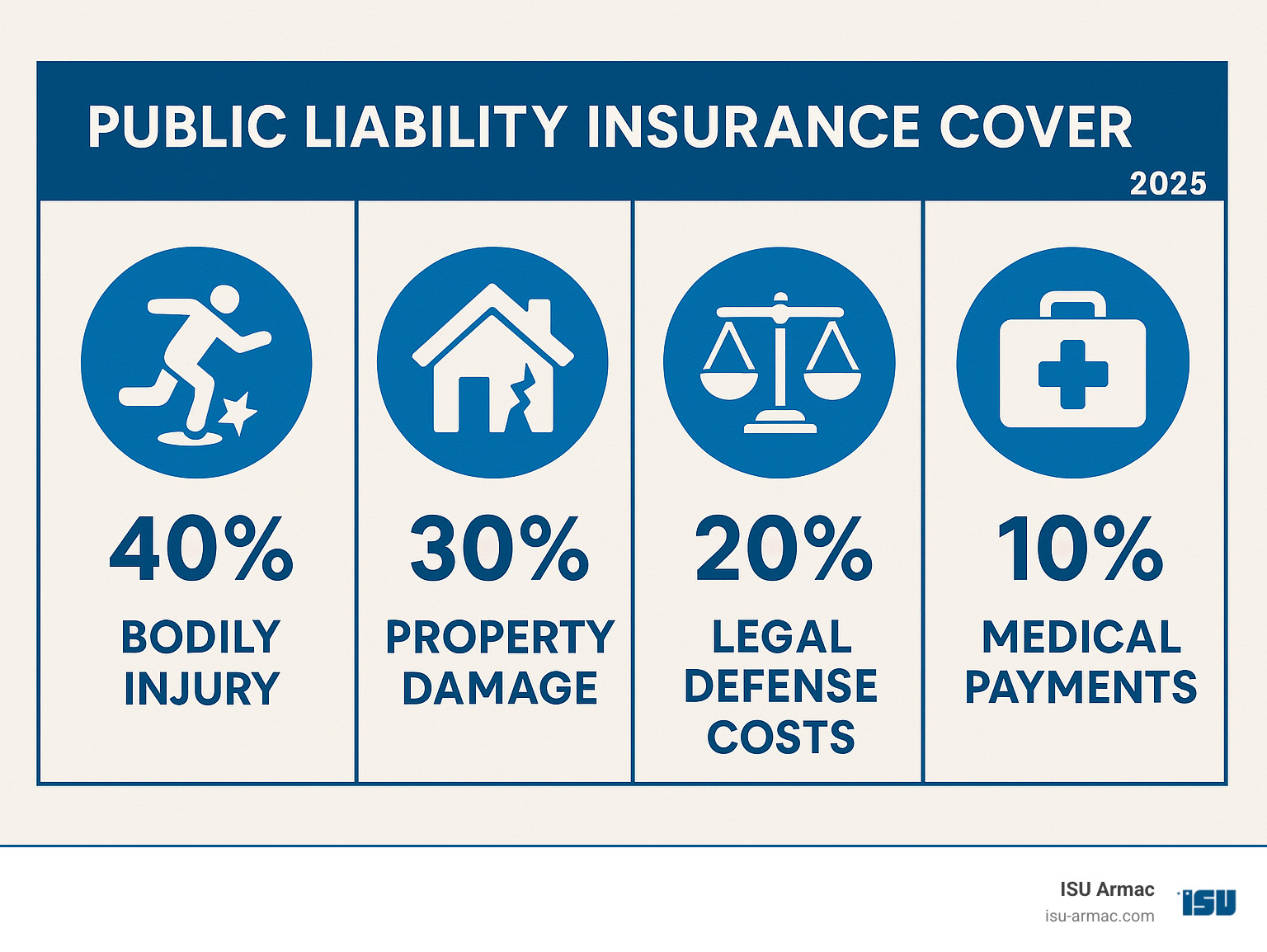
Key Coverage Areas:
- Bodily injury claims – A customer slips, falls, or gets hurt on your premises.
- Property damage – You accidentally damage someone else’s property.
- Legal defense costs – Attorney fees and court expenses if you are sued.
- Medical payments – Immediate medical costs for injured parties, regardless of fault.
Without proper coverage, a single accident could cost your business thousands in damages. The average slip-and-fall claim alone can range from $40,000 to $100,000.
In the United States, public liability insurance cover is typically included as part of a Commercial General Liability (CGL) policy. While not always legally required, many landlords, clients, and government contracts demand proof of this coverage before doing business with you.
As Ryan McEachron, CEO of ISU Insurance Services ARMAC Agency, I’ve helped countless Victorville business owners steer the complexities of public liability insurance cover. My experience on the Victorville City Council has shown me how essential this protection is for our local entrepreneurs.
Similar topics to public liability insurance cover:
What is Public Liability Insurance and Who Needs It?

Defining Public Liability and Its Modern Equivalent
In the United States, the term “public liability insurance” is now largely encompassed by what is called Commercial General Liability (CGL) insurance. This vital coverage protects your business from claims made by third parties—anyone who isn’t your business or an employee. If a customer is injured at your location or your team damages a client’s property, public liability insurance cover helps pay for medical bills, repairs, and legal fees. Without it, a single incident could cause serious financial strain, making it a fundamental part of your risk management plan.
To learn more about how this coverage fits into the U.S. business landscape, see our guide: What Is General Liability Insurance for Small Business?.
Key Businesses and Professionals That Require Coverage
Any business that interacts with the public needs public liability insurance cover. If customers visit your store, you work on a client’s property, or clients visit your home office, you are exposed to liability risks. This includes a wide range of professionals:
- Contractors and tradespeople (plumbers, electricians, painters) who work on others’ property.
- Retail stores and restaurants where slip-and-fall incidents or other accidents can occur.
- Consultants and freelancers who meet with clients in person and risk accidental property damage.
- Event planners and entertainers who manage large groups of people and venues.
Often, clients and landlords will require proof of insurance before they will work with you, making it a key to opening new business opportunities. If you’re an independent contractor, learn more about your specific needs here: Do Independent Contractors Need General Liability Insurance?.
Is Public Liability Insurance Legally Required?
In the U.S., public liability insurance cover is not typically mandated by federal or state law, unlike Workers’ Compensation. However, “not legally required” does not mean “unnecessary.” It is often a practical requirement for doing business.
Many clients and government entities require proof of coverage before signing a contract. Commercial lease agreements almost always demand it to protect the landlord. Furthermore, certain industry licenses and professional associations may require members to carry a minimum level of coverage. Most importantly, the financial protection it offers is invaluable. The potential cost of an uninsured claim is a risk most businesses cannot afford to take.
While the law may not force you to have it, the realities of the business world often do. To understand more about the legal aspects, visit Is General Liability Insurance Required by Law?.
Understanding Your Public Liability Insurance Cover

What Your Policy Typically Covers
A solid public liability insurance cover policy, usually part of a General Liability policy in the U.S., is designed to cover a wide range of risks from your business operations. Here’s what you can typically expect:
- Bodily Injury Liability: Covers medical expenses and lost wages if a non-employee is injured on your premises or due to your business activities, such as a slip-and-fall.
- Property Damage Liability: Pays for damage your business accidentally causes to a third party’s property, like a contractor cracking a client’s floor.
- Legal Defense Costs: Pays for attorney fees, court costs, and other legal expenses to defend your business against a claim, regardless of the outcome.
- Medical Payments: Covers immediate, minor medical expenses for a third party injured on your premises, which can help prevent a larger lawsuit.
- Personal and Advertising Injury: Covers non-physical damages like libel, slander, copyright infringement, or using another’s advertising idea.
Every policy has specific limits. To understand the full scope, read our detailed article: What Does Liability Insurance Actually Cover?
Common Exclusions: What Is Not Covered
Understanding what your policy doesn’t cover is just as important as knowing what it does. Common exclusions in a public liability insurance cover policy include:
- Employee Injuries: These are covered by Workers’ Compensation insurance.
- Professional Mistakes: Claims of negligence or errors in your professional services are covered by Professional Indemnity (or E&O) insurance.
- Intentional Damage or Criminal Acts: Insurance is for accidents, not deliberate acts.
- Damage to Your Own Property: You need Commercial Property Insurance to cover your own buildings, equipment, or inventory.
- Commercial Auto Accidents: Accidents involving business vehicles are covered by Commercial Auto Insurance.
- Faulty Workmanship: The policy generally won’t cover the cost to redo your own faulty work, though it may cover damage caused by it.
- Product Recall Costs: The costs to recall a faulty product from the market are typically not covered.
Understanding these exclusions helps you identify gaps in your coverage.
Does Public Liability Insurance Cover My Employees’ Actions?
Yes, your public liability insurance cover generally extends to claims against your business due to the negligent actions of your employees, as long as they are acting within the scope of their employment. This is known as “vicarious liability.”
For example, if your employee accidentally causes property damage or a customer injury, your policy would typically respond. However, it’s crucial to remember this policy does not cover injuries to your employees themselves. That is the specific purpose of Workers’ Compensation insurance. This distinction highlights why most businesses need both types of coverage.
Public Liability vs. Other Key Business Insurance Policies

Navigating business insurance requires understanding how different policies fit together. Here’s how public liability insurance cover compares to other key policies.
Public Liability vs. General Liability Insurance
In the U.S., these terms are often used interchangeably, but Commercial General Liability (CGL) is the modern, more comprehensive policy. While both cover third-party bodily injury and property damage, CGL policies typically add coverage for products-completed operations and personal and advertising injury. When you seek public liability insurance cover in the U.S., you will likely be offered a CGL policy.
For a comprehensive look, explore our resource: All About General Liability Insurance Coverage
Public Liability vs. Product Liability Insurance
This is a key distinction:
- Public Liability Insurance Cover: Protects against claims from your business operations or activities, like a slip-and-fall in your store.
- Product Liability Insurance: Protects against claims from injury or damage caused by a product you manufacture, sell, or distribute.
Businesses dealing with products often need specific product liability coverage.
Public Liability vs. Employers’ Liability Insurance
The difference is who is making the claim:
- Public Liability Insurance Cover: Protects against claims from third parties (the public, clients, vendors).
- Employers’ Liability Insurance (Workers’ Compensation in the U.S.): Protects your business if an employee is injured at work. In most states, this is legally required for employers.
Public Liability vs. Professional Indemnity Insurance
These policies cover different types of harm:
- Public Liability Insurance Cover: Addresses physical injury to people or damage to property.
- Professional Indemnity Insurance (E&O): Covers financial loss a client suffers due to your professional negligence, errors, or bad advice.
Service-based businesses that also have physical operations may need both policies for complete protection.
Cost and Coverage Levels of Public Liability Insurance
How Much Does Public Liability Insurance Cost?
The cost of public liability insurance cover (or General Liability in the U.S.) varies based on your business’s unique risk profile. While average monthly costs can range from $42 to $68, your specific premium depends on several factors:
- Industry: High-risk fields like construction pay more than low-risk office-based businesses.
- Business Size and Revenue: Larger operations have more exposure and thus higher premiums.
- Location: Costs vary by state and city due to local regulations and claim trends.
- Operations: The type of work you do and the equipment you use affect your risk.
- Coverage Limits and Deductible: Higher limits increase the premium, while a higher deductible can lower it.
- Claims History: A clean record typically results in lower costs.
For a deeper dive into pricing, see: How Much Does Small Business Liability Insurance Cost?
How Much Public Liability Insurance Cover Do I Need?
Choosing the right coverage amount is a strategic decision. While policies often start at $1 million per occurrence and $2 million in aggregate, many businesses need more. To determine your needs, consider:
- Risk Level: Assess the worst-case scenario. A serious injury claim can easily exceed $1 million.
- Contractual Requirements: Many clients, landlords, and government contracts will mandate specific, often higher, coverage limits (e.g., $2 million to $10 million or more).
- Industry Standards: Your industry may have unwritten standards for adequate coverage.
- Business Assets: Your insurance should be sufficient to protect your business’s assets from a large claim.
Underinsuring your business to save on premiums is a significant risk. For an extra layer of protection over your primary policies, consider Umbrella Insurance.
Is Public Liability Insurance Cover Tax Deductible?

Yes, the premiums you pay for public liability insurance cover are generally considered an ordinary and necessary business expense by the IRS, making them tax-deductible. This can help lower your taxable income and overall tax bill.
As we are insurance experts, not tax advisors, we recommend consulting with a qualified tax professional to confirm your eligibility and ensure compliance. For general information, you can refer to the IRS guidelines on business expenses.
Conclusion
From unexpected slip-and-fall accidents to accidental property damage, running a business involves inherent risks. Public liability insurance cover—typically part of a Commercial General Liability policy in the U.S.—is your essential safety net. It provides the peace of mind and financial shielding needed to protect your business from costly lawsuits.
Understanding your policy, its limits, and how it fits with other coverage empowers you to make smart decisions for your business’s future. At ISU Armac, we understand that every business is unique. Our independent agents specialize in shopping multiple trusted carriers to find the right protection that fits your specific needs and budget.
Don’t leave your business vulnerable. Safeguard your hard-earned assets and secure your future. Ready to find the perfect fit? Contact us to explore our General Liability Insurance Services and get a quote custom-built for you.