
Why Life Insurance Coverage Is Essential for Your Family’s Financial Security
Life insurance coverage provides a tax-free death benefit to your loved ones when you pass away. This payment can cover funeral costs, pay off debts, replace lost income, fund education, or maintain your family’s standard of living.
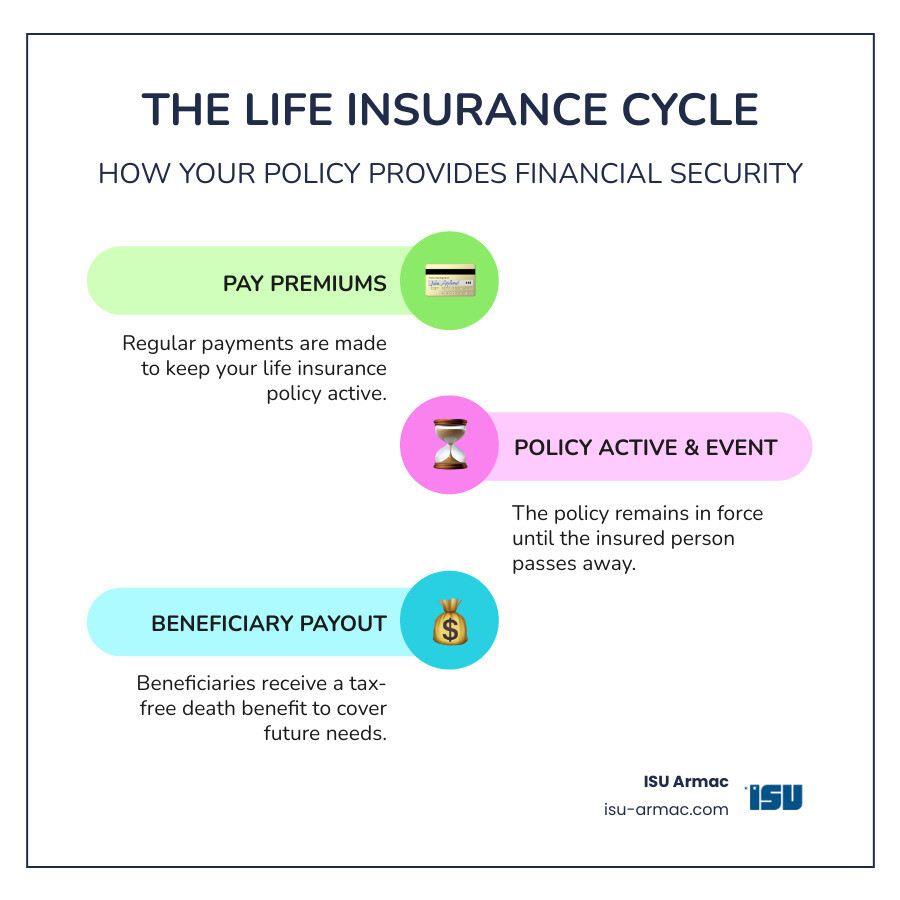
Here’s how life insurance coverage works:
- You pay regular premiums to keep your policy active.
- The insurance company promises to pay a lump sum to your chosen beneficiaries when you die.
- Your beneficiaries receive this money tax-free to use however they need.
- Coverage comes in two main types: term life (temporary, 10-40 years) and permanent life (lifelong protection with cash value).
- Premiums depend on your age, health, lifestyle, and the amount of coverage you choose.
Life insurance protects those who depend on you financially. If you have a spouse, children, a mortgage, or anyone who relies on your income, it ensures they won’t face hardship if you pass away. Some policies even let you access funds while you’re still alive.
I’m Ryan McEachron, CEO of ISU Insurance Services ARMAC Agency in Victorville, and I’ve been helping High Desert families understand life insurance coverage for over two decades. My experience on the Victorville City Council and with local businesses has shown me how critical proper coverage is for families and business owners throughout San Bernardino County.
Decoding the Main Types of Life Insurance Policies

Choosing life insurance coverage doesn’t have to be overwhelming. Policies fall into two main categories: term and permanent. Term life is temporary protection, like renting a safety net, while permanent life is lifelong coverage you own. The right choice depends on your protection needs and timeline.
Term life provides coverage for a set period (10-40 years), while permanent life covers you for your entire lifetime and builds cash value. Term life is more affordable but eventually ends; permanent life costs more but never expires if premiums are paid.
Here’s how they stack up side by side:
| Feature | Term Life Insurance | Permanent Life Insurance |
|---|---|---|
| Coverage Duration | Specific period (10, 20, 30, or 40 years) | Your entire lifetime |
| Premium Cost | More affordable, especially when you’re younger | Higher premiums than term life |
| Cash Value | No cash value component | Builds cash value over time |
| Primary Purpose | Cover temporary needs like mortgages and child-rearing | Long-term needs like estate planning and final expenses |
Term Life Insurance Explained
Term life insurance coverage is the workhorse of family protection—straightforward, affordable, and ideal for covering financial responsibilities with an end date. If you buy a 20-year term policy and pass away within that time, your beneficiaries receive a tax-free death benefit. If you outlive the term, the policy expires, though renewal is often possible at a higher rate.
The biggest advantage is getting the most protection for your dollar. Term life is ideal for income replacement, mortgage protection, and covering children’s expenses. Many young families can secure substantial coverage—$500,000 or more—for a very affordable monthly premium.
Joint first-to-die insurance is an option for couples, covering both spouses under one policy that pays out when the first person dies. It’s less expensive than two separate policies but offers less flexibility.
More info about our Life Insurance services.
Permanent Life Insurance Explained
Permanent life insurance coverage is built for the long haul, staying in force for your entire life as long as premiums are paid. These policies also build a tax-deferred cash value, which becomes a financial asset you can access while alive.
While permanent life costs more than term, it provides lifelong protection and a guaranteed death benefit. You can also access your cash value through policy loans or withdrawals. Loans are not typically taxable but accrue interest and reduce the death benefit if unpaid. Withdrawals may be taxable and also reduce the death benefit.
Permanent life has three main types. Whole life insurance has fixed premiums and guaranteed growth. Universal life insurance offers flexibility in premiums and death benefits. Variable life insurance lets you invest the cash value in market-based options, meaning its value and death benefit can fluctuate.
Learn more about policy options from the NAIC.
Specialized and Supplemental Policies
Specialized life insurance coverage exists for unique situations. Guaranteed issue life insurance requires no medical exam or health questions, making it an option for seniors or those with serious health conditions. However, coverage amounts are limited, premiums are higher, and there’s typically a two-year waiting period for the full death benefit to be paid. If death occurs during this period, beneficiaries usually receive a refund of premiums plus interest.
Accidental death insurance only pays if you die from an accident, not from illness or natural causes. It can supplement other coverage but should not be your only policy.
Business owners have their own specialized needs too. Key Man Insurance vs Life Insurance: Which is Right for Your Business? explores how these business-focused policies protect companies from losing crucial employees.
Calculating Your Life Insurance Coverage Needs and Costs

Figuring out how much life insurance coverage you need doesn’t have to be overwhelming. You’re not guessing at your life’s value; you’re calculating your family’s financial needs. Straightforward methods can help you find the right amount.
If you were gone, your family’s financial obligations would remain. The DIME method—Debt, Income, Mortgage, and Education—is a simple framework to calculate your needs.
Add up your debts (credit cards, car loans). Multiply your annual income by 5-10 years to replace it. Add your mortgage balance. Finally, estimate future education costs for your children. Beyond DIME, consider funds for your spouse’s retirement, inheritances, or charitable gifts. Final expenses and potential estate taxes also factor into your total life insurance coverage amount.
The best time to buy life insurance is now, especially when you’re young and healthy, as premiums increase with age. Reassess your coverage after major life events like getting married, buying a home, having children, or starting a business. If someone depends on you financially, it’s time to get covered.
For a detailed walkthrough of calculating your specific coverage needs, take a look at our guide: How Much Life Insurance Should You Get?
Factors That Determine Your Life Insurance Coverage Premiums
Insurers use a detailed underwriting process to evaluate your risk. Several key factors influence what you’ll pay for your life insurance coverage.
- Age: A healthy 30-year-old will pay far less than a healthy 50-year-old for the same coverage because younger people are statistically a lower risk.
- Gender: Women typically pay slightly lower premiums than men because they tend to live longer on average.
- Health and medical history: Pre-existing conditions like heart disease or diabetes, as well as your family’s medical history, will impact your rates.
- Lifestyle choices: Smoking or using tobacco will lead to substantially higher premiums. Dangerous hobbies (skydiving, rock climbing) and hazardous occupations (logging, commercial fishing) can also increase your costs.
- Coverage amount and policy type: A larger death benefit costs more. Permanent policies are more expensive than term policies with the same death benefit because they offer more features.
The healthier and less risky your profile, the more affordable your life insurance coverage becomes. For a comprehensive look at what influences your premiums, check out: 10 Factors to Consider When Getting Life Insurance.
Understanding the Cost of Life Insurance Coverage
Most people are surprised by how affordable life insurance is, often overestimating the cost by three times or more. This misconception leaves many families unprotected.
For example, a healthy, non-smoking 30-year-old might find a $100,000 10-year term life insurance coverage policy for around $12 per month. Even larger coverage amounts are often surprisingly affordable for young, healthy applicants.
You can choose your payment frequency. Monthly premiums are easier on the budget, while annual payments may come with a small discount. We can help you compare options to see what fits your cash flow.
Some insurers offer wellness programs that reward healthy living. By exercising, maintaining a healthy weight, and getting preventive screenings, you may earn discounts on your premiums or other rewards. It’s a win-win: you improve your health and lower your insurance costs.
Don’t let cost assumptions stop you from protecting your family. The actual price is likely lower than you think, and the peace of mind that comes with proper coverage is priceless.
Navigating Key Policy Features and Fine Print

Getting the right life insurance coverage is half the battle; understanding your policy’s details is the other half. Knowing who gets paid, when, and what might prevent payment is crucial.
Beneficiaries are the people or entities you choose to receive your death benefit. Your primary beneficiary is first in line, but you should also name contingent (backup) beneficiaries in case your primary beneficiary predeceases you. You can name your spouse, children, a trust, or a charity. Naming minor children directly can create legal complications, so it’s often better to establish a trust to manage the funds until they are adults.
Life changes, so your beneficiary designations should too. Review them after events like marriage, divorce, or birth to ensure the benefit goes to the intended person. Make it part of your annual financial checkup. For detailed guidance on this crucial topic, A government guide to beneficiaries offers comprehensive information.
Revocable vs. Irrevocable Beneficiaries
Beneficiaries can be revocable or irrevocable, a technical but important distinction.
Revocable beneficiaries can be changed at any time without their permission. This flexibility is ideal for most people, as life circumstances change.
Irrevocable beneficiaries cannot be changed without their written consent. This gives up your control and is typically only used in specific legal or business situations, such as divorce settlements or business succession planning. Think carefully before making this choice, as it’s not easily undone.
Common Policy Limitations and Exclusions
Life insurance policies have standard limitations to prevent fraud and manage risk. Understanding them is key to knowing what’s covered.
- Contestability Period: For the first two years, the insurer can investigate your application if you pass away. If they find material misrepresentations (significant lies about health, smoking, etc.), they can deny the claim. After two years, the policy is “incontestable” for anything other than outright fraud. Honesty on your application is essential.
- Suicide Clause: Most policies have a two-year suicide clause. If death by suicide occurs during this period, the death benefit is not paid; instead, premiums are typically refunded. After two years, suicide is covered.
- Material Misrepresentation: Intentionally providing false information (e.g., hiding a medical condition or smoking habit) can lead to the policy being voided and the claim denied, even years later.
- Dangerous Activities: Some policies exclude deaths from high-risk activities, especially if you didn’t disclose them on your application. Be sure to mention any hazardous hobbies or occupations.
- Acts of War: While rare, some policies contain exclusions for deaths resulting from war or terrorism.
Reading your policy is vital. If anything is unclear, ask us to explain it. For more on waiting periods, see our article: How long do you have to have life insurance before it will pay?. The California Department of Insurance Life Insurance Guide is also an excellent resource.
The Process: From Application to Making a Claim
Getting life insurance coverage doesn’t have to be complicated. We’re here to guide you through each step with clarity and care.
The application process begins with a questionnaire about your needs, finances, and health history. This helps us find the right coverage for you. Depending on the coverage amount and your health, a quick and convenient medical exam may be required, often done at your home or office. You’ll need to provide details on your age, gender, occupation, medical history, family health history, and lifestyle. This information helps us find you the best possible rates.
As your insurance advisor, we work for you, not a single insurance company. We start with a needs analysis to determine the right coverage amount and policy type for your goals and budget. Our advantage is shopping multiple carriers to find you the best life insurance coverage at the most competitive price.
This independent approach means we’re shopping multiple carriers on your behalf throughout Victorville, Apple Valley, Hesperia, Oak Hills, and all of Southern California. We handle the legwork of comparing policies and simplifying the process so you can make an informed decision without the headache. You can also verify the financial strength of insurance companies through independent rating services like A.M. Best and Moody’s Investor Service.
How to Make a Life Insurance Claim
Understanding the claims process provides peace of mind. When the time comes, the process is designed to be as straightforward as possible during a difficult time.
- Locate the policy. The beneficiary must find the policy document or at least know the policy number and insurer’s name. We advise clients to tell their beneficiaries where these documents are stored.
- Contact the insurer. The beneficiary should contact the insurer’s claims department. They will explain the next steps.
- Submit required documents. These typically include a claim form, an official death certificate, and beneficiary identification. If the beneficiary is a trust or estate, other legal documents may be needed.
- Receive the payout. Once all documents are verified, the insurer issues the tax-free death benefit to the beneficiaries. Most claims are processed within a few weeks.
Throughout this entire process, our team remains available to assist your family. We can help steer the paperwork, answer questions, and provide support. That’s part of our commitment to you—not just when you buy your policy, but whenever you or your loved ones need us.
Conclusion: Taking the Next Step to Secure Your Legacy
This guide has shown that life insurance coverage isn’t about you—it’s about protecting the people who matter most.
At its heart, life insurance provides a financial safety net. The tax-free death benefit can replace lost income, pay off the mortgage, fund college tuition, and cover final expenses. It gives your family financial breathing room to grieve without the added weight of financial worry.
Life insurance coverage also plays a vital role in legacy protection. It can provide generational wealth, fund a charitable gift, or supply the liquidity to cover estate taxes, preserving assets for your heirs.
Your insurance needs change with your life. We strongly encourage you to review your life insurance coverage every few years or after major events like a new baby, a promotion, a divorce, or paying off your mortgage. This ensures your policy always matches your current needs.
ISU Armac has served families and businesses in Victorville, Apple Valley, Hesperia, Oak Hills, and Southern California for decades. As an independent agency, we work for you, not for an insurance company. We shop multiple top-rated carriers to find you the best life insurance coverage at the most competitive rate, handling all the heavy lifting.
I’ve seen in our community how the right insurance coverage can make all the difference. From my time on the Victorville City Council to working with local business owners, I understand the unique needs of High Desert families. We’re not just selling policies; we’re helping neighbors protect what matters most.
Getting started is often the hardest part, but you’ve already taken the first step by reading this guide. Don’t leave your family’s future to chance. We’re here to make the next step easy, answering your questions and guiding you through the entire process with patience and expertise.
Your legacy deserves protection. Your family deserves security. Let’s work together to make it happen. Explore your life insurance options with us today.