
Protecting Your Business’s Vital Assets: Key Employee Insurance
Key employee insurance is a financial safeguard that can spell the difference between a business surviving or shuttering its doors when a crucial member is gone. Here’s the quick lowdown:
- What is it? Insurance taken by a business on a key team member.
- Why is it needed? Protects business continuity after a significant loss.
- Who pays for it? The business pays the premiums.
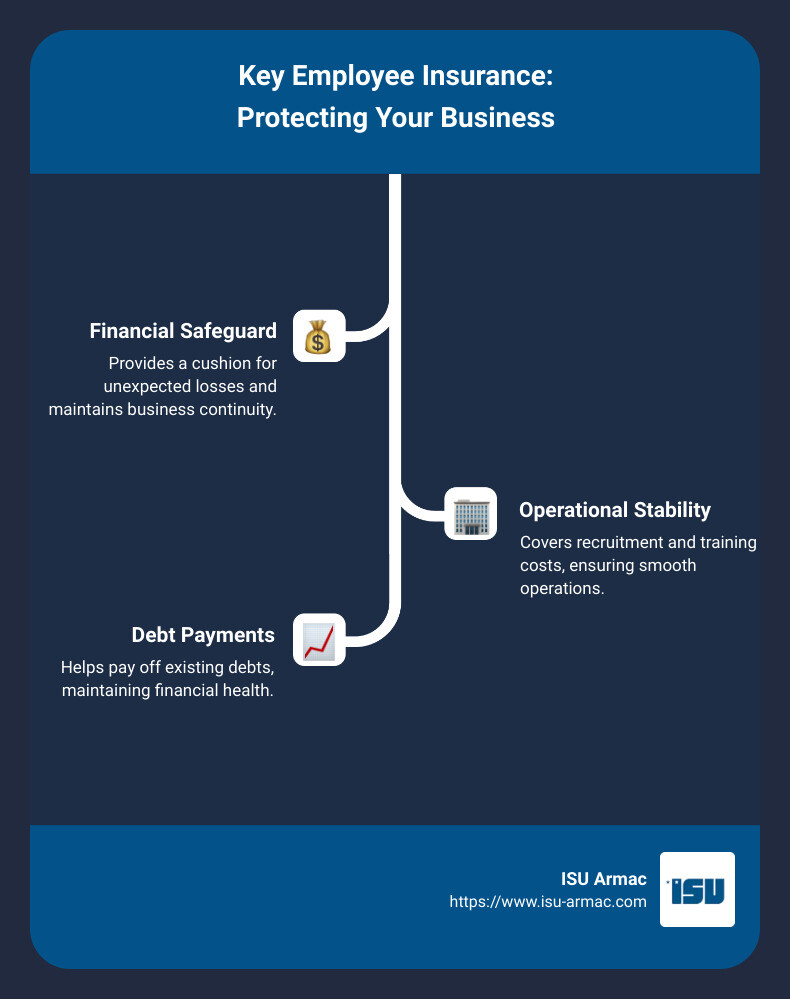
- What can it cover? Recruitment costs, debt payments, and operational expenses.
In today’s business world, key employee insurance ensures that your business remains resilient against unexpected losses. From founding members to top executives, losing a key employee can disrupt operations massively. The insurance payout helps cover the costs of recruiting and training a replacement, paying off debts, or maintaining day-to-day business operations.
“In a small business, the key person is usually the owner who does most things, such as keeping the books, managing employees, and handling key customers,” notes Investopedia. This highlights just how crucial key employee insurance can be, especially for startups and small businesses.
Hello, I’m Ryan McEachron, CEO of ISU Insurance Services ARMAC Agency. With years of experience in the insurance sector and a strong involvement in the Victorville community, I understand the importance of key employee insurance in safeguarding your business’s future. Let’s delve deeper into how this essential coverage works and how it can benefit your business.
What is Key Employee Insurance?
Key employee insurance is a special type of insurance policy that a company buys to protect itself from the financial impact of losing a vital team member. This could be the owner, a top executive, or any other employee whose absence would significantly affect the business’s operations and revenue.
Definition and Purpose
At its core, key employee insurance is a safety net. It ensures that if a key person dies or becomes incapacitated, the business won’t suffer financially. The company receives the insurance payout, which can be used to cover various costs like hiring a replacement, paying off debts, or maintaining day-to-day operations.
Key Person Insurance and Key Man Insurance
You might also hear key employee insurance referred to as key person insurance or key man insurance. These terms are interchangeable and mean the same thing: a life insurance policy that a company takes out on a crucial employee.
Key person insurance is essential for small businesses and startups where the loss of one person could be devastating. For instance, if the founder who handles everything from bookkeeping to customer relations suddenly passes away, key person insurance can provide the financial cushion needed to keep the business afloat.

Real-World Example
Consider a small tech startup with a brilliant chief scientist working on a groundbreaking product. If this scientist were to pass away unexpectedly, the company might face severe financial difficulties. With key person insurance, the business would receive a payout to help cover the costs of finding and training a new scientist, ensuring the project continues without major disruptions.
Key employee insurance is not just about life insurance; it can also include disability insurance. This means that if a key person becomes unable to work due to illness or injury, the business can still receive financial support.
In summary, key employee insurance is a crucial tool for protecting your business’s vital assets. It provides a financial safety net that helps ensure business continuity, even in the face of unexpected challenges.
Next, we’ll explore why your business needs key employee insurance and the benefits it offers.
Why Your Business Needs Key Employee Insurance
Key employee insurance is more than just a safety net; it’s a strategic investment in your company’s future. Let’s explore why your business needs this essential coverage.
Financial Cushion
Imagine losing your top executive or founder suddenly. The financial impact can be devastating. Key employee insurance provides a financial cushion to help your business survive such a loss.
Case in Point: A small tech startup lost its co-founder unexpectedly. The insurance payout helped cover immediate expenses and kept the company afloat until a replacement was found. Without this cushion, the startup might have faced bankruptcy.
Business Continuity
Your business’s day-to-day operations depend on key individuals. Losing one of them can disrupt everything. Key employee insurance ensures business continuity by providing funds to maintain operations while you search for a replacement.
Example: A family-owned restaurant relied heavily on its head chef. When the chef passed away, the insurance payout allowed the restaurant to hire a temporary chef and keep the doors open, ensuring customers kept coming back.
Revenue Protection
Key employees often play a critical role in generating revenue. Their absence can lead to lost sales and declining profits. Key employee insurance helps offset this loss, protecting your revenue stream.
Operational Stability
The sudden loss of a key employee can create chaos, affecting everything from customer relations to employee morale. Key employee insurance provides the funds needed to stabilize operations, ensuring your business continues to run smoothly.
In summary, key employee insurance is essential for financial protection, business continuity, revenue security, and operational stability. It allows your business to navigate the challenging period following the loss of a vital team member without falling apart.
How Key Employee Insurance Works
Understanding how key employee insurance works is essential for making informed decisions. Let’s break it down into simple terms.
Policy Ownership and Premium Payments
When a business decides to purchase key employee insurance, the company itself owns the policy. This means the business is responsible for paying the premiums. The key employee, whose life or ability to work is insured, does not pay anything out of pocket.
For example, if your business buys a key employee insurance policy for your top sales executive, the company will handle the premium payments. This ensures that the business has control over the policy and can manage it according to its needs.
Beneficiary and Insurance Proceeds Usage
The business is also the beneficiary of the policy. This means if the insured key employee passes away or becomes incapacitated, the insurance payout goes directly to the business.
How can these proceeds be used? Here are some common scenarios:
- Debt Payoff: The insurance money can be used to pay off any outstanding debts. This is crucial if the key employee was involved in securing loans or financial guarantees.
- Operating Expenses: The payout can help cover day-to-day operating expenses, ensuring the business continues to run smoothly during the transition period.
- Lost Revenue: If the key employee was responsible for significant revenue, the insurance can offset the loss until a replacement is found.
- Business Closure: In extreme cases, if the business cannot continue without the key employee, the funds can be used to close down the business in an orderly manner. This includes paying severance to employees and distributing money to investors.
Key employee insurance provides a financial cushion, giving the business options other than immediate bankruptcy.
Next, we’ll look into the different types of key employee insurance available.
Types of Key Employee Insurance
When it comes to protecting your business’s vital assets, there are three main types of key employee insurance: life insurance, disability insurance, and critical illness insurance. Each type provides unique benefits and serves different purposes in ensuring your business’s stability and continuity.
Life Insurance
Life insurance is the most common type of key employee insurance. It provides a death benefit to the business if the key employee passes away. This type of insurance helps in several ways:
- Business Protection: The death benefit can be used to cover lost revenue, pay off debts, and manage ongoing operating expenses.
- Recruitment Costs: It helps cover the cost of finding, hiring, and training a suitable replacement for the deceased key employee.
- Shareholder Interests: In some cases, the funds can be used to buy out the deceased employee’s shares, ensuring smooth business operations.
Life insurance is crucial for maintaining business stability during a difficult transition period.
Disability Insurance
Disability insurance provides coverage if the key employee becomes disabled and is unable to work. This type of insurance ensures operational continuity by offering financial support in the following ways:
- Lost Income: It compensates for the revenue lost due to the key employee’s absence.
- Hiring Costs: The funds can be used to hire temporary or permanent replacements.
- Operational Expenses: It helps cover ongoing expenses like payroll, rent, and utilities, ensuring the business continues to run smoothly.
Disability insurance is vital for businesses that rely heavily on specific individuals whose incapacitation would otherwise disrupt daily operations.
Critical Illness Insurance
Critical illness insurance covers the key employee if they are diagnosed with a severe illness such as cancer, heart attack, or stroke. This type of insurance provides financial stability by:
- Medical Costs: Covering the medical expenses of the key employee.
- Business Operations: Ensuring the business has the funds to continue operating while the key employee recovers.
- Recruitment and Training: Helping with the costs associated with recruiting and training a temporary or permanent replacement.
Critical illness insurance is essential for protecting the business from the financial strain caused by the sudden illness of a key employee.
Each type of key employee insurance serves a specific purpose in safeguarding your business against unexpected events. By understanding these options, you can choose the right coverage to ensure your business remains resilient.
Next, we’ll discuss the cost factors associated with key employee insurance.
Cost of Key Employee Insurance
When considering key employee insurance, understanding the costs involved is crucial. The price you pay will depend on several factors, including the age of the insured, the type of policy, the coverage amount, and more. Let’s break it down.
Age Factors
The age of the key employee significantly impacts the cost of the insurance policy. Younger employees generally cost less to insure because they are considered lower risk.
- Younger Employees (20-30 years): Lower premiums due to lower health risks.
- Middle-Aged Employees (31-50 years): Moderate premiums; costs increase with age.
- Older Employees (51+ years): Higher premiums due to increased health risks.
Policy Term and Coverage Amount
The length of the policy term and the coverage amount also play a big role in determining the cost.
- Term Life Policies: These are generally cheaper and provide coverage for a specific period (e.g., 10, 20, or 30 years).
- Permanent Life Policies: More expensive but offer coverage for the employee’s entire life.
The amount of coverage you choose will also affect the premiums. Higher coverage limits mean higher premiums.
- Coverage Limits: Typical policies range from $100,000 to $1 million or more.
- Term Length: Longer terms usually result in higher premiums.
Typical Costs
Understanding the typical costs can help you budget for key employee insurance. Here are some cost examples based on different factors:
- $100,000 Policy for a 30-Year-Old: Approximately $300-$500 annually for a term life policy.
- $500,000 Policy for a 45-Year-Old: Around $1,000-$2,000 annually for a term life policy.
- $1 Million Policy for a 55-Year-Old: Could cost $3,000-$5,000 annually for a term life policy.
Permanent life policies can be significantly more expensive, often costing several times more than term life policies for the same coverage amount.
In summary, the cost of key employee insurance varies widely based on age, policy type, and coverage amount. It’s essential to get quotes for different scenarios to find the best fit for your business needs.
Next, we’ll address some frequently asked questions about key employee insurance.
Frequently Asked Questions about Key Employee Insurance
What does key employee insurance cover?
Key employee insurance provides a financial cushion for your business if a crucial team member dies or becomes incapacitated. This insurance can cover:
- Revenue Loss: Offset the income lost due to the absence of the key employee.
- Operational Costs: Help with the day-to-day running of the business.
- Recruitment and Training: Cover the costs of finding and training a replacement.
- Debt Payoff: Use the funds to pay off business debts.
- Business Closure: In extreme cases, it can help close the business in an orderly manner.
Who is the beneficiary of key employee insurance?
The business itself is the beneficiary of key employee insurance. This means:
- Business Ownership: The company owns the policy.
- Premium Payments: The company pays the premiums.
- Insurance Proceeds: The business receives the death benefit if the key employee passes away.
The proceeds can be used to stabilize the company financially during a challenging transition period.
What are the disadvantages of key employee insurance?
While key employee insurance offers many benefits, there are some limitations to consider:
- Employee Departure: If the key employee leaves the company, the policy may no longer be necessary, and premiums paid may not be recoverable.
- Non-Crucial Employees: This insurance is not beneficial for employees who are not critical to the business’s survival.
- Cost: Premiums can be expensive, especially for permanent life policies.
Understanding these limitations can help you decide if key employee insurance is the right fit for your business.
Conclusion
In summary, key employee insurance is a vital tool for protecting your business against the unexpected loss of a crucial team member. It provides a financial cushion to ensure business continuity, covering costs such as recruiting and training replacements, paying off debts, and maintaining day-to-day operations.
By investing in key employee insurance, you safeguard your business’s future and stability. This coverage can be the difference between a company thriving or struggling in the face of sudden changes.
At ISU Armac, we understand the importance of protecting your business’s vital assets. Our team is dedicated to helping you find the right key employee insurance tailored to your unique needs.
Contact us today to learn more about how we can help you secure the right policy to keep your business running smoothly, no matter what challenges come your way.