
Why Your Business Can’t Afford to Be Uninsured
The insurance needed for small business is not just a good idea—it’s essential protection that can save your company from financial ruin. Every day, businesses face risks that could cost thousands or even force them to close permanently.
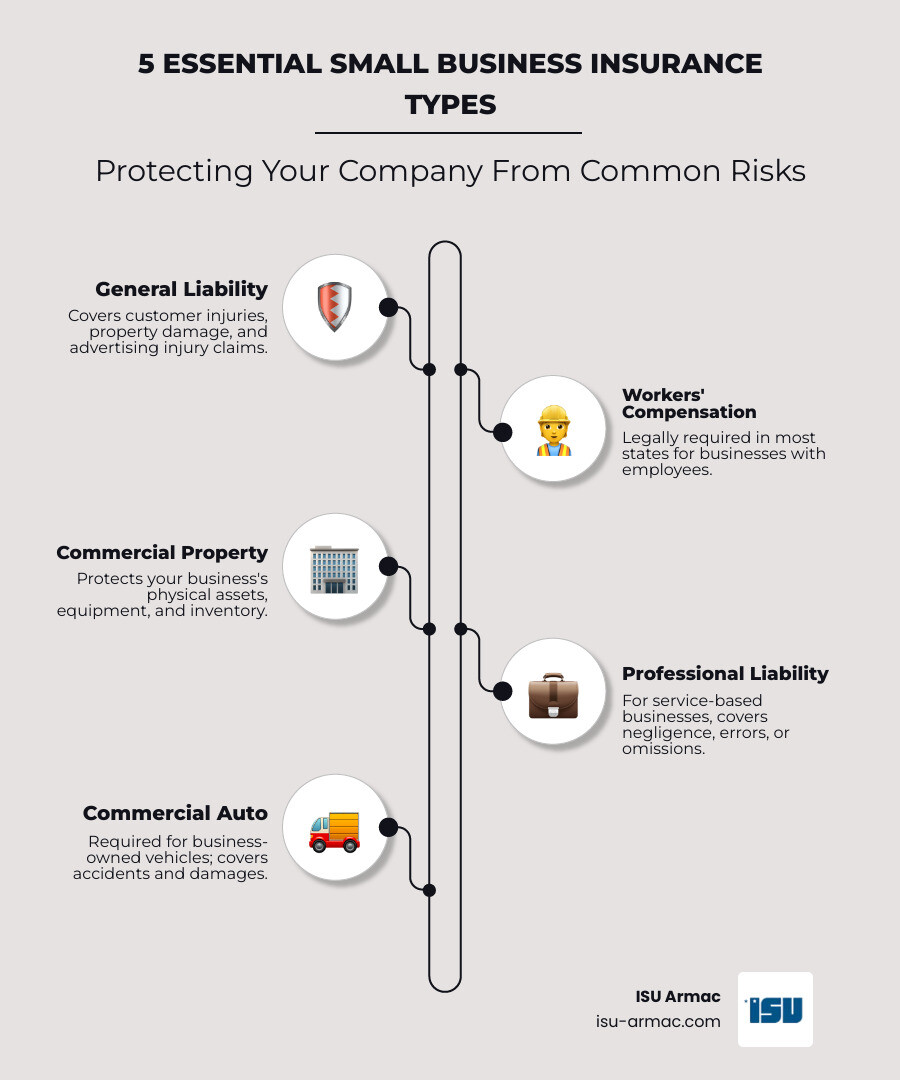
Essential Small Business Insurance Types:
- General Liability Insurance – Protects against customer injuries and property damage claims.
- Workers’ Compensation – Required by law in most states if you have employees.
- Commercial Property Insurance – Covers damage to your business property and equipment.
- Professional Liability Insurance – Protects service-based businesses from negligence claims.
- Commercial Auto Insurance – Required if your business owns vehicles.
- Cyber Liability Insurance – Covers data breaches and cyber attacks.
The average customer injury or property damage claim costs $30,000, a sum that could destroy an uninsured small business. Beyond protecting your assets, many insurance types are legally required, and clients or landlords often demand proof of coverage.
Whether you’re a solo consultant or employ a team, the right insurance keeps your business running through unexpected events. From slip-and-fall accidents to cyber attacks, these policies provide a financial safety net, letting you focus on growth instead of worst-case scenarios.
I’m Ryan McEachron, CEO of ISU Insurance Services ARMAC Agency in Victorville. With decades of experience helping local businesses, my background on the Victorville City Council and various business organizations has given me deep insight into the unique risks facing our community’s small business owners.
Simple insurance needed for small business glossary:
- business owners policy
- are small businesses required to provide health insurance
- business insurance cost
Common Types of Small Business Insurance Coverage
When considering the insurance needed for small business, it’s about building a layered shield of protection, not finding a single policy. You’ll choose different coverages designed for specific risks, and your policy should be custom to your operations, revenue, payroll, and location.
Many carriers offer discounts, sometimes up to 10%, for bundling multiple policies. This provides more complete protection and makes broader coverage more affordable. Let’s explore the most common types of small business insurance.
General Liability Insurance (GLI)
General Liability Insurance (GLI), or Business Liability Insurance, is a cornerstone policy that protects you from everyday claims. It covers costs if your business is found responsible for third-party bodily injury or property damage. It also helps with claims of libel, slander, or advertising injury. GLI can pay for medical bills, repair costs, and legal fees, even for unfounded claims.
Nearly every small business needs GLI, especially those that interact with the public, have a physical location, or advertise. It’s often required for commercial leases, licenses, and client contracts.
The average monthly cost for GLI is between $42 and $68. For more details, see our page on General Liability Insurance.
Professional Liability Insurance (E&O)
Professional Liability Insurance (PLI), also known as Errors and Omissions (E&O), is vital if your business provides services or expert advice. It protects you if a client claims your professional service, advice, or an error or omission caused them financial harm. This includes claims of negligence, malpractice, or misrepresentation. E&O can cover legal defense costs, settlements, and judgments.
E&O is crucial for service-based businesses like consultants, real estate agents, and IT professionals. It helps cover defense costs even if a claim is baseless.
The average monthly premium for PLI is around $62. Learn more on our Errors & Omissions Liability Insurance page.
Business Owner’s Policy (BOP)
A Business Owner’s Policy (BOP) is a smart, budget-friendly package that bundles key coverages into one plan. A BOP typically combines:
- General Liability Insurance: Covers third-party claims like customer injuries or property damage.
- Commercial Property Insurance: Protects your physical assets (building, equipment, inventory) from fire, theft, and other perils.
- Business Income Insurance: Replaces lost income and covers ongoing expenses if your business must temporarily close due to a covered loss.
BOPs are ideal for many small to medium-sized businesses in low-risk industries with a physical location. It’s a great way to get broad protection and often saves money. The average monthly premium for a BOP is $141. Explore a Business Owners Insurance (BOP).
Other Key Coverages
Beyond these core policies, other types of insurance needed for small business are important depending on your operations.
Cyber Liability Insurance: Protects your business from the financial fallout of cyber attacks and data breaches. It can cover notification costs, credit monitoring, and legal fees. With an average monthly cost of $145, it’s strongly recommended if you handle any personal data. Learn more on our Cyber Liability Insurance page.
Commercial Auto Insurance: This is a must-have if your business owns company vehicles or if employees use personal cars for work, as personal auto policies rarely cover business use. It covers injuries and property damage from accidents involving a business vehicle. The average monthly cost is $147. Visit our Commercial Auto Insurance page.
Workers’ Compensation Insurance: Legally required in most states if you have employees, this policy covers medical expenses and lost wages for employee injuries sustained on the job. The average monthly cost ranges from $45 to $86. Learn more on our Workers’ Compensation Insurance page.
Commercial Property Insurance (Standalone): Businesses that don’t qualify for a BOP can buy this separately to cover physical assets against perils like fire and theft. The average monthly cost is $67.
Tools and Equipment Insurance: This policy covers the cost to repair or replace lost, stolen, or damaged work equipment. The average monthly cost is just $14.
Product Liability Insurance: Essential for businesses that make or sell products, it protects against claims of injury or damage caused by a faulty product. The average monthly cost is $42.
Legally Required Policies and How to Assess Your Needs
Running a small business involves responsibilities, including having the right insurance needed for small business to comply with the law. Understanding your unique risks, industry rules, and contractual obligations is key to protecting your company from fines, lawsuits, and missed opportunities.
Federally and State-Mandated Insurance
Legal insurance requirements are typically set at the state level, especially for businesses with employees. The most common mandated coverage is Workers’ Compensation. Nearly every state requires it if you have even one employee. It covers medical care, lost wages, and rehabilitation for employees injured on the job, while protecting your business from related lawsuits. The cost for Workers’ Compensation is typically $45 to $86 per month, varying by industry and payroll. You can learn more on our Workers’ Compensation Insurance page.
If your business owns vehicles, Commercial Auto Insurance is also required in most states to cover injuries or property damage from an accident.
Additionally, a few states (like California, New York, and New Jersey) require Disability Insurance to help employees who can’t work due to non-job-related illnesses or injuries. Since laws vary, check local requirements. The U.S. Small Business Administration (SBA) is a great resource; find details on their business guide.
How to Determine the Specific Insurance Needed for Your Small Business
Figuring out the exact insurance needed for small business requires a close look at your specific operations.
First, consider your industry risks. A contractor faces different hazards than a consulting firm and may need specialized Contractor Insurance. Understanding the common risks in your field is the first step.
Next, evaluate your business operations:
- Do you have a physical location? If so, you’ll need commercial property and general liability coverage.
- Do you interact with the public? More interaction increases the need for robust general liability.
- Do you sell products or offer services? Product sales call for product liability, while providing advice requires professional liability (E&O).
- Do you operate online? Handling customer data or e-commerce makes cyber liability insurance a must.
Your number of employees affects Workers’ Compensation premiums and may warrant Employment Practices Liability Insurance (EPLI) to protect against claims like wrongful termination.
Also, check your client contracts and leases. Many commercial leases and client projects mandate specific types and amounts of insurance. Always review these agreements carefully.
Finally, take stock of your assets (building, equipment, inventory, vehicles). This helps determine the right coverage limits. A good rule of thumb: if you couldn’t afford to replace an asset out-of-pocket, you need to insure it.
By analyzing these factors, we can help you build a strong safety net that allows your business to thrive.
Understanding and Managing Your Insurance Costs

“How much will this cost?” is a common question from small business owners. The cost of insurance needed for small business varies, but understanding how premiums are calculated can help you make smart decisions. Insurance pricing is customized to your business, based on the likelihood of a claim.
Once you understand the pricing factors, there are several strategies to manage costs without sacrificing protection. For a comprehensive breakdown, see our guide on How Much Does Insurance Cost for a Small Business?
Key Factors That Influence Your Premiums
Insurers assess several factors to determine your risk and calculate your premiums.
- Industry: High-risk industries like construction have higher rates than office-based services due to a greater chance of accidents.
- Location: A business’s location affects risk. Areas prone to natural disasters or high crime rates can lead to higher property and liability premiums.
- Payroll and Employee Count: Workers’ Compensation premiums are directly tied to your payroll. More employees mean a higher potential for workplace injuries.
- Claims History: A clean claims record can lower your costs over time, while a history of frequent claims signals higher risk to insurers.
- Coverage Limits and Deductibles: Higher policy limits mean higher premiums. Conversely, choosing a higher deductible can lower your premium.
- Business Operations: Specific activities, like handling sensitive data or storing valuable inventory, influence the cost of relevant coverages.

How to Potentially Lower Your Costs
While some factors are fixed, several strategies can help reduce your insurance needed for small business costs.
- Bundle Policies: Combining coverages into a Business Owner’s Policy (BOP) or buying multiple policies from one carrier often leads to discounts.
- Choose a Higher Deductible: If your business has sufficient cash reserves, a higher deductible can significantly lower your premiums.
- Implement Risk Management: Installing security systems, conducting employee safety training, and adding fire suppression can prevent claims and may qualify you for premium discounts.
- Maintain a Clean Claims Record: Avoiding claims through proactive safety measures can lead to lower renewal rates.
- Conduct Annual Policy Reviews: As your business evolves, your insurance needs change. An annual review ensures you aren’t overpaying for coverage you no longer need.
- Shop Multiple Carriers: As an independent agency, we work with multiple top-rated insurers. This allows us to compare quotes and find the best combination of protection and price for your business.
Frequently Asked Questions about Insurance Needed for Small Business
It’s normal to have questions when determining the insurance needed for small business. Here are answers to some of the most common concerns we hear.
Do I Need Business Insurance if I Have an LLC?
Yes, absolutely. A Limited Liability Company (LLC) is a smart way to protect your personal assets (like your home or car) from business debts and lawsuits. However, it does not protect the business’s assets.
If your business is sued, its own assets—bank accounts, equipment, inventory—are at risk to cover legal fees and settlements. Business insurance is the shield that protects your business itself, while the LLC protects your personal finances. For more details, read our article on Business Insurance for LLC.
What Are the Essential Types of Insurance Needed for a Small Business?
While every business is unique, several core policies form the foundation of a strong protection plan:
- General Liability Insurance: Protects against common claims like customer injuries or property damage.
- Commercial Property Insurance: Covers your physical assets (office, equipment, inventory) from perils like fire, theft, and vandalism.
- Workers’ Compensation Insurance: Legally required in most states for businesses with employees, it covers work-related employee injuries and illnesses.
- Professional Liability Insurance (E&O): A must for service-based businesses, it protects against claims of negligence or errors that cause a client financial harm.
- Business Owner’s Policy (BOP): A convenient package that bundles General Liability, Commercial Property, and Business Income insurance, often at a lower cost.
Depending on your operations, you should also consider Commercial Auto Insurance if you use vehicles for business and Cyber Liability Insurance if you handle customer data.
How Often Should I Review My Insurance Policies?
We strongly recommend reviewing your insurance needed for small business policies at least annually. Your business is constantly evolving, and an annual review ensures your coverage keeps pace.
An annual review is important for several reasons:
- Business Changes: Have you hired staff, moved, or added new services? These changes affect your risk and insurance needs.
- Growth: As your revenue and assets grow, your coverage limits should increase to match your success.
- New Risks: The business landscape changes, introducing new risks that may require new or updated coverage.
- Policy and Cost Updates: New, better, or more cost-effective policies may become available. An annual review is a perfect time to explore these options and potential savings.
An annual check-in with your insurance advisor can prevent costly gaps in coverage and ensure your business remains protected.
Conclusion: Securing the Right Protection for Your Future
We’ve covered why the right insurance needed for small business is not just a requirement but a foundational element for success. It’s about protecting your hard work, your assets, and your future. From a slip-and-fall accident to a cyberattack, the right insurance acts as a shield, keeping your business safe from devastating financial hits.
We explored key coverages like General Liability, Professional Liability, and Workers’ Compensation. We also discussed how a Business Owner’s Policy (BOP) can bundle essential protections, and why Commercial Auto and Cyber Liability are increasingly vital. Understanding legal requirements and assessing your unique risks are crucial steps, as is managing costs through smart strategies like bundling policies and proactive risk management.
At ISU Armac, we believe in proactive protection. We know that navigating small business insurance can feel overwhelming, which is why we offer clear, expert guidance to businesses in Apple Valley, Victorville, Hesperia, Oak Hills, and across Southern California. Our strength lies in our ability to shop multiple top-rated carriers, finding you the perfect blend of coverage and competitive rates custom to your business.
Don’t leave your business vulnerable. Let us help you put comprehensive protection in place so you can focus on what you do best: growing your business. Protect your business with a comprehensive policy today.