
You open the mail, see your renewal, and your stomach drops. The premium jumped. Or worse, the letter says your policy won't renew and gives you a deadline. Around Victorville, that isn't rare anymore. Homeowners are finding out that buying a house and keeping it properly insured are now two separate challenges.
That pressure hits harder here because a lot of Victorville households own their homes. In 2024, 60.6% of Victorville housing units were owner-occupied, up from 58.5% the year before, which means insurance pricing and underwriting changes affect a big share of local families directly, according to Victorville housing data from Data USA.
If you're shopping for Homeowners Insurance in Victorville CA, don't treat this like a commodity purchase. A cheap policy that leaves out the risks that matter in the High Desert can cost you far more than a higher premium ever would. The smart move is to understand what the policy does, what it leaves out, and what underwriters are looking at when they decide whether they even want the risk.
Protecting Your High Desert Home in a Changing Market
A standard conversation in my office goes like this. A homeowner bought several years ago, has made payments on time, hasn't filed many claims, and assumes the renewal will be routine. Then the renewal comes in with a much higher price, a tighter deductible, or wording that makes them wonder what changed.
A lot changed.
California's homeowners market isn't stable right now, and Victorville homeowners feel that instability even when their own street hasn't had a major event. The pressure is broader than one neighborhood, one ZIP code, or one home value. It affects affordability, eligibility, and how many options you can realistically compare.
At the state level, California home insurance for a home with $300,000 in dwelling coverage averaged $1,641 per year in 2026, and that figure was reported as 32% below the national average, based on the same Data USA profile for Victorville. That statewide benchmark matters because it shows two things at once. First, this isn't a trivial household bill. Second, your quote in Victorville can still land above or below that mark depending on rebuilding cost, deductible, and hazard exposure.
What homeowners usually get wrong
Individuals often prioritize the premium. I get it. Monthly cost matters.
But the first question shouldn't be "What's the cheapest policy?" The first question should be "Will this policy still work when the claim is ugly?" Around the High Desert, that means paying attention to wildfire concerns, excluded perils, and how a carrier is treating properties near brush or edge areas.
Practical rule: If a quote looks unusually cheap, ask what was stripped out, limited, or excluded to get it there.
What to do instead
Use a simple approach:
- Check renewal terms early. Don't wait until the last week to compare options.
- Review the property, not just the premium. Roof age, updates, location, and nearby hazard conditions all matter.
- Ask direct exclusion questions. Earthquake, flood, water backup, and wildfire-related underwriting issues should be discussed before you bind coverage.
The homeowners who succeed in this market best aren't guessing. They're asking better questions and comparing policies with their eyes open.
The Building Blocks of a Homeowners Insurance Policy
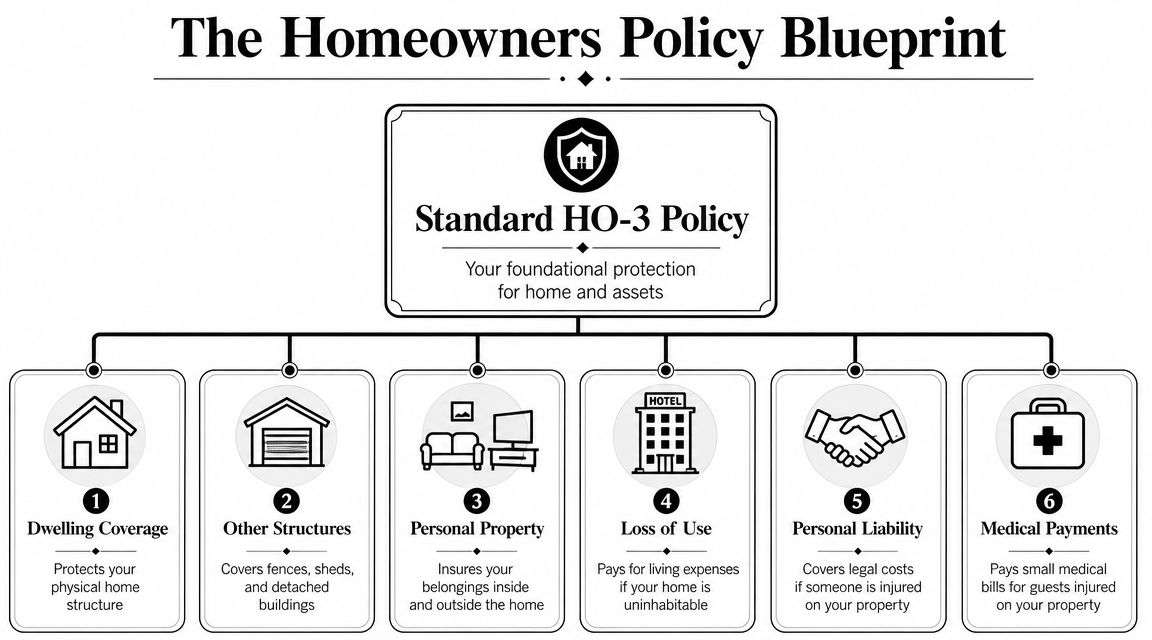
A homeowners policy is like a house blueprint. If you don't know what each part is supposed to protect, it's easy to assume the whole structure is stronger than it really is. Most standard homeowners policies in California are built around the same core components, even if the exact wording varies by carrier.
Here's the visual version.
Start with the structure
Dwelling coverage protects the physical home itself. Think roof, walls, attached garage, built-in cabinets, and the parts of the house that would need to be rebuilt after a covered loss.
Other structures coverage handles detached items on the property. Fences, sheds, detached garages, and similar features usually fall here.
A lot of homeowners miss the difference between these two. If your detached workshop gets damaged, that isn't usually paid under the same bucket as the main house.
Then look inside the home
Personal property coverage protects your belongings. Furniture, clothing, electronics, kitchenware, and many everyday items live in this part of the policy. Coverage can apply to belongings inside the house and, in many situations, outside it too.
That matters more than people realize. If you've ever wondered how a claim might work after pipe damage or interior water issues, this guide on plumbing insurance coverage in Big Bear is a useful example of how homeowners should think through damage to structure versus contents.
The part that keeps life moving after a loss
Loss of use coverage pays for the extra cost of living somewhere else if a covered claim makes your home unlivable. Hotel bills, temporary rent, and certain added living expenses can fall under this section if the policy conditions are met.
This is one of the most underappreciated parts of the policy until a family has to leave their home.
If your kitchen is torn apart after a covered fire or major water loss, you're not just insuring drywall. You're insuring your ability to function while repairs happen.
The liability side
Homeowners insurance isn't only about your house. It also includes personal liability coverage and medical payments coverage.
A quick breakdown helps:
| Coverage part | What it generally does |
|---|---|
| Personal liability | Helps protect you if someone claims you caused injury or property damage |
| Medical payments | Pays smaller guest injury medical bills without getting into a full liability fight |
Liability matters because claims don't always start with a fire or theft. Sometimes they start with a fall, a dog incident, or accidental damage involving another person.
What I recommend
Before you compare quotes, make sure each one addresses the same core pieces:
- Dwelling limit that reflects rebuilding, not wishful thinking
- Personal property that matches how you live
- Loss of use that won't leave you short during repairs
- Liability limits high enough to protect your savings and income
If you compare one stripped-down quote to one properly built policy, you aren't comparing apples to apples. You're comparing a shortcut to real protection.
High Desert Hazards What Your Standard Policy Excludes
A standard homeowners policy is not a catch-all. Too many Victorville homeowners find that out after the damage happens.
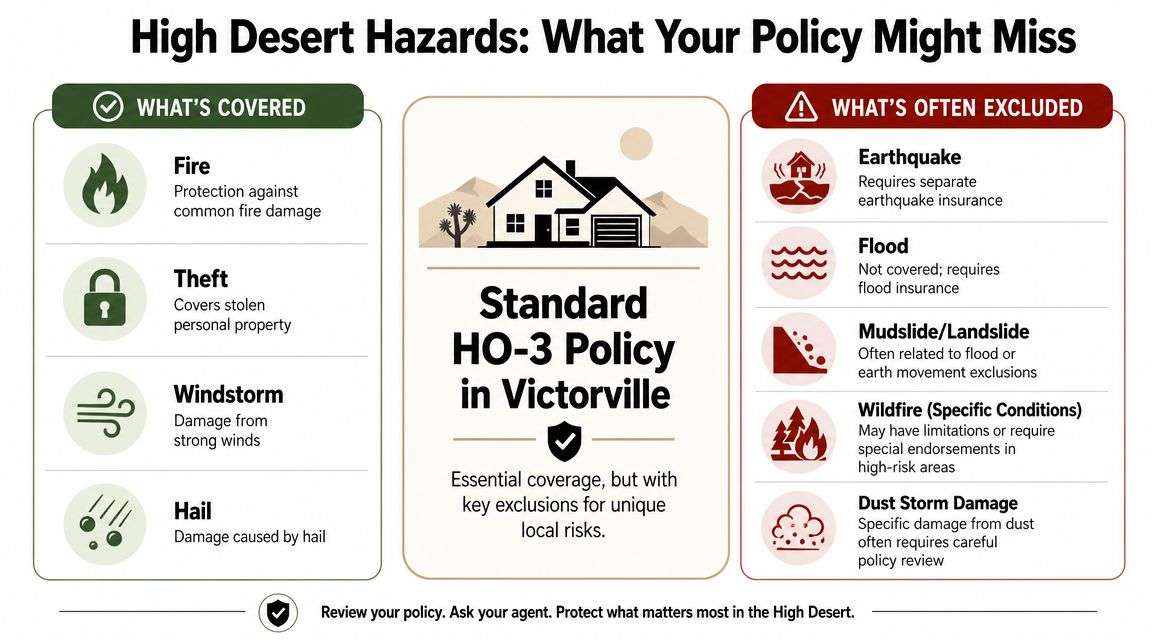
The biggest gap in local conversations is what the policy doesn't cover. That's where High Desert homeowners need to pay attention, because inland Southern California risks don't stop at fire, theft, or wind. As Acceptance's Victorville insurance page notes, a major underserved issue is what homeowners insurance doesn't cover in the High Desert, especially earthquake, flood, and water-backup losses, with earthquake coverage typically separate and flooding generally excluded from standard policies.
Here's the visual version of that problem.
The exclusions that surprise people most
Standard homeowners insurance usually does not cover these the way people assume:
- Earthquake damage. This usually requires separate coverage.
- Flood damage. Standard homeowners policies generally exclude it.
- Water backup or sewer backup. This is often optional, not automatic.
- Certain earth movement losses. Mudslide, landslide, and related events can trigger complicated exclusions.
If your home takes damage from one of those events and you never added the right endorsement or separate policy, the claim can turn into an expensive lesson.
Why this matters in Victorville
Victorville homeowners don't need a generic California insurance lecture. They need practical answers tied to local conditions. Dry terrain, changing weather patterns, runoff concerns, and regional earth movement exposures all make exclusions more important here than many buyers expect.
Wildfire questions belong in that conversation too. If you want a focused breakdown of policy treatment and underwriting issues tied to fire exposure, review whether homeowners insurance covers wildfires in California.
Local advice: Ask your agent to list exclusions and endorsements side by side. If they only talk about the declarations page and premium, the review isn't complete.
Endorsements worth discussing
Not every homeowner needs the same add-ons, but these are worth asking about:
Earthquake coverage
Different from your standard homeowners form. If your property would be financially vulnerable to shaking damage, don't ignore it.Flood insurance
Many homeowners skip this because they don't picture standing water. That can be a mistake. Flood exposure isn't just a coastal issue.Water backup endorsement
One of the most practical optional coverages for homes with drain, sewer, or sump-related concerns.Scheduled personal property
Useful for higher-value items that may need broader or more specific treatment than standard contents coverage provides.
My opinion on exclusions
If you haven't reviewed exclusions in the last year, your policy review is incomplete. The High Desert doesn't forgive assumptions. You don't need every endorsement under the sun, but you do need to know where the gaps are before a claim tests them.
Understanding Your Premium Costs and Finding Discounts
Most homeowners fixate on market value. Insurers don't. They care about replacement cost, claim potential, and how expensive your home would be to repair or rebuild after a covered loss. That's a different math problem.
This section is where homeowners can regain some control. You may not be able to change statewide underwriting pressure, but you can improve how your property presents to underwriters.

What drives the quote
A carrier usually looks at a mix of property details and risk signals, including:
- Replacement cost rather than resale price
- Roof age and condition
- Construction type
- Updates to plumbing, electrical, and HVAC
- Distance to fire protection
- Claims history
- Wildfire exposure and surrounding vegetation
That last point is the one a lot of Victorville homeowners underestimate. In California, wildfire risk has become a key underwriting driver, even for homes that don't look like classic mountain properties.
Risk reduction can help your insurability
Practical upgrades matter. According to McKinsey's analysis of California's insurance market, homes built to California's Chapter 7A wildfire-resistant building standards have up to 40% lower wildfire loss rates, which can translate into an underwriting advantage.
That doesn't mean every carrier gives the same credit or discount. It does mean hardened features matter.
A few examples of upgrades carriers often care about:
| Home feature | Why it matters |
|---|---|
| Defensible space | Can reduce fire spread potential near the structure |
| Ember-resistant materials | Helps address one of the most destructive wildfire loss paths |
| Updated roof | Older roofs create underwriting concerns fast |
| Modernized systems | Updated plumbing and electrical can reduce claim frequency |
Where to look for savings
The right discount strategy isn't glamorous, but it works.
- Bundle where it makes sense. Home and auto packaged together can sometimes improve pricing.
- Document improvements. If you've replaced the roof or updated electrical, say so clearly.
- Report protective devices. Central alarms, smoke detection, and similar safety features can matter.
- Show mitigation work. Defensible space and fire-hardening steps shouldn't stay invisible.
A homeowner who spends money on risk reduction should make sure the underwriter sees it. Unreported improvements don't help your quote.
My recommendation on premium shopping
Don't chase the lowest number first. Get the dwelling amount right, then review deductibles, exclusions, and mitigation credits. A premium is only "cheap" if the policy still does its job.
Navigating the Challenging California Insurance Market
If you've had trouble getting quotes lately, it isn't your imagination and it isn't just your house. California's homeowners market has tightened, and Victorville sits inside that broader shift.
The reason is straightforward. In California, homeowners insurance pricing is increasingly driven by wildfire exposure, and the Terner Center notes that several large insurers have raised premiums by more than 10% in the past year and reduced coverage in high-risk areas, pushing more homeowners toward the state FAIR Plan.
Why Victorville homeowners feel statewide pressure
Victorville isn't Pacific Palisades, but the market doesn't care about local pride. Carriers often make decisions based on statewide portfolio exposure, reinsurance pressure, and fire concentration risk across larger regions. That means your quote may be affected by forces well beyond your subdivision.
This is why some homeowners with decent roofs, updated systems, and no major claims still run into tougher underwriting.
What the FAIR Plan means
The California FAIR Plan exists as a last-resort option when standard market coverage gets harder to place. It can be necessary for some properties, but I don't recommend treating it like a first choice without understanding what it does and doesn't solve.
Many homeowners who end up there still need additional coverage layered around it to address liability or other property concerns. That's why placement strategy matters.
If you're dealing with fire-zone underwriting issues right now, this guide on how to get California home insurance in high fire risk areas is worth reading before you start calling around blindly.
Why an independent agent matters more in this market
In such situations, independent advice earns its keep. Captive options are limited by design. An independent agency can compare across a broader group of insurers and see who is still writing, who is tightening, and where a property might fit best.
ISU Insurance Services is one example of that model in Victorville. The agency works with a broad carrier network, which gives homeowners more than one lane to explore when underwriting gets difficult.
The job isn't just finding a quote. The job is finding a quote that can survive scrutiny and still protect the property properly.
If the home is a rental, don't mix up coverages
One more point that gets missed. If the property is tenant-occupied or partly held as an investment, don't assume a standard owner-occupied homeowners policy is the right answer. Landlords should review a guide built for that risk, such as this resource to protect your rental investment, because rental dwellings and owner-occupied homes aren't rated or covered the same way.
Your Checklist for Getting the Right Quote in Victorville
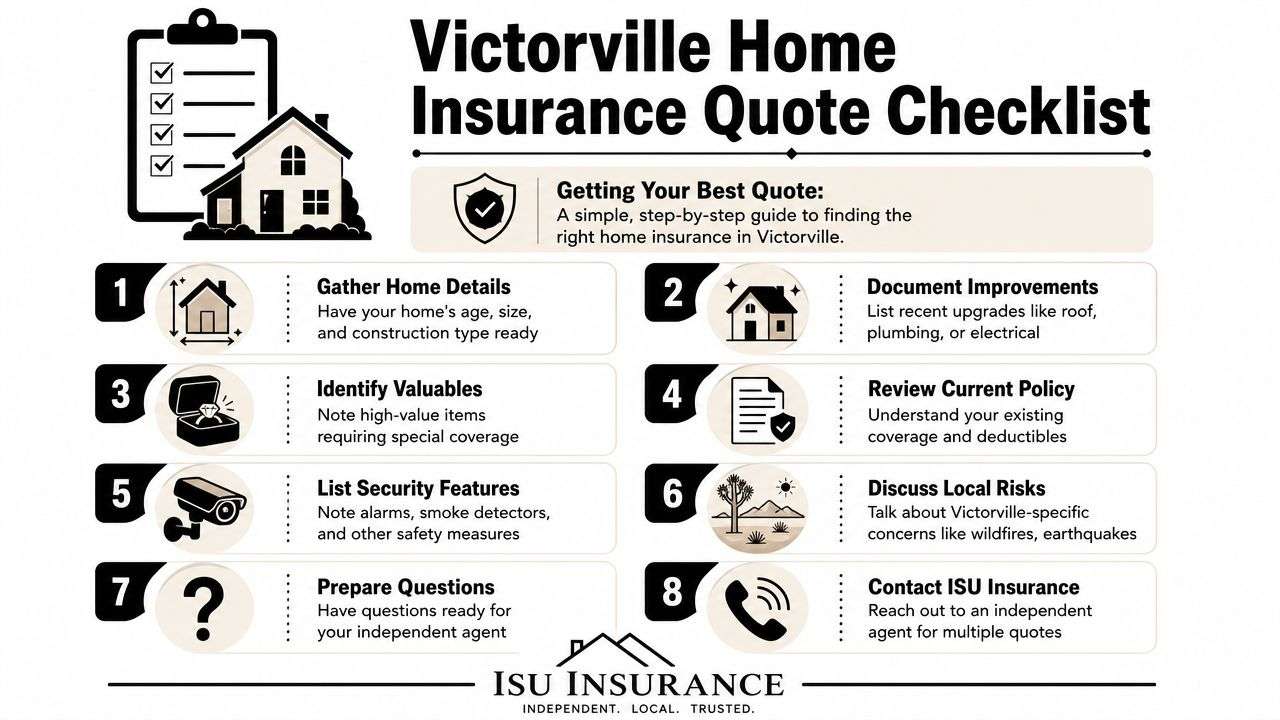
A good quote starts before you call anyone. If you pull together the right details upfront, you'll get cleaner pricing, fewer surprises, and a much better chance of comparing real options instead of rough guesses.
Here is the short version.
Gather the property facts
Start with the basics that underwriters use:
- Year built and square footage
- Roof type and age
- Construction details
- Garage and detached structures
- Occupancy details, including whether it's owner-occupied
Then make a second list of updates.
Document improvements the right way
This part gets skipped all the time, and it shouldn't.
Bring details on:
- Roof replacement
- Plumbing updates
- Electrical upgrades
- HVAC replacement
- Window or exterior improvements
- Fire-hardening work and defensible space steps
Photos can help. So can invoices or contractor summaries. If you did the work, prove it.
Review your current policy before shopping
Don't shop blind. Pull out your current declarations page and look for:
| Item to review | Why it matters |
|---|---|
| Dwelling limit | Helps you compare on similar footing |
| Deductible | Big premium differences can hide here |
| Endorsements | Optional coverages may not carry over automatically |
| Liability limit | Many homeowners are underinsured here |
Prepare the questions that matter
Ask direct questions, not generic ones:
- What's excluded that I might assume is covered?
- Is water backup included or optional?
- How is wildfire exposure affecting this quote?
- Are my recent upgrades reflected?
- If standard coverage isn't available, what's the fallback plan?
For the final step, reach out through [object Object] and send the property details in one clean package. That saves time and usually leads to a more accurate conversation from the start.
Partner with a Local Expert for Peace of Mind
Homeowners Insurance in Victorville CA isn't simple anymore. This is now the case. Between pricing pressure, wildfire-driven underwriting, and major exclusions that many families never spot until it's too late, this isn't a policy you buy on autopilot.
The good news is that the process becomes manageable once you stop treating every quote as interchangeable. A policy has to fit the property, the local hazards, and your financial risk tolerance. If one of those pieces is off, the premium doesn't matter nearly as much as people think.
A local independent agent can help you sort through that faster because the questions are different here. Victorville homeowners need someone who understands High Desert property conditions, knows how exclusions affect real claims, and can compare more than one path when the standard market tightens. That's the practical advantage behind working with an independent insurance agency.
If you want one piece of advice to remember, it's this: don't buy a homeowners policy based on price alone. Buy it based on how well it protects your house, your finances, and your ability to recover when something goes wrong.
If you want help reviewing your current policy, checking exclusions, or comparing options for your home, ISU Insurance Services is a practical place to start. A local independent agent can walk through your Victorville property details, explain where coverage gaps may exist, and help you compare available solutions with less guesswork.