
Your Blueprint for Financial Safety
General construction insurance is a safety net against the risks of building, renovating, and maintaining properties. For general contractors and specialized tradespeople alike, the right coverage protects your business from costly accidents, lawsuits, and equipment theft that could otherwise destroy everything you’ve built.
Essential coverages include:
- Commercial General Liability (CGL): Covers third-party injuries and property damage.
- Commercial Auto Insurance: Protects business vehicles.
- Tools & Equipment Insurance: Covers theft and damage to your gear.
- Workers’ Compensation: Required for employee injuries in most states.
- Builder’s Risk Insurance: Protects projects under construction.
- Professional Liability (E&O): Covers claims of faulty workmanship or design errors.
Construction sites are inherently dangerous. The average contractor insurance policy costs between $450-$950 annually, but a single lawsuit can cost hundreds of thousands. Smart contractors build their businesses on a foundation of comprehensive insurance.
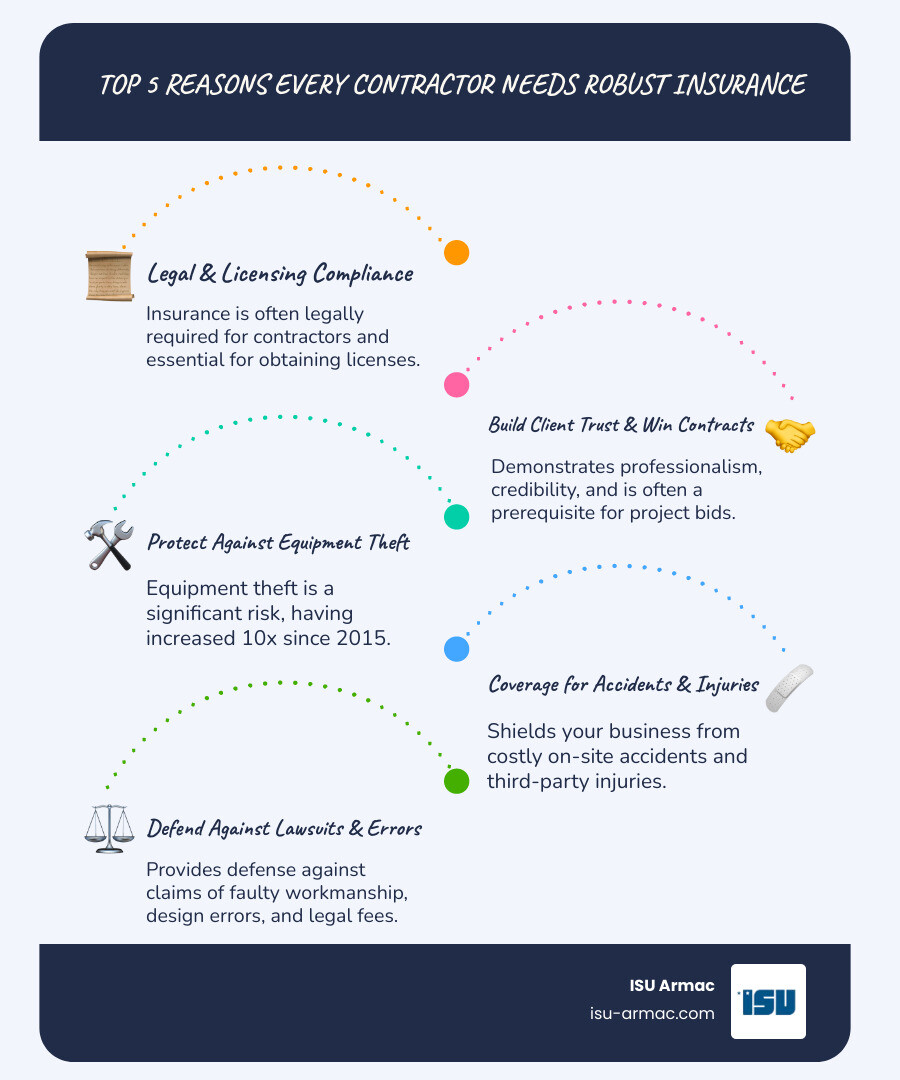
Proper insurance also demonstrates professionalism and credibility. Many projects require proof of insurance to bid, making it essential for winning contracts and growing your business.
I’m Ryan McEachron, CEO of ISU Insurance Services ARMAC Agency. I’ve spent over two decades helping contractors in the High Desert region secure custom general construction insurance. I understand the challenges you face and how the right coverage is critical to your success.
General construction insurance vocab to learn:
- do contractors need insurance
- are subcontractors covered under contractors insurance
- does contractor insurance cover poor workmanship
What is General Construction Insurance and Why Is It Essential?

General construction insurance isn’t a single policy but a customized portfolio of coverages designed for the unique risks contractors face. Every job site involves power tools, heavy equipment, and tight deadlines, creating financial risks that could devastate a business without proper protection.
Understanding General Construction Insurance Basics
General construction insurance is a risk management system that protects you when things go wrong. The foundation is Commercial General Liability (CGL) insurance, which activates when your work causes bodily injury to a third party or damages their property. For example, if a client trips over your tools and is injured, or your crew damages a neighbor’s fence, CGL covers the medical bills, repair costs, and potential lawsuits.
Crucially, CGL also covers your legal defense costs, even for frivolous claims. This allows you to focus on your business instead of funding a costly legal battle. For a deeper dive, see What is Commercial General Liability Insurance Coverage?.
The Importance of Being Insured
Robust insurance is often a business requirement. Many clients, general contractors, and government agencies won’t let you bid on projects without proof of specific coverage limits.
Winning contracts often starts with meeting this basic requirement. Beyond legal compliance, insurance protects your business assets, personal finances, and family’s security from a major lawsuit. It also demonstrates professionalism to clients, showing that you are a serious business that plans for the unexpected. This builds trust and sets you apart from competitors.
As your business grows, so does your risk exposure. The financial risks that come with growth make comprehensive insurance even more critical. Smart clients verify coverage, and understanding How to Check if a Contractor is Licensed and Insured helps them choose you with confidence.
Core Coverages: What’s Inside a Policy?

A general construction insurance policy is a package of specific coverages. Together, they create comprehensive protection for your business.
Essential Liability and Property Coverages
- Commercial General Liability (CGL): This is your first line of defense, handling third-party claims for bodily injury and property damage. It also covers your legal defense costs. Learn more about What Does General Liability Insurance Cover for a Contractor?.
- Commercial Auto Insurance: Crucial for any vehicle used for business, as personal auto policies won’t cover work-related incidents. It protects your vehicles and drivers from accidents and liability claims.
- Tools and Equipment Insurance: Often called inland marine insurance, this vital coverage follows your equipment to job sites, in transit, or in storage, protecting it from theft or damage.
- Workers’ Compensation: This is legally required in most places if you have employees. It covers medical expenses and lost wages for on-the-job injuries, protecting your business from related lawsuits. In Ontario, for example, the Workplace Safety and Insurance Board Ontario manages these benefits.
Specialized Coverage Options
- Builder’s Risk Insurance: Also known as Course of Construction coverage, it protects the structure, materials, and on-site equipment from fire, theft, and weather damage during a project.
- Professional Liability (E&O): Essential if you provide design, advice, or project management. It covers financial harm to clients from professional errors, faulty recommendations, or management mistakes.
- Pollution Liability: Covers cleanup costs and liability claims from environmental disturbances, such as excavating contaminated soil or puncturing a storage tank.
- Installation Floater: Protects materials and equipment from the moment they leave your shop until they are permanently installed.
You can learn more about these specialized options through our guide on Construction Liability Insurance.
Insurance vs. Construction Bonds: What’s the Difference?
Contractors often confuse insurance and bonds, but they serve different purposes.
- Insurance protects you from unexpected losses. Your insurer pays for covered claims, like injuries or stolen equipment.
- Construction bonds protect the project owner. A surety company guarantees you will fulfill your contract. Performance bonds guarantee project completion, while payment bonds ensure subcontractors are paid.
With insurance, you pay a premium and the insurer covers losses. With a bond, if the surety has to pay a claim due to your failure, you must reimburse the surety. Both are critical for risk management but are not interchangeable.
Decoding the Costs of General Construction Insurance

The cost of general construction insurance isn’t one-size-fits-all; your premium is as unique as your business. Understanding the factors insurers consider helps you balance protection with affordability.
Key Factors Influencing Your Premium
- Business Size: Companies with higher revenue, larger payrolls, and more employees have greater risk exposure and thus higher premiums.
- Location: Premiums vary significantly based on state regulations, local lawsuit trends, and natural disaster risks.
- Type of Work: Your specific trade and the project complexity directly impact costs. A roofer faces higher risks and premiums than an interior painter.
- Number of Employees: This directly drives your Workers’ Compensation costs.
- Claims History: A clean record can lead to significant savings, while frequent claims signal higher risk and increase premiums.
- Coverage Limits & Deductibles: Higher limits offer more protection but cost more, while higher deductibles can lower your premium but increase your out-of-pocket costs per claim.
Understanding How is General Liability Insurance Calculated for Contractors? can help you make effective choices.
Average Costs for Different Trades
While every policy is unique, industry data provides a helpful budget starting point. These sample costs assume a $2 million coverage limit for CGL, a common client requirement:
| Trade | Average Starting Annual Premium (for $2M CGL) |
|---|---|
| General Contractors | $550 – $805 |
| Electricians | $625 – $950 |
| Plumbers | $540 |
| Painters | $450 |
| Roofers | $540 |
| Handymen | $450 |
Electricians often pay more due to inherent fire and injury risks, while painters typically have lower rates. In Ontario, many contractors pay around $550 annually for a policy with $2 million in general liability. These are starting prices; adding commercial auto, tools, and other coverages will increase the total investment. For more details, see Commercial General Liability Insurance Cost.
General construction insurance is an investment in your business’s future, and it’s far less expensive than facing a major claim without protection.
Real-World Risks: Common Claims Scenarios
Understanding common claims scenarios shows why general construction insurance is a financial lifeline, not just paperwork. Even careful contractors face situations that can cost thousands.
On-Site Accidents and Injuries
Third-party injuries are among the most common and expensive claims. If a visitor trips over your equipment and is injured, you could face a lawsuit for medical expenses and more. Similarly, property damage claims are frequent, from a ladder falling through a skylight to accidentally damaging a utility line while digging. Your Commercial General Liability (CGL) policy is designed for these moments, covering repair costs, medical payments, and legal fees, even if a claim is baseless.
Theft and Equipment Damage
Tool theft is a growing problem. Construction workers in London, Ontario, for instance, were targeted by thieves 10 times more often since 2015. Losing your tools means financial loss and project delays. Tools and Equipment insurance covers theft from a job site, truck, or storage. This policy, along with Builder’s Risk insurance, can also respond to equipment breakdown and vandalism to materials or the structure itself, getting you back to work quickly.
Completed Operations and Professional Errors
Your risk doesn’t end when the job is done. Claims can arise months or years later. A client might claim faulty workmanship caused property damage, such as cracking tile or a sagging deck. Your CGL policy’s “products and completed operations” coverage is designed for these situations.
If you provide design or project management services, a miscalculation or oversight can lead to costly structural problems. Professional Liability (Errors and Omissions or E&O) insurance protects you when a client claims your professional advice caused them financial harm. It can also cover costs related to project delays caused by your errors. The specifics of whether a policy will respond depends on the situation, which is why understanding if Does Contractor Insurance Cover Poor Workmanship? is so important.
How to Choose the Right Insurance Provider
Choosing the right insurance provider for your general construction insurance is a critical business decision. It’s not just about the cheapest premium; it’s about finding a reliable partner who understands the construction industry.
Working with an Independent Agent vs. Going Direct
Going direct to an insurance company limits your options to a single brand. You’re restricted to their products, which may not be the best fit or price for your specific needs.
Working with an independent agent like ISU Armac changes the game. As an independent agency in Victorville with locations across Southern California, we work for you, not an insurance company. Our key advantage is our ability to shop multiple carriers to find the best coverage at the most competitive rates. We compare quotes and policies from a wide network of insurers to build a custom portfolio for you.
An independent agent also provides expert guidance through the complexities of construction insurance, policy customization as your business evolves, and advocacy during the claims process. It’s a long-term partnership. Learn more about how to work with insurance companies as a contractor effectively.
Evaluating a Provider’s Strength and Service
When exploring options, focus on these key areas:
- Financial Stability: Check ratings from agencies like A.M. Best. An A+ or similar rating indicates a strong ability to pay claims.
- Claims Process: You need a provider with a smooth, responsive system. Ask about turnaround times and the support you can expect.
- Customer Service Reviews: Look for feedback from other contractors in your trade about responsiveness and helpfulness.
- Industry Expertise: Does the provider truly understand construction? A specialist insurer will grasp your specific risks better than a generalist.
Ask potential providers about their recommended coverages for your trade, their experience with similar claims, and what risk management resources they offer. The right provider is an extension of your team, offering peace of mind so you can focus on building.
Conclusion: Build Your Business on a Foundation of Security
Successful construction businesses are built on quality craftsmanship and comprehensive insurance protection. As we’ve covered, general construction insurance is your financial safety net against the daily risks of the trade.
From Commercial General Liability to Tools & Equipment coverage, each policy addresses a real threat to your livelihood. While a single lawsuit can be financially devastating, a comprehensive policy is an affordable investment in your future. The key is custom protection, as no two contractors face the same risks. This is where working with an independent agent provides a significant advantage, allowing you to find coverage custom to your specific trade and budget.
At ISU Armac, we specialize in helping Southern California contractors steer these challenges. We shop multiple carriers to find you the best protection at competitive rates, acting as your partner in proactive risk management. When an unexpected claim occurs, you need an advocate in your corner.
Don’t leave your hard work vulnerable. The most successful contractors plan ahead and protect their assets, allowing them to focus on what they do best.
Get a custom quote for your contractor insurance needs today and find how the right coverage can give you the confidence to win more contracts and build your business on solid ground.