
Why Errors and Omissions Insurance Is Critical for Your Business
Errors and omissions insurance protects businesses from financial ruin when clients claim professional mistakes caused them harm. This specialized liability coverage pays for legal defense costs, settlements, and judgments—expenses that can easily bankrupt a small business. It covers claims of professional negligence, missed deadlines, and inadequate work.
Any professional providing services or advice needs this coverage, including real estate agents, IT consultants, accountants, architects, and marketing agencies. Even a single oversight can trigger a lawsuit that costs more than most businesses earn in years. Without errors and omissions insurance, you’re gambling your entire business on never making a human error.
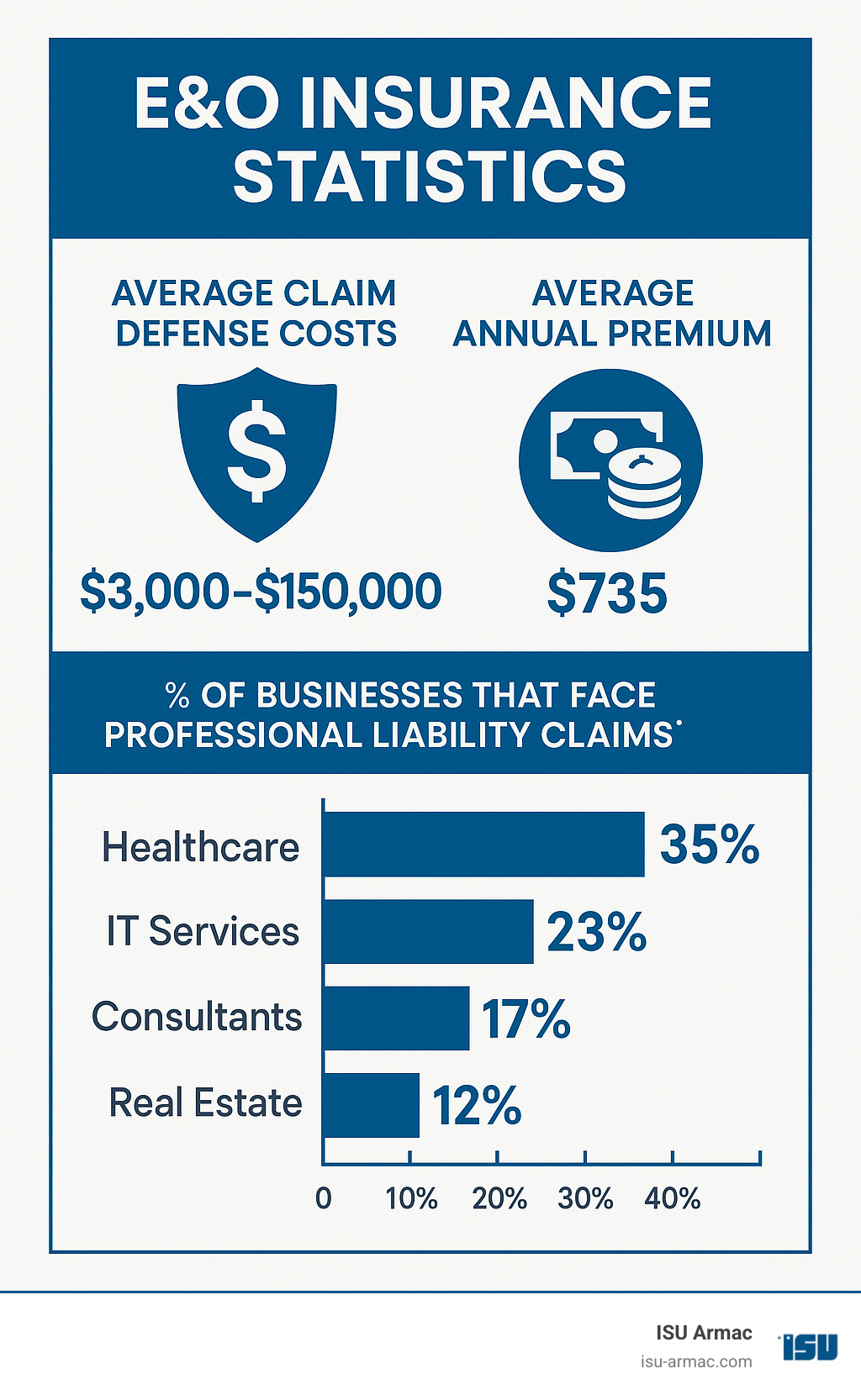
The average small business pays around $735 per year for E&O coverage, a small price compared to the $150,000 average cost of defending one claim. Many states require it, and clients often demand proof of E&O insurance before signing contracts.
I’m Ryan McEachron, CEO of ISU Armac Insurance Agency. I’ve helped countless Victorville businesses secure custom errors and omissions insurance. My experience on the Victorville City Council has shown me how devastating liability claims can be, even for established companies.
Common errors and omissions insurance vocab:
- errors and omissions insurance for insurance agents
- errors and omissions insurance for real estate agents
- errors and omissions insurance for travel agents
What is Errors and Omissions (E&O) Insurance?
Errors and omissions insurance is your professional safety net. Also known as professional liability or malpractice insurance, it protects your business when clients claim your services caused them financial harm.
Even experts make mistakes. A missed deadline, faulty advice, or a simple oversight can lead to a client lawsuit. Errors and omissions insurance steps in to handle the expensive legal defense costs, settlements, and court judgments that follow. Without it, a single lawsuit could drain your business savings.
The terms “errors” and “omissions” describe the coverage: an “error” is an active mistake, like a calculation error, while an “omission” is a failure to do something important, like missing a filing deadline. Both can lead to costly lawsuits. Errors and omissions insurance is especially vital for service-based businesses where expertise is the main product.
Learn more: Errors and Omissions Insurance: E&O Explained
E&O vs. Other Business Insurance Policies
Business owners often confuse different types of commercial insurance. Here’s how errors and omissions insurance differs from other essential coverages.
General Liability Insurance protects against physical risks like bodily injury and property damage. If a client slips in your office, general liability applies. It does not cover professional mistakes.
Directors & Officers (D&O) Insurance protects company leadership from lawsuits over management decisions, such as misusing company funds. D&O covers management actions, while E&O covers the professional services your business delivers.
Cyber Liability Insurance handles data breaches and cyber attacks. If hackers steal client data, this policy covers the response costs. While an IT consultant’s E&O might cover a faulty installation, it won’t cover a resulting data breach.
Here’s how these policies compare:
| Coverage Type | What It Protects | Example Claim |
|---|---|---|
| Errors & Omissions | Professional mistakes, negligent acts, inadequate work, omissions | Accountant’s tax error costs client $50,000 in penalties |
| General Liability | Bodily injury, property damage from business operations | Client trips over cables in your office and breaks their arm |
| Directors & Officers | Management decisions, wrongful acts by leadership | Shareholders sue over alleged financial misrepresentation |
The key difference is that errors and omissions insurance specifically covers your professional services. It’s the only policy that protects against claims that your advice or work caused financial loss to clients. Many businesses need multiple policies for complete protection.
Further reading: What Does General and Professional Liability Cover?
Who Needs E&O Insurance and Why Is It Crucial?

If you provide professional services, advice, or solutions for a fee, you need errors and omissions insurance. Human error is inevitable, and in a professional setting, a single mistake can trigger a lawsuit that jeopardizes your entire business.
E&O insurance isn’t just for when you’re wrong; it’s for protecting your financial future from the reality of litigation. Even if you did nothing wrong, defending yourself can be incredibly expensive. Client contracts and state licensing boards increasingly require proof of errors and omissions insurance. Smart business owners see it as essential protection that provides peace of mind, allowing them to focus on serving clients rather than worrying about potential lawsuits.
See also: 9 Big Risks of Going Without Commercial Liability Insurance
Professions with High E&O Exposure
While any service business can benefit, some professions face higher risks. They handle sensitive data, provide critical advice, or manage large financial transactions, making them common targets for E&O claims.
- Accountants face claims for tax errors and flawed financial advice.
- Real estate agents are sued for non-disclosure or property misrepresentation.
- Insurance agents risk claims for recommending inadequate coverage.
- IT consultants deal with software failures and cybersecurity vulnerabilities.
- Architects and engineers are liable for design flaws and construction defects.
- Marketing agencies face claims over inaccurate data or undelivered results.
- Healthcare professionals require malpractice insurance, a form of E&O, for treatment errors.
If your business relies on professional expertise, this coverage is a critical part of your risk management strategy.
The Financial Consequences of an E&O Claim
The financial impact of an errors and omissions insurance claim can be devastating, even if the claim is meritless. Legal defense costs alone typically range from $3,000 to $150,000. For most small businesses, that expense could cause serious financial trouble.
If a claim proceeds to a settlement or judgment, the costs can escalate into the millions. Without errors and omissions insurance, these expenses come directly from your business, potentially leading to financial ruin. The indirect costs, such as lost time and reputation damage, only worsen the situation. E&O insurance exists to cover these costs, providing expert legal counsel and paying for defense, settlements, and judgments.
Decoding Your E&O Policy: What’s Covered and What’s Not

Understanding your errors and omissions insurance policy is crucial. Key terms define your protection:
- Policy Limits: The maximum your insurer will pay. This is broken into a per claim limit (for one incident) and an aggregate limit (total for the policy period).
- Deductible: The amount you pay out of pocket before insurance coverage begins.
- Claims-Made Policy: This is the most common type of E&O policy. It means the policy must be active both when the error occurred and when the claim is filed. Lapsing coverage can leave past work unprotected.
- Retroactive Date: The date from which your past work is covered. Maintaining this date when switching insurers is vital to avoid coverage gaps.
What Your Errors and Omissions Insurance Policy Typically Covers
Your E&O policy is designed to handle the costs associated with claims of professional mistakes. Key coverages include:
- Negligence: Protects you when a client claims you failed to meet professional standards.
- Errors, Mistakes, and Omissions: Covers both active mistakes (errors) and failures to perform a necessary action (omissions).
- Service Delivery Issues: Includes missed deadlines, inaccurate advice, undelivered services, and misrepresentation of your capabilities.
- Defense Costs: Pays for attorney fees, court costs, and expert witnesses, even if the claim is baseless. This often extends to disciplinary hearings with licensing boards.
- Settlements and Judgments: Covers payouts to the claimant, up to your policy limits.
- Vicarious Liability: Protects your business from errors made by your employees.
Common Exclusions: What Your Errors and Omissions Insurance Doesn’t Cover
While robust, errors and omissions insurance has specific boundaries. It’s designed for honest mistakes, not all business risks. Common exclusions include:
- Intentional or Criminal Acts: Fraud, deliberate deception, and criminal behavior are never covered.
- Bodily Injury or Property Damage: These claims fall under General Liability insurance.
- Employee-Related Issues: Employee injuries are covered by Workers’ Compensation, and employment disputes (like wrongful termination) require Employment Practices Liability Insurance.
- Cyber Incidents: Data breaches and cyberattacks require a separate Cyber Liability policy.
- Other Exclusions: Policies typically exclude patent infringement, false advertising claims, cost guarantees you provide, and issues you were aware of before the policy started (known prior acts).
An experienced agent can help you identify these gaps and build a comprehensive insurance program. At ISU Armac, we help Victorville businesses find the right combination of policies for complete protection.
Understanding the Cost and Choosing the Right Policy

The cost of errors and omissions insurance is calculated based on your unique business profile. While the average small business pays around $735 per year, your premium will depend on your specific risks. For example, a new life insurance agent might pay around $26 per month, while a tech consultant could average $164 monthly.
As an independent agency, ISU Armac shops multiple carriers to find the best fit for your needs. We compare prices, coverage features, and claim handling reputations, focusing on financially stable insurers with high A.M. Best ratings. An insurance policy is only as good as the company behind it. Our goal is to customize your errors and omissions insurance to cover exactly what you need without unnecessary extras.
For more information on tailoring coverage for your business, visit our Small Business Insurance page.
Factors That Determine Your E&O Premium
Several factors combine to create your final premium:
- Industry and Risk Level: High-risk professions like technology, healthcare, and real estate typically have higher premiums.
- Business Size and Revenue: Larger businesses with higher revenues generally pay more due to increased exposure.
- Number of Employees: More employees can mean a higher potential for error, which affects rates.
- Claims History: A clean record helps keep premiums down, while past claims will increase costs.
- Coverage Limits: Higher per-claim and aggregate limits result in higher premiums.
- Deductible Amount: A higher deductible lowers your premium but increases your out-of-pocket cost in a claim.
- Business Location: State-specific legal environments and claim patterns influence pricing.
Getting a personalized quote is essential, as rates vary widely. For example, a Property and Casualty Agent’s E&O might start at $48.75 monthly, while a Series 7 Registered Representative’s could begin at $128.33 monthly.
How to Select the Right E&O Policy for Your Business
Choosing the right errors and omissions insurance is about securing comprehensive protection, not just finding the lowest price.
- Assess Your Risks: Identify your specific professional vulnerabilities. What could go wrong in your service delivery?
- Determine Coverage Limits: Select limits that reflect your potential claim exposure. The common $1 million per claim/$3 million aggregate is a good starting point for many.
- Choose a Deductible: Pick a deductible amount you can comfortably afford to pay if a claim occurs.
- Compare Quotes Thoroughly: Look beyond the premium to compare coverage details and exclusions. As an independent agency, we can show you multiple options side-by-side.
- Review Exclusions: Understand what your policy doesn’t cover to see if you need other policies like Cyber Liability.
- Check Carrier Reputation: We prioritize carriers with strong A.M. Best ratings and fair claims handling.
- Understand the Policy Type: Most E&O policies are claims-made, making continuous coverage essential to avoid protection gaps.
The goal is to find a policy that provides robust protection without unnecessary costs, so you can grow your business with confidence.
Proactive Risk Management: Reducing Claims and Premiums
The best way to use errors and omissions insurance is to rarely need it. Proactive risk management, much like regular car maintenance, helps prevent expensive problems. Insurance companies reward businesses that demonstrate a commitment to risk reduction, often with lower premiums over time.
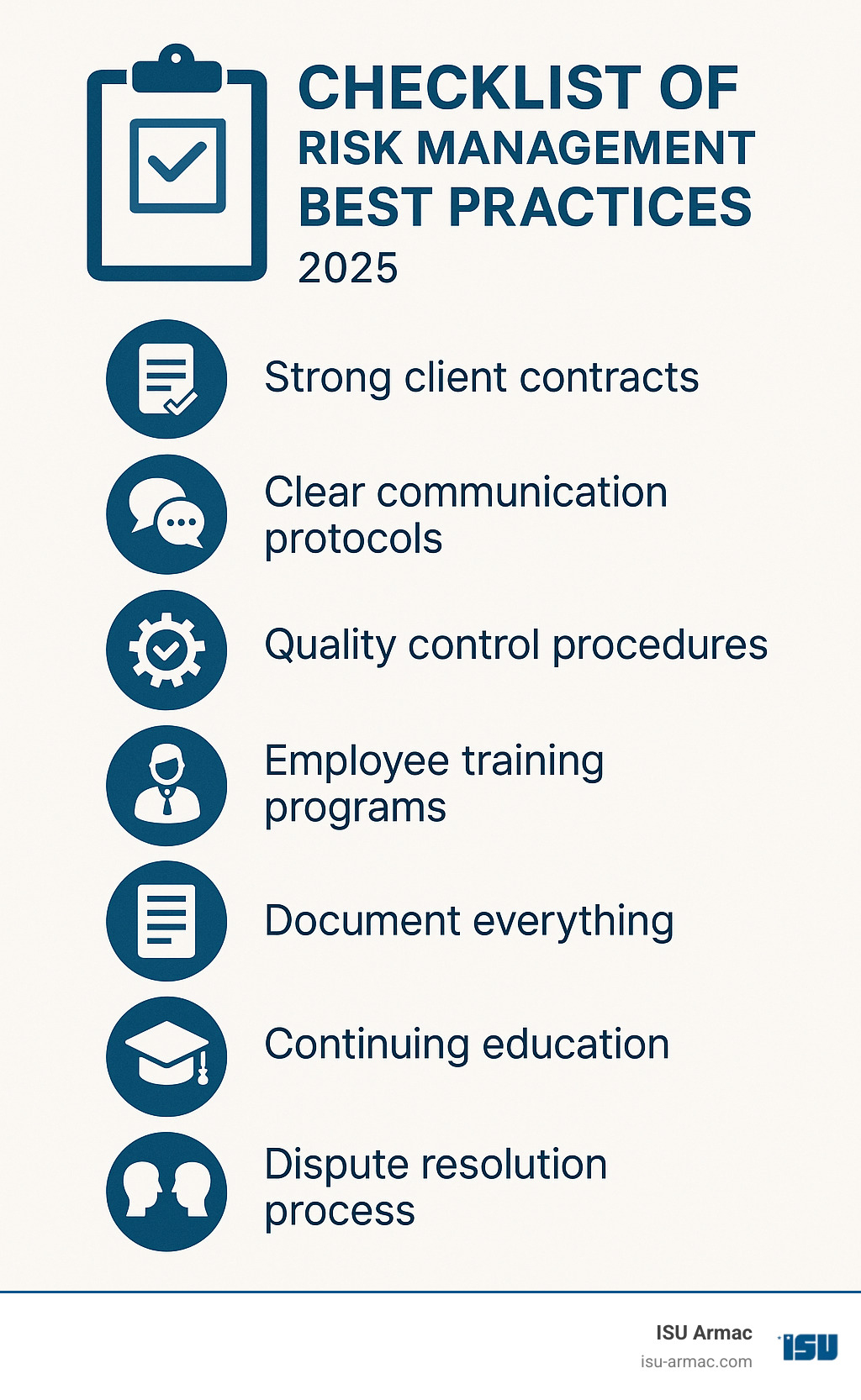
- Strong Client Contracts: Clearly define the scope of work, responsibilities, and deliverables to prevent misunderstandings.
- Clear Communication Protocols: Maintain regular contact with clients and document conversations to keep small issues from escalating.
- Quality Control Procedures: Implement review processes or checklists to catch errors before they reach the client.
- Employee Training Programs: Regularly train your team on industry best practices and professional standards to prevent common mistakes.
- Document Everything: Keep detailed records of client interactions, decisions, and work performed. This is invaluable in a dispute.
- Continuing Education: Stay current with industry changes and certifications to ensure your advice remains accurate.
- Dispute Resolution Processes: Establish a formal process for handling client complaints to resolve issues before they become lawsuits.
Implementing these practices builds a stronger, more reputable business, leading to happier clients, fewer claims, and lower insurance costs.
Conclusion: Securing Your Professional Future
The truth is, nobody’s perfect. When a single mistake can lead to a costly lawsuit, errors and omissions insurance is not just an expense—it’s a financial lifeline.
This coverage protects your bank account, professional reputation, and peace of mind. It allows you to continue serving clients even when facing a claim, covering legal defense costs that can range from $3,000 to $150,000, plus any settlements or judgments.
Here in the High Desert, from Victorville to Apple Valley, Hesperia, and Oak Hills, we at ISU Armac have seen how quickly liability claims can derail a business. As an independent agency, we don’t work for a single insurer. We shop multiple carriers to find the policy that truly fits your specific needs and budget.
The cost of errors and omissions insurance is minimal compared to the financial devastation of a lawsuit. Don’t gamble with the business you’ve worked so hard to build.
Ready to protect what you’ve built? We’re here to help you find the errors and omissions insurance policy that’s right for your business.
Get a personalized quote: Errors & Omissions Liability Insurance