
Why Adding Your Mortgage Lender to Buildings Insurance Matters
Adding mortgage lender to buildings insurance is a critical step in the homebuying process that protects both your investment and your lender’s financial stake in your property. If you’re closing on a home or refinancing, here’s what you need to know:
Quick Answer: How to Add Your Lender
- Contact your insurance company and request to add the mortgagee clause
- Provide your lender’s information: full legal name, mortgagee clause address, and loan number
- Request an updated declarations page showing the lender as mortgagee
- Send proof of insurance to your lender or escrow company
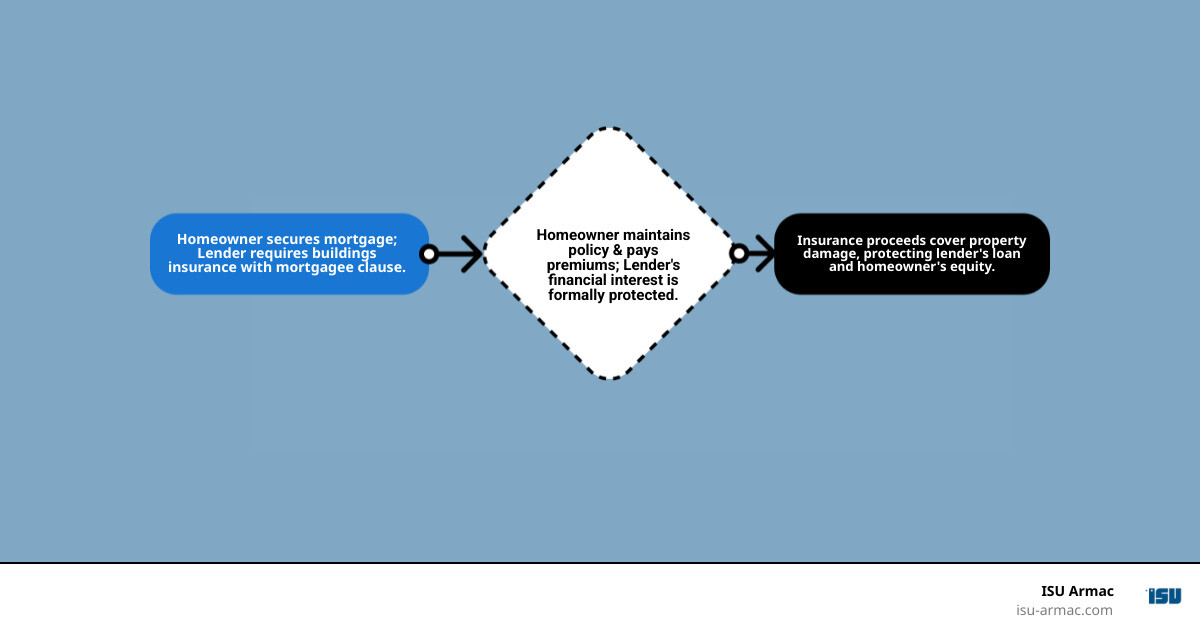
When you take out a mortgage, your lender requires buildings insurance because they have a financial interest in the property until your loan is paid off. The property serves as collateral for your loan, and if it’s damaged or destroyed, the lender needs assurance they’ll be compensated. This is why mortgage agreements include a condition requiring you to maintain adequate buildings insurance with the lender listed as the mortgagee.
The mortgagee clause on your insurance policy gives your lender specific rights and protections that go beyond simply being notified about your coverage. It ensures that if you file a claim, the lender receives payment for any damage to the property structure. The lender also receives notice if your policy is canceled or lapses, which protects them from the risk of an uninsured property.
I’m Ryan McEachron, CEO of ISU Insurance Services ARMAC Agency, and over my decades in the insurance industry, I’ve helped countless Victorville homeowners steer the process of adding mortgage lender to buildings insurance and understand the requirements their lenders have. This guide will walk you through exactly what you need to do to satisfy your lender’s requirements and protect your home.
Common adding mortgage lender to buildings insurance vocab:
Why Your Lender Needs to Be on Your Buildings Insurance
When you secure a mortgage to purchase a home in Southern California, your lender becomes a key stakeholder in that property. Until you’ve paid off your loan, your home acts as collateral. This means that if something catastrophic were to happen – a fire, a major storm, or any other covered peril – the lender stands to lose a significant investment. This is why your mortgage agreement will always stipulate that you maintain buildings insurance and that your lender be formally recognized on that policy.
This requirement isn’t just a formality; it’s a critical component of risk mitigation for your lender. By being listed on your policy, they ensure their financial interest is protected, safeguarding the funds they’ve lent you against potential damage or destruction of the property. This is particularly important because, if your property is damaged, the insurance payout will directly impact the lender’s ability to recover their loan.

Understanding the Mortgagee Clause
The “mortgagee clause” is a specific provision within your buildings insurance policy that protects your mortgage lender. It’s designed to ensure that the lender, as the mortgagee, receives payment for any damage to the insured property, up to the outstanding balance of the loan, even if your actions (or inactions) might otherwise invalidate your coverage.
Essentially, the mortgagee clause creates a separate contractual agreement between the insurance company and your lender. This means that even if you, the borrower, were to intentionally damage the property, or if your policy were invalidated due to some breach on your part, the lender’s right to receive a claim payment for covered losses would still be upheld. This offers a superior level of protection for the lender compared to simply being listed as an “additional interested party.”
Furthermore, the mortgagee clause typically mandates that the insurer provides your lender with notice if your policy is canceled, non-renewed, or significantly changed. This advance warning allows the lender to take steps to protect their interest, such as requiring you to find new coverage or potentially initiating lender-placed insurance (which we’ll discuss later). This clause is a non-negotiable part of most mortgage agreements and is crucial for lenders to protect their collateral.
Mortgagee vs. Loss Payee: What’s the Difference?
While the terms “mortgagee clause” and “loss payee” are often used interchangeably, especially outside of real estate, there are important distinctions, particularly when it comes to the level of protection offered. Understanding these differences is key for both borrowers and lenders.
A Mortgagee Clause (or Mortgagee Interest clause) is specifically designed for lenders who hold a mortgage or deed of trust on real property (like your home). As we’ve discussed, it provides robust protection, often creating a separate contract between the insurer and the lender. This means the lender’s interest is protected even if the borrower’s actions would otherwise invalidate the policy. They also receive notice of cancellation or non-renewal.
A Loss Payee clause, on the other hand, is a more general endorsement that directs the payment of insurance proceeds to a third party (the loss payee) if a loss occurs. This is common for personal property or equipment financed through a loan. The critical difference is that a standard loss payee’s rights are usually tied to the borrower’s rights. If the borrower’s policy becomes invalid due to their actions, the loss payee might not receive payment. This is why, as experts in the field, we generally advise against settling for just a “loss payee” status on a buildings insurance policy. It simply doesn’t offer the same level of security for the lender.
A specialized version, the Lender’s Loss Payee clause, bridges some of this gap, offering more protection than a basic loss payee but still often falling short of the comprehensive coverage provided by a mortgagee clause for real property. It often includes language that provides greater protection against acts or omissions of the insured that might invalidate the policy.
Here’s a quick comparison:
| Feature | Mortgagee Clause (Real Property) | Loss Payee (General) | Lender’s Loss Payee (Improved Personal Property) |
|---|---|---|---|
| Protects | Lender’s interest in real property | Lender’s interest in personal property/equipment | Lender’s interest in personal property/equipment |
| Level of Protection | Superior (separate contract, protects even if borrower invalidates) | Limited (rights tied to borrower’s, can be invalidated) | Better than basic loss payee, but less than mortgagee |
| Notice of Cancellation | Yes | Often limited or no notice | Often includes notice |
| When to Use | Mortgage on a home/building | Loan on equipment, vehicles, or other personal assets | Loan on personal property where improved protection is needed |
For your home, your mortgage lender will insist on a proper mortgagee clause. Always ensure this is correctly specified on your policy documents to avoid any complications.
The Step-by-Step Guide to Adding a Mortgage Lender to Buildings Insurance
Adding mortgage lender to buildings insurance doesn’t have to be a complicated process, but it does require attention to detail. Whether you’re purchasing a new home or refinancing an existing one, here’s a clear, actionable guide to ensure your lender is properly listed on your policy.

The first step is always to communicate directly with your insurance provider. We recommend calling your insurance agent or company as soon as you have your lender’s information. They will guide you through the specific requirements and ensure the correct endorsements are applied to your policy. Don’t rely solely on online portals for this critical step, as a conversation can often prevent errors. Once the lender is added, you’ll need to obtain proof of insurance, typically an updated declarations page, to send to your lender.
What Information is Needed for Adding a Mortgage Lender to Buildings Insurance?
Accuracy is absolutely key when providing your lender’s details to your insurance company. Even a small typo or an incorrect address can lead to significant headaches, delays, or even trigger lender-placed insurance. Before you contact your insurer, make sure you have the following information readily available:
- Lender’s Full Legal Name: This is the official name of the mortgage company, exactly as it appears on your loan documents. This might be different from a common brand name (e.g., “ABC Mortgage Company, LLC” instead of just “ABC Mortgage”).
- Lender’s Specific Mailing Address for Insurance Purposes (Mortgagee Clause Address): Lenders often have a dedicated department and address for receiving insurance documents. This is typically not their general corporate address. Your loan officer or mortgage servicer can provide this exact “mortgagee clause address.”
- Your Mortgage Loan Number: This unique identifier helps your lender easily match the insurance policy to your specific loan.
We can’t stress enough the importance of confirming this information directly with your lender. A quick call to your loan officer or mortgage servicer can save you a lot of trouble down the line.
The Process for Adding a Mortgage Lender to Buildings Insurance with an Escrow Account
Many homeowners, especially those with down payments less than 20% of their home’s value, pay their homeowners insurance premiums through an escrow account. This system simplifies things by bundling your property taxes and insurance premiums into your monthly mortgage payment. Your mortgage lender then manages this account, ensuring these bills are paid on time.
Here’s how the process typically works when an escrow account is involved:
- Lender Notification: Once you’ve secured your buildings insurance policy and have the mortgagee clause added, your insurance company will send proof of insurance (the declarations page) directly to your mortgage lender’s insurance department. This is usually done electronically or via mail to the specific mortgagee clause address you provided.
- Escrow Account Funding: A portion of your monthly mortgage payment will be earmarked for your home insurance premium and other expenses like property tax. Your lender will estimate the total annual costs and divide it by 12 to determine your monthly escrow amount. For example, if your annual home insurance is $1,200 and property taxes are $3,600, the total annual cost is $4,800, making your monthly escrow payment $400.
- Lender Pays Premium: When your buildings insurance premium is due, your lender will disburse the payment directly from your escrow account to your insurance company. This ensures continuous coverage and removes the burden of remembering due dates from you.
- Escrow Analysis: Lenders typically conduct an annual escrow analysis. They review your actual insurance premium and property tax costs for the past year and project them for the upcoming year. If your insurance premium changes, your monthly escrow payment will be adjusted accordingly.
- Switching Insurers with Escrow: If you decide to switch insurance providers, the process is manageable. We advise you to shop around for new quotes and select a new policy. Once you’ve purchased the new policy, your new insurer will typically handle sending the bill and proof of insurance to your mortgage lender. You should also proactively inform your lender of the switch. If you receive a premium refund from your old policy (e.g., if you switched mid-term), it’s crucial to contact your mortgage company and ask how to send this money back to your escrow account to avoid a shortfall.
While your lender manages the escrow account, you are still the policyholder and responsible for ensuring adequate coverage is in place.
Navigating Policy Changes and Potential Pitfalls
Even after successfully adding mortgage lender to buildings insurance, it’s important to understand how policy changes, cancellations, and other issues can impact you and your lender. Your buildings insurance isn’t a “set it and forget it” item; it requires periodic review and attention.
How Does This Affect Your Premium and Coverage?
The act of adding mortgage lender to buildings insurance itself typically does not directly increase your premium. Your premium is determined by factors like your home’s location, construction, age, claims history, and the coverage limits and deductibles you choose. The lender’s role is to ensure you have adequate coverage, not to dictate its cost.
However, your lender can influence your coverage requirements. For instance, they might mandate certain coverage types (like earthquake or flood insurance in specific areas of Southern California) or a minimum amount of coverage for the rebuilding cost of your home. If your current policy doesn’t meet these requirements, you might need to adjust your coverage, which could, in turn, affect your premium.
As mentioned, if you pay your premiums through an escrow account, any change in your buildings insurance premium will directly impact your monthly mortgage payment. Lenders perform annual escrow analyses to adjust these payments, so if your insurance costs go up, your monthly mortgage payment will likely increase, and vice-versa.
What Happens if Your Policy is Canceled?
One of the most significant protections afforded by the mortgagee clause is the lender’s right to be notified if your policy is canceled, non-renewed, or lapses. This is a critical safety net for them.
If your policy is canceled (e.g., for non-payment of premiums, or if your insurer decides not to renew your policy), your lender will receive a notice, usually with a 10-day or 30-day grace period. This gives them time to contact you and urge you to reinstate your coverage or find a new policy.
If you fail to secure new coverage, your lender has the right to purchase what’s known as “Lender-Placed Insurance” (LPI), also sometimes called “force-placed insurance.” This is a policy the lender buys to protect their interest in your property when you don’t maintain your own insurance.
Here’s why LPI is a pitfall to avoid:
- Higher Costs: LPI is almost always significantly more expensive than a policy you would purchase yourself. The premiums are added to your mortgage balance, leading to a higher monthly payment.
- Limited Coverage: LPI typically only covers the dwelling itself, and often only up to the outstanding mortgage balance. It usually does not include coverage for your personal belongings, liability, or additional living expenses, which are standard in a comprehensive homeowners policy.
- Lack of Control: The lender chooses the insurer and the policy terms, not you.
To avoid the expense and limited coverage of LPI, it’s crucial to maintain continuous homeowners insurance. If your policy is ever at risk of cancellation or non-renewal, communicate immediately with your insurance agent and your lender. Resources like Pennymac’s blog on Everything You Need to Know About Lender-Placed Insurance offer further insights into this scenario. Our team at ISU Armac is always here to help you steer these situations and find suitable coverage options.
Frequently Asked Questions
We frequently encounter questions from homeowners in Victorville, Apple Valley, Hesperia, and Oak Hills about managing their buildings insurance with a mortgage lender involved. Here are some of the most common ones:
Can I change my home insurance provider even with a lender listed on my policy?
Absolutely, yes! You are not tied to your current insurance provider just because your lender is listed on your policy. Lenders cannot dictate which insurance company you use. They simply require that you maintain adequate coverage. Many homeowners switch providers to find better rates, improved coverage, or better customer service.
The key steps when changing providers are:
- Shop for a new policy: Get quotes from several providers.
- Ensure continuous coverage: Make sure the effective date of your new policy is on or before the cancellation date of your old policy to avoid any gaps.
- Notify your new insurer: Provide them with your lender’s exact mortgagee clause details and loan number.
- Inform your lender: Once your new policy is active, notify your mortgage lender of the change. Your new insurer will usually send proof of insurance to your lender, but it’s good practice to follow up yourself.
- Handle premium refunds: If you switched mid-term, you might receive a prorated refund from your old insurer. If you have an escrow account, you should return this money to your escrow account to prevent a shortfall.
Will my monthly mortgage payment go down if I find cheaper insurance?
It’s possible! If you find significantly cheaper buildings insurance, and other factors (like property taxes) remain stable, your monthly escrow payment could decrease.
Your escrow payment is calculated based on the total annual costs of your insurance and property taxes. Lenders typically perform an annual escrow analysis. If your annual insurance premium decreases, your lender will factor this into the next analysis. However, keep in mind that property taxes can also fluctuate. If your insurance premium goes down but your property taxes go up, your overall escrow payment might remain the same or even increase. It’s always a good idea to check your escrow analysis statements or contact your lender for specific details.
What happens if my lender isn’t listed correctly on the policy?
If your mortgage lender isn’t listed correctly (or at all) on your buildings insurance policy, it can lead to several problems:
- Delayed Closing: For new home purchases or refinances, the closing process can be significantly delayed or even halted until the correct insurance documentation is provided.
- Lender Rejection: Your lender may reject the proof of insurance you provide if their details are inaccurate or incomplete, requiring you to get a corrected policy.
- Risk of Lender-Placed Insurance (LPI): Without proper notification of your policy, your lender might assume you don’t have adequate coverage. This could trigger them to place LPI on your property, leading to higher costs and less comprehensive coverage for you.
- Communication Breakdown: If your policy is ever at risk of cancellation or non-renewal, your lender might not receive the required notice, leaving them (and potentially you) unaware of a looming coverage lapse.
- Claim Complications: In the event of a covered loss, if your lender isn’t properly listed, there could be delays or complications in the claims payout process, as the insurer might not know to include the lender in the payment.
It’s always in your best interest to ensure your lender’s information is carefully accurate on your buildings insurance policy from day one. If you find an error, contact your insurance agent immediately to have it corrected.
Conclusion
Adding mortgage lender to buildings insurance is a non-negotiable step in the mortgage process, designed to protect both you and your lender. By understanding the terminology, providing accurate information, and maintaining continuous coverage, you ensure a smooth and secure homeownership experience. If you’re navigating the complexities of different insurance carriers and their requirements, working with an independent agency can simplify the process.
At ISU Armac, we understand the unique insurance needs of homeowners in Southern California, from Victorville to Apple Valley, Hesperia, and Oak Hills. Our team of independent insurance agents works with multiple carriers to shop around and find you the best coverage at the most competitive rates, ensuring your home and your lender’s interest are fully protected.
For more information about home insurance services and to get personalized advice, visit our website: More info about home insurance services