
Why Your Small Business Needs Protection Now
Business insurance for small businesses isn’t just a nice-to-have – it’s the difference between surviving a crisis and shutting down forever. According to the Insurance Bureau of Canada, 2 out of 3 companies go out of business after a major loss if they don’t have business interruption insurance.
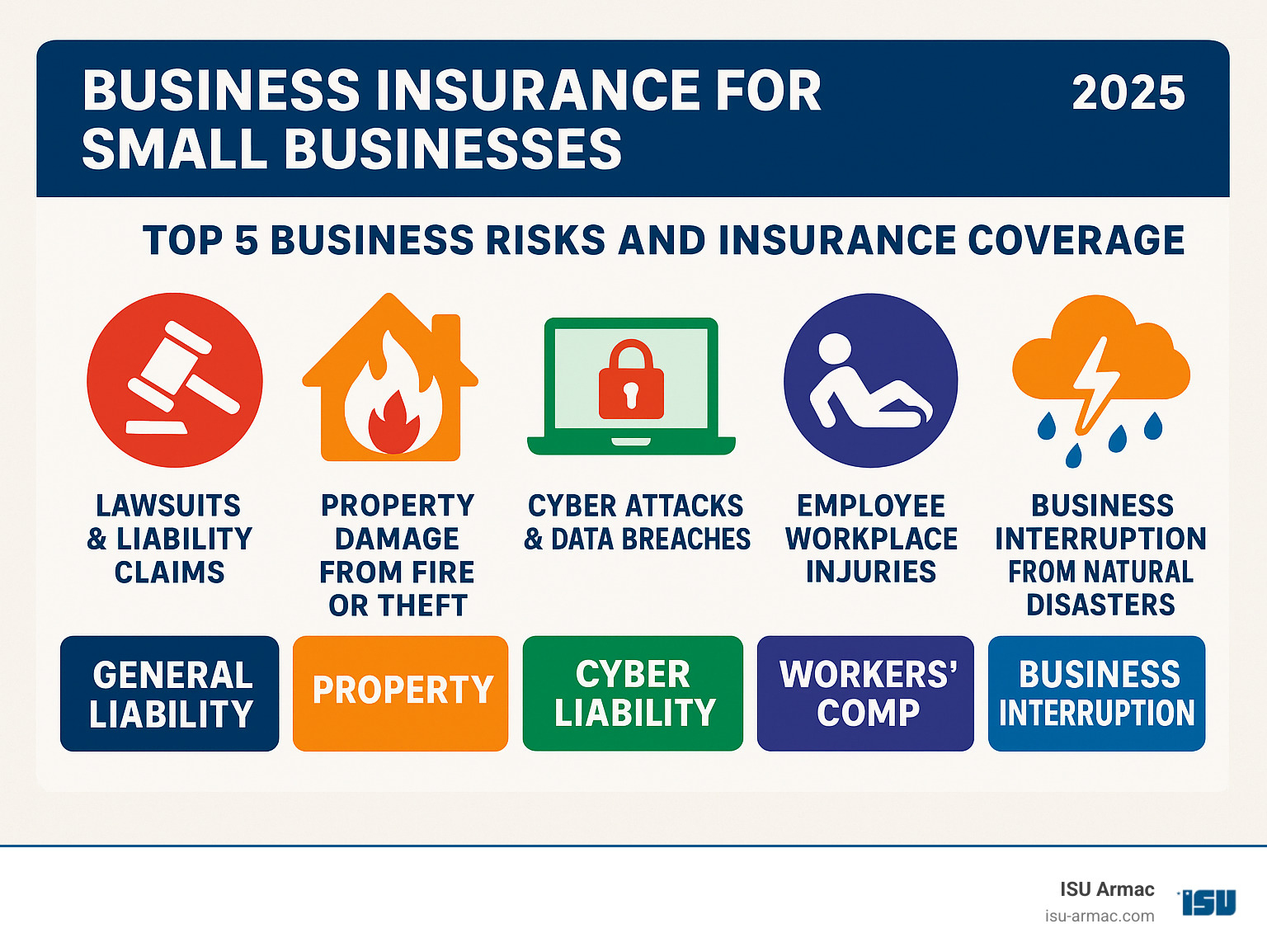
Top 5 Essential Business Insurance Types:
- General Liability Insurance – Protects against third-party injuries and property damage (average: $68/month)
- Business Owner’s Policy (BOP) – Bundles liability and property coverage (average: $141/month)
- Professional Liability (E&O) – Covers errors in professional services (average: $62/month)
- Workers’ Compensation – Required in most states for employee injuries (average: $86/month)
- Commercial Property – Protects your building, equipment, and inventory
Whether you’re a home-based consultant or run a brick-and-mortar shop, the right insurance coverage protects your livelihood from lawsuits, property damage, cyber attacks, and employee injuries. Small business insurance policies now start from as little as $19 per month, making protection accessible for every budget.
The December 2013 ice storm in Ontario alone resulted in $200 million in insured losses – showing how quickly unexpected events can devastate unprepared businesses.
I’m Ryan McEachron, CEO of ISU Insurance Services ARMAC Agency in Victorville, with over 25 years of experience helping small businesses steer business insurance for small businesses complexities. My background includes serving on the Victorville City Council and leading local business organizations, giving me deep insight into the unique risks facing small business owners in Southern California.
Quick business insurance for small businesses terms:
- business owners policy
- how much does insurance cost for a small business
- best general liability insurance for small business
Understanding the Core Types of Business Insurance for Small Businesses
Business insurance for small businesses isn’t one-size-fits-all. Think of it as a custom suit of armor, with each piece protecting against different threats to create comprehensive protection. It shields your company from financial disasters like slip-and-fall accidents, inventory loss from fire, or lawsuits from professional mistakes. You can mix and match coverages to fit your specific needs and budget.

To understand the full scope of what’s available, check out our comprehensive guide on What is Small Business Insurance? Let’s explore the essential coverage types that form the foundation of most small business protection plans.
General Liability Insurance (CGL)
Often the first policy a business buys, General Liability Insurance is your shield against third-party claims of bodily injury or property damage from your operations. For example, it covers medical bills if a customer trips in your store or legal fees if you damage a client’s property. It also handles advertising injury claims, such as copyright infringement in your marketing. Most commercial leases and many client contracts require this coverage, making it a baseline for professional operation. For details, explore our resources on Business Liability Insurance and What is Commercial General Liability Insurance Coverage?.
Commercial Property Insurance
Commercial Property Insurance protects your physical assets from fire damage, theft, vandalism, and other covered disasters. This coverage isn’t just for your building; it includes your equipment, inventory, furniture, and business electronics. It provides peace of mind that you can rebuild and recover after a disaster. Learn more about protecting your business assets with our Commercial Property Insurance guide.
Business Owner’s Policy (BOP)
A Business Owner’s Policy is a smart, cost-effective bundle for small businesses. A BOP typically combines General Liability Insurance, Commercial Property Insurance, and Business Interruption Insurance into one convenient package. The Business Interruption component is vital, as it replaces lost income and covers ongoing expenses if your business must temporarily close. BOPs are generally more affordable than buying each policy separately. To see if this bundled approach is right for you, visit our Business Owners Policy (BOP) page.
Professional Liability Insurance (E&O)
If your business provides advice or professional services, Professional Liability Insurance (also called Errors and Omissions or E&O) is essential. This protects you when clients claim your services caused them financial loss. Consultants, accountants, and other service providers face risks that General Liability doesn’t cover, such as negligence claims. E&O insurance covers defense costs and damages, protecting your finances and professional reputation. For more details, check out our Errors & Omissions Liability Insurance guide.
Workers’ Compensation Insurance
If you have employees, Workers’ Compensation Insurance is a legal requirement in most states, including California. It provides benefits to employees for work-related injuries or illnesses, covering medical expenses and lost wages. This coverage protects your business from lawsuits and severe penalties for non-compliance, while ensuring your employees get the care they need. To understand your obligations, visit our Workers’ Compensation Insurance page and Who Needs Workers’ Compensation Insurance? guide.
Other Essential Coverages
Depending on your industry, you might need specialized coverages:
- Cyber Liability Insurance: Protects against losses from data breaches and cyber attacks. Learn more at Cyber Liability Insurance.
- Commercial Auto Insurance: Essential if your business uses vehicles. Personal auto policies won’t cover business use. Explore options at Commercial Auto Insurance.
- Commercial Umbrella Insurance: Provides extra liability protection above your primary policy limits for catastrophic lawsuits.
- Keyman Insurance: Protects your business from the financial impact of losing a key employee or owner. Understand the benefits of Keyman Insurance.
Decoding the Cost: What to Expect and How to Save
Understanding the cost of business insurance for small businesses is crucial for budgeting. Premiums are unique to each business, but knowing the key cost drivers can help you find affordable coverage. The last thing you need is another surprise hitting your budget. For a detailed breakdown, see our guide on How Much Does Insurance Cost for a Small Business?
Factors That Influence Your Insurance Premium
Insurance companies assess your business’s risk to calculate your premium. Key factors include:
- Industry Risk: A high-risk industry like construction will have higher premiums than a low-risk one like bookkeeping.
- Business Location: Factors like local weather patterns (wildfires, earthquakes), crime rates, and building codes affect your rates.
- Number of Employees: More employees increase your workers’ compensation and general liability exposure.
- Claims History: A clean record typically leads to lower premiums.
- Coverage Limits & Deductibles: Higher coverage limits increase premiums, while higher deductibles lower them.
- Years in Business: Established businesses often receive better rates than new ventures.
For more details, visit our page on What Factors Affect the Price of Commercial Liability Insurance?
Average Cost of Business Insurance for Small Businesses
While your costs will vary, here are some national averages to give you an idea:
- Business Owner’s Policy (BOP): Averages $1,687 annually (about $141/month).
- General Liability Insurance: Averages $810 annually (about $68/month). Many small businesses can find basic policies for as little as $19-$30 per month.
- Workers’ Compensation Insurance: Averages $1,032 annually (about $86/month), but varies widely by industry and payroll.
- Professional Liability Insurance: Averages $744 annually (about $62/month).
Considering a single lawsuit can cost tens of thousands in legal fees, this protection is a bargain.
Smart Strategies to Lower Your Insurance Costs
Smart business owners don’t just buy insurance; they manage it strategically. Here are some ways to save:

- Bundle policies: Save 5-10% by combining multiple policies like a BOP and Workers’ Comp.
- Increase your deductibles: Choosing a higher deductible can significantly lower your premium. Just ensure you have the cash flow to cover it.
- Implement risk management: Installing security systems, training employees on safety, and maintaining equipment can lead to lower rates.
- Conduct annual policy reviews: Your business changes, and your insurance should too. A review can uncover new savings opportunities.
- Ask about discounts: Inquire about discounts for professional memberships, good credit, or safety training programs.
- Maintain a clean claims history: Avoiding small claims can keep your premiums down in the long run.
Using these strategies, many businesses save 20-30% on their annual premiums while maintaining excellent coverage.
The Process: From Quote to Claim
Getting business insurance for small businesses is a straightforward process with the right partner. We guide you through each step, from understanding your needs to supporting you during a claim.
How to Get a Quote and Purchase Business Insurance for Small Businesses
The journey begins with understanding your unique business risks. Here’s how to get started:
- Assess Your Risks: Consider your daily operations. Do you have a physical location? Do you handle client data? Do you offer professional advice?
- Gather Business Information: Have your industry type, annual revenue, number of employees, and claims history ready for an accurate quote.
- Compare Quotes: Our unique selling proposition is that we shop multiple carriers for you. This ensures you get the best coverage at the most competitive rate without the hassle of contacting multiple agents.
- Review and Purchase: We’ll explain your policy options in plain English. Once you choose, we can bind the policy quickly and provide your Certificate of Insurance (COI) immediately.
Ready to begin? Visit our guide on How to Get Small Business Insurance. We also recommend you check provider ratings on the Better Business Bureau to ensure you work with reputable companies.
Special Considerations for Home-Based Businesses
Don’t assume your homeowner’s insurance covers your home-based business. These policies have significant gaps:
- Limited Property Coverage: A typical homeowner’s policy may only cover up to $2,500 in business property, leaving expensive equipment underinsured.
- No Business Liability: If a client is injured at your home office, your homeowner’s policy likely won’t cover the lawsuit.
- No Income Protection: Homeowner’s policies don’t include business interruption coverage to replace lost income if a fire or other event stops you from working.
A separate Business Owner’s Policy (BOP) or a specialized home-based business policy is the best solution to fill these gaps.
What to Do When You Need to File a Claim
When an incident occurs, knowing the process can reduce stress. Follow these steps:
- Prioritize Safety: Address any immediate dangers and seek medical attention if needed.
- Document Everything: As soon as it’s safe, take photos and videos of the damage. Get contact information from any witnesses.
- Contact Us Immediately: As your broker, we are your first point of contact and strongest advocate. We will guide you through the insurer’s claims process, which is often available 24/7.
- Provide Accurate Information: Be thorough and honest when describing the incident to the insurer.
- Cooperate with the Adjuster: The adjuster’s job is to investigate the claim and determine coverage. Full cooperation helps speed up the process.
- Keep Records: Maintain copies of all documents and communications related to your claim.
We’re here to ensure you get the protection you’ve paid for when it matters most.
Frequently Asked Questions about Business Insurance
We hear the same questions about business insurance for small businesses every day. Here are answers to the most common ones.
Is business insurance legally required?
It depends. While no single law requires it for every business, some coverages are mandated. In California, Workers’ Compensation is legally required if you have even one employee. Additionally, commercial leases, client contracts, and professional licensing boards often require you to carry General Liability or Professional Liability insurance. Even when not legally required, it’s a critical business practice. For more details, check out our page on Is Commercial Liability Insurance Mandatory?
Do I need business insurance if I have an LLC?
Yes, absolutely. This is a common misconception. An LLC protects your personal assets (home, car) from business debts, but it does not protect the business’s assets. If your business is sued, its bank accounts, equipment, and future earnings are still at risk. Without insurance, a single large claim could bankrupt your company. The LLC protects you personally, while business insurance protects your business. You need both.
Can I deduct my business insurance premiums on my taxes?
Yes, in most cases. The IRS considers premiums for ordinary and necessary business insurance for small businesses to be tax-deductible. This includes policies like General Liability, Workers’ Compensation, Professional Liability, and Commercial Auto. The key is that the insurance must be for your business. We always recommend consulting with a qualified tax professional for advice specific to your situation and to ensure compliance.
Conclusion: Secure Your Business’s Future Today
Business insurance for small businesses is not just another expense; it’s a critical investment in your company’s survival. You’ve worked too hard to leave your future vulnerable to a single lawsuit, fire, or cyber attack that could wipe it all away. The reality is that most companies without proper coverage fail after a major loss, but comprehensive protection is more accessible and affordable than you might think.
At ISU Armac, we specialize in protecting businesses in Victorville, Apple Valley, Hesperia, and throughout Southern California. Our role is to be your partner in risk mitigation. We compare multiple carriers to find custom coverage that fits your unique needs and budget, ensuring you get the best value. This peace of mind allows you to focus on what you do best: growing your business with confidence.
Don’t gamble with your hard work. Let us help you assess your risks and build a robust insurance strategy to secure your company’s future. Your business deserves the security that comes with comprehensive protection.
Take the first step toward safeguarding your livelihood. Protect your business with a comprehensive Business Owner’s Policy and gain the peace of mind you’ve earned.