Why Getting Auto Insurance Quotes for High-Risk Drivers Doesn’t Have to Be Overwhelming
Finding auto insurance quotes for high risk drivers can feel impossible after a DUI, multiple accidents, or a string of traffic violations. The truth is, you have more options than you think.
Quick Answer for High-Risk Auto Insurance Quotes:
- Work with independent agents who shop multiple carriers for you.
- Expect 25-300% higher premiums, but rates vary widely between companies.
- Prepare your documentation: License, VIN, violation dates, and SR-22 if needed.
- Compare beyond price: Look at coverage limits, deductibles, and payment options.
- Plan for 3-5 years of high-risk coverage.
Being labeled “high-risk” isn’t a punishment; it’s how insurance companies manage financial risk. In California, high-risk auto insurance can cost between $3,000 to $7,000+ per year, but this status isn’t permanent. Whether you’re dealing with a DUI, at-fault accidents, or an SR-22 requirement, the key is understanding your options and working with an expert in the non-standard insurance market.
I’m Ryan McEachron, CEO of ISU Insurance Services ARMAC Agency in Victorville. With decades of experience in the insurance industry and deep roots in the High Desert community, I’ve helped countless drivers steer the complexities of auto insurance quotes for high risk drivers. I believe everyone deserves a second chance and affordable coverage, regardless of their driving history.
Learn more about auto insurance quotes for high risk drivers:
Understanding the “High-Risk” Driver Label in California
When insurance companies create auto insurance quotes for high risk drivers, they are performing a risk assessment based on statistics. A driver with a DUI or multiple accidents is statistically more likely to file a claim. It’s not personal—it’s mathematics. This is why high-risk insurance is also called “non-standard” or “substandard” insurance, and it costs more.
Understanding why you’re in this category is the first step toward getting out. After helping drivers in Victorville, Apple Valley, and Hesperia for years, I’ve seen many people successfully work their way back to standard rates.
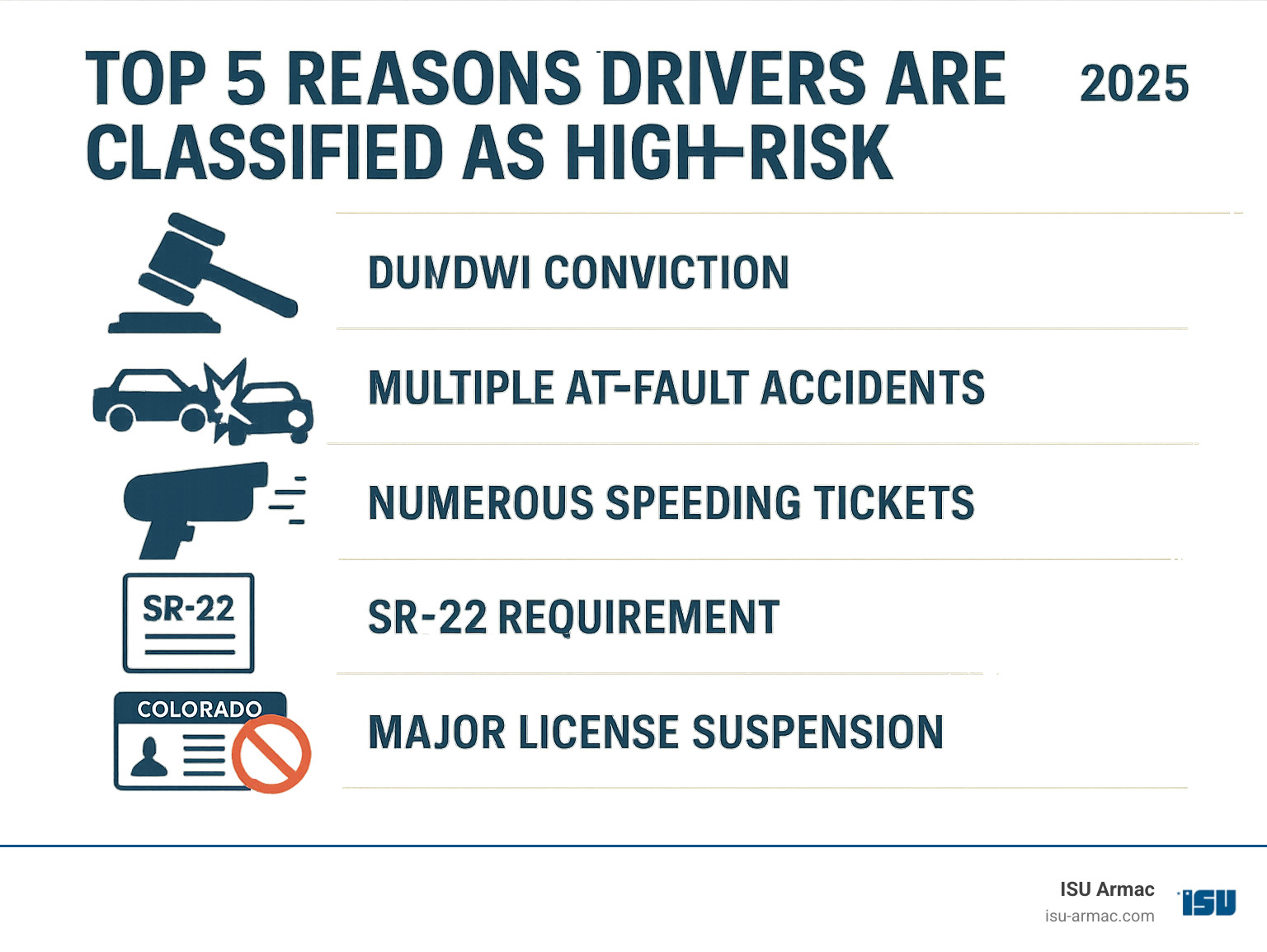
Key Factors That Classify You as High-Risk
Some violations will instantly land you in the high-risk category, while others build up over time.
- Serious Convictions: A DUI, DWI, or reckless driving conviction is the fastest way to high-risk status and can triple your rates or more.
- At-Fault Accidents: One accident might be overlooked, but multiple at-fault incidents suggest a pattern of risky driving to insurers.
- Multiple Moving Violations: A few speeding tickets in a short period can be as damaging as a single major violation. Insurers see this as a consistent disregard for traffic laws.
- License Suspension or Revocation: This is an automatic red flag, signaling serious issues with maintaining your driving privileges.
- Lapses in Insurance Coverage: Going without insurance suggests financial instability or a lack of responsibility, both of which are red flags for insurers. A history of missed payments can also push you into this category.
What is an SR-22 and Why Might You Need One?
An SR-22 is not insurance. It’s a certificate of financial responsibility that your insurance company files with the DMV on your behalf to prove you carry the minimum required liability coverage. You’ll typically need an SR-22 after serious violations like a DUI, reckless driving, or driving without insurance. The DMV requires it to reinstate your license.
Needing an SR-22 automatically makes you high-risk, but not all high-risk drivers need an SR-22. It’s a specific requirement tied to particular violations.
How Demographics and Vehicle Choice Affect Your Risk
Your driving record isn’t the only factor. Other data points also influence your rates.
- Age: Young drivers under 25 and, in some cases, senior drivers over 70 face higher rates due to statistical accident frequencies.
- Vehicle Choice: High-performance vehicles, luxury cars, and sports cars are more expensive to repair or replace and are associated with riskier driving behavior. Choosing a safer, less expensive car can help lower your premium. For more information, the Insurance Bureau of Canada has helpful information about how cars measure up regarding insurance risk.
While you can’t change your age, you can choose a more insurance-friendly vehicle to help manage your costs.
The Financial Impact: Comparing High-Risk vs. Standard Auto Insurance
When you get auto insurance quotes for high risk drivers, the reality check hits hard. Premiums can be dramatically more expensive, but these higher costs are a temporary reflection of statistical risk, not a punishment.
How Much More Does High-Risk Insurance Cost?
High-risk insurance can cost 25% to 300% more than standard coverage. In California, while a driver with a clean record might pay around $1,927 per year, high-risk drivers typically face premiums from $3,000 to $7,000+ annually. This translates to roughly $250 to $580 per month.
The exact increase depends on the violation. A DUI conviction has a much more severe impact than a couple of speeding tickets. For example, a single at-fault accident might raise rates by 60-80%, while a DUI can easily double or triple them. These costs decrease as violations age off your record.
Key Differences in Coverage and Payment Options
Beyond cost, high-risk policies have different terms. Understanding them helps you make informed decisions.
| Criteria | Standard Auto Insurance | High-Risk Auto Insurance |
|---|---|---|
| Average Annual Premium | $1,500 – $2,500 typically | $3,000 – $7,000+ annually |
| Available Discounts | Wide variety: multi-policy, good driver, defensive driving | Limited discounts, though some still available |
| Coverage Limits | Higher limits readily available | May have restricted maximum limits |
| Deductible Amounts | Flexible options from $250-$2,500 | Often higher deductibles required ($1,000+) |
| Payment Plan Flexibility | Monthly, quarterly, or annual options | Fewer payment plans, often requiring larger down payments |
High-risk policies still include all required California coverages, so you won’t lose essential protection. Discounts for bundling policies, defensive driving courses, or vehicle safety features become especially valuable.
Common Payment Requirements for High-Risk Policies
Payment flexibility is often limited for high-risk policies. Insurers typically require:
- Larger Down Payments: Expect to pay 25-50% of your annual premium upfront.
- Limited Payment Plans: Monthly options may be unavailable, with payments required every 3-6 months instead.
- Shorter Grace Periods: A missed payment can lead to cancellation within days, not weeks. Setting up automatic payments is highly recommended.
Paying your full premium upfront can sometimes earn a 5-10% discount, which is a good way to reduce your overall cost if you can afford it.
Your Guide to Getting Affordable Auto Insurance Quotes for High Risk Drivers
Being a high-risk driver means you need to be smarter about how you shop for insurance. Success comes down to preparation, partnership, and patience. Breaking the process into manageable steps makes finding auto insurance quotes for high risk drivers much more straightforward.

Step 1: Prepare Your Driving and Vehicle Information
Before you start, gather all necessary information. Having complete, accurate details helps you get better quotes faster.
- Driver’s License Number: For all drivers on the policy.
- Vehicle Identification Number (VIN): For each car you want to insure.
- Violation History: A complete list of all tickets and accidents from the past five years, including dates and details. Honesty is key, as insurers will verify this information.
- SR-22 Documentation: If you need an SR-22 filing, have that information ready.
Step 2: Work with an Independent Insurance Agency
This is the most effective way to find competitive rates. Going directly to a single insurer limits your options. An independent agency like ISU Armac works for you, not an insurance company. We have access to multiple carriers, including specialists in the non-standard market. We shop the market for you, leveraging our expertise to find carriers that offer the best rates for your situation. We also identify hidden discounts you might miss on your own.
Step 3: How to Compare Your High-Risk Auto Insurance Quotes
When quotes come in, don’t just pick the cheapest one. A low price isn’t a bargain if it leaves you underinsured.
- Look Beyond the Price: Compare coverage limits to ensure they are adequate. California’s minimums may not be enough to protect your assets.
- Check Deductibles: Make sure you can comfortably afford the deductible in case of a claim. A higher deductible lowers your premium but increases your out-of-pocket cost.
- Understand Exclusions: High-risk policies can have more restrictions. We’ll help you understand the fine print.
- Consider Carrier Reputation: A good claims service is essential. We only work with carriers known for handling claims fairly and efficiently.
Your Path Back to Standard Rates
Being classified as high-risk is not a life sentence. With patience and consistent safe driving, you can work your way back to standard insurance rates. Every month of safe driving is an investment in your future premiums.
How Long Will You Be Considered a High-Risk Driver?
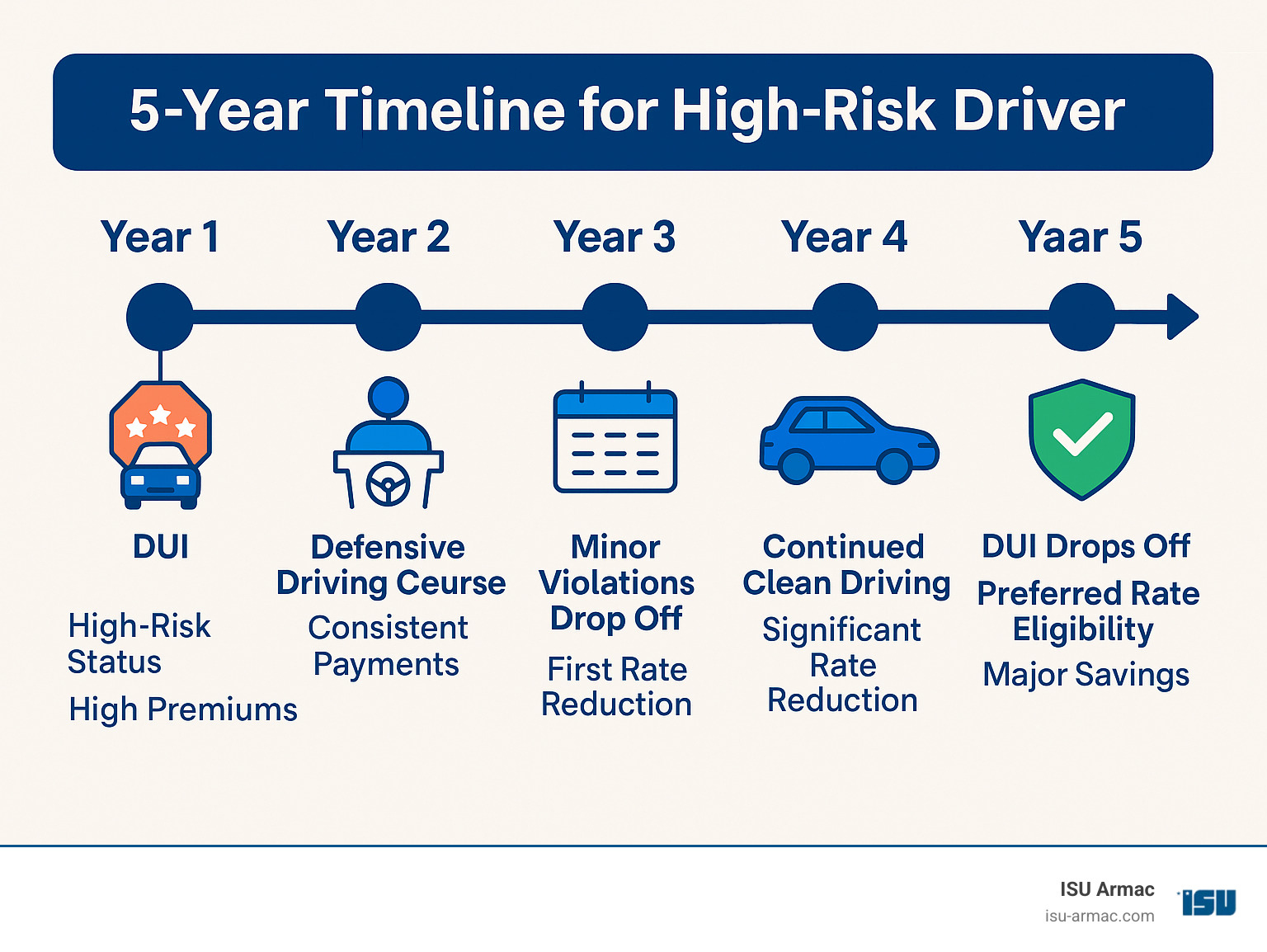
Most drivers remain in the high-risk category for 3 to 5 years. The exact timeline depends on the violation. In California, minor violations typically stay on your record for 3 years, while major ones like a DUI can remain for 5 years or more. The clock starts from your conviction date. Maintaining a completely clean driving record during this period is essential, as even a minor ticket can reset your progress.
For drivers who can’t find coverage in the private market, Information on the California Automobile Assigned Risk Plan (CAARP) ensures you have an option.
Actionable Steps to Improve Your Record and Lower Premiums
You can take concrete steps to improve your situation while you wait for violations to drop off your record.
- Take a defensive driving course: Many insurers offer discounts for certified courses.
- Drive safely and avoid new violations: This is the most critical step. Follow speed limits, avoid distractions, and never drive impaired.
- Pay all premiums on time: This demonstrates financial responsibility. Missed payments can lead to cancellation.
- Maintain continuous coverage: Any gap in your insurance history is a red flag. Consider a non-owner policy if you sell your car.
- Choose a safer, insurance-friendly car: Opt for models with high safety ratings and low repair costs.
- Increase your deductible: A higher deductible can lower your premium, but make sure you can afford the out-of-pocket cost.
- Bundle your policies: Combining auto and home insurance often leads to significant discounts.
- Consider usage-based insurance: Some programs track your driving habits and reward safe behavior with lower rates.
When to Re-Shop Your Insurance for Better Rates
Be proactive about shopping for auto insurance quotes for high risk drivers to save money.
- Shop annually: Rates change constantly, so last year’s best deal may not be competitive today.
- When a major violation falls off your record: This is when you’ll see the most significant rate reductions. Contact your agent immediately.
- When your SR-22 requirement ends: This opens up new, more affordable options in the standard market.
- After 3 years of clean driving: This milestone demonstrates consistent improvement and can make you eligible for better rates.
Your journey back to standard rates is a marathon, not a sprint. Every safe mile brings you closer to the affordable coverage you deserve.
Frequently Asked Questions about High-Risk Auto Insurance
When searching for auto insurance quotes for high risk drivers, many questions arise. Here are answers to the most common concerns.
Is high-risk insurance the same thing as SR-22 insurance?
No, they are related but not the same. High-risk is a classification for drivers who pose a higher statistical risk. An SR-22 is a certificate of financial responsibility filed with the DMV to prove you have insurance. The SR-22 itself is not an insurance policy.
If you are required to have an SR-22, you are automatically considered high-risk. However, you can be classified as high-risk for other reasons (like multiple accidents or tickets) without needing an SR-22.
Can I be denied auto insurance in California?
Yes, a private insurance company can deny you coverage based on your risk profile. However, you cannot be left without options in California.
California’s Automobile Assigned Risk Plan (CAARP) is a state program that acts as a safety net, ensuring all drivers can obtain at least the minimum required liability coverage. Premiums through CAARP are very high, but it guarantees you can get insured.
Will one speeding ticket make me a high-risk driver?
Typically, no. A single minor violation like one speeding ticket is unlikely to push you into the high-risk category, though it will likely increase your premium. Insurers look for a pattern of behavior, such as multiple violations in a short period or a combination of tickets and at-fault accidents. One ticket is an isolated incident; a pattern suggests higher risk.
Take Control of Your Auto Insurance Today
Being a high-risk driver is a temporary chapter, not the whole story. While it’s frustrating to pay higher premiums, the situation is not permanent. The path forward begins with understanding your risk factors and knowing how to shop smart for auto insurance quotes for high risk drivers.
Working with an independent insurance agency is the key. At ISU Armac, we specialize in helping drivers in your exact situation. Whether you’re in Victorville, Hesperia, or Apple Valley, we dig into your specific circumstances to find the best coverage.
Our team has relationships with dozens of specialized carriers that want to insure high-risk drivers. We know which companies offer the most competitive rates and how to present your case in the best light. We’ve helped countless drivers who thought they’d never find affordable rates again get back on the road with confidence.
Your journey to lower rates starts now. Don’t let past mistakes drain your bank account. The team at ISU Armac is ready to help you steer your options, secure the coverage you need, and create a plan to get you back to standard rates as quickly as possible.