
Why Paying More for Car Insurance Isn’t Necessary
An Auto insurance comparison tool helps you see quotes from multiple insurance companies at once, saving you time and money. Here’s a quick overview:
- What it does: Gathers quotes from dozens of insurers based on your profile.
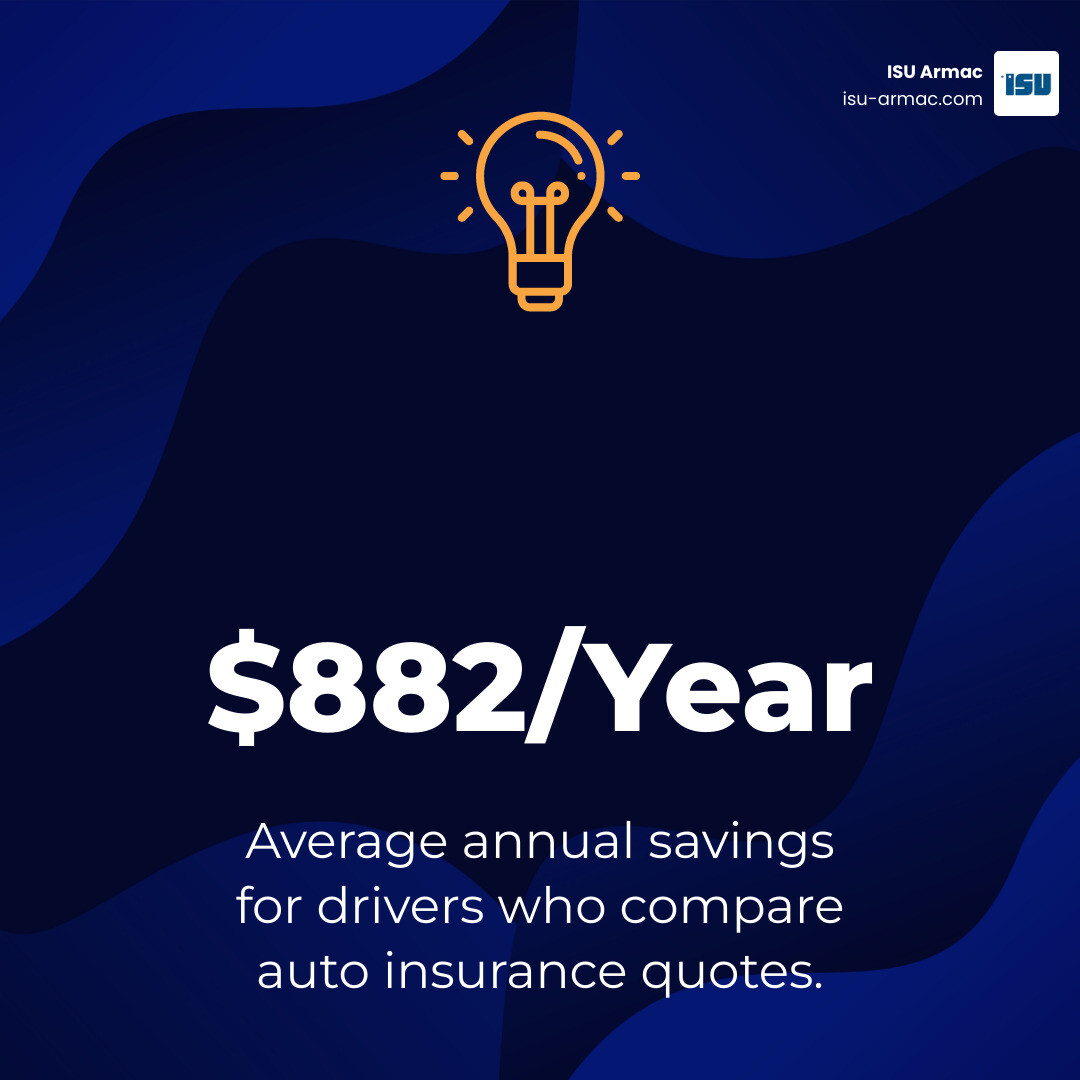
- Average Savings: Drivers save an average of $882 per year.
- Time Required: Get multiple quotes in under 3 minutes.
- Cost: 100% free to use.
- Why it Matters: Insurers use different formulas, so rates for the same driver can vary by hundreds of dollars.
Car insurance companies don’t all charge the same rates. Each insurer calculates risk differently, weighing factors like your age, driving record, and vehicle in unique ways. This means the company that’s cheapest for your neighbor might be overcharging you.
Drivers who compare auto insurance quotes save an average of 23% annually—often $800 or more per year. Yet many people stick with their current insurer, watching premiums rise at renewal without realizing better options exist. This guide explains how comparison tools work, what influences your rates, and how to find the best value.
I’m Ryan McEachron, CEO of ISU Insurance Services ARMAC Agency in Victorville. Since 1995, I’ve helped thousands of High Desert residents steer the insurance market. Using an Auto insurance comparison tool is the most effective way to ensure you’re not overpaying. Let me show you how.
What Is an Auto Insurance Comparison Tool and Why Is It Essential?

Think of an auto insurance comparison tool as a personal shopping assistant. You enter your information once, and the tool gathers quotes from multiple insurance companies, saving you from calling different agents or filling out repetitive forms.
The simple truth is that every insurance company calculates risk differently. One insurer might focus on your commute distance, while another weighs your credit score more heavily. The same driver can receive quotes that vary by hundreds of dollars per year. Comparison tools aggregate these quotes side-by-side, so you can find the right balance of price and coverage in minutes.
The financial impact of not comparing is significant. Insurers often count on customer inertia, gradually increasing rates for loyal customers at renewal. You also miss out on new discounts you may qualify for, such as those for working from home or improving your credit score. The numbers are clear: drivers who compare save an average of $882 per year. Don’t leave that money on the table.
How ISU Armac’s Comparison Tool Stands Out
Since 1995, we’ve learned that technology works best when combined with human expertise. Our auto insurance comparison tool provides instant quotes, but we don’t stop there. As an independent agency, we work for you, not a single insurance company.
Our experienced agents help you understand the details behind the numbers—like differences in deductibles or included coverages. We provide the speed of modern tech with personalized recommendations from local experts who understand the needs of drivers in Victorville, Apple Valley, and Hesperia. You get a truly informed choice, not just a list of prices.
Key Factors That Influence Your Insurance Rates
Ever wonder why your insurance quote differs from your neighbor’s? Every company weighs risk factors differently, which is why an auto insurance comparison tool can reveal such dramatic price differences. Insurers are essentially guessing your likelihood of filing a claim. Understanding these factors helps you find better rates.
The How Cars Measure Up data shows how vehicle characteristics impact premiums. Cars that are cheaper to repair and have better safety features earn lower rates.
Driver-Specific Factors
Your personal profile is a primary driver of your insurance costs.
- Age and experience: Younger, less experienced drivers statistically have more accidents and pay higher premiums. Rates typically start dropping after age 25, especially with a clean record.
- Driving record: A history free of accidents and tickets is your best tool for lowering costs. At-fault accidents and moving violations can cause premiums to skyrocket.
- Claims history: Frequent claims, even small ones, suggest a higher risk and lead to higher rates.
- Location: Your ZIP code informs insurers about local accident rates, crime, and traffic density. Premiums in urban areas are often higher than in rural ones.
- Credit-based insurance score: In many states, including California, a score derived from your credit history is used. A stronger score often translates to lower premiums.
Vehicle-Specific Factors
The car you drive has a major impact on your insurance rate.
- Make and model: Luxury and sports cars cost more to insure due to high repair costs and theft rates. A practical sedan is almost always cheaper to cover.
- Vehicle age: Newer cars have higher replacement values, increasing collision and comprehensive costs. However, they often have better safety features that can lower rates.
- Safety features: Advanced driver-assistance systems, airbags, and anti-lock brakes can earn you significant discounts.
- Anti-theft devices: Alarms and tracking systems make your car less likely to be stolen, reducing your comprehensive coverage cost.
- Repair costs: Vehicles with expensive or hard-to-find parts cost more to insure.
- Likelihood of theft: If your car model is frequently stolen, your comprehensive premiums will be higher.
How to Compare Quotes: Beyond Just the Lowest Price

It’s tempting to grab the cheapest insurance quote, but the lowest price isn’t always the best value. A truly good deal requires an apples-to-apples comparison, ensuring each quote offers the same coverage levels and deductibles. A quote that seems cheap might leave you underinsured in an accident. The Financial Services Regulatory Authority’s guide on purchasing auto insurance emphasizes comparing products and services, not just price tags.
Mandatory vs. Optional Coverage
To compare effectively, you must know what coverage is required versus optional. In California, it’s mandatory to hold car insurance, but minimums often provide inadequate protection.
- Liability Coverage: This is mandatory and protects you financially if you’re at fault in an accident. It covers others’ injuries and property damage. We often recommend higher limits than the state minimum to protect your assets.
- Uninsured/Underinsured Motorist: This protects you if you’re hit by a driver with little or no insurance. It’s optional but highly recommended in California.
- Collision Coverage: This optional coverage pays for damage to your own car from a collision, regardless of fault.
- Comprehensive Coverage: This optional coverage protects your car from non-collision events like theft, vandalism, or natural disasters.
- Medical Payments: This can help pay medical bills for you and your passengers, regardless of fault.
When using an auto insurance comparison tool, ensure each quote includes the mandatory coverage, then evaluate which optional coverages fit your needs.
Deductibles and Endorsements
Your deductible is what you pay out-of-pocket before your insurance pays a claim. The trade-off is simple: a higher deductible means a lower premium, and vice versa. Choose a deductible you can comfortably afford on short notice.
Endorsements (or riders) customize your policy. Common options include:
- Roadside Assistance: Covers towing, jump-starts, and tire changes.
- Rental Car Reimbursement: Pays for a rental while your car is being repaired after a covered claim.
- Gap Insurance: Covers the difference between your car loan and its value if it’s totaled.
- New Car Replacement: Pays for a brand-new car if yours is totaled shortly after purchase.
When comparing quotes, check which endorsements are included. A slightly more expensive policy might offer better value if it includes add-ons that would cost extra elsewhere.
A Step-by-Step Guide to Using an Auto Insurance Comparison Tool
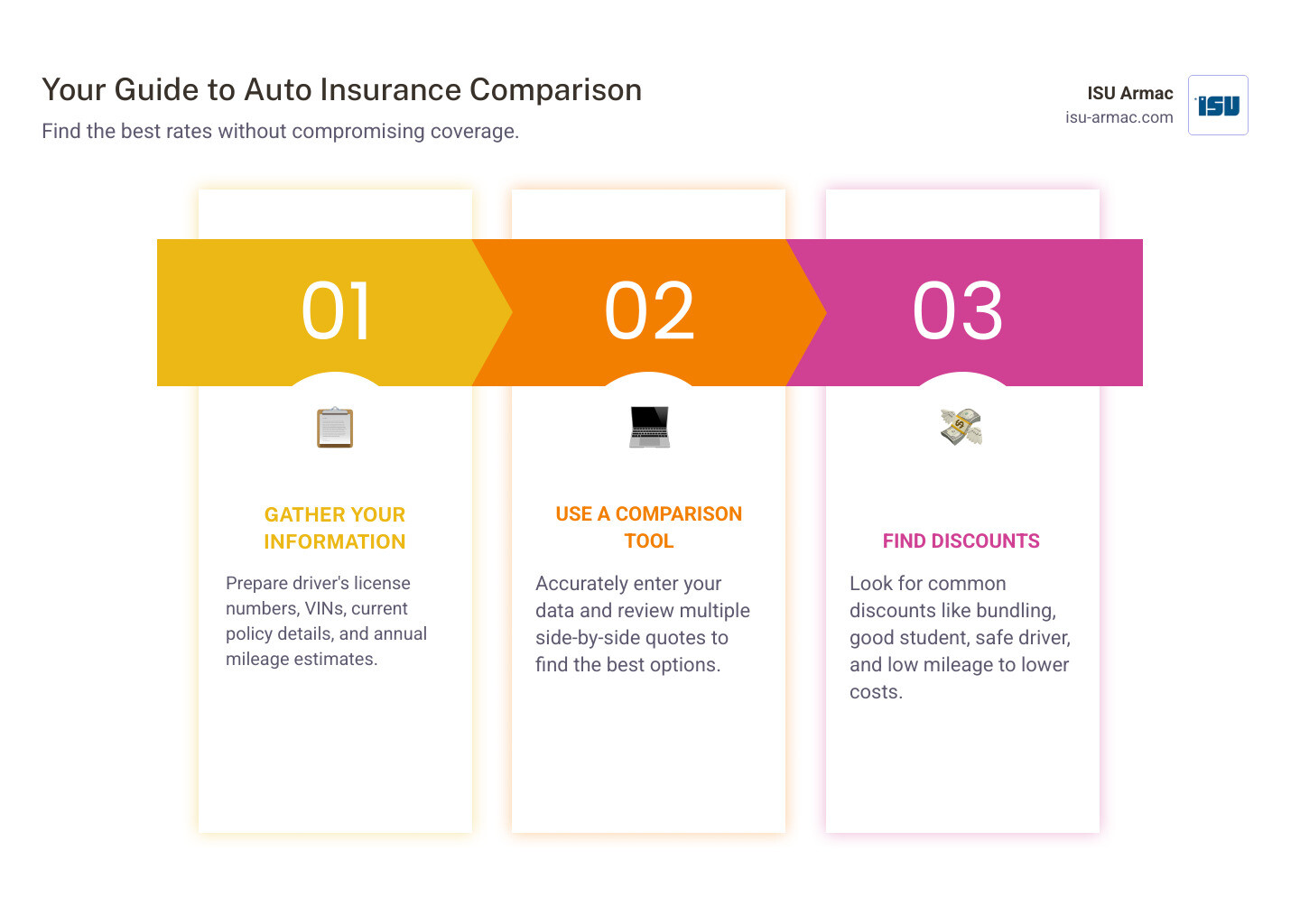
With a quality auto insurance comparison tool and the right information, you can get multiple quotes in minutes. Here’s how to do it efficiently.
Step 1: Gather Your Information
Having your details ready makes the process quick and smooth. The quoting process itself takes less than three minutes with this information on hand.
- Driver’s license numbers for all drivers in your household.
- Vehicle Identification Numbers (VINs) for each car you want to insure.
- Current policy details, including coverage limits and deductibles, for an apples-to-apples comparison.
- Annual mileage estimates for each vehicle.
Step 2: Use ISU Armac’s Auto Insurance Comparison Tool
With your information gathered, you’re ready to see your options.
- Enter your data accurately. Typos or omissions can lead to inaccurate quotes. Precision pays off.
- Review multiple quotes. Our tool queries multiple carriers and displays quotes side-by-side. Look beyond the price—check that liability limits and deductibles match across the quotes you’re comparing.
- Identify the best option. Find the sweet spot where coverage, deductibles, and price align with your needs and budget. Our agents in Victorville can help you analyze these choices.
Step 3: Find Discounts and Lower Your Costs
Insurance companies offer dozens of discounts, but you often have to ask for them. Here are some of the most common ways to save:
- Bundling: Combine your auto insurance with home insurance for a discount of up to 25%.
- Good Student Discount: Available for students who maintain a B average or better.
- Safe Driver Programs: Telematics apps or devices that monitor your driving habits can lead to savings of 20-30% for cautious drivers.
- Pay in Full: Paying your premium annually instead of monthly usually earns a discount.
- Low Mileage Discount: If you work from home or have a short commute, you may qualify for reduced rates.
Our team at ISU Armac automatically applies every discount you qualify for, ensuring you get the best possible rate.
Frequently Asked Questions about Auto Insurance Comparison
What is a ‘no-fault’ insurance system?
In a no-fault insurance system, your own insurance company pays for your medical expenses after an accident, regardless of who was at fault. This system is designed to speed up payments for injuries and reduce lawsuits over minor accidents. However, you can still sue the at-fault driver for severe injuries that exceed state-defined thresholds.
California operates under an “at-fault” system. This means the driver who causes an accident is responsible for the damages. Their liability insurance pays for the other party’s injuries and property damage. This is why having adequate uninsured/underinsured motorist coverage is so important in our state.
Are there special insurance considerations for ride-sharing drivers?
Yes, this is critical. Your personal auto policy excludes coverage when you’re driving for commercial purposes, like for Uber or Lyft. If you have an accident while logged into a ride-sharing app, your personal policy will likely deny the claim.
Ride-sharing companies provide some insurance, but there are significant gaps, especially during “Period 1”—when your app is on but you’re waiting for a ride request. To be fully protected, you need a ride-sharing endorsement or Transportation Network Company (TNC) coverage from your insurer. This add-on fills the gaps in coverage. We help drivers in Victorville, Apple Valley, and Hesperia secure this essential protection.
How often should I compare car insurance quotes?
You should compare quotes at least every six to twelve months, especially before your policy renews. Rates are not static; they change based on market conditions and your personal profile. Simply renewing without checking could mean you’re overpaying by hundreds.
Certain life events should also trigger an immediate comparison:
- Moving to a new ZIP code
- Buying a new car
- Adding or removing a driver (e.g., a teen or a child going to college)
- A change in marital status
- A change in your driving record or credit score
- A significant change in your daily commute or annual mileage
Never simply accept your renewal offer without checking the market first. Using an auto insurance comparison tool is the best way to ensure you’re getting a competitive rate.
Conclusion
The smartest way to save on car insurance is to compare your options. An auto insurance comparison tool simplifies this process, often revealing hundreds of dollars in annual savings. As we’ve covered, every insurer calculates risk differently, meaning your current provider might not be your cheapest option. Drivers who compare save an average of $882 per year.
To find the best value, you must look beyond the lowest price. Compare coverage levels, deductibles, and available discounts to make an informed decision that protects your assets and your budget. Don’t just accept your renewal offer—insurance companies often count on customer inertia.
At ISU Armac, we’ve helped residents of Victorville, Apple Valley, and Hesperia steer the insurance market since 1995. As an independent agency, we shop multiple carriers on your behalf, combining the efficiency of modern tools with the personal guidance of experienced agents. We find the discounts you’re entitled to and present options custom to your needs.
The next step is simple. Take three minutes to get an auto insurance quote today and see your potential savings. Compare, save, and drive with confidence knowing you made the smart choice.