
You bought a rental in Victorville because the numbers made sense. The High Desert keeps drawing residents, rents have held up, and a single property can become a serious long-term asset if you manage it like a business.
That last part matters. A rental isn't just a house with a tenant in it. It's a structure you have to rebuild if there's a major loss, a liability exposure if someone gets hurt, and an income stream that can stop overnight after a covered claim. In Victorville, that math isn't small. Data USA reports Victorville's median property value at $385,600 in 2024, with Realtor.com reporting a median rent of $2,500. That's exactly why Rental Property Insurance in Victorville CA shouldn't be treated like a box-checking exercise.
If you're also tightening the financial side of ownership, it helps to look beyond insurance alone. A practical companion to coverage planning is understanding how to maximize rental income deductions so the property performs better on paper and in your bank account.
Table of Contents
- Protecting Your Victorville Investment A Landlord's First Priority
- Why Homeowners Insurance Is Not Enough for Your Rental
- Deconstructing Your Victorville Landlord Policy Core Coverages
- Key Factors That Influence Your Insurance Costs in Victorville
- Customizing Your Coverage with Endorsements and Add-Ons
- Common Pitfalls to Avoid and How to Navigate Claims
- How ISU Insurance Services Simplifies Protection in Victorville
Protecting Your Victorville Investment A Landlord's First Priority
A lot of new landlords have the same moment. The tenant is in place, the rent starts coming in, and the property suddenly feels less like real estate and more like a business asset that can create profit or create problems.
That's the right way to look at it. In Victorville, you aren't protecting a minor side project. You're protecting a property value measured in the hundreds of thousands and a monthly rent stream that can disappear if a kitchen fire, pipe break, or liability claim knocks the unit out of service.
The asset is bigger than most owners first assume
New investors often focus on loan payment, rent amount, and whether the appliances need replacing. Insurance gets treated like overhead. That's backwards.
Your policy has to protect three things at once:
- The building itself: Walls, roof, attached structures, and the cost to repair or rebuild after a covered loss.
- Your legal exposure: Tenant and visitor injuries can turn into claims fast.
- Your income stream: Rent stops immediately when the property becomes uninhabitable. Your fixed expenses usually don't.
Practical rule: If the property produces income, your insurance should be built around business risk, not owner-occupant risk.
Victorville owners need a local risk lens
Victorville has its own rhythm. Properties vary widely by age, upkeep, neighborhood layout, and exposure to wind, heat, and regional fire concerns. That means your insurance decision shouldn't come from a generic online template.
A solid landlord policy starts with a blunt question: if this place had a serious covered loss next month, would the current limits, liability setup, and rent protection keep the investment intact? If the answer is uncertain, you don't have coverage dialed in yet.
Why Homeowners Insurance Is Not Enough for Your Rental
The most common mistake I see is simple. Someone moves out of a home, turns it into a rental, and keeps the homeowners policy in place because it seems close enough.
It isn't close enough.
The occupancy issue carriers care about
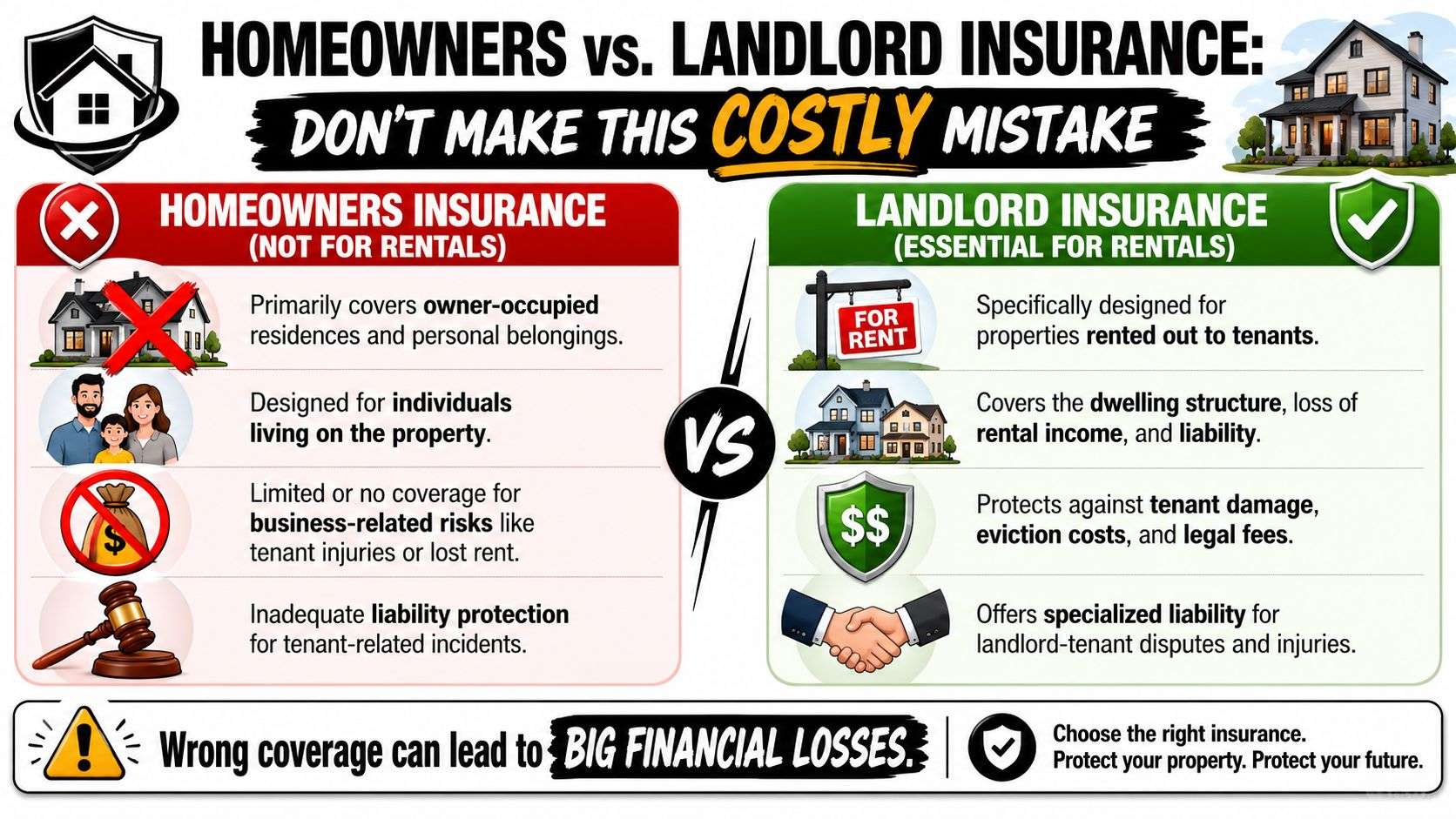
Insurance companies price and underwrite based on how a property is used. Owner occupancy and rental occupancy are not the same risk. A home you live in is rated around your personal use. A rental is rated around tenant occupancy, premises liability, and income interruption.
The California Department of Insurance explains that landlord policies are designed for one- to four-unit rental properties and include key features such as loss-of-rent coverage that aren't part of a standard homeowners setup. That's the dividing line.
If you're comparing forms and trying to understand where standard home coverage stops, this plain-language piece on homeowners insurance biohazard cleanup is useful because it shows how easily people assume a policy covers more than it does.
What a landlord policy is built to do
A landlord policy is built for the challenges of renting property to other people. It protects the dwelling, addresses liability tied to tenants and visitors, and can reimburse fair rental value when a covered loss makes the unit uninhabitable.
That's a completely different job than a homeowners policy.
Here's the practical comparison:
| Policy type | Best fit | Main focus | Major problem for a rental owner |
|---|---|---|---|
| Homeowners policy | Owner-occupied residence | Personal dwelling and personal contents | Doesn't match rental occupancy exposure |
| Landlord policy | One- to four-unit rental property | Structure, liability, and loss of rent | Must be properly rated and endorsed |
One more point matters. If you still own a primary residence and want to understand how that protection differs from rental coverage, compare it against a local Victorville homeowners insurance policy overview. The gap between owner protection and landlord protection becomes obvious fast.
A rental property with the wrong policy isn't "mostly covered." It's exposed in the places that matter most.
Deconstructing Your Victorville Landlord Policy Core Coverages
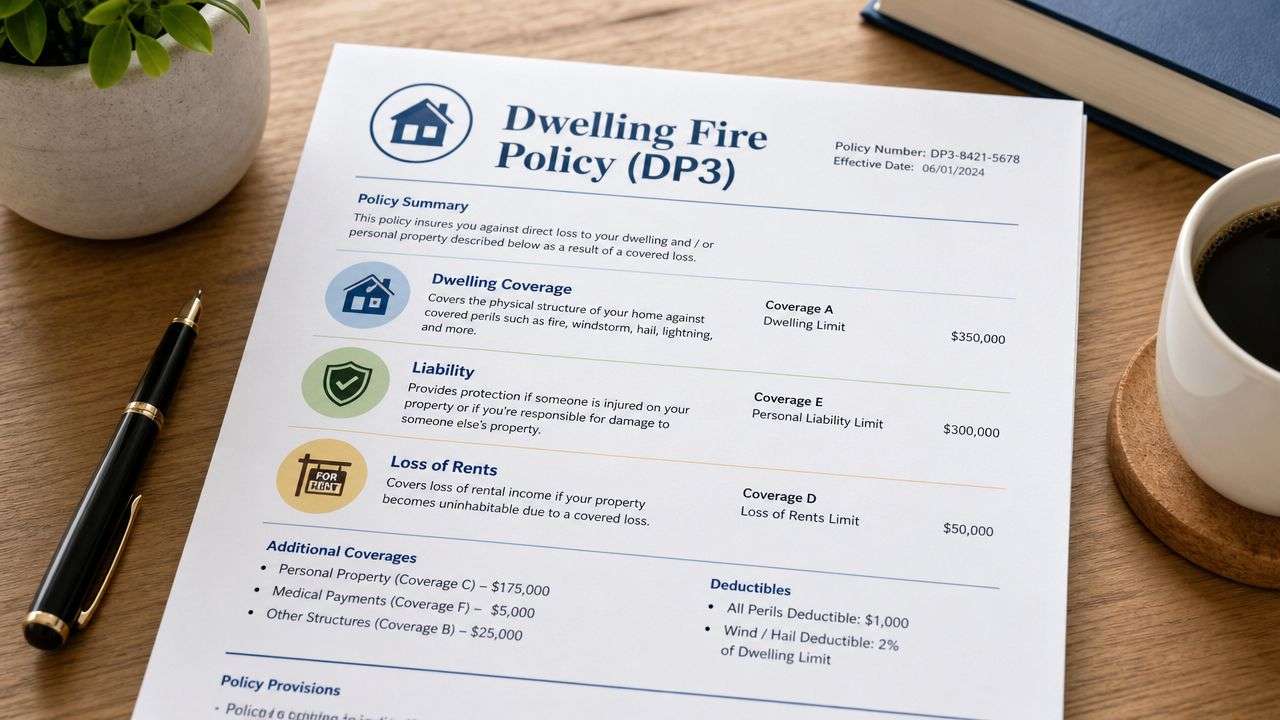
Most landlord policies boil down to three core functions. Protect the structure. Protect you from liability. Protect the rent stream when a covered loss interrupts the business.
If you understand those three pieces, you'll ask much better questions when reviewing quotes.
Dwelling protection
This is the backbone. Dwelling coverage is what pays to repair or rebuild the insured structure after a covered cause of loss. Think of a fire that tears through the kitchen, smoke damage that affects multiple rooms, or a wind event that damages roofing and exterior materials.
The biggest mistake here is confusing market value with rebuild cost. Investors think in purchase price and resale value. Carriers think in construction cost, materials, labor, and what it would take to put the building back together after a loss. Those are not the same number.
Check these points carefully:
- Dwelling limit: Make sure it reflects realistic rebuild exposure.
- Other structures: Detached sheds, fences, and similar features may need attention.
- Landlord-owned items: Appliances or fixtures you provide should be identified properly.
If you want a plain-English companion read, this essential landlord insurance guide does a good job of framing why landlords need broader protection than a standard personal policy.
Liability protection
Liability is the part owners tend to underestimate until something happens. A loose handrail, broken walkway lighting, damaged step, or trip hazard can lead to an injury claim. So can disputes tied to conditions at the property.
This isn't about panic. It's about accepting that once you rent property to the public, even on a long-term basis, you take on premises liability risk.
Agent's view: Liability limits should be chosen with lawsuit exposure in mind, not with the hope that nothing serious will happen.
The policy should clearly include premises liability. If you own more than one property or have higher-value assets to protect, it's smart to review whether your primary liability limit is enough and whether excess liability belongs in the plan.
Loss of rental income
This is the coverage landlords miss most often when they shop only on price. Loss of rental income is what turns property insurance into business continuity protection.
If a covered claim makes the unit uninhabitable, this coverage can reimburse fair rental value while repairs are being completed. That's what keeps a claim from becoming two problems at once: physical damage and a cash-flow hit.
Think about the sequence:
- A covered loss happens: Fire, smoke, or another covered peril damages the unit.
- The tenant can't occupy the property: Rent stops or the unit can't be leased.
- Your expenses continue: Mortgage, taxes, and upkeep don't pause.
- Loss-of-rent coverage bridges the gap: The policy helps replace income during repairs.
Without this piece, a landlord can have the building fixed and still take a painful financial loss.
Key Factors That Influence Your Insurance Costs in Victorville
Price matters, but "what's the cheapest policy" is the wrong first question. The right question is why one quote is higher, lower, broader, or more restricted than another.
In California, the answer often starts outside Victorville and ends at the specific condition of your property.
California pressure reaches the High Desert
Property insurance in California has become much more expensive. One example cited by the Joint Center for Housing Studies shows the average annual homeowners premium in Pacific Palisades rising from $5,025 to $6,689, described as a 33% increase above inflation, which shows how sharply pricing can move in higher-risk California ZIP codes in the broader property market, as discussed in this analysis of California's homeowners insurance market.
That doesn't mean Victorville prices mirror Pacific Palisades. It means California carriers are already reacting to catastrophe exposure and rebuild-cost pressure statewide. Landlord pricing reflects that same environment.
Independent market guidance also places average annual California landlord premiums around $1,728 statewide, with lower-risk properties sometimes closer to $900 to $1,200 and wildfire-exposed ZIP codes often above $2,000, according to this California landlord insurance guide. That's a useful benchmark, not a promise.
What underwriters look at on your property
Underwriters don't price a rental because it's "in Victorville." They price it based on the building and the risk controls they can verify.
The biggest drivers usually include:
- Roof age and condition: Older roofs create concern because they affect weather resistance and claim severity.
- Electrical and system updates: Outdated wiring or deferred maintenance pushes pricing the wrong way.
- Replacement-cost accuracy: Underinsuring to save premium can create a much bigger problem after a loss.
- Liability setup: Higher limits and broader protection can change the quote.
- Mitigation details: When carriers price for hazard controls, documented upkeep matters.
A landlord with a maintained roof, updated electrical, accurate dwelling limit, and clear risk controls often gets a more sustainable quote than an owner who shops only for the lowest number and ignores the property profile.
Cheap premium and smart premium aren't the same thing. The cheaper quote often becomes the expensive mistake after a claim.
Customizing Your Coverage with Endorsements and Add-Ons
A basic landlord policy is only the starting point. Closing the gaps that show up when your property isn't a generic rental requires focused effort.
Experienced review matters. Endorsements look optional until one of them would have solved the exact problem you're now paying for out of pocket.
Small gaps that become expensive claims
Start with what you own at the property. If you provide the refrigerator, stove, laundry equipment, or storage structure, those items need to be accounted for correctly. The same goes for detached features and building components that increase replacement exposure.
Another add-on worth discussing is ordinance or law coverage. If a covered loss triggers repair work, local code requirements can affect how the rebuild has to be completed. That can change cost and scope.
A few smart questions to ask before binding a policy:
- What property am I supplying to the tenant? Appliances and fixtures matter.
- Do I have detached structures? Sheds, garages, and similar features shouldn't be assumed.
- Would a rebuild trigger code upgrades? If yes, ask how the policy handles that.
Earthquake and flood are separate decisions
This is the gap many landlords don't understand until it's too late. Standard landlord policies explicitly exclude earthquake and flood damage. If you want protection for those perils, you buy separate coverage.
The Policygenius overview of California landlord insurance notes that earthquake and flood protection are typically separate add-ons or separate policies and that availability can vary by ZIP code. That's the practical rule for Victorville landlords.
Flood especially deserves a direct conversation because many owners assume inland means low concern. That's not a safe assumption. The smarter move is to review whether separate flood insurance coverage works and when it fills a real gap for your property instead of guessing based on geography alone.
If you own in California, earthquake should also be an intentional yes-or-no decision. Not an accidental omission.
Common Pitfalls to Avoid and How to Navigate Claims
Most landlord insurance problems start before the claim. They start when the owner buys the wrong valuation basis, skimps on liability, forgets to document condition, or assumes exclusions won't matter.
Once the loss happens, your advantage comes from preparation.
Mistakes that cost landlords money
The first trap is buying around premium alone. Some policies default to less favorable settlement approaches unless you specifically choose stronger replacement-based protection. Saving a little on the front end can produce a much larger out-of-pocket bill later.
The second trap is weak documentation. Before a tenant moves in, photograph the property carefully. Keep records of upgrades, appliance ownership, maintenance work, and lease terms. If there's a claim, that file becomes evidence.
Other avoidable mistakes include:
- Ignoring liability exposure: A low limit may look acceptable until an injury claim tests it.
- Forgetting business continuity: If there's no meaningful rent protection, the income side of the investment is exposed.
- Failing to disclose occupancy correctly: A rental must be insured as a rental. Shortcuts here can create coverage problems at claim time.
Document the property's condition before the problem starts. After the loss, memory is weak and paperwork wins.
What to do right after a covered loss
When a claim happens, don't overcomplicate the first response. Handle the property, the people, and the paper trail.
Use this order:
- Protect people and prevent further damage: Secure the site if you can do so safely.
- Notify your agent and carrier immediately: Early reporting matters.
- Document everything: Photos, video, damaged items, invoices, and tenant communications.
- Keep receipts: Emergency mitigation and temporary protective expenses may matter.
- Stay organized: Build one claim file and keep every update in it.
Be careful with assumptions. A landlord's job after a loss isn't to decide what is or isn't covered on the spot. It's to report promptly, preserve evidence, and avoid creating new damage through delay.
How ISU Insurance Services Simplifies Protection in Victorville
Landlord insurance gets easier when someone reviews the property the way an underwriter and a local owner would review it. That's the practical value of working with a Victorville-based independent agency instead of trying to force a rental into a generic online quote flow.
ISU Insurance Services is a community-rooted independent agency in Victorville with access to 300+ carriers and 60+ years of experience, according to the publisher information provided for this article. For a landlord, that means the job isn't just producing a price. It's comparing fit, exclusions, liability structure, property details, and how the policy handles the risks tied to the rental.

Why local independent guidance matters
A Victorville rental has local nuances. Desert conditions, older housing stock in some areas, investor-owned homes, and regional catastrophe pricing all affect how a policy should be built. An independent agent can pressure-test the details instead of dropping every property into the same template.
That matters most in three places:
- Coverage design: Matching limits and endorsements to the actual building.
- Carrier fit: Some policies are a better match for certain property profiles.
- Claims support: When something goes wrong, local guidance helps owners move faster and cleaner.
What a smarter quote process looks like
A productive quote conversation should cover occupancy, age and condition of the property, roof and systems, tenant setup, desired liability level, landlord-owned items, and whether separate catastrophe coverage should be considered. That's the difference between shopping and underwriting.
If you manage multiple units or want coverage suited for rental operations more broadly, it's also worth reviewing how property manager insurance fits landlord and rental exposure.
The best outcome isn't the lowest premium on day one. It's a policy that still makes sense on the day you need it.
If you own a rental in the High Desert and want a clean review of your current policy or a fresh quote for Rental Property Insurance in Victorville CA, contact ISU Insurance Services. Bring your current declarations page, the property address, and a few details about the building and tenancy. A focused review now is a lot cheaper than finding a coverage gap during a claim.