
The Unseen Risks of Owning “Empty” Land
Does vacant land need to be insured? The short answer is yes. While not always legally required, vacant land insurance is a smart financial decision that protects you from significant liability risks.
Quick Answer:
- Liability Protection: You’re responsible for injuries on your property, even to trespassers.
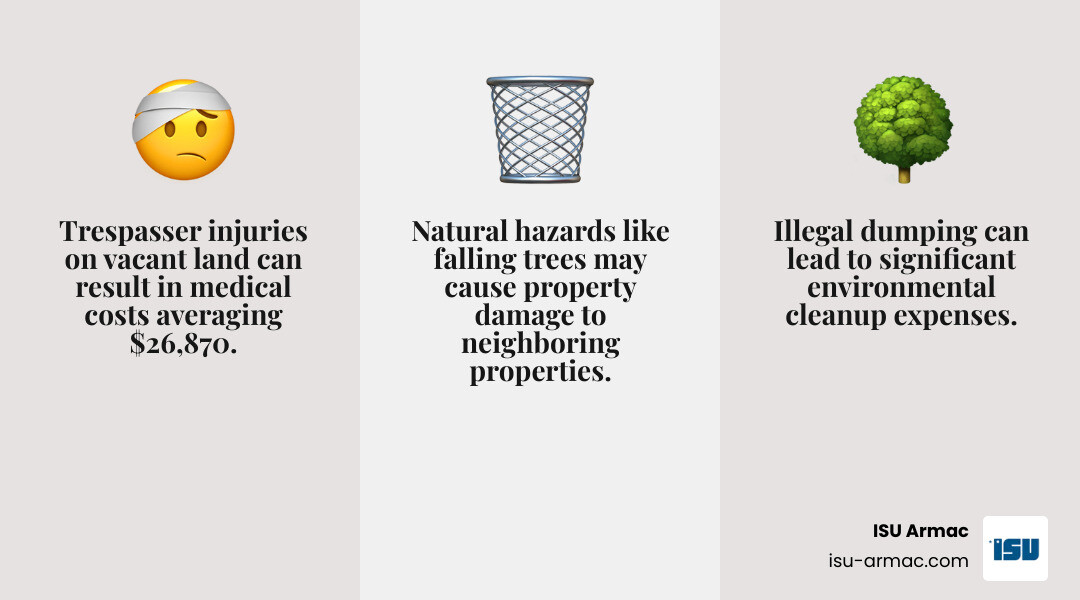
- Financial Risk: The average bodily injury claim exceeded $26,870 from 2014-2018.
- Affordable Coverage: Basic policies start around $27/month for $1-2 million in coverage.
- Lender Requirements: Often required if the land is financed.
Many landowners assume “empty” land is risk-free, but this is a costly misconception. Any vacant property, whether held for development or recreation, exposes you to serious financial liability.
Consider a real scenario: a landowner’s insurance claim was denied after an ATV accident on his 40 acres. The policy didn’t cover it because a concrete slab and old septic tank meant the land wasn’t “truly vacant.”
The Insurance Institute for Highway Safety reports that 1,701 ATV riders died in a five-year study period. An accident like this on your property could lead to devastating medical and legal costs.
As Ryan McEachron, CEO of ISU Insurance Services ARMAC Agency in Victorville, I’ve seen how liability issues can blindside property owners. My experience on the Victorville City Council and helping High Desert residents has proven that proactive insurance planning is the key to preventing financial disaster.
Related content about does vacant land need to be insured:
Why You Can’t Afford to Skip Vacant Land Insurance
Owning land means you are responsible for what happens on it, even to uninvited guests. A dedicated Land liability insurance policy is crucial, as a single injury can lead to a lawsuit that threatens your assets. This insurance isn’t for the land itself; it’s to protect you from the financial fallout of accidents.
The Common Risks of Vacant Land Ownership
An empty field seems harmless, but its openness can attract trespassers for activities like hiking or ATV riding, and you can be held liable for accidents.
- Trespassers and ATV Accidents: Vacant land is often used for recreation. If someone is injured while on your property, you could be held liable for their medical and legal costs. The Insurance Institute for Highway Safety reports 1,701 ATV rider deaths in a five-year study, highlighting this significant risk.
- Attractive Nuisance Doctrine: This legal concept holds you to a higher standard of care if your property has features that might attract children, such as a pond or old structure. You can be held responsible if a curious child gets hurt, even if they were trespassing.
- Natural Hazards: Dangers can exist naturally. Hidden stumps or uneven ground can cause falls, ponds pose drowning risks, and falling trees can damage neighboring property, leaving you liable.
- Illegal Dumping and Vandalism: Empty lots are often targets for illegal dumping, which can lead to expensive environmental cleanup, and vandalism can also result in significant costs.

Are There Legal Requirements for Insuring Vacant Land?
While vacant land insurance is not legally mandated by most states, it’s often a practical necessity.
- Lender Requirements: If the land is financed, your lender will almost certainly require liability insurance to protect their investment.
- Local Ordinances: Some municipalities have ordinances that imply a need for liability protection.
- Personal Responsibility: The most compelling reason is to protect your personal assets from a financially devastating lawsuit.
How Vacant Land Insurance Differs from Homeowners Insurance
Don’t assume your homeowners policy covers your vacant land. Any coverage it offers is typically limited and conditional for several reasons:
- Strict Definition of “Vacant”: Insurers define “vacant land” as having no man-made structures. Even an old foundation, fence, or septic tank can disqualify the land from being covered under a homeowners policy.
- Insufficient Limits: The liability limits on a homeowners policy may not be high enough for a severe claim occurring on a separate parcel.
- Coverage Gaps: Homeowners policies aren’t designed for the unique risks of undeveloped land, like environmental contamination.
A standalone vacant land policy is the safest option. When asking, “Does homeowners insurance cover vacant land?“, the answer is almost always “not sufficiently.”
What Does Vacant Land Insurance Actually Cover?
Vacant land insurance is a liability safety net, designed to shield you financially if someone is injured on your property or if your land causes damage to a neighboring property. Accidents can happen on even the most harmless-looking property, and this insurance steps in to protect your financial future.

Core Protections: Understanding Your Coverage
The answer to “does vacant land need to be insured?” becomes clear when you see what’s covered. It centers on liability for incidents where you are legally responsible.
- Bodily Injury Claims: This covers medical bills, rehabilitation, and lost wages if someone is injured on your land, from a hiker tripping on a root to a more serious ATV accident.
- Property Damage Claims: This applies when your land damages someone else’s property, for example, if a tree on your lot falls and crushes a neighbor’s shed.
- Medical Payments Coverage: This is a no-fault benefit that covers minor medical expenses for injuries on your property, which can help prevent small incidents from becoming large lawsuits.
- Legal Defense Costs: Your policy pays for attorney fees and court costs to defend you against a claim, even if it’s baseless. As liability coverage experts explain, this protection is invaluable.
- Settlements and Judgments: If you are found legally responsible, the policy covers settlements up to your policy limits, protecting your financial future.
Common Exclusions and Limitations
Like any policy, vacant land insurance has exclusions. Knowing them helps you avoid surprises. Common exclusions include:
- Intentional acts and injuries to yourself or your family.
- Employee injuries, which fall under workers’ compensation.
- Commercial activities like farming or ranching, which require a separate commercial policy.
- Environmental contamination, such as from illegal dumping or pre-existing issues like PFAS contamination, is also typically excluded.
- Damage to existing structures on the land itself, as the policy is for liability.
Vacant vs. Unoccupied Land: A Critical Distinction for Insurance
Insurers distinguish between “vacant” and “unoccupied” land, a critical difference for proper coverage.
- Vacant land is raw land with no structures.
- Unoccupied land has structures (like a house or barn) but is temporarily empty, with the owner intending to return.
The distinction is crucial: vacant land needs a specialized policy, while unoccupied property may be covered by an endorsement to a homeowners or commercial policy. Getting the classification wrong can lead to a denied claim. If your property has any structures, it is likely not considered “vacant” by insurers.
So, Does Vacant Land Need to be Insured? The Cost-Benefit Analysis
Given the potential for large liability claims, the answer to does vacant land need to be insured is a clear yes. It’s an essential part of responsible ownership that protects your financial security. Just as you insure your car, you should insure your land. Accidents can happen on any property, no matter how remote it seems.
The cost-benefit analysis is simple: affordable premiums protect you from potentially devastating lawsuits. For more details, you can explore our guide on Vacant land liability insurance cost.
Factors That Influence Your Insurance Premium
Insurers calculate your premium based on several key risk factors:
- Geographic location: Premiums are higher in areas prone to wildfires or floods, or those with higher rates of trespassing.
- Property size: Larger parcels have more exposure to risk and typically cost more to insure, though the per-acre cost may decrease.
- Intended use: Recreational use (hunting, ATV riding) is riskier and costs more to insure than land held for future development.
- Physical features: Hazards like ponds, steep slopes, or abandoned structures increase the premium.
- Claims history: A history of liability claims will increase your rates.
- Coverage limits: Higher limits, such as $2 million versus $1 million, will increase the premium but offer greater protection.
How much does vacant land need to be insured for?
The good news is that vacant land insurance is affordable. A basic policy for $1-2 million in coverage can start at around $27 per month (about $324 annually). Premiums generally range from $15 to $150 per month, depending on the risk factors.
Policies typically start at $1 million per occurrence, but many owners choose $2 million due to rising medical and legal costs. Considering the average bodily injury claim can exceed $26,870, this level of protection is a wise investment.
As an independent agency, we shop multiple carriers to find you the best coverage at a competitive price. Since insurers evaluate risk differently, quotes can vary significantly. For a detailed cost analysis, check out our guide: How much does vacant land insurance cost?.
How to Proactively Protect Your Land and Your Assets
While insurance is your financial safety net, proactive risk mitigation is your first line of defense. These steps work with your Landowner liability insurance for comprehensive protection.
Practical Steps to Reduce Liability
These simple, low-cost steps can significantly reduce your liability:
- Post “No Trespassing” Signs: Clearly mark your property boundaries. This serves as a legal notice and deterrent that can strengthen your position if an incident occurs.
- Install Fences or Barriers: A physical barrier is an effective deterrent, especially along roads or near hazardous areas.
- Conduct Regular Inspections: Walk your property periodically to identify new hazards like fallen trees, erosion, or signs of illegal dumping.
- Remove Hazards: Clear away obvious dangers like dead trees, debris piles, or abandoned equipment that could cause injury.
- Secure Existing Structures: If you have old buildings or wells, secure them properly. These may disqualify your land from a standard “vacant land” policy, requiring different coverage.
Why does vacant land need to be insured even with precautions?
Even with these precautions, the answer to does vacant land need to be insured is still yes. Insurance remains essential for the following reasons:
- Accidents are Unpredictable: Storms can create new hazards overnight, and hidden dangers like old wells can be finded only through an accident.
- Legal Complexities: Trespasser rights vary by state. Doctrines like “attractive nuisance” can hold you liable for injuries to children even if they were trespassing.
- Barriers Aren’t Foolproof: Determined trespassers can bypass fences and signs. For some, like ATV riders, barriers can be seen as a challenge.
- Financial Backup is Crucial: When prevention fails, insurance is the only thing protecting your personal assets from the devastating cost of a major lawsuit.

Precautions and insurance work together. Your safety measures can lower your premiums, but only insurance provides true financial protection when an accident occurs.
Frequently Asked Questions about Vacant Land Insurance
Here are answers to the most common questions we hear from landowners in our Victorville office.
Can I add vacant land to my existing homeowners policy?
While some insurers allow this, it’s rare and comes with strict conditions. The land must be truly “vacant” (no structures at all) and often must be adjacent to your home.
A standalone insurance for vacant lot policy is almost always the safer choice. Homeowners policies have insufficient limits and coverage gaps for the unique risks of vacant land.
So, does vacant land need to be insured separately? In most cases, yes. A separate policy is the best way to ensure you’re fully protected.
What is an “attractive nuisance” and how does it affect my liability?
An attractive nuisance is any feature on your property that could attract and endanger children, such as a pond, old equipment, or an abandoned building.
The law holds you to a higher standard of care for these features. You can be found liable for a child’s injuries even if they were trespassing, which makes liability insurance essential.
Does an umbrella policy cover vacant land?
An umbrella policy is excellent for extra protection, but it’s important to understand how it works. It provides liability coverage on top of an existing primary policy, kicking in only after the limits of your underlying policy have been exhausted.
Therefore, you typically need a primary vacant land insurance policy first. An umbrella policy is a great way to add millions in extra liability protection, a strategy we recommend for clients with significant assets to protect.
Secure Your Investment and Your Future
The verdict is clear: does vacant land need to be insured? Absolutely. What seems like harmless property can become a source of devastating financial liability. Your land is an investment, and it requires protection. Just like your home or car, your vacant land deserves protection from unpredictable accidents.
The smart landowner is proactive. Don’t wait for an expensive lawsuit to learn the importance of coverage. The quiet appearance of your land doesn’t eliminate risk.
Here in the High Desert—from Victorville to Apple Valley, Hesperia to Oak Hills—we understand the local risks. The mix of recreational activity and varied terrain means your property faces constant liability exposure.
At ISU Armac, we make protecting your investment straightforward. Our ability to shop multiple carriers means we find you the best coverage at rates that won’t break your budget. We’ve helped countless landowners secure policies starting around $27 per month – a small price for potentially millions in protection.
Your peace of mind matters to us. Whether you’re dealing with attractive nuisances, worried about trespassers, or simply want to sleep better knowing you’re covered, we’re here to help. Our team understands both the insurance landscape and the local challenges you face as a property owner.
Don’t wait until after an incident to wish you had coverage. For personalized advice and competitive quotes custom to your specific situation, explore our vacant land insurance services or contact us today.
Your investment deserves protection. Your future deserves security. Let us help you achieve both with the right vacant land insurance coverage.