
Understanding the True Cost of Protecting Your Land Investment
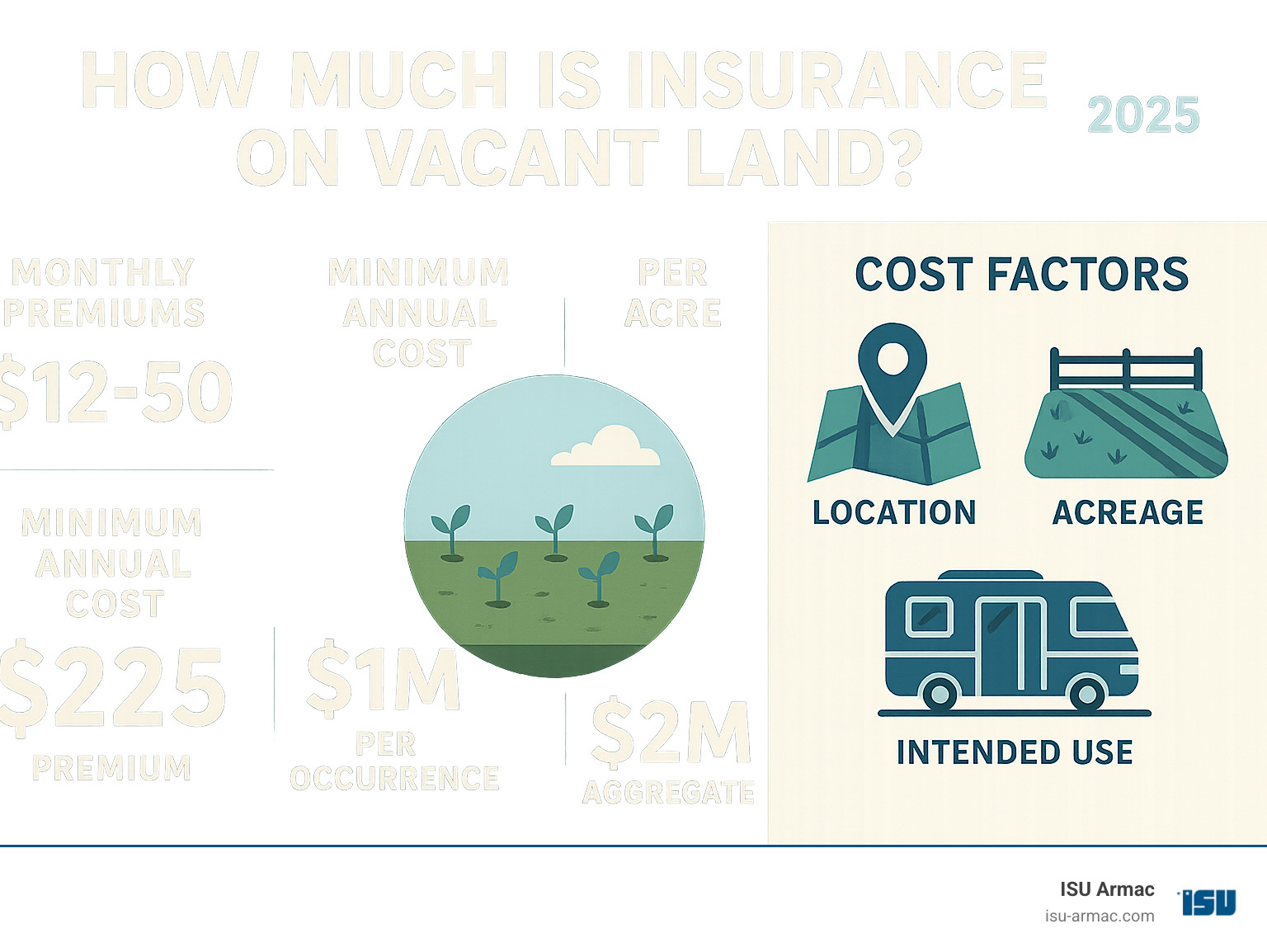
How much is insurance on vacant land is one of the most common questions we hear from property owners in Southern California. The quick answer: vacant land insurance typically costs between $12-50 per month, with most policies starting around $225 annually or $0.30 per acre (whichever is higher).
Here’s what you can expect to pay:
- Small parcels (1-5 acres): $225-400 per year
- Medium parcels (25 acres): $300-400 per year
- Large parcels (100+ acres): $500-750 per year
- Coverage limits: $1 million per occurrence, $2 million aggregate
- Deductible: Zero for liability coverage
Many landowners assume their empty lot doesn’t need insurance protection. After all, what could go wrong on undeveloped property? The reality is that vacant land carries surprising liability risks – from trespasser injuries to attractive nuisances that draw curious children. Just one slip-and-fall accident could result in thousands of dollars in medical bills and legal fees.
Whether you own a small residential lot in Victorville or hundreds of acres in the High Desert, understanding your insurance options can save you from financial disaster. Lenders often require coverage for financed land, but even if it’s not mandatory, the peace of mind is worth the modest cost.
I’m Ryan McEachron, CEO of ISU Insurance Services ARMAC Agency, and I’ve been helping High Desert residents steer insurance decisions for over two decades, including many clients seeking guidance on how much is insurance on vacant land costs. Through my experience on the Victorville City Council and work with local property owners, I’ve seen how the right coverage protects both investments and peace of mind.
Simple guide to how much is insurance on vacant land terms:
Understanding Vacant Land Insurance: More Than Just Empty Space
That empty lot you purchased as an investment might look harmless, but it carries surprising liability risks that could cost you thousands. How much is insurance on vacant land becomes an important question when you realize that even undeveloped property can expose you to significant financial liability.
What is Vacant Land Insurance and Why Do You Need It?
Vacant land insurance is a specialized liability policy that protects property owners from lawsuits and claims arising from injuries or accidents on undeveloped land. Think of it as a financial shield between you and the unexpected costs that come with land ownership.
Here’s the reality that catches many landowners off guard: you can be held legally responsible for injuries that happen on your property, even if you never visit it. This includes injuries to trespassers who had no business being there in the first place. California’s premises liability laws don’t give landowners a free pass just because someone was on their property illegally.
The attractive nuisance doctrine makes this even more complex. If your vacant land has features that might draw children – like a pond, interesting rock formations, or even just open space perfect for exploring – you could face a lawsuit if a child gets hurt. These legal challenges can result in medical bills, legal fees, and settlement costs that quickly reach into the tens of thousands.
Beyond the financial protection, vacant land insurance provides something equally valuable: peace of mind. You can sleep better knowing that your investment won’t become a financial nightmare if someone slips and falls during a casual walk across your property.
Many lenders require vacant land insurance as a condition of financing, recognizing that unprotected property represents a risk to their investment too. Even if it’s not required, the modest annual cost makes it one of the smartest investments you can make as a landowner.
What’s Covered vs. What’s Excluded

Understanding what your vacant land policy covers helps you appreciate why the answer to how much is insurance on vacant land represents such good value for the protection you receive.
Your policy focuses primarily on liability protection, covering bodily injury claims when someone gets hurt on your property. This includes medical expenses, lost wages, and compensation for pain and suffering. Whether it’s a hiker who twists an ankle on uneven terrain or a neighbor who falls into an unmarked drainage area, you’re protected.
Third-party property damage coverage handles situations where something on your land damages someone else’s property. That dead tree that finally topples over and crushes your neighbor’s fence? Your policy can cover the repair costs.
One of the most valuable benefits is legal expense coverage. As noted by Investopedia, vacant land insurance provides crucial protection against liability risks and legal expenses, which can quickly escalate even in frivolous lawsuits. Your policy covers defense costs and attorney fees, typically outside of your policy limits so they don’t reduce the money available for settlements.
Medical payments coverage can handle minor injuries without determining fault, often preventing small incidents from becoming major lawsuits. It’s like a goodwill gesture that can save you from bigger headaches down the road.
However, vacant land insurance has clear boundaries. Structures like sheds, fences, or outbuildings typically aren’t covered – the policy is designed for truly vacant land. Once construction activities begin, you’ll need different coverage like builder’s risk insurance. Intentional acts by you or your family members won’t be covered, and most policies exclude damage from floods, earthquakes, and other natural disasters.
Vacant Land vs. Homeowners Insurance: Key Differences
Many landowners assume their homeowners policy will cover their vacant land, but this assumption can leave dangerous gaps in protection. The insurance industry has a very specific definition of “vacant” – property with absolutely no man-made structures whatsoever.
If your “vacant” lot has a shed, well, fence, or even a gravel driveway, it may not qualify as vacant under your homeowners policy. Even if it does qualify, coverage is often limited and may only apply to land adjacent to your primary residence.
A stand-alone vacant land policy eliminates these coverage gaps and uncertainties. It’s specifically designed for the unique risks of undeveloped property, providing comprehensive protection that homeowners policies often miss.
Some landowners try to rely on homeowners policy endorsements to cover their vacant land, but these additions often come with restrictions and limitations that a dedicated vacant land policy doesn’t have. When you consider how affordable vacant land insurance is, the peace of mind of having proper, comprehensive coverage makes the separate policy the smart choice.
The bottom line: don’t assume your existing insurance covers your vacant land. A quick conversation with your insurance agent can reveal potentially costly gaps and help you secure the right protection for your investment.
How Much is Insurance on Vacant Land? A Breakdown of Costs
Now for the burning question: how much is insurance on vacant land going to set you back? The good news is that vacant land insurance is surprisingly affordable, especially when compared to the potential costs of a lawsuit.
Average Premiums and Typical Coverage Limits
As we discussed, premiums can vary, but generally, you can expect costs to be quite manageable. Many policies start as low as $12 per month, with annual premiums typically beginning around $150. For a basic policy, you might see figures like $0.30 per acre, with a minimum annual cost of $225.
Here’s a general idea of what you might pay based on acreage:
| Acreage | Typical Annual Cost |
|---|---|
| 1-5 acres | $225 – $400 |
| 25 acres | $300 – $400 |
| 100+ acres | $500 – $750 |
These costs typically provide substantial liability coverage. The most common coverage limits we see are $1,000,000 per occurrence and $2,000,000 in annual aggregate. This means the insurer will pay up to $1 million for any single incident and up to $2 million in total for multiple claims over the policy term. A significant advantage of liability coverage for vacant land is that it usually comes with a zero deductible, meaning you won’t have to pay anything out-of-pocket before the insurance kicks in. Defense costs are also typically covered in addition to the liability limits.
What Factors Influence How Much Insurance on Vacant Land Will Cost?
While the averages provide a good starting point, several factors “move the needle” on your specific premium. Understanding these can help you anticipate costs and even find ways to save.
- Geographic Location: Where your land is located plays a significant role. Land in areas prone to natural disasters like wildfires (a concern in Southern California), floods, or hurricanes will generally have higher premiums. For example, Forbes Advisor highlights that geographic location is a primary factor, with land in flood-prone areas or those with high natural disaster risks seeing higher rates.
- Acreage and Size: Larger parcels generally mean higher premiums, simply because there’s more area for potential incidents to occur. However, the per-acre cost might decrease as the size increases.
- Land Use: The intended or current use of your land is a major cost driver. If your land is used for recreational activities like hunting, ATV riding, or even public access trails, the risk of injury increases significantly, leading to higher premiums. If you rent your land for farming, you’ll need commercial and farm liability, and possibly environmental insurance for things like pesticide use or PFAS contamination.
- Land Features: The physical characteristics of your land can impact cost. Properties with water bodies (ponds, lakes, rivers), steep inclines, cliffs, or old wells (attractive nuisances) can increase liability and thus, premiums.
- Risk Assessment: Insurers will assess the overall risk profile of your land. Factors like proximity to busy roads, schools, population density, vegetation density, and the area’s history of incidents (e.g., vandalism, trespassing) are considered.
- Coverage Limits: Opting for higher liability limits (e.g., $2 million per occurrence instead of $1 million) will naturally increase your premium.
- Your Claims History: While less common for vacant land, your personal insurance claims history can affect your rates across all your policies.
Smart Strategies to Lower Your Vacant Land Insurance Costs
The great news about how much is insurance on vacant land costs is that you have more control than you might think. While you can’t relocate your property or shrink its acreage, there are proven strategies to manage your risk and potentially trim your premiums.
Proactive Risk Management on Your Property
Think of risk management as an investment that pays dividends twice – first by keeping people safer on your property, and second by potentially lowering your insurance costs. Insurance companies genuinely appreciate policyholders who take active steps to reduce liability exposure.
- Post clear signage. Your first line of defense is bright “No Trespassing” signs at every entry point. They aren’t just suggestions; they’re legal notices that can help establish your intent to limit access. While they won’t guarantee protection from liability, they demonstrate responsible ownership and may deter casual trespassers.
- Fence your property boundaries. Fencing serves a dual purpose: it clearly marks where your responsibility begins and ends, while also creating a physical barrier to unauthorized access. Even simple wire fencing can be effective, especially when combined with proper signage.
- Remove hazards. This should be part of your regular property maintenance routine. Dead trees that could fall on someone, debris that creates trip hazards, old wells that aren’t properly covered, or drainage issues that create unsafe conditions all increase your liability exposure. A quarterly walk-through of your property can help you spot and address these issues before they become problems.
- Secure attractive nuisances. If your land has features that might draw curious children, like ponds, interesting rock formations, or old structures, securing these areas is crucial. The attractive nuisance doctrine means you could be held liable even for trespassing children who are injured by these features.
- Conduct regular property inspections. This isn’t just good practice; it’s documentation that you’re being a responsible landowner. Keep notes of your visits, what you observed, and any actions you took. This paper trail can be valuable if you ever face a liability claim.
How to Save Money When Shopping for Your Policy
Smart shopping for vacant land insurance goes beyond just comparing prices. It’s about finding the right coverage at the best value while building relationships that serve you long-term.

- Work with an independent agent. An agent like ISU Armac gives you a significant advantage. Instead of being limited to one company’s rates and coverage options, we can shop multiple carriers on your behalf. This means you get to see competing quotes side-by-side, ensuring you’re getting the best deal available in the market.
- Bundle policies. This can open up meaningful discounts. If you already have auto or homeowners insurance, adding your vacant land policy to the same carrier often triggers multi-policy discounts. We can help you calculate whether bundling saves money overall, even if the individual vacant land premium isn’t the absolute lowest available.
- Pay premiums annually. Paying annually instead of monthly eliminates installment fees that many insurers charge. While it requires a larger upfront payment, the annual savings can be substantial over time. Think of it as getting a small discount for paying in advance.
- Compare quotes from multiple carriers. This is essential because pricing can vary dramatically between companies. What one insurer considers high-risk, another might view as standard. Factors like your location, the size of your property, and your intended use can be weighted very differently across carriers.
The key is finding the sweet spot between adequate coverage and reasonable cost. You want enough liability protection to shield your assets from a significant claim, but you don’t need to over-insure. A good independent agent will help you analyze your specific situation and recommend coverage limits that make sense for your circumstances and budget.
Frequently Asked Questions about Vacant Land Insurance
When you’re trying to figure out how much is insurance on vacant land and what coverage you need, certain questions come up again and again. Let’s explore the most common concerns we hear from landowners in the High Desert and beyond.
How does recreational use like hunting or ATVs affect my policy?
The moment you allow hunting, ATV riding, or other recreational activities on your vacant land, you’re stepping into a different risk category altogether. These activities can be incredibly enjoyable, but they also significantly increase the chances of someone getting hurt on your property.
Disclosing your land use to your insurance provider isn’t just recommended – it’s absolutely essential. If someone gets injured during a hunting trip or ATV ride and your insurer finds you never mentioned these activities, your claim could be denied entirely. That’s a risk you simply can’t afford to take.
Expect your premiums to reflect these higher risk activities. Insurance companies understand that recreational use means more people on your property engaging in potentially dangerous activities, so your rates will likely be higher than basic vacant land coverage. However, the extra cost is usually modest compared to the protection you’re getting.
You might need specific policy endorsements or even specialized coverage like hunting lease insurance if you’re charging people to use your land. Liability waivers can provide an additional layer of protection, though they’re never a substitute for proper insurance coverage. We also recommend posting clear ATV safety guidelines and rules to help minimize risks.
What should I do if someone gets hurt on my property?
Even with the best safety measures in place, accidents can and do happen. How you handle the immediate aftermath can make a huge difference in protecting yourself and ensuring your insurance claim goes smoothly.
- Seek immediate medical help for the injured person. Don’t hesitate to call 911 if the situation warrants it – this isn’t the time to worry about costs or liability.
- Document the scene thoroughly. Once everyone is safe, take photos from multiple angles showing where the incident occurred, any hazards or contributing factors, and the general area.
- Gather witness information, including names, phone numbers, and brief statements about what they saw happen.
- Notify your insurer promptly – ideally within 24 hours. Contact us as soon as possible so we can guide you through the process and start your claim.
- Avoid admitting fault or discussing liability with anyone except your insurance company and their representatives. It’s natural to want to apologize, but statements like “I’m sorry, I should have fixed that” can be interpreted as admissions of guilt later. Let your insurance carrier handle all discussions about fault and legal matters.
I plan to build on my land. How does that change my insurance needs?
Planning to build on your vacant land is exciting, but it marks a major transition in your coverage needs. The moment you break ground, your vacant land insurance policy will no longer apply, and you’ll need different protection entirely.
Builder’s risk insurance becomes essential once construction begins. This specialized coverage protects your structure-in-progress from perils like fire, theft, vandalism, and weather damage. It also includes liability coverage for the construction site, which faces entirely different risks than vacant land.
The key is notifying your agent before you start construction – not after. We can help you seamlessly transition from vacant land coverage to builder’s risk insurance without any gaps that could leave you exposed. This planning prevents the nightmare scenario of having an incident occur during a coverage gap.
Once construction wraps up and you receive your certificate of occupancy, you’ll need to transition again to a standard home insurance policy. Our goal is to ensure you have appropriate, continuous coverage throughout your property’s entire journey from empty land to finished home.
The beauty of working with an independent agency like ISU Armac is that we can coordinate all these transitions for you, making sure you’re never left wondering whether you’re properly covered as your land transforms into your dream property.
Conclusion
Protecting your vacant land investment doesn’t have to be complicated or expensive. Throughout our journey together exploring how much is insurance on vacant land, we’ve finded that comprehensive liability coverage typically costs just $12-50 per month – a small price for protecting what could be your most valuable asset.
Your empty lot in the High Desert might seem harmless, but as we’ve seen, even undeveloped property can expose you to significant financial risks. From curious children drawn to that old well to hikers who take a wrong turn and get injured, liability can strike when you least expect it.
The peace of mind that comes with proper vacant land insurance is truly priceless. Knowing you’re protected against medical bills, legal fees, and potential lawsuits lets you focus on what matters most – whether that’s planning your dream home, enjoying recreational activities, or simply holding the land as an investment for the future.
At ISU Armac, we’ve spent over two decades helping families and property owners throughout Victorville, Apple Valley, Hesperia, and Oak Hills steer these important decisions. Our approach is simple: we shop multiple carriers to find you the best coverage at rates that won’t break the bank. No two properties are exactly alike, and your insurance shouldn’t be cookie-cutter either.
Taking that next step is easier than you might think. A quick conversation with our team can help you understand exactly what coverage makes sense for your specific situation. We’ll walk you through the options, explain the costs clearly, and make sure you’re never paying for coverage you don’t need.
Your land represents dreams, investment, and future possibilities. Don’t let an unexpected accident turn those dreams into financial nightmares. For a personalized assessment that takes into account your property’s unique characteristics and your budget, explore our vacant land insurance options today.
Because when it comes to protecting what matters most, the right coverage at the right price isn’t just smart business – it’s the foundation of true peace of mind.