
The Search for Affordable Auto Insurance Without Immediate Cash
Can I get auto insurance with no down payment? If you’ve been hunting for this option in Victorville or anywhere else, you’ve likely seen ads promising “zero down” or “no deposit required.” Here’s what you need to know right away:
The Quick Answer:
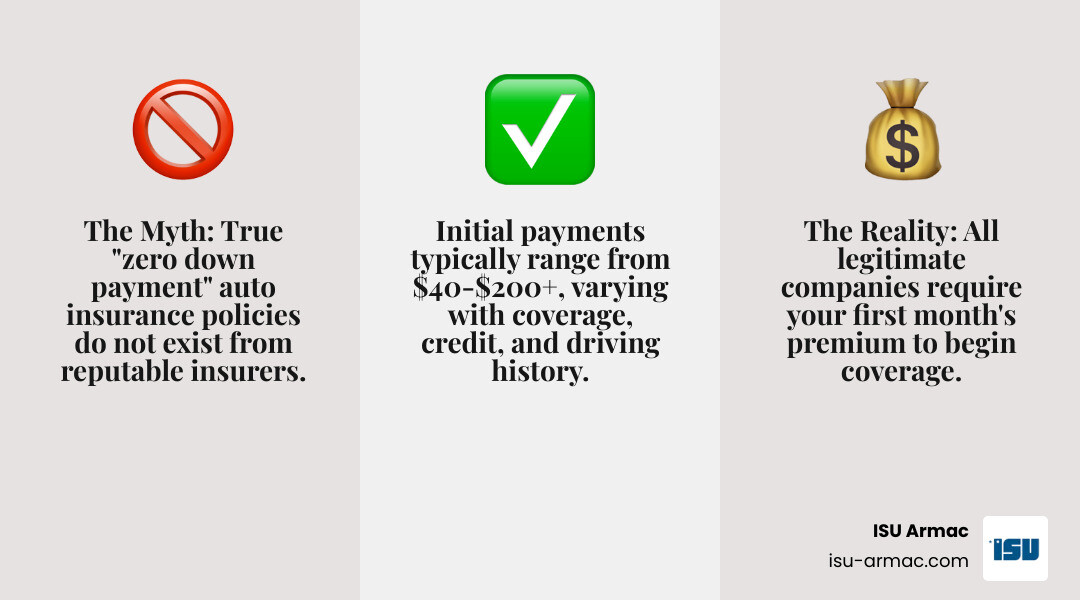
- No, true “no down payment” auto insurance does not exist from reputable insurance companies.
- All legitimate insurers require at least your first month’s premium before coverage starts.
- What companies call “no down payment” usually means no extra deposit fee—but you still pay that first month.
- You can minimize your initial payment by shopping around, asking about discounts, and choosing monthly installments.
The harsh reality is that advertisements for “zero down” auto insurance are misleading. Every reputable insurance company in California requires some money upfront before your policy activates. This isn’t about greed—it’s about financial risk. Insurance companies need to protect themselves from drivers who might get into an accident immediately after signing up, then never pay a premium.
Why does this matter to you? If you’re facing financial strain after buying a car, dealing with a recent accident, or simply living paycheck to paycheck in the High Desert, that first insurance payment can feel like an impossible barrier. You need coverage to legally drive in California, but coming up with a large lump sum can derail your budget.
The good news? While you can’t eliminate that first payment entirely, you can dramatically reduce it. The real question isn’t “Can I get insurance with zero down?” but rather “How can I find the lowest possible first payment?”
I’m Ryan McEachron, CEO of ISU Insurance Services ARMAC Agency in Victorville, and I’ve helped countless local drivers steer the question of can I get auto insurance with no down payment by finding them affordable policies with minimal upfront costs. Through smart shopping and understanding how insurance payments actually work, you can make that initial payment manageable—even when money is tight.
Key terms for can i get auto insurance with no down payment:
- can your car be towed for no insurance
- do i need insurance to get license plates
- Non owner insurance policy
Debunking the Myth: What “No Down Payment” Really Means
When we hear the term “no down payment” car insurance, it conjures an image of getting coverage without paying a single cent upfront. Unfortunately, this is a marketing term that often misleads consumers. The reality is quite different. What insurance companies often mean by “no down payment” or “no deposit” is that they won’t charge an additional deposit fee beyond your first premium payment. You still need to pay that first installment before your policy becomes active.

This initial payment is crucial because it’s the first step in activating your policy and ensuring you’re covered the moment you drive off. It’s essentially your first month’s premium, not a separate, extra fee. So, while you might not pay a large lump sum that’s called a “down payment,” you’ll always have an “initial payment” that serves the same purpose. This payment ensures that the financial agreement between you and the insurer is secured from day one.
Is “No Down Payment” Car Insurance Real?
Let’s be direct: true “no down payment” car insurance, where you literally pay nothing to start your policy, does not exist among reputable insurers. We’ve seen many people in Victorville, Apple Valley, and Hesperia come to us asking about this, and we always have to clarify this common misconception.
Insurance companies require money upfront because they are taking on a financial risk the moment your policy goes into effect. Imagine if you got into an accident an hour after signing up but hadn’t paid anything. The insurer would be on the hook for potential damages without having received any compensation. This is why every legitimate car insurance policy requires some form of initial payment, typically your first month’s premium, to bind the coverage. This payment is then applied towards your total premium for the policy term.
How Insurance Companies Handle Initial Payments
Insurance companies offer several ways to handle your initial payment and subsequent premiums, giving you flexibility based on your budget.
Here are the typical payment options:
- Monthly Installments: This is the most common option and what most people are referring to when they seek “no down payment” car insurance. You pay your first month’s premium to activate the policy, and then continue to pay a set amount each month. While convenient for budgeting, some insurers might add small processing fees for monthly payments, and the total cost over a year could be slightly higher than paying in full.
- Semi-Annual Payments: With this option, you pay your premium twice a year, typically every six months. The initial payment would be for the first six months of coverage. This can sometimes come with a small discount compared to monthly payments.
- Annual Payments: This involves paying your entire premium for the year upfront. Many insurance companies offer a significant “pay-in-full” discount for this option, which can lead to substantial savings over time. If you have the financial means, this is often the most cost-effective way to pay for your auto insurance.
- Automatic Payments (EFT): Regardless of your chosen frequency, setting up automatic payments via Electronic Funds Transfer (EFT) from your bank account can sometimes lead to small discounts and helps ensure you never miss a payment, protecting your coverage and potentially your rates.
The initial payment you make, whether it’s for a month, six months, or a year, is an integral part of your total premium. It’s not a separate deposit that you get back; it’s simply your first installment.
Why Insurers Require an Upfront Payment
At its core, insurance is about managing risk. When an insurer provides you with coverage, they are agreeing to take on the financial burden of potential accidents or damages. This is a significant responsibility, and they need assurance that you are a committed policyholder.
Here’s why insurers require an upfront payment:
- Financial Risk Mitigation: This is the primary reason. If an accident occurs shortly after a policy starts, the insurance company could face a large payout. An initial payment ensures they’ve received some compensation for the risk they’ve immediately assumed.
- Securing the Agreement: The upfront payment solidifies the financial agreement between you and the insurer. It’s a tangible commitment to the policy.
- Onboarding Costs and Administrative Fees: Setting up a new policy involves administrative work, such as processing paperwork, running checks, and entering data. The initial payment helps cover these immediate onboarding costs.
- Driving Record Check: Insurers often conduct checks on your driving history and other factors when you first sign up. The initial payment helps cover the costs associated with these verification processes.
- High-Risk Drivers: Insurers are wary of drivers who might seek temporary insurance just to meet registration requirements or for a short period, then cancel. An upfront payment helps filter out some of this “high-risk” behavior, as those less committed to long-term coverage might be deterred by even a small initial cost.
- Preventing Fraud: Requiring an initial payment is a basic safeguard against certain types of fraud, ensuring that policyholders have a genuine interest in maintaining their coverage.
- Gauging Customer Commitment: An initial payment is a good indicator that a policyholder intends to keep their policy active. This helps insurers predict retention and manage their business more effectively.
Factors That Influence Your Initial Payment Amount
While the concept of a down payment is often misunderstood, the amount of your initial premium payment can vary significantly. Several factors play a role in how much you’ll need to pay upfront, even for just the first month.
Here are the key factors that influence the amount of your initial payment:
- Driving History (Accidents, Tickets): This is one of the most critical factors. A history of accidents, traffic violations, or DUIs in Southern California will signal higher risk to insurers, leading to higher premiums and, consequently, a higher initial payment.
- Vehicle Type (Age, Value): The make, model, year, and value of your car impact your premium. Newer, more expensive cars, or those considered high-performance, generally cost more to insure. Older, less valuable cars often have lower premiums.
- Location (ZIP Code): Where you live and park your car in places like Victorville, Apple Valley, or Oak Hills can affect your rates. Areas with higher crime rates (theft, vandalism) or more frequent accidents often have higher premiums.
- Coverage Limits Selected: If you opt for higher liability limits or add comprehensive and collision coverage, your overall premium will be higher, and so will your initial payment. Choosing only the state minimum liability coverage will result in a lower initial payment.
- SR-22 Filing: If you’re required to file an SR-22 (often due to serious driving infractions), insurers will consider you a high-risk driver, which will significantly increase your premiums and initial payment.
- Credit-Based Insurance Score: In most states, your credit history can influence your insurance rates. Insurers believe there’s a correlation between financial responsibility and driving habits. However, it’s important to note that in California, insurers are prohibited from using your credit score to determine your auto insurance premiums. This is a significant protection for drivers in our state. To learn more about how insurance scores are generally used, you can refer to this Background on: Insurance scores.
Who Qualifies for a Lower Initial Payment?
While everyone pays something upfront, certain drivers are more likely to secure a lower initial payment. This typically comes down to being perceived as a lower risk by insurance companies.
You might qualify for a lower initial payment if you have:
- Clean Driving Records: Drivers with no accidents, tickets, or claims on their record are considered less risky and often receive the best rates and lowest initial payments.
- Owners of Older, Less Valuable Cars: If your vehicle is older and has a lower market value, the cost to insure it (especially for comprehensive and collision coverage) will be less, leading to a smaller initial payment.
- Drivers in Low-Risk Areas: Living in a ZIP code with lower rates of theft, vandalism, and accidents can help reduce your premiums.
- Drivers Choosing Minimum Coverage: Opting for only the legally required minimum liability coverage in California will result in a lower overall premium and, consequently, a lower initial payment. However, we always recommend considering more than just the minimum to adequately protect yourself.
How Can I Get Auto Insurance with No Down Payment? A Practical Guide to Lowering Your First Payment
Since true “no down payment” car insurance doesn’t exist, the real goal is to find the lowest possible initial payment. This is where smart shopping and understanding your options come into play. We help our clients across Southern California steer this by focusing on strategies that reduce their overall premium, which directly impacts that first payment.
Here are the actionable steps we recommend to lower your first payment:
Step 1: Compare Quotes from Multiple Carriers
This is, hands down, the most effective way to find affordable car insurance with a low initial payment. Different insurance companies have different ways of assessing risk and calculating premiums, even for the same driver in the same location like Victorville or Oak Hills. What one company considers a high risk, another might view differently.
- Independent Agents: This is where we shine! As an independent insurance agency at ISU Armac, we don’t work for one specific insurance company. Instead, we work with a wide range of carriers. This means we can shop around on your behalf, compare quotes from multiple providers, and find the best coverage at the lowest rates, including options with the most manageable initial payments. We do the legwork so you don’t have to.
- Online Comparison Tools: While useful for initial estimates, these tools might not always capture all available discounts or give you the personalized advice an agent can provide. They are a good starting point, but always verify with an agent.
By comparing quotes, you ensure you’re not overpaying and increase your chances of finding a company that offers a competitive initial payment for your specific situation.
Step 2: Ask About All Available Discounts
Discounts are your best friend when it comes to lowering your car insurance costs, and ultimately, your initial payment. Most reputable insurers offer a variety of discounts that can significantly reduce your premium. Don’t be shy – always ask what discounts you qualify for!
Here are some common discounts to inquire about:
- Bundling Policies: If you have multiple insurance needs, such as auto and home insurance, combining them with the same carrier can often lead to substantial savings. For more information on how we can help you with your home insurance needs, visit our page on More info about home insurance.
- Good Driver Discount: A clean driving record with no accidents or traffic violations for a certain period (e.g., 3-5 years) often qualifies you for a discount.
- Good Student Discount: If you’re a young driver with good grades, many insurers offer a discount.
- Telematics Programs: Some insurers offer programs where a device or app monitors your driving habits (speed, braking, mileage). Safe drivers can earn discounts based on their actual behavior.
- Paperless Billing & Automatic Payments: Opting for electronic documents and setting up automatic payments can sometimes earn you small discounts.
- Multi-Vehicle Discount: Insuring more than one vehicle with the same company often results in a discount.
- Defensive Driving Course Discount: Completing an approved defensive driving course can sometimes lead to a discount, especially for younger drivers or those with minor infractions.
Step 3: Adjust Your Coverage and Deductibles
While we always recommend adequate coverage, making smart choices about your policy limits and deductibles can significantly impact your premium and initial payment.
- Minimum State Requirements: In California, there are specific minimum liability coverage requirements. Choosing only these minimums will result in the lowest possible premium and initial payment. However, be aware that this provides minimal protection and could leave you financially vulnerable in a serious accident.
- Dropping Optional Coverage: For older vehicles with low market value, you might consider dropping optional coverages like collision and comprehensive. If your car is only worth a few thousand dollars, paying hundreds in premiums for these coverages might not make financial sense. We can help you assess if this is a viable option for your specific vehicle.
- Raising Your Deductible: Your deductible is the amount you pay out-of-pocket before your insurance kicks in for a covered claim. Choosing a higher deductible (e.g., $1,000 instead of $500) will lower your premium and, consequently, your initial payment. Just make sure you have enough in savings to cover that higher deductible if you need to file a claim. For example, increasing your deductible from $200 to $500 can reduce insurance costs by 15-30%, and a $1,000 deductible could save you up to 40% on monthly premiums.
The Risks of “Low Deposit” Policies and Unreputable Insurers
While the desire for a low initial payment is understandable, especially when budgeting is tight, it’s crucial to be wary of offers that seem “too good to be true.” Sometimes, what’s advertised as a “low deposit” or “no deposit” policy from less reputable insurers can come with hidden costs and significant downsides.
Are “No Deposit” Policies More Expensive in the Long Run?
Often, yes. This is one of the most important things we discuss with our clients in Apple Valley and Hesperia. Insurance companies need to make money, and if they waive a traditional “down payment,” they’ll often recoup that cost elsewhere.
Here’s how “no deposit” policies can end up costing you more:
- Higher Overall Premium: To compensate for the waived upfront deposit, the insurer might simply spread that cost across your monthly payments, making each installment higher than it would have been otherwise. The total annual premium could be significantly inflated.
- Increased Monthly Payments: Even if the total premium isn’t drastically higher, the monthly installments themselves are often higher than if you had made a more substantial initial payment. This means you’re paying more each month for the convenience of a lower initial outlay.
- Fees for Monthly Billing: Many insurers charge small administrative or processing fees for monthly payment plans. While minor individually, these can add up over a year, further increasing your total cost compared to paying semi-annually or annually.
The trade-off for a very low initial payment often means a higher overall cost for your policy. It’s like borrowing money: you pay more for the flexibility.
How to Spot and Avoid Insurance Scams
The internet has made it easier than ever to find insurance, but it has also made it more challenging to distinguish between legitimate offers and outright scams. When you’re searching for options related to “can i get auto insurance with no down payment,” you might encounter less-than-reputable companies.
Here’s how to protect yourself and verify legitimacy:
- Verify Company Legitimacy: Always check if the insurance company is licensed to operate in California. You can usually do this through the California Department of Insurance website.
- Check State Licenses: Reputable companies will prominently display their licensing information. If you can’t find it easily, that’s a red flag.
- Read Reviews and Complaints: Look up reviews from other customers. Resourceful sites such as the National Association of Insurance Commissioners Complaint Index can help you find genuine opinions about an insurance company.
- Never Pay for a Quote: Legitimate insurance companies never charge a fee just to give you a quote. If a company asks for money before providing a quote, walk away.
- Be Wary of “Too Good to Be True” Offers: If an offer seems unbelievably cheap or promises something that contradicts what you’ve learned (like a true “no money down” policy), it’s likely a scam or a misleading advertisement. Trust your gut.
- Communicate with a Licensed Agent: Working with a licensed insurance professional, like those at ISU Armac in Victorville, provides an extra layer of protection. We can verify carriers and explain policy details clearly.
Frequently Asked Questions about No Down Payment Insurance
We often hear similar questions from our clients in Oak Hills and Southern California about finding affordable car insurance. Here are some of the most common ones:
What are my alternatives if I can’t afford a large down payment?
If a large upfront payment is simply not feasible, don’t despair! Your best alternatives involve strategies to minimize that first required payment:
- Focus on the Lowest First-Month Installment: Your goal should be to find a policy where the first month’s premium is as low as possible. This involves comparing quotes from multiple carriers, maximizing all eligible discounts (e.g., bundling, good driver, multi-car), and adjusting your coverage to meet your budget while still providing adequate protection.
- California’s Low-Cost Auto Insurance Program: California offers a state-sponsored program to help low-income drivers obtain affordable liability insurance. This program provides minimum coverage at greatly discounted rates. To qualify, you must be at least 16, have a valid California driver’s license, own a car worth $25,000 or less, and meet specific income requirements based on your household size. If you think you might qualify, it’s worth exploring this option.
Does a lower down payment mean I have worse coverage?
Not necessarily, but there’s a strong correlation. To achieve the absolute lowest initial payment, you might need to:
- Opt for Minimum Liability Coverage: This is the legal minimum required in California, but it provides very limited financial protection. It covers damages you cause to others, but not damage to your own vehicle or your medical expenses. While it keeps your initial payment low, it leaves you vulnerable in a serious accident.
- Choose Higher Deductibles: While a higher deductible lowers your premium (and thus your initial payment), it means you’ll pay more out-of-pocket if you need to file a claim.
So, while a low initial payment doesn’t automatically mean worse coverage, it often means you’ve selected options that provide less comprehensive protection or require you to take on more financial responsibility in the event of a claim. It’s a balance between upfront cost and long-term financial security.
Can I get car insurance and pay for it later?
No, you absolutely cannot. This is a common misunderstanding that can lead to significant problems. Coverage does not begin until the first payment is successfully made. There is no “grace period” to start a new policy without paying.
If you drive without active insurance, even for a day, you are breaking California law. You could face fines, license suspension, and severe financial consequences if you’re involved in an accident. Any company claiming you can get car insurance and “pay for it later” is either misleading you or operating illegitimately.
Conclusion
The promise of “zero-dollar down” auto insurance is a persistent marketing tactic, but as we’ve explored, it’s not a reality in reputable insurance. Every legitimate policy requires an initial payment, typically your first month’s premium, to activate your coverage. The key isn’t finding no payment, but rather finding the lowest possible first payment that fits your budget.
Navigating the complexities of insurance can be challenging, especially when you’re trying to balance affordability with adequate protection. That’s why smart shopping and working with knowledgeable professionals are essential. At ISU Armac, we pride ourselves on being your trusted independent insurance agent in Victorville, Apple Valley, Hesperia, and Oak Hills. We understand the unique needs of drivers in Southern California, and our commitment is to shop multiple carriers to find you the best coverage at the lowest rates. We’ll help you understand all your options, maximize discounts, and make informed decisions so you can get on the road with confidence.
Don’t let the “zero-dollar down” dilemma discourage you. Take control of your insurance costs today. Find the best personal auto insurance for your needs with ISU Armac, and let us help you find an affordable solution with a manageable initial payment.