
Why the Question of Commercial vs. Personal Auto Insurance Matters for Your Business
Can commercial vehicles buy personal insurance? The short answer is no, not if the vehicle is used for business. Most vehicles used to transport goods, carry tools, visit clients, or make deliveries require commercial auto insurance to avoid claim denials and serious financial risk.
Quick Answer:
- No – Commercial vehicles typically cannot be insured under personal policies.
- Personal insurance covers only personal use like commuting, errands, and leisure driving.
- Commercial insurance is required when you transport goods, equipment, or clients for business.
- Weight matters – Vehicles over 10,000 lbs or with a 2,000+ lbs load capacity require commercial coverage.
- Misclassification risk – Using personal insurance for business can result in denied claims and policy cancellation.
For small business owners in Victorville and the High Desert, the line between personal and commercial vehicle use can feel hazy. You might use your pickup truck for weekend errands and also to haul tools to job sites. This dual use creates confusion and risk. Insurance companies have clear definitions for commercial use, and if you have an accident while using a vehicle for business under a personal policy, your insurer will likely refuse to pay the claim. This leaves you exposed to devastating out-of-pocket costs.
As Ryan McEachron, CEO of ISU Insurance Services ARMAC Agency in Victorville, I’ve helped countless business owners steer the can commercial vehicles buy personal insurance question. With over two decades of experience, I’ve seen the financial consequences when business owners wrongly assume their personal policy covers work-related driving.
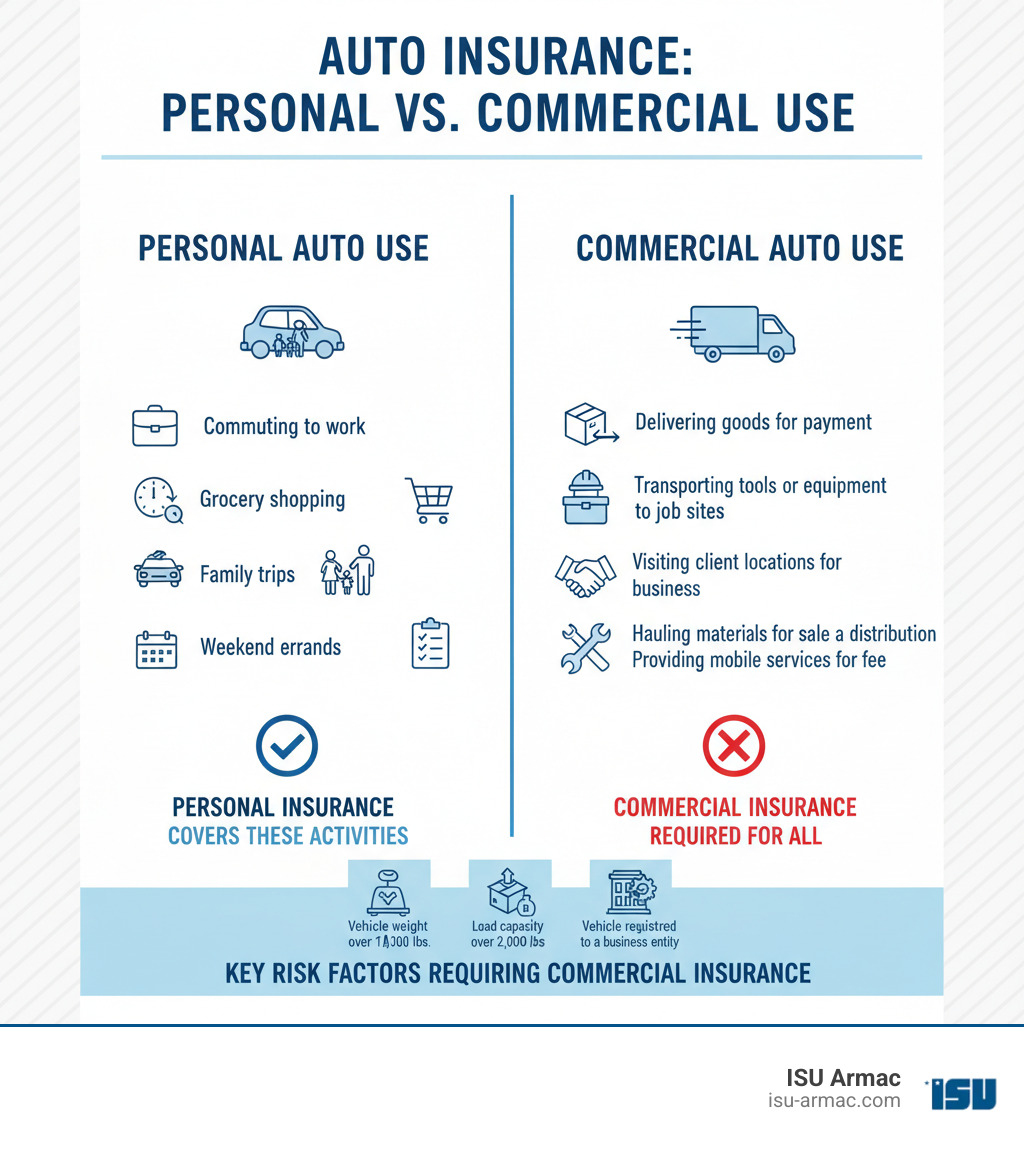
Personal vs. Commercial Auto Insurance: A Head-to-Head Comparison
When Victorville business owners ask, “can commercial vehicles buy personal insurance,” the confusion often stems from the different purposes of each policy. Personal auto insurance is for personal driving: your commute, grocery runs, or weekend trips. It assumes your vehicle is for personal transport, not a business tool.
Commercial auto insurance recognizes your vehicle is part of how you earn a living. Hauling materials, delivering products, or visiting clients are commercial activities. The insurance industry treats these differently because the risks are higher. A business vehicle often spends more hours on the road, carries valuable cargo, and may be driven by multiple employees. If an accident happens during business operations, the liability can be immense, far beyond what a personal policy is designed to handle.
That’s why the answer to can commercial vehicles buy personal insurance is almost always no. The rare exceptions are too limited to risk your business’s financial future.
Here’s how these two types of insurance stack up:
| Feature | Personal Auto Insurance | Commercial Auto Insurance |
|---|---|---|
| Who is Covered | Individual, household members | Employees, designated drivers, business entity |
| Coverage Limits | Lower, designed for individual risks | Higher, designed for significant business liability |
| Vehicle Types | Standard cars, SUVs, light trucks for personal use | Wide range: cars, vans, heavy trucks, specialized vehicles |
| Primary Use | Commuting, errands, leisure, personal travel | Transporting goods/equipment, client visits, deliveries, services |
| Cost | Generally lower | Generally higher (reflects increased risk and coverage) |
Key Coverage Differences
The gap between what personal and commercial policies cover can be shocking. Liability limits are a major difference. A personal policy might offer $100,000 in liability, but a serious commercial accident can cost far more. Commercial policies typically start at $750,000 and often go to $1 million or more. This reflects the reality that a work vehicle accident can cause extensive damage.
While both policies include bodily injury and property damage coverage, commercial versions offer broader protection and higher limits needed for business risks. Uninsured motorist protection is also more robust in commercial policies to account for more time on the road.
The real game-changers are coverages that only exist in commercial policies. Hired and non-owned auto insurance protects your business when employees use their personal vehicles for work errands. Most personal policies exclude this. Cargo coverage is another essential add-on. It protects the tools, materials, or products you transport, which are not covered by a standard auto policy. A personal policy won’t touch this exposure. Depending on your business, you might also need specialized coverages like motor truck cargo or on-hook towing insurance, which are only available commercially.
For context on what personal policies do cover, review our Personal Auto Insurance Plans Guide.
Why Can Commercial Vehicles Buy Personal Insurance Only in Rare Cases?
Insurance premiums are based on risk, and vehicles used for business have a significantly higher risk profile. That’s why personal auto policies have strict business use exclusions. The moment you use your vehicle for activities the insurer defines as commercial—like making deliveries or transporting tools for a fee—your coverage can be voided. I’ve seen insurers deny claims completely when an accident happened during a work-related drive, leaving the business owner with thousands in out-of-pocket costs.
Understanding the difference between commuting and job site travel is crucial. Driving from home to your regular workplace is commuting, covered by personal insurance. Driving to multiple job sites, picking up materials, or visiting clients during the day is commercial use. The rideshare exception proves this point; when Uber and Lyft emerged, insurers created new rideshare policies rather than expanding personal ones to cover this commercial activity.
If you’re wondering about your specific situation, our page on Does my personal auto insurance cover business use? can help clarify where the line falls. The bottom line is that if your vehicle is essential to your business, personal insurance is a financial risk you can’t afford.
Key Factors That Define Your Vehicle as “Commercial”
At ISU Armac, we look beyond just the vehicle type to assess your insurance needs. The crucial element is always how you use it. This section covers the specific triggers that classify your vehicle as commercial.

1. How the Vehicle Is Used
The primary factor is your vehicle’s use. If it’s integral to your business operations, it needs commercial insurance. Common commercial uses include:
- Transporting Goods or Equipment: Carrying tools, materials, or products for your trade (e.g., a contractor’s lumber, a caterer’s food).
- Client Visits or Service Provision: Driving to client locations to provide services (e.g., a mobile mechanic, a real estate agent).
- Delivery Services: Making deliveries of any kind, even as a side gig.
- Employee Transport: Using a vehicle to take employees to job sites.
- Advertising: Displaying business logos, wraps, or permanent lettering on the vehicle.
The distinction between occasional vs. regular business use is also critical. A personal policy might tolerate a rare business errand, but daily or frequent business-related driving requires a commercial policy. For more details, see our guide: When do I need commercial auto insurance?.
2. Who Owns the Vehicle
Vehicle ownership is another key factor.
- Individual Ownership: If you own the vehicle personally but use it primarily for business, you still need commercial insurance.
- Titled to a Business: If the vehicle is registered in the name of your business (LLC, corporation), it is automatically considered a commercial vehicle.
As an expert source states, “A commercial vehicle is any type of motor vehicle used for transporting goods or paying passengers.” This definition from Wikipedia links vehicle use to its commercial purpose, reinforcing the need for specialized coverage.
3. The Vehicle’s Type and Weight
Vehicle characteristics can also mandate commercial insurance.
- Vehicle Weight and Load Capacity: This is a major differentiator. A truck weighing over 10,000 pounds (Gross Vehicle Weight) or with a load capacity of 2,000 pounds or more requires commercial insurance.
- Heavy Trucks and Vans: Vehicles like dump trucks, box trucks, and large cargo vans are almost always considered commercial due to their typical use.
- Vehicle Modifications: Business-specific modifications can trigger commercial insurance requirements, such as:
- Ladder racks or permanent toolboxes
- Altered suspension for heavy loads
- Snowplows or other attachments
- Refrigeration units
Even if you use a modified vehicle for personal reasons, these features signal commercial use to an insurer.
The High Cost of Getting It Wrong: Risks of Misclassifying Your Vehicle
I’ve seen too many business owners in Victorville and the High Desert learn this lesson the hard way. Trying to save money by using personal auto insurance for a commercial vehicle is a gamble that can be financially catastrophic. The question can commercial vehicles buy personal insurance has a clear answer because the consequences of getting it wrong are severe.

Claim Denial and Out-of-Pocket Expenses
If you have an accident while using your vehicle for business, your personal insurer can deny the claim. This leaves you with full accident liability. You become personally responsible for all costs, including:
- Repair costs for your vehicle and any other damaged property.
- Medical bills for yourself, your employees, or other injured parties.
- Legal fees if you are sued.
Without proper commercial coverage, both your business and personal assets are at risk. I’ve seen business owners lose their savings and homes over a single misclassified vehicle.
Policy Cancellation and Future Insurability
The consequences extend beyond a single denied claim. Your insurer might void your policy entirely for misrepresentation, meaning you had no coverage at all. This can be viewed as fraud and makes it extremely difficult and expensive to get insurance in the future. You’ll be flagged as a high-risk client, facing higher premiums for any policy you can find.
Legal and Regulatory Penalties
Operating without proper commercial insurance can lead to serious legal trouble. California requires commercial vehicles to carry appropriate coverage, and failure to comply can result in hefty fines, vehicle impoundment, and suspension of your business license.
Furthermore, federal regulations from the Federal Motor Carrier Safety Administration (FMCSA) set strict insurance requirements for many commercial vehicles. Non-compliance can lead to severe penalties that could shut down your business. The few dollars saved on premiums aren’t worth risking everything you’ve built.
Frequently Asked Questions about Vehicle Insurance for Business Use
Business owners across Victorville, Hesperia, and Oak Hills often ask similar questions about vehicle insurance. Here are clear answers to the most common ones we hear at ISU Armac.
Does a commercial auto policy cover personal use of the vehicle?
Yes, a commercial auto insurance policy typically does cover personal use of an insured business vehicle. If you use your work truck for an errand after hours, you are generally still covered. This is a key advantage of commercial auto insurance—it’s designed to be comprehensive.
However, policy specifics matter. There may be limitations on who is permitted to use the vehicle for personal reasons (e.g., employee use). It’s always best to review the fine print with your agent. For more details, see our guide on Does commercial auto insurance cover personal use?.
When should a business owner have both personal and commercial auto insurance?
Most business owners need both. The logic is simple: you need separate policies for separate vehicles and purposes. Your delivery van needs a commercial policy, while your family sedan needs a personal one. Each policy should match the vehicle’s primary use.
Using both types of insurance creates a protective barrier between your business and personal life. Business liabilities are handled by the commercial policy, shielding your personal assets. This structure ensures there are no coverage gaps, which is the biggest risk of trying to use one policy for everything. Our guide, Do I need both commercial and personal auto insurance?, offers more scenarios.
Can commercial vehicles buy personal insurance for very limited business use?
No, a true commercial vehicle cannot be insured under a personal policy, even for limited use. This is a critical distinction. The confusion arises between a commercial vehicle (like a dump truck or a vehicle titled to an LLC) and a personal vehicle that is occasionally used for business.
For a personal vehicle with very light business use, you might be able to add a “business use” endorsement to your personal policy. However, this is not an option for a vehicle that is fundamentally commercial in nature due to its type, ownership, or regular use. The definition of “limited” is also very strict.
Consulting an experienced agent is the only way to be sure. We can analyze your specific situation and determine the right coverage. Our expertise in Personal Vehicle Business Use helps you avoid the costly mistake of being underinsured. Don’t guess when the financial stakes are this high.
How to Ensure You Have the Right Coverage
Getting your vehicle insurance right is about protecting everything you’ve built. At ISU Armac, we’ve spent over two decades helping business owners in Victorville, Apple Valley, and Hesperia make these critical decisions. Securing proper coverage is straightforward with the right guidance.
The process starts with complete honesty with your insurance agent. Detail exactly how you use your vehicle, who drives it, what it carries, and who owns it. These facts determine whether a claim gets paid or denied.
Consulting with an experienced insurance agent turns guesswork into a strategic decision. The team at ISU Armac specializes in the nuances of the can commercial vehicles buy personal insurance question. We help local business owners determine if they need full commercial coverage, a business-use endorsement, or both. We can also identify needs for specific coverages like hired and non-owned auto or cargo insurance.
Your business evolves, and your insurance should too. Regular policy reviews—at least annually or when your operations change—are essential. Whether you’ve added a vehicle, hired new drivers, or changed your services, your coverage must keep pace.
At ISU Armac, we are your partners in protection. We understand the local High Desert business landscape and shop multiple carriers to find you comprehensive coverage at competitive rates. Don’t wait for an accident to find a gap in your coverage. For a deeper dive, explore our Navigating Business Auto Insurance: A Comprehensive Comparison Guide.
Ready to secure the right protection? Contact us today for a personalized consultation and a free Get a Quote. Let us help you find the Commercial Auto Insurance that fits your business perfectly.
