
Understanding Business Owners Policy Cost
Business owners policy cost is one of the most common questions we hear from small business owners in California. Here’s what you need to know:
Average BOP Costs at a Glance:
- National Average: $684 per year ($57 per month)
- Typical Range: $500-$2,000 annually
- 42% of businesses pay under $50/month
- 30% of businesses pay $50-$100/month
- California Average: $59-$711 per month depending on the provider
What Affects Your Cost:
- Industry and risk level (restaurants pay more than consultants)
- Business location (urban vs. rural)
- Number of employees
- Value of business property
- Claims history
- Coverage limits and deductibles
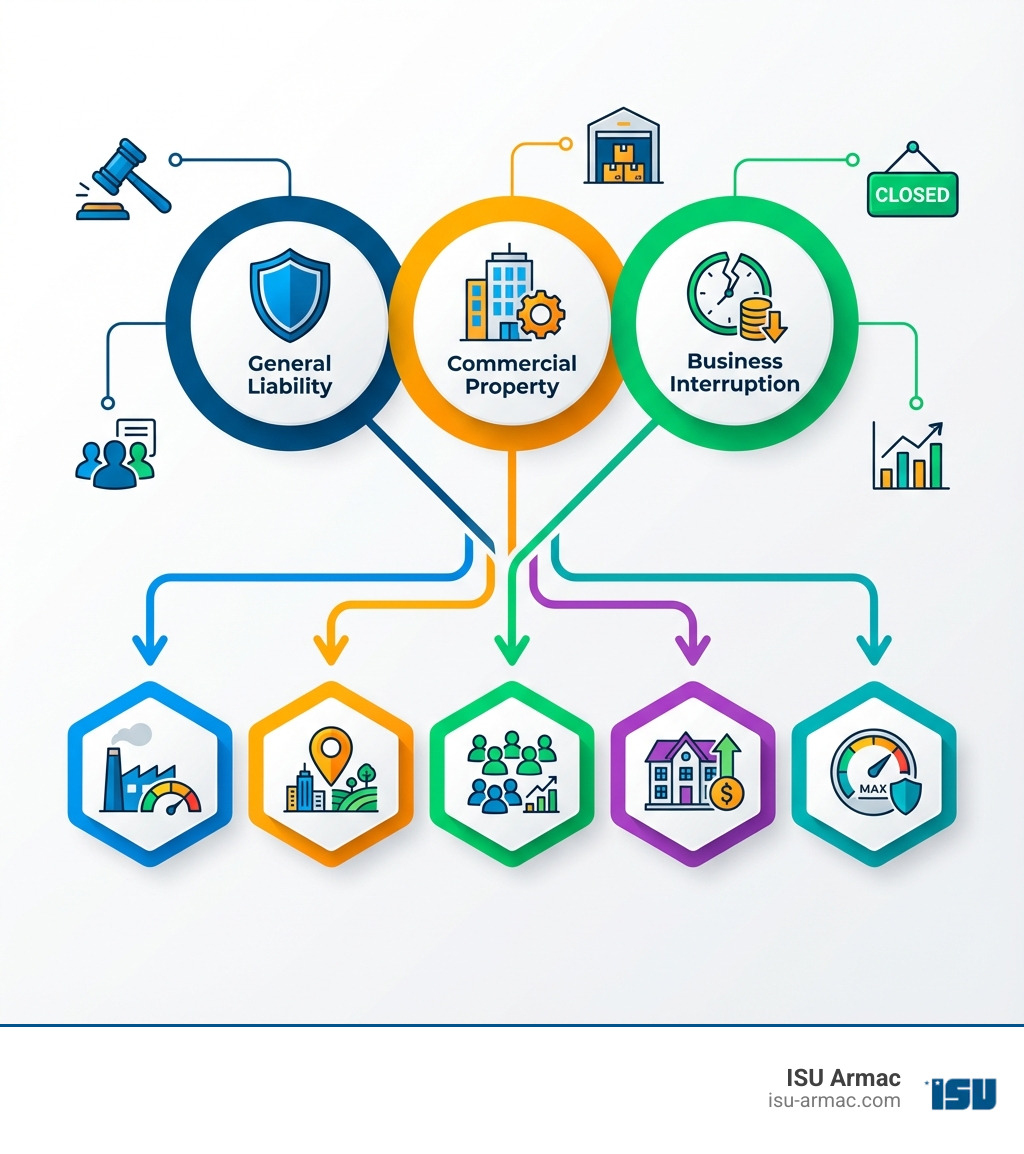
A Business Owners Policy (BOP) bundles three essential coverages into one package: general liability insurance (protects against third-party injuries and property damage), commercial property insurance (covers your building, equipment, and inventory), and business interruption insurance (replaces lost income if you must close temporarily). This bundled approach typically costs 10% less than buying these policies separately.
I’m Ryan McEachron, Chief Executive Officer of ISU Insurance Services ARMAC Agency in Victorville, where I’ve helped hundreds of local business owners understand and optimize their business owners policy cost over the past two decades. My experience on the Victorville City Council and with the local business community has given me unique insight into the insurance challenges facing Southern California businesses.
What is the Average Business Owners Policy Cost?
When we talk about the average business owners policy cost, it’s important to understand that “average” is just a starting point. The figures vary widely based on numerous factors, but they provide a useful benchmark. Nationally, the average cost of a BOP is around $684 per year, which breaks down to about $57 a month. However, some sources suggest averages closer to $85, $118, or even $141 per month, showcasing the range of policies and providers. For instance, data from some providers shows new customers in 2024 paid an average of $118 per month ($1,420 annually), while other reports show small business customers averaging $141 a month ($1,687 a year). Data from online insurance marketplaces suggests an average of $1,019 annually, or about $85 a month.
What’s truly insightful is how many businesses fit into lower price brackets. We’ve seen statistics indicating that 42% of businesses pay less than $50 per month for a BOP, and another 30% fall between $50 and $100. This means a significant majority of small businesses might find their business owners policy cost to be quite affordable. The best way to determine your specific cost is to get a personalized quote. For more detailed information on typical costs, you can visit our guide on How much does a business owners policy (BOP) cost?.
Understanding the Price Range
The price range for a BOP is broad, typically spanning from $500 to $2,000 per year, but can be higher for businesses with significant risks or assets. This wide range exists because insurers assess each business individually. A low-risk business, such as a sole proprietor IT consultant working from a home office, will naturally have a lower premium than a high-risk enterprise like a busy restaurant with a large dining area and valuable kitchen equipment.
For example, a building design firm might pay around $648 a year for a BOP, while a food and beverage business could see costs closer to $1,770 annually. The type of industry, the value of property, and the potential for liability claims all play a role in this differentiation. Data variations between insurance providers also contribute to the range, as each insurer has its own underwriting criteria and risk assessment models. This is why shopping around is so crucial, a service we specialize in at ISU Armac.
BOP Cost by State
The state where your business operates significantly influences your business owners policy cost. Factors like local laws, population density, crime rates, and susceptibility to natural disasters all contribute to varying premiums.
In California, where we are based, BOP costs can range widely. For instance, some industry data for California shows an average monthly cost of $59, while other data points suggest average annual premiums around $711 or even up to $751. These differences highlight the impact of specific location within the state, business type, and the insurer. For comparison, some reported state averages include Florida at $76/month, Georgia at $66/month, Illinois at $58/month, and Texas at $73/month.
Our Southern California locations, including Apple Valley, Victorville, Hesperia, and Oak Hills, face unique considerations. While some areas might have lower crime rates than dense urban centers, we are also in a region prone to specific natural disasters like earthquakes and wildfires, which insurers factor into property coverage costs. It’s not just about the state average; it’s about the specific risks tied to your immediate environment.
Key Factors That Determine Your BOP Premium

Understanding what factors influence your business owners policy cost is like understanding the ingredients in a complex recipe – each one contributes to the final outcome. Insurers look at a holistic picture of your business to determine your premium.
How Industry and Risk Profile Affect Your Business Owners Policy Cost
Your industry is arguably one of the biggest determinants of your BOP premium. Businesses in riskier fields will almost always pay more for coverage. Why? Because certain industries inherently carry a higher probability of property damage, customer injury, or other liability claims.
- High-risk industries: Construction businesses, auto services, and retail stores, especially those with storefronts, often face higher premiums. For example, a construction company using heavy equipment has a much higher potential for accidents and property damage than an office-based business. Restaurants and food service establishments also fall into this category due to risks like kitchen fires, slip-and-falls, and spoilage. The median monthly cost for restaurants can be as high as $145.
- Low-risk industries: On the other hand, professional services like business consultants, accountants, IT/technology firms, and even beauticians or barbers generally enjoy lower rates. Their operations typically involve less physical risk, fewer valuable assets exposed to direct harm, and less interaction with the public in physically hazardous environments. For instance, a medical or dental office, or nail technician services, might have median monthly costs around $34-$40.
The key takeaway here is that the inherent risks associated with your daily operations are heavily weighed by insurers.
Business Location and Environment
Where your business is located in Southern California also plays a significant role in your business owners policy cost. It’s not just about the state, but also the specific city and even neighborhood.
- Urban vs. Rural: Businesses in densely populated urban areas, particularly those with high foot traffic, may face higher rates due to increased risk of crime, vandalism, or potential liability claims from more customer interactions. Conversely, businesses in more rural or suburban areas like parts of Apple Valley or Hesperia might see slightly lower rates for certain property risks.
- Crime and Vandalism: Areas with higher crime statistics will naturally lead to higher premiums, as the risk of theft or property damage increases.
- Weather-Related Risks: Southern California is no stranger to severe weather events. Insurers consider risks like wildfires, and while less common, seismic activity in areas like Victorville and Oak Hills. Businesses in areas prone to such events will see higher property insurance components of their BOP. Proximity to fire services can also influence rates; a business closer to a fire station might receive a discount.
- State Laws and Regulations: California has its own set of insurance regulations and requirements, which can affect overall pricing.
Understanding the specific environmental risks of your business location is crucial. You can learn more about how natural disasters affect insurance at How natural disasters affect insurance.
Business Size, Employees, and Claims History
These internal factors offer another lens through which insurers view your risk profile.
- Number of Employees: Generally, more employees mean increased risk exposure. Each employee adds to the potential for workplace accidents, errors, or liability claims. A business with 10 employees will likely pay more than a sole proprietorship, even if everything else is equal.
- Payroll Size: Closely tied to the number of employees, a larger payroll can indicate a larger operation and, therefore, greater exposure to risk.
- Revenue: While not a direct factor for every component of a BOP, higher revenue often correlates with a larger business operation, more assets, and potentially greater liability exposure, influencing the overall premium.
- Impact of Claims History: This is a big one. A company with a history of claims typically pays more for BOP insurance than one that’s accident-free. Insurers see past claims as an indicator of future risk. Conversely, a clean claims history can lead to claims-free discounts, rewarding businesses that prioritize safety and risk management.
- Years in Business: Established businesses with a consistent track record of operations and a good claims history may receive more favorable rates compared to startups, which present a less predictable risk profile.
Property and Asset Value
The value of what you need to protect under the commercial property portion of your BOP is a direct driver of your business owners policy cost.
- Value of Business Personal Property (BPP): This includes everything from your office furniture and computers to specialized equipment and inventory. The higher the value of these assets, the more it will cost to insure them against damage, theft, or other perils.
- Equipment and Inventory Value: Businesses that rely on expensive machinery, tools, or maintain a large inventory will see higher property premiums. For example, a retail store with a high volume of goods will pay more than a consulting firm with minimal physical assets.
- Building Ownership vs. Renting: If you own your commercial building, the cost to insure the structure itself will be a significant part of your BOP. If you rent, your BOP will primarily cover your business personal property and any improvements you’ve made, as the landlord typically insures the building structure.
- Age and Condition of the Building: Older buildings, especially those not updated to modern codes, can sometimes incur higher insurance rates due to perceived higher risks of electrical fires, plumbing issues, or structural vulnerabilities.
How Your Policy Choices Affect Your Premium

While many factors influencing your business owners policy cost are inherent to your business, you have significant control over others through the choices you make when structuring your policy. These decisions directly impact your premium.
Calculating Your Specific Business Owners Policy Cost with Policy Choices
The policy limits and deductibles you select are crucial in determining your BOP premium.
- Policy Limits: These are the maximum amounts an insurer will pay out for a covered claim. BOPs typically have two main liability limits:
- Per-occurrence limit: The maximum amount paid for any single incident.
- Aggregate limit: The total maximum amount paid for all covered incidents within a policy period (usually one year).
A popular BOP choice for many small businesses, for example, is the $1 million per-occurrence / $2 million aggregate policy. Higher limits offer more protection but will increase your premium. We often advise our Southern California clients to consider their potential maximum exposure when choosing limits.
- Deductibles: This is the amount you pay out-of-pocket before your insurance coverage kicks in. Many small businesses typically choose a deductible of about $500 for a BOP.
- Higher deductible impact: Choosing a higher deductible will lower your monthly or annual premium. This is because you’re taking on more of the initial risk yourself.
- Lower premium trade-off: While a higher deductible saves you money upfront, it means you’ll pay more out of pocket if you have a claim. It’s a balance we help our clients strike – finding a deductible that makes the premium affordable but won’t cripple your business if you need to file a claim.
Replacement Cost vs. Actual Cash Value
When insuring your business property, you’ll typically choose between two valuation methods, each with a different impact on your premium and potential claim payout.
| Feature | Replacement Cost Value (RCV) | Actual Cash Value (ACV) |
|---|---|---|
| Definition | Pays to replace damaged property with new property of similar kind and quality, without depreciation. | Pays the cost to replace the damaged property minus depreciation (wear and tear, obsolescence). |
| Premium Cost | Higher | Lower |
| Claim Payout | Higher payout, as it covers the full cost of new items. | Lower payout, as it accounts for the item’s age and condition, potentially leaving a gap between payout and replacement cost. |
| Example | Your 5-year-old computer is stolen. RCV pays for a brand-new, equivalent computer. | Your 5-year-old computer is stolen. ACV pays for a new computer, but subtracts depreciation for the 5 years of use. |
Opting for Actual Cash Value can keep your premiums lower, but it’s important to understand that you might not receive enough from a claim payout to fully replace your damaged or stolen property with new items. We always discuss this trade-off with our clients to ensure they make an informed decision that aligns with their budget and risk tolerance.
Common Endorsements and Add-ons
A standard BOP provides excellent core coverage, but many businesses have unique risks that require additional protection. These extra coverages, known as endorsements or riders, can be added to customize your BOP, but they will increase your business owners policy cost.
- Cyber liability: Crucial in today’s digital age, this covers data breaches, cyberattacks, and the costs associated with notifying affected customers, credit monitoring, and legal defense.
- Equipment breakdown: Extends coverage beyond typical perils to include mechanical or electrical breakdown of essential machinery, like HVAC systems or production equipment.
- Spoilage coverage: Essential for food service businesses, this covers perishable goods lost due to power outages or equipment failure.
- Hired and non-owned auto: Provides liability coverage for vehicles your business rents or for employees using their personal vehicles for business purposes (not a substitute for commercial auto insurance).
- Professional liability (Errors & Omissions): While not typically part of a standard BOP, it can sometimes be bundled or recommended as a separate policy for professional service providers to cover claims arising from professional mistakes or negligence.
- Utility services: Covers business interruption or property damage caused by damage to off-premises utility lines.
- Employee theft: Protects against losses from dishonest acts by employees.
Each add-on improves your protection, but assess which ones are truly necessary for your specific business in Southern California. We can help you fine-tune your BOP with options relevant to your specific line of business.
Smart Strategies to Save on Your BOP Insurance
Managing your business owners policy cost isn’t just about finding the cheapest quote; it’s about implementing smart strategies that reduce your risk and optimize your coverage.
Proactive Risk Management
The best way to lower your insurance premiums is to reduce the likelihood of filing a claim. Insurers reward businesses that are proactive about safety.
- Implementing safety programs: Regular safety training for employees, clear protocols for operating machinery, and emergency procedures can significantly reduce accidents.
- Employee training: Proper training can prevent errors that lead to liability claims or property damage. For instance, training on safe lifting techniques can reduce workers’ compensation claims, which, while separate from BOP, indicates a culture of safety.
- Security systems: Installing burglar alarms, surveillance cameras, and robust locks can deter theft and vandalism, potentially leading to discounts on your property coverage.
- Regular property maintenance: Keeping your premises in good repair, addressing potential hazards like loose flooring or leaky pipes, and ensuring fire safety equipment is up-to-date minimizes the risk of property damage or slip-and-fall incidents.
- Hazard reduction: Actively identifying and mitigating risks on your property, from clear walkways to proper storage of flammable materials, makes your business safer and more attractive to insurers.
Financial and Policy Adjustments
Beyond risk management, there are specific financial and policy decisions that can directly impact your premium.
- Bundling policies: A BOP itself is a form of bundling, combining general liability, commercial property, and business interruption. This is often more cost-effective than purchasing these coverages separately. Some insurers may offer further discounts if you bundle other policies, like workers’ compensation or commercial auto, with your BOP.
- Paying the annual premium in full: Many insurers offer a discount for paying your entire annual premium upfront instead of in monthly installments. If your cash flow allows, this can be a significant saving.
- Choosing a higher, affordable deductible: As discussed earlier, opting for a higher deductible will lower your premium. The key is to choose an amount you can comfortably afford out-of-pocket without financial strain if a claim arises.
- Reviewing coverage annually: Your business evolves, and so should your insurance. Annually reviewing your policy with us ensures your coverage still matches your current needs and helps identify areas where you might be over-insured or under-insured, potentially leading to adjustments that save money.
Home-Based Business Considerations
For many entrepreneurs in Southern California, a home-based business offers flexibility and lower overhead. However, it’s a common misconception that a homeowner’s policy will adequately cover business risks.
- Separating personal and business assets: Your homeowner’s policy typically offers very limited, if any, coverage for business property or liability. If a client is injured during a business meeting at your home, or your business computer and inventory are stolen, your homeowner’s policy might not cover the losses.
- Why a homeowner’s policy isn’t enough: Standard home insurance is designed for personal use, not commercial risks. It won’t cover professional liability, business income losses, or significant business property.
- BOP for home-based businesses: A BOP is an excellent solution for home-based businesses. It provides the essential liability and property coverage custom to your commercial operations, often at a very reasonable business owners policy cost. It gives you peace of mind knowing your business assets and liabilities are properly protected, distinct from your personal property. For more information on protecting your home, you can refer to our resources on More info about home insurance.
Frequently Asked Questions about BOP Costs
We often get questions from business owners in Victorville, Apple Valley, and across Southern California about their BOPs. Here are some of the most common ones we encounter.
When is a BOP recommended for a business?
A Business Owners Policy is an ideal solution for a wide range of businesses, especially those that:
- Are small to mid-sized: BOPs are specifically designed to meet the insurance needs of these enterprises, offering comprehensive coverage in a streamlined package.
- Have a physical location: Whether you own a storefront in Hesperia, an office in Oak Hills, or a workshop in Victorville, a BOP protects your physical premises and the contents within.
- Interact with the public: If customers, vendors, or other third parties visit your business location, you have a liability exposure. The general liability component of a BOP is crucial here.
- Have assets to protect: If you have equipment, inventory, furniture, or other business personal property, a BOP ensures these valuable assets are covered against damage or theft.
Essentially, if your business has a physical footprint and interacts with the world, a BOP is likely a smart and cost-effective choice.
Is a BOP legally required?
Generally speaking, a Business Owners Policy is not legally required by state or federal law. However, there are several situations where having a BOP (or the coverages it provides) becomes a practical necessity:
- Landlord requirements: Many commercial landlords in Southern California require their tenants to carry general liability and commercial property insurance, which a BOP conveniently provides.
- Client contracts: Some clients may require you to show proof of liability insurance before they’ll work with you, especially for larger projects or ongoing services.
- Lender requirements: If you’ve taken out a business loan or have financing for equipment, your lender may mandate specific insurance coverages to protect their investment.
While not a legal mandate in the strictest sense, a BOP is often a prerequisite for operating smoothly and securing essential business relationships.
How is a BOP different from standalone General Liability insurance?
This is a critical distinction that can significantly impact your coverage and business owners policy cost.
- General Liability Insurance: This is a foundational policy that primarily protects your business from claims of bodily injury, property damage, and personal and advertising injury to third parties. For example, if a customer slips and falls in your store, general liability would cover their medical expenses and your legal defense costs.
- BOP as a package deal: A BOP takes general liability and bundles it with two other essential coverages: commercial property insurance and business interruption insurance.
- Commercial Property Insurance: This protects your business’s physical assets – your building (if you own it), equipment, furniture, and inventory – from perils like fire, theft, and certain weather events.
- Business Interruption Insurance: This is an invaluable coverage that replaces lost income and covers ongoing expenses if your business is forced to close temporarily due due to a covered event (e.g., a fire or storm damage).
- Cost savings of bundling: Purchasing these three coverages together in a BOP is almost always more cost-effective than buying general liability and commercial property insurance separately. We’ve seen that bundling can lead to savings of approximately 10%. It simplifies your insurance portfolio and eliminates potential coverage gaps.
For more detailed information on general liability, you can visit our page on General Liability Insurance.
Find the Right BOP Coverage at the Best Price
Navigating business owners policy cost can seem daunting, but it doesn’t have to be. We’ve seen that your premium is a dynamic figure, influenced by everything from your industry and location in Southern California to the specific choices you make regarding limits and deductibles. The key is to understand these factors and leverage them to your advantage.
The average costs provide a good starting point, but your specific needs will dictate your actual premium. Whether you’re a small retail shop in Apple Valley, a busy restaurant in Victorville, or a professional service provider in Hesperia, tailoring your coverage is paramount.
This is where we come in. At ISU Armac, we pride ourselves on our ability to shop multiple carriers, ensuring that our clients in Southern California receive the best possible coverage at the most competitive rates. We take the time to understand your unique business, assess your risks, and customize a BOP that provides robust protection without breaking the bank.
Don’t let the complexity of insurance costs deter you from protecting your hard-earned business. Take control of your insurance costs by partnering with experts who can guide you through the process, explain your options clearly, and advocate on your behalf.
Ready to find out your personalized business owners policy cost? Get a personalized business insurance quote with us today, and let’s build a secure future for your business together.