
Why Group Medical Insurance Plans Matter for Your Business
Group medical insurance plans are health coverage policies offered by employers or organizations to their employees and members, spreading risk across a large pool of participants to reduce costs and provide valuable benefits. For businesses comparing options, here’s what you need to know:
- HMO Plans: Lowest cost, require a primary care physician and referrals, in-network only
- PPO Plans: Most flexibility, higher cost, no referrals needed, in-network and out-of-network coverage
- EPO Plans: Moderate cost, no referrals needed, in-network only
- POS Plans: Hybrid model, requires PCP and referrals for in-network, allows out-of-network at higher cost
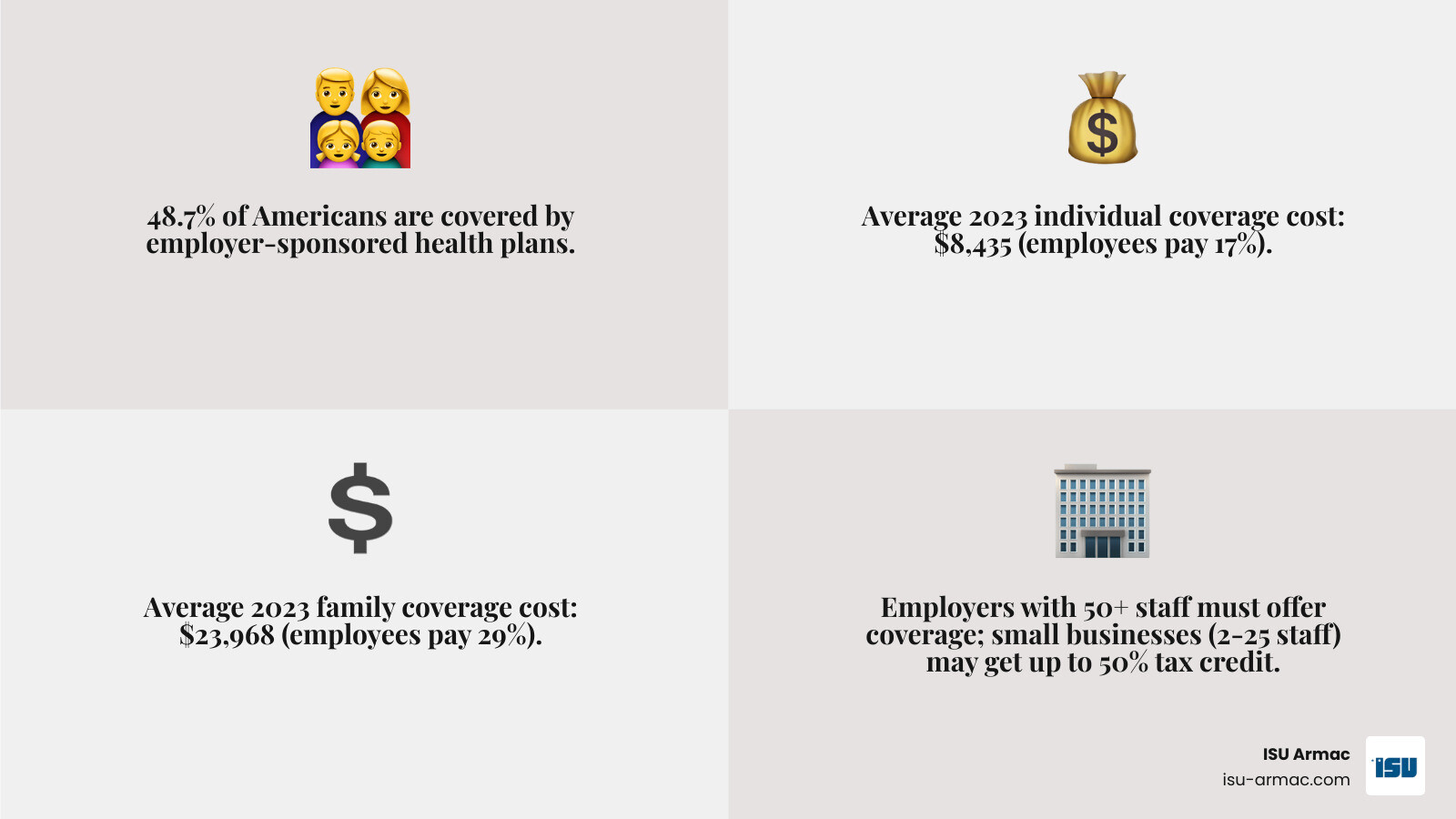
In 2023, 48.7% of Americans received health coverage through employer-sponsored plans. The numbers tell a compelling story: the average annual premium for individual coverage was $8,435, with employees paying just 17% of that cost. For family coverage, the average was $23,968 annually, with employees contributing 29%.
The benefits extend beyond just health coverage. Businesses with 50 or more full-time employees must offer medical insurance under the Affordable Care Act, while smaller employers with 2-25 employees may qualify for tax credits up to 50% of premiums paid. These plans help attract and retain talent, reduce turnover, and create a healthier, more productive workforce.
Group plans work through risk pooling — when costs are spread across many people, everyone pays less. Employers typically share premium costs with employees, making coverage more affordable than individual market plans. The system also provides stability, as group policies are less likely to face dramatic rate increases or cancellations compared to individual coverage.
The history of group health insurance dates back to 1910, but it exploded during World War II when wage controls pushed employers to offer health benefits as a recruitment tool. Today, it remains the primary way most Americans access healthcare coverage, regulated by ERISA for private employers and shaped by ACA requirements.
I’m Ryan McEachron, Chief Executive Officer of ISU Insurance Services ARMAC Agency in Victorville, and I’ve spent decades helping businesses steer the complex landscape of group medical insurance plans to build benefits packages that protect their teams and their bottom line. Whether you’re a small business exploring options for the first time or a larger employer looking to optimize your current plan, understanding the fundamentals is your first step toward making an informed decision.
Basic group medical insurance plans glossary:
- benefits of offering health insurance to employees
- business employee benefits packages
- health insurance benefits for small businesses
Understanding How Group Health Insurance Works
Understanding how group medical insurance plans function is crucial for any employer considering offering this vital benefit. At its core, group health insurance is a health plan offered by an employer or employee organization that provides health coverage to employees and their families. This type of coverage is often called employer-based coverage. The process typically begins with an employer selecting a plan or a set of plans from an insurance carrier. Once selected, eligible employees can enroll, gaining access to a network of healthcare providers and services.

The “group” aspect is key here. By pooling many individuals together, the risk of high medical costs is spread across a larger population. This risk-spreading mechanism allows insurers to offer more affordable premiums and often more comprehensive benefits than what individuals might find on their own. We’ve seen this play out in Southern California, where employer-sponsored plans consistently provide a robust safety net for countless families.
Group health plans are typically categorized into two main types of eligible groups: employer-employee groups (the most common form) and affinity groups (such as professional organizations or unions). These plans usually cover employees or members, their spouses, and their families. To maintain the integrity of the risk pool, many group plans require a minimum percentage of eligible group members to elect coverage before the policy can be issued. For example, some plans require at least 70% participation.
Enrollment periods are structured to manage the entry of new participants into the group. This includes initial enrollment for new hires, annual open enrollment periods, and special enrollment periods triggered by specific life events. More info about Health Insurance is always available through our team.
Who is Eligible to Enroll?
Eligibility for group medical insurance plans hinges on several factors, primarily related to employment status and the employer’s size.
- Employer Size: In the United States, businesses with 50 or more full-time employees (or full-time equivalents) must provide group medical insurance to their entire workforce under the Affordable Care Act (ACA). For smaller businesses, the rules are different but still offer significant advantages. Many group health insurers offer plans to companies with one or more employees. Businesses with two to 25 employees who offer group health coverage may even be entitled to the Health Insurance Premium Tax Credit, which can significantly offset costs.
- Full-time Employees: Typically, full-time employees are eligible for enrollment. The definition of “full-time” often aligns with ACA standards (working an average of 30 hours per week or 130 hours per month).
- Part-time Employees: Eligibility for part-time employees can vary based on the employer’s policy and the state’s regulations. Some employers extend benefits to part-time staff, while others do not.
- Dependents: Most group medical insurance plans allow for the coverage of dependents. This commonly includes:
- Spouses: Legally married spouses are almost always eligible.
- Children up to age 26: Under the ACA, children can remain on their parent’s plan until they turn 26, regardless of their student status, marital status, or financial dependency. This is a significant benefit for young adults transitioning into their careers.
- Minimum Participation Requirements: As mentioned, insurers often require a minimum percentage of eligible employees to participate in the plan to ensure a balanced risk pool. This usually helps keep premiums stable and affordable for the group.
The Enrollment Process Explained
Navigating the enrollment process for group medical insurance plans can seem daunting, but it generally follows a clear structure:
- New Hire Waiting Period: When a new employee starts, there is typically a waiting period before their health coverage begins. This period can range from 30 to 90 days, as allowed by law. This gives both the employer and employee time to process paperwork and integrate into the system.
- Annual Open Enrollment: This is a designated period, usually once a year (often in the fall), when all eligible employees can enroll in a new plan, switch plans, or make changes to their existing coverage without a qualifying life event. It’s a crucial time for employees to review their options and ensure their coverage still meets their needs.
- Special Enrollment Period (SEP): Outside of the new hire waiting period and annual open enrollment, employees may qualify for a Special Enrollment Period. An SEP is triggered by specific “qualifying life events,” which allow individuals to enroll in or change their health insurance coverage.
- Life Events (Marriage, Birth, etc.): Common qualifying life events include marriage, the birth or adoption of a child, loss of other health coverage (e.g., due to job loss, divorce, or aging off a parent’s plan), or a significant change in household income. These events typically open a 30-day (or sometimes 60-day) window during which employees can make changes to their coverage.
- Required Documentation: To complete enrollment, employees will typically need to provide personal information for themselves and any dependents, such as Social Security numbers, dates of birth, and proof of relationship (e.g., marriage certificates, birth certificates). It’s essential to complete all forms accurately and submit them by the specified deadlines.
Comparing the Core Types of Group Medical Insurance Plans
When it comes to group medical insurance plans, employers in Southern California have several core types to choose from, each offering different levels of flexibility, network access, and cost control. Understanding these distinctions is crucial for selecting a plan that best fits your company culture and your employees’ healthcare needs.
| Plan Type | PCP Required | Referrals Needed | In-Network Coverage | Out-of-Network Coverage | Typical Cost Structure |
|---|---|---|---|---|---|
| HMO | Yes | Yes | Yes | No (except emergencies) | Lower premiums, fixed co-pays |
| PPO | No | No | Yes | Yes (higher cost) | Higher premiums, deductibles, co-insurance |
| EPO | No | No | Yes | No (except emergencies) | Moderate premiums, deductibles, co-insurance |
| POS | Yes | Yes (for specialists) | Yes | Yes (higher cost) | Moderate premiums, deductibles, co-insurance |
We often guide our clients through these options, emphasizing that plan flexibility and network size often correlate with cost. Plans that offer greater freedom to choose providers typically come with higher premiums, while those with more restricted networks tend to be more budget-friendly. This balance is a key consideration for both employers and employees. For more detailed information on specific plans, explore our Group Medical plans options.
Health Maintenance Organization (HMO)
HMOs are known for their focus on managed care and cost efficiency. With an HMO, members are generally required to:
- Stay In-Network: Services are typically covered only if received from providers within the plan’s specific network. Out-of-network care is usually not covered, except in true emergencies.
- Choose a Primary Care Physician (PCP): Each member must select a PCP who acts as their main point of contact for all healthcare needs.
- Obtain Referrals: The PCP is responsible for coordinating care and must provide a referral for members to see specialists or receive other services. Without a referral, specialist visits usually won’t be covered.
- Lower Premiums: Because of these restrictions and the managed care approach, HMOs often have the lowest monthly premiums and predictable co-payments, making them an attractive option for employers looking to control costs.
Preferred Provider Organization (PPO)
PPOs offer more flexibility than HMOs, making them a popular choice for many employees who value choice.
- In-Network and Out-of-Network Options: Members can choose to see any healthcare provider, both within and outside the plan’s network. However, using in-network providers results in lower out-of-pocket costs.
- No PCP Required: Members are not required to select a PCP.
- No Referrals Needed: You typically don’t need a referral from a PCP to see a specialist, offering direct access to specialized care.
- Higher Flexibility, Higher Costs: This increased freedom comes with higher monthly premiums compared to HMOs. Members also usually face deductibles and co-insurance, especially when opting for out-of-network services.
Exclusive Provider Organization (EPO)
EPOs strike a balance between HMOs and PPOs, offering a hybrid model that can be appealing.
- In-Network Only: Similar to an HMO, EPO plans generally only cover services from providers within the plan’s network, except in emergencies.
- No PCP Required: Like a PPO, members are typically not required to choose a PCP.
- No Referrals Needed: You can usually see specialists within the network without a referral.
- Moderate Cost: EPOs often have moderate premiums, falling between HMOs and PPOs, and typically involve deductibles and co-insurance.
Point of Service (POS)
POS plans combine features of both HMOs and PPOs, providing a blend of managed care and flexibility.
- PCP Required: Members are generally required to choose a PCP who will manage their care.
- Referrals for Specialists: Similar to an HMO, a referral from the PCP is typically needed to see specialists within the network.
- In-Network and Out-of-Network Options: While the PCP coordinates in-network care, members usually have the option to seek care outside the network without a referral, albeit at a higher out-of-pocket cost, much like a PPO.
- Combines HMO/PPO Features: POS plans offer a structured approach to in-network care while providing the flexibility to go out-of-network when needed, albeit with a higher financial responsibility.
Key Advantages and Tax Benefits for Employers
Offering group medical insurance plans is more than just a perk; it’s a strategic business decision that yields significant advantages for employers, especially in competitive markets like Southern California. Beyond simply providing health coverage, these plans serve as a cornerstone for employee well-being and a powerful tool for business growth.

From our experience working with businesses in Victorville, Apple Valley, and Hesperia, we’ve seen how a robust benefits package can transform a company. It’s not just about compliance; it’s about building a stronger, more resilient workforce.
Attracting and Retaining Top Talent
In today’s job market, a competitive benefits package is often as important as salary.
- Employee Recruitment: High-quality group medical insurance plans are a major draw for prospective employees. When we help our clients craft attractive benefits, they find it easier to stand out and recruit top talent in their industries.
- Employee Loyalty and Reduced Turnover: Employees who feel valued and supported by their employer are more likely to stay. Providing excellent health benefits fosters loyalty and significantly reduces employee turnover, saving businesses substantial costs associated with recruiting and training new staff. The Bureau of Labor Statistics (BLS) provides extensive Data on employee benefits from the BLS that underscores the importance employees place on these offerings. Most employees consider health insurance their most important benefit, which directly translates to loyalty and reduced turnover.
- Increased Productivity and Positive Company Culture: Healthy employees are productive employees. Access to quality healthcare means fewer sick days, quicker recovery times, and a workforce that feels secure and appreciated. This contributes to a positive company culture where employees are motivated and engaged.
Significant Tax Implications and Benefits
The financial benefits of offering group medical insurance plans extend to significant tax advantages for employers.
- Premium Contributions as Tax-Deductible: The premiums that employers pay towards their employees’ group health insurance are generally considered a tax-deductible business expense. This reduces the company’s taxable income, leading to substantial savings. For more detailed guidance, the Information on tax provisions from the IRS is an invaluable resource.
- ACA Tax Credits for Small Businesses: For eligible small businesses (typically those with fewer than 25 full-time equivalent employees), the Affordable Care Act offers the Health Insurance Premium Tax Credit. This credit can be quite substantial, equaling the lesser of $1,000 for individual coverage, $3,000 for family coverage, or 50% of the premiums paid. This is a powerful incentive for smaller employers in Oak Hills and beyond to provide coverage.
- Payroll Tax Reduction: Employer contributions to health insurance premiums are generally exempt from federal income tax withholding, Social Security, and Medicare taxes. This means both the employer and employee save on payroll taxes.
- Section 125 Plans: Many employers use Section 125 “cafeteria plans,” which allow employees to pay their portion of health insurance premiums with pre-tax dollars. This further reduces their taxable income, benefiting employees while also saving the employer on matching payroll taxes. It’s a win-win scenario that makes group medical insurance plans even more appealing.
Navigating Compliance and Employee Transitions
Offering group medical insurance plans comes with important regulatory responsibilities and considerations for employee transitions. Compliance with federal laws like the Affordable Care Act (ACA) and COBRA is essential to avoid penalties and ensure fair treatment of employees. As your trusted partner, we at ISU Armac are here to help Southern California businesses steer these complexities.
Impact of the Affordable Care Act (ACA)
The Affordable Care Act (ACA) significantly reshaped the landscape of group medical insurance plans in the United States, introducing new requirements and protections.
- Employer Mandate (50+ Employees): A cornerstone of the ACA is the employer mandate, often referred to as the “employer shared responsibility provision.” This requires businesses with 50 or more full-time equivalent employees to offer affordable, minimum essential coverage to their full-time employees and their dependents. Failure to comply can result in substantial penalties.
- Minimum Essential Coverage (MEC): All ACA-compliant plans must provide Minimum Essential Coverage, which includes a broad range of preventive services and essential health benefits. This ensures that employees receive comprehensive care.
- Grandfathered Plans: It’s worth noting that some older group medical insurance plans that existed before the ACA’s enactment in 2010 are considered “grandfathered” plans. These plans may be exempt from certain ACA requirements, such as covering preventive care without cost-sharing or offering all essential health benefits. Employers must inform employees if their plan is grandfathered. To learn more about what constitutes affordable coverage under the ACA, you can visit Learn about affordable coverage at healthcare.gov.
- Reporting Requirements: The ACA also introduced reporting requirements for applicable large employers (ALEs) to the IRS and to employees, detailing the health coverage offered. This helps the IRS verify compliance with the employer mandate.
What Happens When an Employee Leaves? (COBRA)
The end of an employment relationship doesn’t necessarily mean the immediate end of health coverage, thanks to federal and state laws designed to protect individuals during transitions.
- Continuation of Coverage (COBRA): The Consolidated Omnibus Budget Reconciliation Act (COBRA) is a federal law that allows eligible employees and their dependents to continue their health benefits for a limited period after certain qualifying events, such as job loss (for reasons other than gross misconduct), reduction in hours, or other specific circumstances. While COBRA allows for continuation, it’s important to understand that the employee is typically responsible for the full premium cost, plus a small administrative fee.
- Employee Cost: Under COBRA, the former employee pays 100% of the premium (both the employer and employee share), plus up to an additional 2% for administrative costs. This can make COBRA coverage significantly more expensive than when they were employed, but it provides a crucial bridge to new coverage.
- Notification Requirements: Employers have specific obligations to notify employees about their COBRA rights. When a qualifying event occurs, employers must provide detailed information about COBRA election periods and costs. For example, employers should notify individuals within 15 days after their group medical insurance plans end about COBRA/Cal-COBRA qualification. Health plans must receive COBRA/Cal-COBRA applications and first premium payments within 63 days after group health insurance ends.
- Cal-COBRA: For businesses in California, there’s also Cal-COBRA, a state law that extends COBRA-like benefits to employees of smaller companies (typically those with 2-19 employees) that are not subject to federal COBRA. Cal-COBRA can also provide an extension of coverage for individuals who have exhausted their federal COBRA benefits.
- Duration of Coverage: COBRA coverage typically lasts for 18 months, though it can be extended to 29 or 36 months under certain circumstances (e.g., disability or second qualifying events). During this time, the individual cannot be denied coverage due to a medical condition.
Understanding these provisions is vital for both employers and employees to ensure a smooth transition and continuous access to healthcare. When an employee leaves, exploring More info about Individual Medical options can also be a viable path.
Frequently Asked Questions about Group Medical Insurance Plans
We often encounter common questions from employers and employees alike regarding group medical insurance plans. Here, we address some of the most frequent inquiries to provide clarity and guidance.
How does the cost of group health insurance compare to individual plans?
Group medical insurance plans are typically more affordable due to risk pooling across many participants, leading to lower average premiums. When a large group of people shares the risk, the cost per individual goes down. In 2023, the average annual premium for employer-sponsored individual coverage was $8,435, with employees typically paying only 17% of that premium. This is often significantly less than a comparable Individual Medical plan purchased on the open market, where individuals bear the full cost and insurers price policies based on individual health factors (though pre-existing conditions cannot be denied since 2014). For family coverage, the average cost in 2023 was $23,968, with employees contributing 29%. This cost efficiency is one of the primary reasons employers offer group plans.
What other types of group coverage can be bundled?
Beyond medical plans, employers can offer a comprehensive benefits package by including a range of other group coverages, often at a lower bundled cost. This holistic approach further improves employee satisfaction and retention. Common additional group coverages include:
- Group Dental: Covers preventive care, basic services (fillings), and sometimes major services (crowns, bridges).
- Group Vision Template: Provides coverage for eye exams, glasses, and contact lenses.
- Group Life: Offers a financial benefit to an employee’s beneficiaries upon their death.
- Group Voluntary Benefits: These are additional benefits (like short-term disability, long-term disability, critical illness, or accident insurance) that employees can choose to purchase, often through payroll deductions, at group rates.
Bundling these options allows employers to create a robust and attractive benefits package that addresses a wider array of employee needs.
What are the key considerations when choosing a group medical insurance plan?
Selecting the right group medical insurance plans requires careful consideration of various factors to ensure it meets both the company’s budget and the employees’ healthcare needs. When we consult with businesses in Southern California, we emphasize these key considerations:
- Costs: Evaluate the total cost, including monthly premiums, deductibles (the amount employees must pay before insurance kicks in), co-pays (fixed amounts for doctor visits), co-insurance (a percentage of costs after the deductible), and the maximum out-of-pocket limit.
- Network Size and Provider Access: Consider the breadth of the provider network. Do popular local hospitals and doctors participate? Are specialists readily available? This is especially important in our diverse Southern California communities.
- Plan Type: As discussed, the choice between HMO, PPO, EPO, and POS plans will significantly impact flexibility and cost. Understand the trade-offs for each.
- Employee Demographics and Needs: What are the average age and health status of your workforce? Do they have specific healthcare needs, such as chronic conditions or a desire for alternative therapies? Does the plan cover their prescription medications?
- Summary of Plan Benefits (SPB): Always review the SPB for each plan option. This document provides a clear, standardized overview of the plan’s coverage, costs, and limitations, making it easier to compare options side-by-side.
- Additional Benefits: Look beyond basic medical. Does the plan offer integrated wellness programs, mental health services, or telehealth options that align with your employees’ needs?
Balancing these factors helps ensure you choose a plan that provides valuable coverage while being financially sustainable for your business.
Partner with an Expert to Find the Right Plan
Choosing the right group medical insurance plans is a critical business decision that impacts your budget and your team’s well-being. The options can be complex, but you don’t have to steer them alone. A knowledgeable partner can help you compare carriers and plans to find the perfect fit. ISU Armac specializes in helping businesses design and implement strategic Employee Benefits packages that attract top talent and support your company’s goals. Based right here in Victorville, California, and serving the wider Southern California region including Apple Valley, Hesperia, and Oak Hills, we pride ourselves on shopping multiple carriers to find the best coverage at the lowest rates for our clients. Let us put our expertise to work for you, ensuring your business and your employees are well-protected.