
Getting Started: Understanding Kaiser Permanente Small Business Medical Plan Rates
Investing in your team’s health is one of the most critical decisions a small business owner can make. When exploring health coverage, understanding kaiser permanente small business medical plan rates is key. While actual premium rates are unique to each business, influenced by location, plan choice, and employee demographics, here are some typical cost-sharing elements you might encounter with Kaiser Permanente plans:
- Copayments: Often around $30 per visit for most consultations and exams.
- Deductibles: Some plans may have a deductible, such as $250 for certain prescription drugs per calendar year.
- Hospital Inpatient Care: Can range, for example, around $400 per day.
- Outpatient Surgery: A typical cost might be $200 per procedure.
- Emergency Department Visits: Commonly $100 per visit (unless admitted).
- Prescription Drugs: Generic drugs often cost about $10 for a 100-day supply, while brand-name drugs might be $35 for a 100-day supply after meeting any applicable deductible.
- Annual Out-of-Pocket Maximums: Designed to protect you from very high costs, typically around $3,000 for an individual and $6,000 for a family of two or more.
Kaiser Permanente offers a unique integrated care model. This means your health plan, doctors, and hospitals all work together under one system. This approach aims to deliver high-quality care efficiently, which can impact overall costs for your business.
This guide will help you understand Kaiser Permanente’s small business plan options, the factors influencing their rates, and the benefits they offer for your team.
As Ryan McEachron, CEO of ISU Insurance Services ARMAC Agency, I’ve spent years helping businesses in Victorville find the right insurance protection. Understanding complex topics like kaiser permanente small business medical plan rates and ensuring you get comprehensive, affordable coverage is what we do.
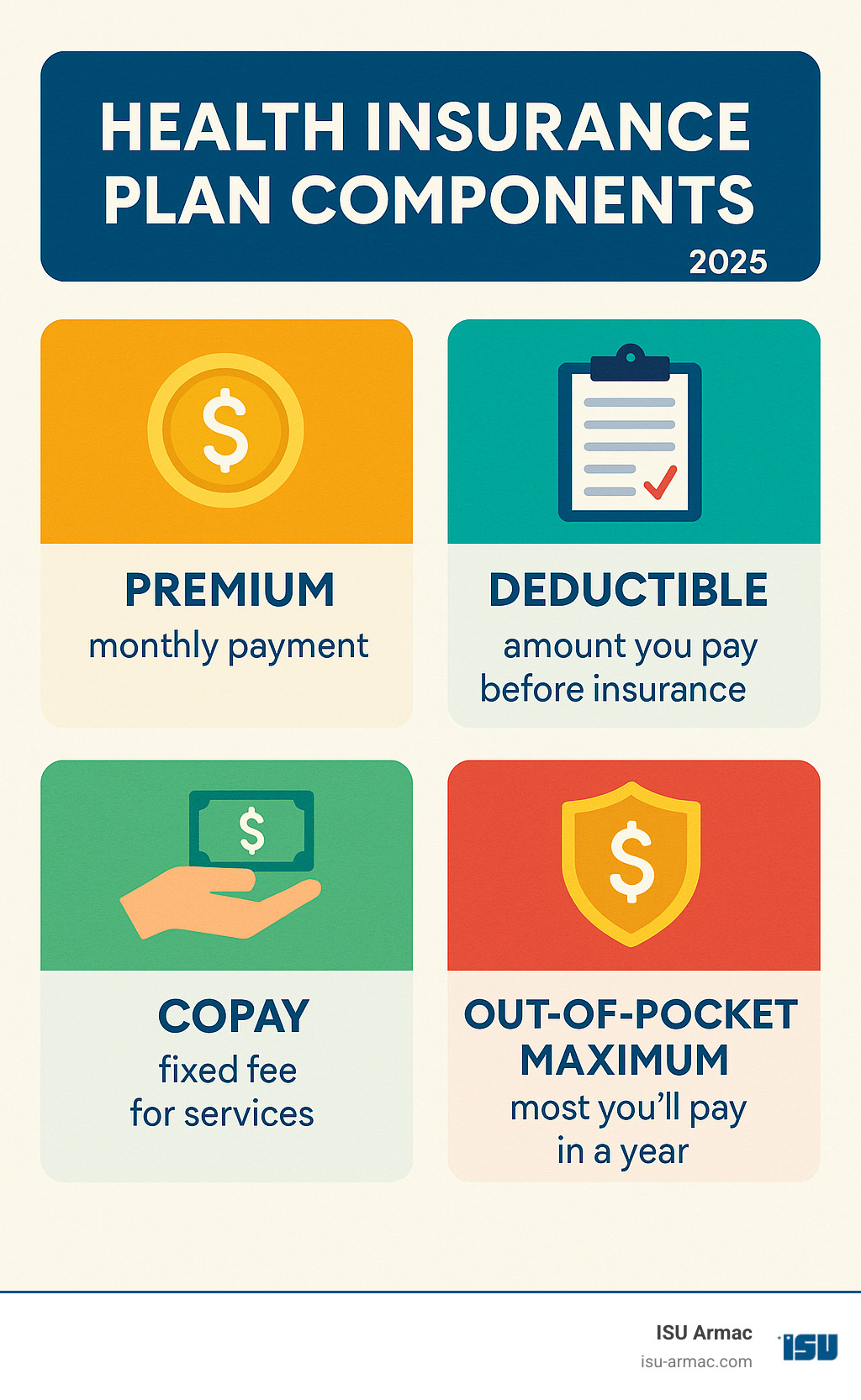
Understanding Kaiser Permanente’s Small Business Plan Options
Kaiser Permanente offers straightforward plan structures focused on cost-effective solutions and quality care. Their key differentiator is an integrated approach where the health plan, doctors, and hospitals work together seamlessly.
This integrated care model means that when an employee sees a primary care doctor, gets lab work, or needs a specialist, all providers are coordinated. This reduces lost paperwork, coverage confusion, and surprise bills from out-of-network providers.
All Kaiser Permanente small business plans meet ACA requirements, covering all essential health benefits. You can compare plans using the familiar metal tier system, which helps balance kaiser permanente small business medical plan rates with the coverage your team needs.
Navigating health insurance can be overwhelming. We help businesses explore options and find plans that support employees’ health and the company’s bottom line. For a broader look, check out our guide on Health Insurance for Employees Small Business.
Core Plan Types: HMO and More
Kaiser Permanente is known for its HMO (Health Maintenance Organization) plans. In an HMO, each employee selects a primary care physician within the Kaiser network who coordinates all their care, from checkups to specialist referrals.
This coordination prevents employees from navigating a fragmented system and is a key reason Kaiser can manage costs while maintaining quality.
Within their HMO framework, Kaiser offers two main variations. Copayment HMO plans feature fixed copays for most services for predictable costs. Deductible HMO plans have lower monthly premiums but require members to meet a deductible before most coverage begins.
Kaiser also provides variations like Kaiser Permanente Plus™, which adds limited out-of-network flexibility to the standard HMO. Kaiser Permanente Everyday Care plans simplify things further by covering essential services without copays or deductibles for eligible groups.
These options show that Kaiser understands every business is different. Whether you’re a tech startup or a manufacturing company, there’s likely a plan structure that fits. To learn more about how group plans work, visit our Group Health Insurance Benefits page.
Understanding the Metal Tiers
The ACA’s metal tiers—Bronze, Silver, Gold, and Platinum—clarify plan comparisons by indicating the average percentage of healthcare costs covered. This helps you balance monthly premiums with out-of-pocket expenses.
Bronze plans have the lowest monthly premiums but higher out-of-pocket costs, covering about 60% of total expenses. They are often suitable for healthier teams seeking protection from major medical events.
Silver plans provide a balance with moderate premiums and out-of-pocket costs, covering about 70% of expenses. They are also the only plans eligible for cost-sharing reductions for qualifying employees.
Gold plans feature higher premiums for lower out-of-pocket costs, covering about 80% of expenses. Platinum plans have the highest premiums and lowest out-of-pocket costs, covering around 90% of expenses.
Choosing the right tier depends on your team’s health needs and budget. A Bronze plan might look attractive until an employee needs surgery and faces a high deductible. A Platinum plan provides excellent coverage but might stretch your budget. We help you analyze the numbers and your team’s healthcare usage to find the right balance. Our Small Business Health Exchange page offers more insights.
Cost-Effective and Flexible Solutions
Kaiser Permanente offers creative alternatives to traditional plans to help businesses manage costs while providing solid coverage.
High-Deductible Health Plans (HDHPs) can be paired with a Health Savings Account (HSA). These plans have lower premiums and higher deductibles. The HSA allows employees to save pre-tax money for medical expenses, and the funds roll over annually.
Level Funded plans give small and mid-sized businesses more control over healthcare spending. You pay a predictable monthly amount covering claims, administration, and stop-loss insurance. If claims are lower than expected, you may receive a refund. The stop-loss coverage protects you from unexpectedly high claims.
This approach provides visibility into your healthcare spending, which can reveal opportunities to invest in wellness programs that reduce claims.
These flexible solutions show that Kaiser understands the financial pressures small businesses face. There are options designed to help you provide great benefits without breaking the bank. For more details, visit our Small Business Health Insurance page.
Decoding Kaiser Permanente Small Business Medical Plan Rates
Kaiser permanente small business medical plan rates are not one-size-fits-all. Like a custom suit, the price is unique to your business. Rates are dynamic, changing based on several factors and varying significantly by situation.
While an exact quote requires your business details, we can explain how rates are calculated. Regional variations are significant. The ACA’s definition of a “small business” differs by state, impacting regulations and rates. For example, it’s 1-100 employees in California and Colorado, but may be 1-50 in states like Georgia or Washington. This affects plan availability and pricing.

Key Factors That Influence Your Premiums
Several key factors influence your kaiser permanente small business medical plan rates. Understanding them helps clarify your quote:
- Business Location: Your location is a primary factor. Rates are influenced by the state and even the specific region (like Victorville, Apple Valley, Hesperia, and Oak Hills in Southern California) due to local healthcare costs, provider competition, and state regulations.
- State-Specific Regulations: Every state has its own insurance laws affecting everything from mandatory benefits to how premiums are calculated.
- Employee Demographics: This is highly significant. The average age of your team, the number of dependents, and gender breakdown all impact the insurer’s risk pool. A younger, healthier workforce typically results in lower rates.
- Group Size: While small business plans are for groups of 2-100 employees (with at least one W2 employee), the exact number of enrollees can influence the final rate.
- Plan Tier Selection: Your choice of a Bronze, Silver, Gold, or Platinum plan directly affects the premium. Higher-tier plans offer more comprehensive coverage but have higher monthly premiums.
- Chosen Plan Design: Beyond the metal tier, specific details like the deductible, copayments, and coinsurance will also shape your premium. Plans with higher deductibles generally have lower monthly premiums.
Navigating these complexities can be a puzzle, but that’s where we come in. If you’re based in Victorville, CA, our team specializing in Health Insurance Victorville CA can provide personalized insights.
How the Integrated Care Model Affects Costs
Kaiser Permanente’s integrated care model helps manage costs and impacts your small business medical plan rates through efficiency and prevention.
- Emphasis on Preventive Care: A strong focus on preventive care is central to the model. With the health plan, doctors, and hospitals in one system, Kaiser Permanente effectively delivers services like check-ups and screenings. Catching issues early prevents them from becoming more serious and expensive, leading to healthier employees and fewer high-cost claims.
- Coordinated Services: The model provides coordinated services, where health information flows smoothly between primary care doctors, specialists, and pharmacies. This coordination reduces wasted time, redundant tests, and administrative headaches, which lowers overall healthcare costs.
- Reduced Administrative Overhead: A unified system means less paperwork, fewer billing complexities, and direct communication channels. When operational costs are lower for the provider, it can be reflected in more competitive plan rates.
This all adds up to a potential for long-term cost savings. Kaiser Permanente’s model is designed to deliver high-quality, affordable care that is financially sustainable for your business.
A Look at Typical Kaiser Permanente Small Business Medical Plan Rates and Cost-Sharing
While exact kaiser permanente small business medical plan rates require a custom quote, we can provide examples of typical cost-sharing structures. These are the out-of-pocket expenses for services, which vary by plan:
- Copayments: Often around $30 per visit for most consultations and exams, making routine care costs predictable.
- Prescription Drug Deductible: Some plans may have a $250 per calendar year deductible for certain medications.
- Generic Drugs: A 100-day supply might cost around $10 after any deductible.
- Brand-Name Drugs: A 100-day supply could be around $35 after any deductible.
- Hospital Inpatient Care: A daily charge could be around $400 per day.
- Outpatient Surgery: A per-procedure cost might be $200.
- Emergency Department Visits: Typically $100 per visit, unless the member is admitted.
- Annual Out-of-Pocket Maximums: These protect employees from very high costs. A typical maximum could be $3,000 for an individual and $6,000 for a family. Once met, the plan pays 100% of covered services for the rest of the year.
These are just examples. Your actual cost-sharing amounts will vary depending on the specific plan you choose. You can review the Summary of Benefits and Coverage (SBC) documents for details, like those on the Kaiser Permanente website for Small business summary of benefits and coverage (SBCs) in California.
Key Benefits and Coverage Highlights
Beyond kaiser permanente small business medical plan rates, it’s important to consider the value these plans offer. Investing in your team’s health fosters a more productive and engaged workforce. Kaiser Permanente focuses on comprehensive coverage, wellness programs, and other benefits that support employees’ overall well-being.

Comprehensive Medical and Wellness Coverage
Kaiser Permanente plans provide extensive care that aligns with comprehensive health coverage principles:
- Coverage of Essential Health Benefits: All plans meet ACA requirements and cover the 10 essential health benefits, such as emergency services, hospitalization, maternity care, mental health services, and prescription drugs.
- Unlimited Lifetime Maximum Benefit: Plans offer an unlimited lifetime maximum, a crucial protection ensuring employees are covered for necessary medical care without a cap.
- No Pre-existing Condition Clauses: In compliance with the ACA, employees cannot be denied coverage or charged more based on pre-existing health conditions.
- Virtual Care Options: Kaiser Permanente offers various virtual care options, allowing members to connect with providers remotely for consultations and follow-ups, which provides flexibility and easy access to care.
- Mental Health and Substance Use Disorder Services: Plans include coverage for mental health and chemical dependency services, ensuring your employees have access to vital support.
Offering comprehensive employer-sponsored health insurance shows your commitment to your team and can be a significant factor in employee retention. Learn more on our Employer-Sponsored Health Insurance page.
Added Perks for a Healthier Workforce
Kaiser Permanente offers programs and benefits beyond basic medical coverage to improve employee wellness:
- Fit Rewards program: This program incentivizes employees to stay active by earning a free gym membership or using resources for at-home workouts. It’s a great way to encourage a healthy lifestyle. Learn more at Learn more about Fit Rewards.
- Employee Assistance Programs (EAP): Often available, EAPs provide confidential counseling and support for personal and work-related issues like stress or financial concerns, supporting employees’ overall well-being.
- Chiropractic and Acupuncture Benefits: Many plans include coverage for chiropractic and acupuncture, often through partners like American Specialty Health Plans, offering employees a broader range of care options.
- Child Dental Benefits: Child dental benefits are provided, either through a separate plan (HMO) or as part of the medical plan (PPO), ensuring essential dental care for children.
- Pediatric Vision Care: Essential health benefits also include pediatric vision care, ensuring children receive necessary eye exams and vision correction.
These added perks contribute to the overall value of Kaiser Permanente plans, making them attractive to employees. Providing such benefits can lead to increased morale and a more vibrant workplace. Find out more about the Benefits of Offering Health Insurance to Employees to see how these programs can make a difference.
How to Get a Quote and Enroll Your Small Business
Now that you understand the plans, rate factors, and benefits, let’s cover the practical steps to get a quote and enroll your small business. The process is designed to be straightforward so you can quickly provide valuable benefits to your team.
![Small business owner reviewing insurance documents at a desk. Alt text: “Business owner reviewing health insurance documents.”]
Step 1: Determine Your Eligibility
First, ensure your business meets Kaiser Permanente’s eligibility criteria for small group health plans.
- Definition of a Small Business by State: The definition varies. In California and Colorado, a small business typically has 1-100 employees. In other states (e.g., Georgia, Washington, Virginia), it’s often 1-50 employees.
- Employee Count Requirements: Your business must generally have between 2-100 employees.
- W2 Employee Minimums: You must have at least one W2 employee besides the owner or partners to qualify for a group plan.
- Sole Proprietors: Sole proprietors looking to cover only themselves and a spouse would typically seek individual coverage, not small business group plans.
If you’re unsure about your eligibility, we can help clarify your status. For more guidance, visit our page on How to Get Health Insurance for My Small Business.
Step 2: Gather Necessary Information
After confirming eligibility, gather the following key information to streamline the quote and enrollment process:
- Business Legal Name and Address: The official registered name and physical address.
- Tax ID Number (EIN): Your Employer Identification Number.
- Employee Census: A list of all eligible employees, including their full names, dates of birth, gender, home ZIP codes, and any dependents. You’ll also need their employment and enrollment status (enrolling or waiving).
This information allows for the accurate calculation of your kaiser permanente small business medical plan rates.
Step 3: Request a Quote and Compare Plans
With your information ready, you can request a quote. Kaiser Permanente offers several pathways, and ISU Armac can facilitate the process:
- Direct Quote Process: You can visit the Kaiser Permanente business website to start the quote process, often by registering for an “instant quote.”
- Using an Independent Broker (like ISU Armac): As an independent agency, we work with multiple carriers, including Kaiser Permanente. We submit your information to get quotes on your behalf and shop other carriers simultaneously. This allows us to present a comprehensive comparison, ensuring you get the best coverage at competitive rates. Our expertise helps you steer the nuances of each plan.
- Contact a Sales Agent: You can also call Kaiser Permanente directly to speak with a sales agent (their California small business line is often 1-866-727-3575).
- Comparing Summary of Benefits and Coverage (SBCs): When you receive quotes, review the SBC for each plan. SBCs provide a standardized format to compare benefits, cost-sharing (copays, deductibles), and limitations, helping you understand the true value of each option beyond just the premium.
The goal is to find the right mix of coverage, cost, and convenience. We are here to guide you through this process and ensure you make an informed decision.
Conclusion: Finding the Best Plan for Your Business
Navigating small business health insurance, particularly kaiser permanente small business medical plan rates, can be complex. We’ve explored Kaiser Permanente’s integrated care model, which aims to lower costs through coordinated, preventive care.
We’ve also covered the factors that influence rates—like employee demographics and plan choice—and the comprehensive benefits and wellness programs that contribute to a healthier, more productive team.
The key takeaway is that while Kaiser Permanente is a compelling choice, the final monthly cost is unique to your business. It depends on your specific details, location, and chosen plan design.
This is where ISU Armac becomes your trusted partner. As an independent insurance agency in Victorville, serving Southern California (including Apple Valley, Hesperia, and Oak Hills), we shop for you. We compare health insurance products from multiple providers, including Kaiser Permanente, to find the best coverage at the most competitive rates.
We understand the local market and the needs of small businesses in our community. Our expert guidance helps you understand kaiser permanente small business medical plan rates and compare them to other options. We simplify the complex, offering clear advice so you can make an informed decision for your team and your budget.
Ready to find the perfect health plan for your employees? Let us take the heavy lifting off your shoulders. Reach out to us today to get a quote and see how we can help build a healthier future for your business.
Get a quote for your small business medical insurance plan today