
Why Lenders Demand Full Protection for Your California Dream Bike
Does financing a motorcycle require full coverage insurance california? The short answer is yes – nearly 85% of lenders require full coverage insurance when you finance a motorcycle in California. This goes far beyond the state’s minimum liability requirements and includes collision and comprehensive coverage to protect the lender’s investment until your loan is paid off.
Quick Answer:
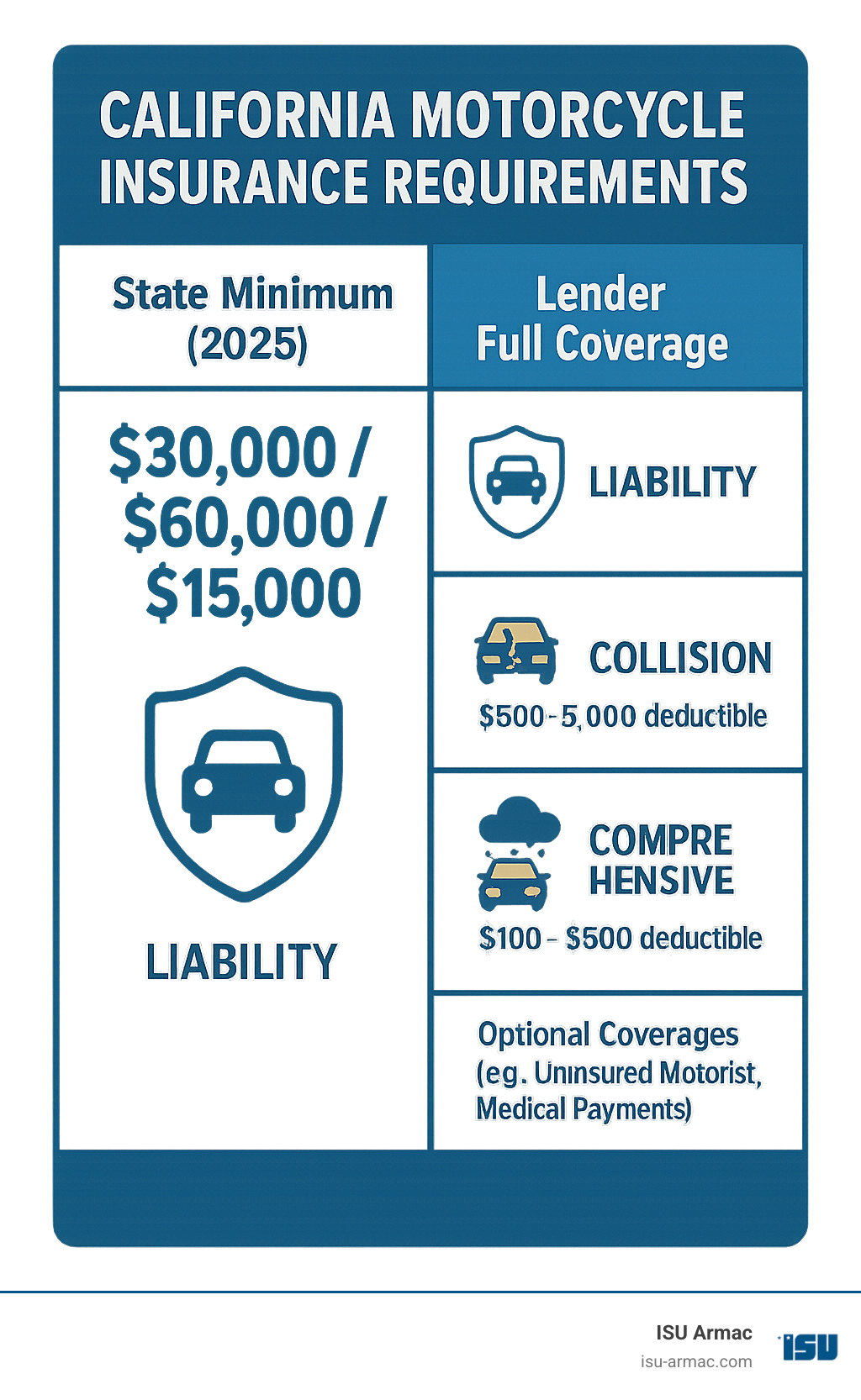
- State Minimum: California requires only liability coverage (currently 15/30/5, increasing to 30/60/15 in 2025)
- Lender Requirement: Full coverage including liability, collision, and comprehensive insurance
- Why: Lenders need to protect their investment – your motorcycle serves as collateral for the loan
- Cost Impact: Full coverage typically costs $500-$1,200 per year vs. $100-$500 for liability-only
If you’re dreaming of cruising down the Pacific Coast Highway on a financed bike, understanding these insurance requirements can save you from costly surprises. The difference between what California law requires and what your lender demands is significant – and it directly impacts your budget.
Many riders find this reality too late in the buying process. As one Reddit user shared about their California motorcycle financing experience: “Why are these quotes I’m getting for motorcycle insurance costing almost as much as the bike for a 12 month policy?!” The shock is real, but the requirement is non-negotiable.
I’m Ryan McEachron, CEO of ISU Armac Insurance Services in Victorville, and I’ve helped countless California riders steer the complex world of motorcycle insurance for financed bikes. Through my years in the insurance industry and involvement with local motorcycle communities, I’ve seen how understanding whether does financing a motorcycle require full coverage insurance california can make or break your riding dreams.
The Lender’s Rule: Why Full Coverage is Non-Negotiable for Financed Bikes
When you finance a motorcycle, you’re not just buying a bike; you’re entering into an agreement with a lender. Whether it’s a bank, credit union, or the dealership itself, that lender has a vested interest in the motorcycle until you’ve paid off every last cent. It’s their asset, and they need to protect it. This is precisely why they will require you to carry full coverage insurance.

Think of it this way: the motorcycle serves as collateral for your loan. If something happens to the bike – it’s stolen, totaled in an accident, or damaged beyond repair – the lender wants assurance that their investment is protected. Without full coverage, if your bike is damaged or destroyed, you might still owe the full loan amount even though you no longer have a ride. The insurance ensures that the remaining loan balance can be covered, allowing the lender to recoup their money.
This requirement is a contractual obligation. When you sign your loan agreement, you’ll find clauses specifying the insurance types and limits you must maintain. The lender is typically listed as a “loss payee” on your policy, meaning they’ll be paid directly by the insurance company in the event of a covered loss. This isn’t about protecting you as the rider; it’s about protecting their financial interest.
As a general rule, if you’re financing your motorcycle, the lender will require full coverage until the loan is paid off. This rule may also apply if you’re leasing your motorcycle. It’s a fundamental industry fact: most banks and lenders require insurance on financed vehicles to protect their investment. For more information about protecting your assets, check out our guide on More info about protecting your assets.
Decoding ‘Full Coverage’ vs. California’s State Minimum
When we talk about “full coverage” for your motorcycle, it’s not a single policy. It’s an industry term for a combination of protections that go far beyond what California legally requires, which is essential when asking does financing a motorcycle require full coverage insurance california?
To see the difference, let’s compare what the state requires versus what a lender needs:
| Coverage Type | California Minimum Liability (Current) | California Minimum Liability (Effective Jan 1, 2025) | Typical Full Coverage Policy (Financed Bike) |
|---|---|---|---|
| Bodily Injury Liability (per person) | $15,000 | $30,000 | $50,000 – $100,000+ |
| Bodily Injury Liability (per accident) | $30,000 | $60,000 | $100,000 – $300,000+ |
| Property Damage Liability (per accident) | $5,000 | $15,000 | $25,000 – $50,000+ |
| Collision Coverage | Not Required | Not Required | Required (with deductible) |
| Comprehensive Coverage | Not Required | Not Required | Required (with deductible) |
| Uninsured/Underinsured Motorist (UM/UIM) | Optional (must be offered) | Optional (must be offered) | Highly Recommended |
| Medical Payments (MedPay) | Optional | Optional | Recommended |
What does full coverage insurance for a financed motorcycle in California include?
When a lender requires “full coverage,” they mean a policy that includes three key protections:
- Liability Coverage: This is the state-mandated foundation that covers costs if you’re at fault in an accident. It includes Bodily Injury (BI) Liability for others’ medical expenses and Property Damage (PD) Liability for damage to their property.
- Collision Coverage: This is crucial for a financed bike. It pays for damage to your motorcycle from a collision, regardless of who is at fault. Lenders require this to protect the physical asset they’ve helped you finance.
- Comprehensive Coverage: This covers non-collision events like theft, vandalism, fire, or storm damage. Lenders insist on this to guard against unexpected events that could destroy their collateral.
Together, these three components form the “full coverage” package that protects both you and your lender’s investment. For a deeper dive into what this means for California riders, check out our guide on Full Coverage Motorcycle Insurance California.
California’s Minimum Motorcycle Insurance Requirements
California’s state-mandated insurance is liability-only and much more modest than what lenders require. Every rider must carry it.
Current minimums (often called “15/30/5”) are:
- $15,000 for bodily injury/death to one person.
- $30,000 for bodily injury/death to multiple people.
- $5,000 for property damage.
Important Update: Starting January 1, 2025, these minimums will increase to “30/60/15”:
- $30,000 for injury/death to one person.
- $60,000 for injury/death to more than one person.
- $15,000 for damage to property.
Crucially, even these updated state minimums do not cover damage to your own motorcycle. This is the key difference: your lender will require physical damage coverage (Collision and Comprehensive) that the state does not. For official details, see the Official DMV insurance requirements.
Understanding this distinction is key to answering does financing a motorcycle require full coverage insurance california. The state requires liability only, but your lender demands full coverage to protect their investment. For more details on California’s basic requirements, visit our page on California Minimum Motorcycle Insurance.
Does Financing a Motorcycle Require Full Coverage Insurance California? The Cost Impact
If you’re asking, “does financing a motorcycle require full coverage insurance california?” the answer is yes, and this requirement significantly impacts your budget. You’ll be adding comprehensive and collision coverage, which are often the most expensive parts of a motorcycle policy.

The cost of your motorcycle insurance in California varies based on several factors:
- Age and Riding Experience: Younger riders (under 25) and new riders typically face higher premiums due to statistical risk. A young rider on a financed sport bike might see quotes of $100-$200 per month.
- Driving Record: A clean record pays off. Accidents, tickets, or a DUI can cause premiums to soar.
- Motorcycle Type: Sport bikes generally cost more to insure than cruisers or touring bikes due to higher claim rates and repair costs.
- Location: Urban areas like Los Angeles often have higher rates than rural parts of California due to more traffic and theft.
- Credit Score: Insurers may use your credit score as an indicator of responsibility, which can influence your rates.
- Coverage Choices: Higher liability limits and lower deductibles will increase your premium.
To give you a clearer picture, a basic liability-only policy in California might cost around $100-$500 annually. However, for the full coverage required by lenders, you’re typically looking at anywhere from $500 to $1,200 per year. When financing, expect your annual cost to be on the higher end of that spectrum. To dive even deeper into what you can expect to pay, check out our guide on the Average Cost Of Motorcycle Insurance In California.
The Risks of Lapsing and Smart Ways to Save
Understanding that does financing a motorcycle require full coverage insurance california is crucial, but so is understanding the consequences if you fail to maintain that coverage.
What Happens if You Don’t Maintain Full Coverage on a Financed Motorcycle?
Ignoring your lender’s insurance requirements can lead to some serious headaches, and potentially losing your motorcycle.
- Force-Placed Insurance: If your full coverage policy lapses, your lender can purchase expensive insurance on your behalf. This “force-placed” insurance only protects the lender’s interest, not yours, and costs much more than a policy you’d find on your own.
- Loan Default: Failing to maintain the required insurance is a breach of your loan agreement, which can lead to your loan being declared in default.
- Repossession Risk: If your loan is in default, the lender has the right to repossess your motorcycle. You could lose your bike and still owe the remaining loan balance.
- Negative Credit Impact: A loan default and repossession will severely damage your credit score, making it difficult to get future loans.
In short, maintaining full coverage on a financed motorcycle is a vital part of your financial agreement.
How can I save money if financing a motorcycle does require full coverage insurance in California?
While full coverage can be costly, there are many strategies we help our clients in Apple Valley, Hesperia, Oak Hills, and throughout Southern California employ to lower their premiums.

Here are some actionable steps you can take:
- Take a Motorcycle Safety Course: Completing an approved safety course (like those from the MSF) improves your skills and can earn you a 5-15% discount.
- Bundle with Auto Insurance: Most insurers offer significant multi-policy discounts (10-25%) if you bundle your motorcycle and auto policies.
- Raise Your Deductible: Opting for a higher deductible (e.g., $1,000 instead of $500) on collision and comprehensive coverage will lower your premium. Ensure you have an emergency fund to cover it.
- Maintain a Clean Riding Record: Avoiding accidents and traffic violations is one of the most effective ways to keep your premiums low.
- Install Anti-Theft Devices: An alarm or GPS tracker can earn you a discount on your comprehensive coverage by reducing theft risk.
- Shop Around for Quotes: Prices vary significantly between providers. As an independent agency, we shop multiple carriers to find you the best rate.
- Consider Your Motorcycle Choice: Sport bikes are more expensive to insure than cruisers. Your choice of bike directly impacts your insurance cost.
- Look for Other Discounts: Ask about discounts for experienced riders, paying annually, or memberships in groups like HOG or the military.
By combining these strategies, you can significantly reduce the cost of your full coverage motorcycle insurance. To learn more about how we help our clients find great rates, check out our insights on Affordable Motorcycle Insurance California.
Frequently Asked Questions about Financed Motorcycle Insurance in California
It’s natural to have questions when navigating insurance for a financed motorcycle. Here are some of the most common ones we hear from riders.
Once my motorcycle is paid off, can I drop full coverage?
Yes, you can. Once your loan is paid off, the lender’s requirement for full coverage ends. However, before dropping it, consider these factors:
- Your Bike’s Value: Could you afford to repair or replace your bike out-of-pocket? For a high-value bike, keeping full coverage is often wise.
- Your Financial Situation: Do you have an emergency fund to cover a total loss or major damage? If not, full coverage provides a crucial safety net.
- Your Risk Tolerance: Are you comfortable with the financial risk of damage or theft?
Many riders keep comprehensive coverage after paying off their loan to protect against non-collision events like theft or vandalism. This is a personal decision based on your needs and budget. You can explore more about tailoring your policy on our Motorcycle Insurance page.
What other coverages should I consider for my motorcycle?
Beyond the “full coverage” core, consider these valuable protections for California riders:
- Uninsured/Underinsured Motorist (UM/UIM) Coverage: This is crucial in California. It covers your medical bills and property damage if an at-fault driver has little or no insurance. We strongly recommend accepting this coverage.
- Loan/Lease Payoff (Gap Coverage): Essential for financed bikes. If your bike is totaled, its actual cash value might be less than your loan balance. Gap coverage pays this difference.
- Medical Payments (MedPay): This covers medical expenses for you and your passengers after an accident, regardless of fault, providing quick access to funds for co-pays and other costs.
- Accessory Coverage: Standard policies may not cover custom parts. This coverage protects your valuable customizations. Some insurers even include an initial amount of accessory coverage automatically.
- Total Loss Coverage: For new bikes, this coverage can replace your totaled motorcycle with a brand-new one of the same make and model, rather than just paying its depreciated value.
These extra protections provide peace of mind, knowing you’re covered for almost any situation.
Do I need to report a motorcycle accident to the California DMV?
Yes, you must report a collision to the DMV within 10 days if the accident caused more than $750 in property damage or if anyone was injured, no matter how minor. You must file the Report of Traffic Accident Occurring in California (SR1) form yourself; law enforcement typically does not file it for you. You can find the necessary form right here: Report of Traffic Accident Occurring in California (SR1).
Securing the Right Protection for Your Ride
Navigating insurance for a financed motorcycle in California can feel complex, but the core takeaway is clear: lenders require full coverage. This means a policy with liability, collision, and comprehensive protection, which goes far beyond the state’s minimum requirements.
While this means a higher premium, you can keep costs down by taking a safety course, bundling policies, raising your deductible, and maintaining a clean driving record. It’s all about finding the right balance between robust protection and an affordable premium.
That’s where we come in. At ISU Armac, we help riders in Apple Valley, Hesperia, Oak Hills, and across Southern California do just that. As an independent agency, we aren’t tied to a single company. We shop our network of carriers to compare policies and discounts, ensuring you get the best coverage at the most competitive rate.
Don’t let insurance complexities slow you down. Whether you’re a seasoned rider or new to the road, we’re here to help you find the ideal policy. Ride with confidence, knowing you’re fully protected. Ready to get started? Contact us today to Find the best motorcycle insurance for your needs.