
Why Your Business Needs More Than Basic Liability Coverage
Commercial umbrella insurance is an additional layer of liability protection that kicks in when your primary insurance policies—like general liability, commercial auto, or employer’s liability—reach their coverage limits. It provides extra financial protection against large, unexpected claims that could otherwise devastate your business.
Key things to know about commercial umbrella insurance:
- What it does: Covers costs that exceed your primary policy limits, including legal fees, medical expenses, and damages
- How it works: Sits on top of existing policies and activates when those limits are exhausted
- Typical coverage: Extends limits from $1 million to $25 million, typically in $1 million increments
- Average cost: Often as low as $200-$400 per year for the first $1 million in coverage
- Who needs it: Businesses with significant assets, high customer interaction, vehicles, or contractual requirements
A single lawsuit exceeding your policy limits can threaten everything you’ve built. For example, if a customer is injured on your premises and sues for $1.5 million, but your general liability policy only covers $1 million, you’d be personally responsible for the remaining $500,000—unless you have commercial umbrella insurance.
I’m Ryan McEachron, CEO of ISU Insurance Services ARMAC Agency in Victorville, and I’ve spent over two decades helping Southern California business owners understand how commercial umbrella insurance can protect their companies from catastrophic financial losses. Whether you’re a contractor, restaurant owner, or retail business, understanding this critical coverage is essential for long-term business security.
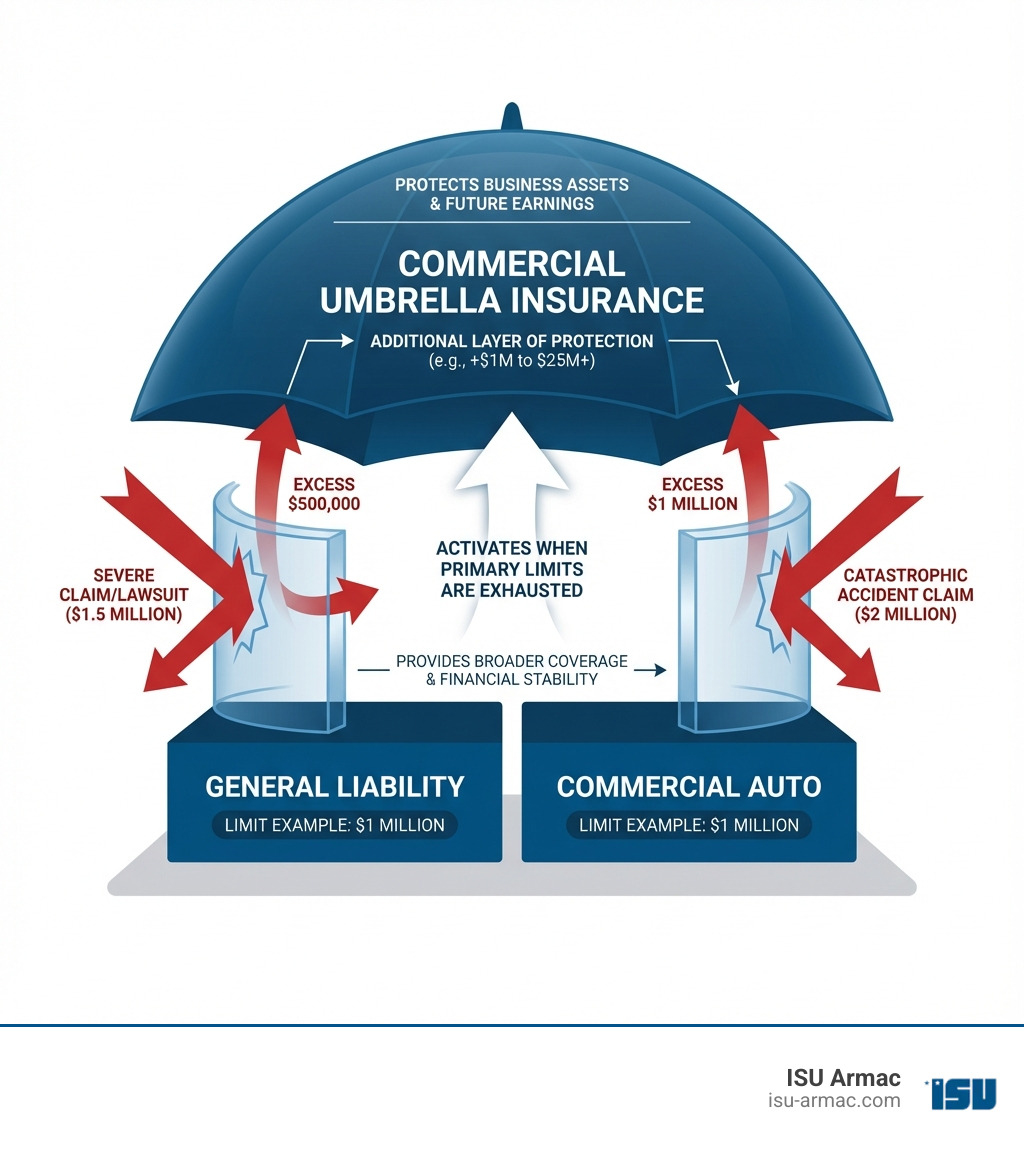
How Commercial Umbrella Insurance Provides an Extra Layer of Protection
Imagine your business’s primary liability policies as sturdy walls, built to protect you from everyday risks. General liability covers slips and falls, property damage you cause to others, and advertising injuries. Commercial auto handles accidents involving your business vehicles. Employer’s liability steps in if an employee sues you for workplace injuries not covered by workers’ compensation. These walls are strong, but they only go so high.
What happens when a claim is so severe, or a lawsuit so costly, that it breaches those walls? That’s where commercial umbrella insurance comes in. It acts like a massive roof, extending over and above the limits of these underlying policies, providing an additional layer of financial protection. It’s not a standalone policy; instead, it works in conjunction with your existing liability coverages, offering broader protection against catastrophic events that could otherwise sink your business.
When we talk about protecting your business, we’re not just thinking about the small bumps in the road. We’re preparing for the unexpected, the “what ifs” that keep business owners up at night. This extra layer of coverage is about securing your peace of mind. For a deeper dive into umbrella protection, explore our Umbrella Insurance page.
What is Commercial Umbrella Insurance?
At its core, commercial umbrella insurance is an extension of your existing liability policies. It provides an extra layer of liability protection by covering costs that go beyond your other liability coverage limits. Think of it as a financial safety net for your business. When a claim against you exceeds the payout limits of your general liability, commercial auto, or employer’s liability policies, your commercial umbrella insurance steps in to cover the difference, up to its own limits.
This type of insurance is crucial because even the most well-managed businesses in Southern California can face catastrophic claims. A serious accident, a major product defect, or even a widespread foodborne illness could lead to lawsuits costing millions of dollars. Without commercial umbrella insurance, your business would be on the hook for any amount exceeding your primary policy limits, potentially jeopardizing your assets and future. It’s about ensuring that a single, devastating event doesn’t mean the end of your hard-earned enterprise.
How Does It Work in a Claim Scenario?
Let’s walk through a hypothetical, yet all too real, scenario that illustrates how commercial umbrella insurance works.
Imagine your restaurant in Apple Valley, a busy spot popular with locals. One evening, a customer slips on a wet floor, suffers a severe back injury, and requires extensive medical treatment and rehabilitation. They sue your business for $1.5 million. Your general liability policy has a $1 million per-occurrence limit.
Here’s how commercial umbrella insurance would respond:
- Primary Policy Exhausted: Your general liability policy would first pay out its maximum limit of $1 million to cover the customer’s medical bills, legal fees, and settlement.
- Umbrella Kicks In: Once the $1 million limit of your general liability policy is exhausted, your commercial umbrella insurance policy would then “drop down” and cover the remaining $500,000 of the lawsuit.
- Covering the Gap: Without the umbrella policy, your business would have to pay that $500,000 out of pocket, potentially forcing you to sell assets, take out loans, or even declare bankruptcy. With the umbrella, the financial burden is significantly reduced, allowing your business to recover.
This coverage also typically helps with legal defense costs, which can quickly add up, even if a lawsuit is eventually dismissed. It provides that crucial buffer when a claim’s financial impact exceeds what your standard policies were designed to handle.
Decoding Your Coverage: What’s Included and What’s Not
Understanding what your commercial umbrella insurance covers is just as important as knowing how it works. While it provides broad protection, it’s not a catch-all for every business risk. We want you to be fully informed so there are no surprises when you need it most.

What a Commercial Umbrella Policy Typically Covers
Our commercial umbrella insurance policies are designed to extend the limits of several underlying liability coverages. This means they generally cover the same types of incidents as your primary policies, but with higher limits. This includes:
- Bodily Injury: If a third party (a customer, vendor, or passerby) is injured on your business premises or due to your business operations, and the costs exceed your general liability limits, the umbrella can cover medical expenses, lost wages, and pain and suffering.
- Property Damage: Should your business accidentally cause damage to someone else’s property—perhaps during a service call in Hesperia or a delivery in Oak Hills—the umbrella policy can cover repair or replacement costs once your underlying general liability or commercial auto limits are reached.
- Personal and Advertising Injury: This less common but equally damaging type of claim involves non-physical harm. Your umbrella can extend coverage for claims of:
- Libel and Slander: False statements that harm someone’s reputation.
- Copyright Infringement: Using copyrighted material without permission in your advertising or business operations.
- False Arrest or Detention: Unjustly detaining someone on your property.
- Legal Defense Costs: Lawsuits are expensive, even if you win. Your umbrella policy can help cover the legal fees, court costs, and settlements or judgments that exceed your primary policy limits.
Essentially, if your primary liability policy covers it, your commercial umbrella insurance will likely extend its limits. It’s a powerful tool for safeguarding your business against significant financial threats. To learn more about the value of this coverage, we encourage you to read Why Is Umbrella Insurance Worth Getting?
Common Exclusions to Be Aware Of
Just like any insurance policy, commercial umbrella insurance has specific exclusions. It’s vital to understand these limitations so you can ensure your business has comprehensive coverage. Generally, umbrella policies do not cover:
- Damage to Your Own Property: Commercial umbrella insurance is a liability policy, meaning it covers damage or injury your business causes to others. It does not cover damage to your own business property, equipment, or vehicles. For that, you would need commercial property insurance, tools & equipment insurance, or commercial auto physical damage coverage.
- Professional Errors (E&O): If your business provides professional advice or services (e.g., an accountant, consultant, or architect), and a client sues you for negligence, errors, or omissions, this would typically fall under Professional Liability (Errors & Omissions) insurance, not your commercial umbrella.
- Employee Injuries (Workers’ Compensation): While your umbrella policy can extend employer’s liability limits (which covers lawsuits by employees for workplace injuries), it does not replace or extend Workers’ Compensation insurance, which is designed to cover medical expenses and lost wages for employees injured on the job.
- Intentional or Criminal Acts: Umbrella policies, like most insurance, will not cover damages resulting from intentional harm, criminal acts, or fraudulent behavior committed by you or your employees.
- Contractual Liability: Unless specifically endorsed, liability assumed under a contract (like a “hold harmless” agreement) may not be covered if it’s beyond what your underlying policies would normally cover.
- War or Terrorism: Acts of war or certified acts of terrorism are generally excluded.
Commercial umbrella insurance is designed to supplement your liability policies, not replace other essential coverages. We always recommend reviewing your entire insurance portfolio with us to identify any potential gaps.
Is This Coverage Right for Your Business?
When we meet with business owners across Southern California, a common question we hear is, “Do I really need commercial umbrella insurance?” Our answer is almost always a resounding yes. In today’s litigious environment, even a small incident can escalate into a multi-million-dollar lawsuit. This coverage is not just for large corporations; it’s a smart investment for businesses of all sizes that want to protect their assets and ensure their long-term viability.
Who Should Consider Commercial Umbrella Insurance?
While nearly every business can benefit from commercial umbrella insurance, certain types of businesses and situations make it an absolute necessity:
- High-Risk Industries: If your business operates in industries like construction, manufacturing, healthcare, or transportation, you face inherently higher risks of accidents, injuries, or product liability claims. A construction company in Victorville, for instance, has a higher likelihood of significant injury claims than a consulting firm.
- Public-Facing Businesses: Restaurants, retail stores, hotels, and any business that regularly interacts with the public on its premises (e.g., a salon in Apple Valley, a gym in Hesperia) has a higher exposure to slip-and-fall incidents or other customer injuries.
- Businesses with Vehicles: If your business uses commercial vehicles—whether a single delivery van or a fleet of trucks—the potential for severe accidents and resulting lawsuits is substantial. A multi-vehicle accident involving one of your employees could easily exceed standard commercial auto limits.
- Contractual Requirements: Many clients, landlords, or business partners will require you to carry a certain level of commercial umbrella insurance before they’ll work with you. This is common for contractors bidding on large projects or businesses leasing commercial space. Meeting these requirements is often non-negotiable for securing lucrative opportunities.
- Significant Asset Protection: If your business has substantial assets, property, or a high revenue stream, you have more to lose in a lawsuit. An umbrella policy helps protect those assets from being seized to satisfy a judgment.
If the potential cost of a claim could exceed your primary liability limits, or if you simply can’t afford to self-insure a multi-million-dollar judgment, commercial umbrella insurance is a must-have.
The Financial Benefits of Added Protection
The decision to invest in commercial umbrella insurance isn’t just about avoiding financial disaster; it’s about making a strategic move that strengthens your business’s foundation. Here are some of the key financial benefits we see our clients enjoy:
- Catastrophic Claim Protection: This is the most obvious benefit. In the face of a multi-million-dollar lawsuit, your umbrella policy ensures that your business won’t have to bear the brunt of costs beyond your primary policy limits. This prevents financial ruin and protects your company’s future earnings.
- Business Continuity: Without commercial umbrella insurance, a large lawsuit could force you to liquidate assets, lay off employees, or even close your doors. With it, your business has a much better chance of weathering the storm and continuing operations. It’s an affordable second source of protection that helps keep your business in business.
- Cost-Effective Limit Increase: Often, increasing the limits on your underlying general liability or commercial auto policies to match the protection of an umbrella policy can be more expensive than simply purchasing an umbrella policy. Commercial umbrella insurance typically offers a large boost in coverage for a relatively small premium.
- Fulfilling Client Contracts: As mentioned, many clients and agencies require higher liability limits. Having an umbrella policy allows you to meet these contractual obligations, opening doors to new business opportunities and ensuring you remain competitive.
- Peace of Mind: Knowing that your business is protected against the most severe financial threats allows you to focus on growth and operations, rather than constantly worrying about potential lawsuits. It’s a small investment that offers immense security.
For additional context on how businesses nationwide are managing their liability exposures, we recommend reviewing Information on typical liability limits purchased.
Navigating Costs, Limits, and Policy Options
At ISU Armac, we understand that cost is always a factor for Southern California businesses. When it comes to commercial umbrella insurance, the good news is that this powerful protection is often more affordable than you might think, especially when you consider the immense financial risks it mitigates.
How Much Does Commercial Umbrella Insurance Cost?
The cost of commercial umbrella insurance can vary, but we often find it to be a highly cost-effective addition to a business’s insurance portfolio.
- Average Cost Statistics: Our research shows that a commercial umbrella insurance policy with $1 million in coverage can cost as little as a few hundred dollars a year. For many small businesses, the first $1 million of umbrella insurance will cost between $200 and $400 per year. Some providers even offer policies as low as $20 per month, often not exceeding $40 per month for many policyholders.
- Cost Factors: Several elements influence your premium:
- Amount of Underlying Coverage: The higher the limits of your primary policies, the less risk the umbrella policy takes on, which can sometimes lead to lower umbrella premiums.
- Limit Amount: Naturally, a $5 million umbrella policy will cost more than a $1 million policy.
- Type of Business: High-risk industries (e.g., construction, manufacturing) will generally pay more than lower-risk service businesses.
- Business Size: Larger businesses with more employees, higher revenue, and more assets typically face higher premiums due to increased exposure.
- Claims History: A history of frequent or large claims will likely result in higher costs.
- Tax Deductibility: It’s worth noting that the IRS categorizes payments you make for this type of insurance as an “ordinary and necessary” business expense. This means your commercial umbrella insurance premiums are typically tax-deductible, further enhancing its affordability. We advise consulting with a licensed accounting professional to confirm your specific tax situation. For more information, refer to IRS guidance on business expenses.
When we help our clients in Victorville, Hesperia, and Apple Valley secure quotes, we always ensure they understand these factors and find the most competitive rates available.
How Much Commercial Umbrella Insurance Do You Need?
Determining the right amount of commercial umbrella insurance is a critical step, and it’s not a one-size-fits-all answer. We typically see policies purchased in $1 million increments, with coverage limits often ranging from $1 million up to $25 million or more, depending on the insurer and the business’s needs.
To help you decide, we consider several factors:
- Risk Assessment: What are the inherent risks of your industry and specific operations? A roofing contractor, for example, faces different and potentially higher liability risks than a small retail shop.
- Asset Valuation: How much are your business assets worth? You’ll want enough coverage to protect your current equity and property from potential judgments.
- Future Income Potential: Consider your business’s future earning capacity. A significant lawsuit could threaten not just your current assets but also your ability to generate income in the years to come.
- Industry Standards: What are the typical liability limits carried by businesses similar to yours in Southern California? We can help you benchmark against your peers.
- Contractual Requirements: As discussed, many clients or landlords will stipulate minimum umbrella coverage limits.
We work closely with our clients to perform a holistic risk evaluation. This personalized approach ensures that you select a level of umbrella coverage that adequately protects your business without overpaying. It’s about finding that sweet spot where you’re sufficiently covered for catastrophic events.
Frequently Asked Questions about Commercial Umbrella Insurance
We get a lot of questions about commercial umbrella insurance, and we’re always happy to clarify. Here are some of the most common inquiries we address for our Southern California business owners:
What is the difference between commercial umbrella and excess liability insurance?
This is a great question, and the terms are often used interchangeably, but there’s a subtle yet important distinction.
- Commercial Umbrella Insurance: This type of policy provides broader coverage. It “sits over” multiple underlying liability policies (like general liability, commercial auto, and employer’s liability) and can “drop down” to fill gaps in coverage where an underlying policy might not apply, or where the underlying policy is exhausted. It often offers coverage for some risks not covered by primary policies (though these are typically minimal and specific).
- Excess Liability Insurance: This is usually a “follow-form” policy, meaning it simply increases the limits of one specific underlying liability policy. It doesn’t broaden coverage or “drop down” to fill gaps. It simply provides additional limits for the exact same coverage as the primary policy it follows.
Here’s a quick comparison:
| Feature | Commercial Umbrella Insurance | Excess Liability Insurance |
|---|---|---|
| Scope of Coverage | Broad; extends limits over multiple underlying policies. May offer some “drop-down” coverage where primary doesn’t apply. | Narrow; extends limits over a single, specific underlying policy. |
| Underlying Policies | Typically covers General Liability, Commercial Auto, Employer’s Liability. | Follows one specific policy (e.g., General Liability). |
| Drop-Down Coverage | Yes, can cover certain claims not covered by primary policies if the underlying policy doesn’t respond. | No, only provides higher limits for what the underlying policy covers. |
While some states might use “excess liability insurance” to refer to what is functionally commercial umbrella insurance, the key takeaway is that umbrella policies generally offer broader protection across multiple underlying coverages.
Do commercial umbrella policies have a deductible?
This is where commercial umbrella insurance differs from many other types of insurance. Instead of a traditional deductible, umbrella policies typically have what’s called a Self-Insured Retention (SIR).
- Self-Insured Retention (SIR): An SIR works much like a deductible, but it applies only when the commercial umbrella insurance policy is acting as primary coverage (i.e., “dropping down” to cover a claim that isn’t covered by an underlying policy, but is covered by the umbrella). In such cases, your business would be responsible for paying the SIR amount out of pocket before the umbrella policy begins to pay.
- When an Underlying Policy Applies: If the claim is covered by an underlying policy (like general liability or commercial auto), and the umbrella is simply extending the limits of that policy, then the deductible of the underlying policy would apply. The umbrella policy would then kick in after the underlying policy’s limits are exhausted.
So, while you might not see a “deductible” listed on your commercial umbrella insurance policy in the traditional sense, the SIR serves a similar function in specific claim scenarios. For a more detailed explanation, please visit our page on Do Commercial Umbrella Insurance Policies Have a Deductible?.
Can I buy a standalone commercial umbrella policy?
No, you generally cannot purchase a standalone commercial umbrella insurance policy. This type of coverage is specifically designed to supplement and extend the limits of your existing primary liability policies.
- Requirement for Underlying Policies: To obtain commercial umbrella insurance, you must first have underlying general liability, commercial auto, and often employer’s liability insurance in place. The umbrella policy literally “sits on top” of these policies.
- Minimum Primary Limits: Insurance carriers will also typically require that your underlying policies meet certain minimum liability limits. For example, they might require your general liability to be at least $1 million per occurrence before they will issue an umbrella policy.
- Purpose of Supplemental Coverage: The entire purpose of commercial umbrella insurance is to provide an additional layer of protection once your primary coverage is exhausted. Without those primary policies, there would be nothing for the umbrella to extend or “drop down” over.
Think of it like building a multi-story building. You can’t put the roof on until the lower floors are built and structurally sound. Similarly, you need your foundational liability policies in place before you can add the protective “roof” of commercial umbrella insurance.
Conclusion
Protecting your business goes beyond standard coverage. When a single, unexpected event can lead to multi-million-dollar lawsuits, commercial umbrella insurance stands as a vital shield, safeguarding your business from catastrophic financial loss. It’s a strategic and affordable investment in your company’s long-term stability, providing critical financial protection against the kinds of large-scale claims that can be devastating.
For business owners in Apple Valley, Victorville, Hesperia, and across Southern California, ensuring you have adequate liability protection is not just smart business—it’s essential for survival. At ISU Armac, we specialize in helping businesses like yours steer the complexities of insurance. By working with an experienced agency like ours, you can steer your options and secure a policy that shields the business you’ve worked so hard to build.
Don’t leave your business vulnerable to the unpredictable. Let us help you assess your risks and find the comprehensive coverage that fits your unique needs.
Protect your business with a comprehensive Commercial Insurance plan