
Why Your Restaurant Needs More Than a Great Menu
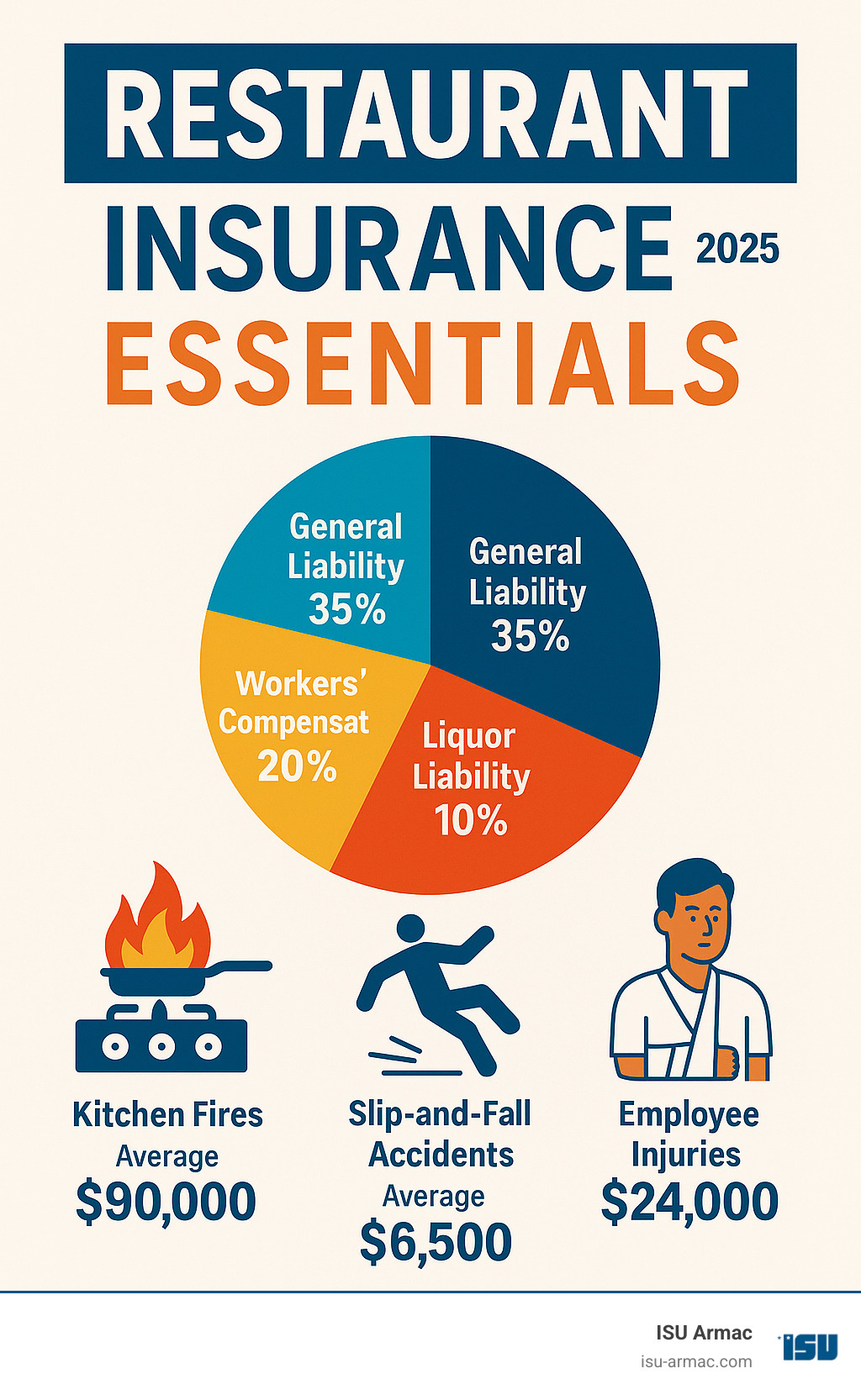
Commercial restaurant insurance is a specialized package of policies designed to protect food service businesses from the unique risks they face daily. Running a restaurant means facing hazards that go far beyond a burnt dish. From slip-and-fall accidents to kitchen fires, a single incident can quickly turn a profitable business into a financial disaster. The average restaurant fire claim costs around $90,000, while slip-and-fall incidents average $6,500 per claim. These aren’t just statistics—they represent real threats to your livelihood.
This essential coverage is a safety net that safeguards your investment, employees, and customers. Whether you’re operating a cozy café in Victorville or a busy family restaurant in Apple Valley, proper protection is crucial for financial stability and long-term success.
Key Commercial Restaurant Insurance Components:
- General Liability: Protects against customer injuries and property damage claims.
- Commercial Property: Covers your building, equipment, and inventory from fire, theft, and vandalism.
- Workers’ Compensation: Required by law for employees; covers their injuries and medical expenses.
- Liquor Liability: Essential for establishments serving alcohol; covers incidents involving intoxicated patrons.
- Business Interruption: Replaces lost income during temporary closures due to a covered event.
- Equipment Breakdown: Covers costly kitchen equipment repairs and resulting food spoilage.
The good news? Commercial restaurant insurance costs are manageable, typically ranging from $2,000 to $8,000 annually, depending on your restaurant’s size and scope. Many owners can save up to 35% by bundling policies and implementing safety programs.
I’m Ryan McEachron, Chief Executive Officer of ISU Insurance Services ARMAC Agency in Victorville. With over two decades of experience helping High Desert business owners, I’ve seen how proper commercial restaurant insurance can mean the difference between a temporary setback and permanent closure.
Commercial restaurant insurance helpful reading:
For a deeper dive into what our restaurants truly need, you can find more information here: What Insurance Does a Restaurant Need?.
The Core Ingredients: A Breakdown of Essential Restaurant Insurance Policies

Alt text: Insurance policy document with chef’s hat and whisk, symbolizing restaurant insurance coverage.
Building a comprehensive commercial restaurant insurance policy requires combining the right foundational coverages with specialized endorsements custom to your unique operations. While every restaurant faces similar core risks, your specific needs will depend on your location, menu, and services.
Core Coverages in a Commercial Restaurant Insurance Policy
General Liability Insurance: Your first line of defense, this covers you if a customer is injured on your property (e.g., a slip and fall) or if you cause property damage. Most owners choose industry-standard limits of $1 million per occurrence and $2 million aggregate. Learn more about General Liability Insurance.
Commercial Property Insurance: This protects your physical assets, including your building, kitchen equipment, furniture, inventory, and signage from perils like fire, theft, or storm damage.
Workers’ Compensation Insurance: Required by law in most states for businesses with employees, this covers medical bills and lost wages for work-related injuries. It also protects you from employee lawsuits. To stay compliant, you’ll need to comply with state and federal laws.
Liquor Liability Insurance: Also known as “dram shop” coverage, this is essential if you serve alcohol. It protects you if an intoxicated patron causes harm or damage after being served at your establishment. Understanding liquor liability information is vital for compliance.
Specialized Endorsements for Added Protection
While core coverages handle common risks, specialized endorsements provide crucial protection for specific scenarios.
Business Interruption Insurance: Replaces lost income and covers ongoing expenses like rent and payroll if you’re forced to close temporarily due to a covered event like a fire.
Equipment Breakdown Insurance: Covers the cost to repair or replace essential machinery like refrigeration systems or ovens after a sudden failure, and can help cover food spoilage losses.
Food Spoilage Coverage: Specifically reimburses you for ingredients lost due to a power outage or equipment failure, allowing you to restock quickly.
Cyber Liability Insurance: Protects against the costs of a data breach, such as stolen credit card information from your point-of-sale system.
Product Liability Insurance: Covers claims if a customer gets sick or has an allergic reaction from your food, helping with medical and legal expenses.
Commercial Auto Insurance: Necessary if you use vehicles for business purposes like deliveries or catering, as personal auto policies won’t cover commercial use.
All of these coverage options are available through ISU Armac. We can help you build a policy that fits your restaurant’s specific needs and budget, ensuring you have the right balance of protection.
Understanding the Price Tag: What Determines Your Commercial Restaurant Insurance Cost?

Alt text: Calculator and menus on restaurant counter, representing insurance cost calculation.
One of the first questions restaurant owners ask is, “How much will this cost?” The cost of commercial restaurant insurance is unique to each business, but understanding the key factors can help you make informed decisions. What works for a breakfast spot in Apple Valley will differ from a sports bar in Hesperia. For more details, see How Much Does Restaurant Insurance Cost?.
Factors Influencing Your Premium
Your insurance premium is based on a recipe of risk factors:
- Restaurant Type: Fine dining, fast food, bars, and food trucks all have different risk profiles.
- Location: Proximity to fire services, local crime rates, and regional risks (like earthquakes in Southern California) affect your rates.
- Revenue and Employees: Higher revenue and more employees generally increase exposure and costs.
- Claims History: A clean record can lead to better rates, while frequent claims signal higher risk.
- Coverage Limits and Deductibles: Higher limits increase premiums, while higher deductibles can lower them.
- Alcohol Sales: A higher percentage of alcohol sales significantly increases liquor liability costs.
Most small restaurants can expect to pay around $2,000 annually for basic coverage, while larger establishments or those with full bars may see costs reach $10,000 or more.
Common Risks and Claim Scenarios
Premiums reflect the real risks restaurants face daily. Kitchen fires are severe, averaging around $90,000 per claim. Slip-and-fall accidents are the most frequent, averaging $6,500. Other common claims stem from food poisoning allegations, employee injuries (burns, cuts), theft and vandalism (averaging $8,000), and equipment failure leading to inventory loss. Modern risks also include data breaches from POS systems.
How to Find Savings and Discounts
There are effective ways to reduce your commercial restaurant insurance costs without sacrificing protection:
- Bundle Policies: A Business Owner’s Policy (BOP) often saves 5-20%.
- Implement Safety Programs: Regular staff training and well-maintained fire suppression systems can earn discounts.
- Maintain a Claims-Free Record: A good history demonstrates lower risk to insurers.
- Work with an Independent Agent: As an independent agency, ISU Armac shops multiple carriers, which can save clients 35-40%.
- Ask About Other Discounts: We can help identify savings for alumni groups or customer loyalty programs.
Finding the right balance between comprehensive protection and manageable costs is key. Cutting corners on essential coverage is a risk no successful restaurant owner should take.
Proactive Protection: Mitigating Risks and Best Practices for Restaurant Safety

Alt text: Restaurant manager performing a safety inspection in a well-organized kitchen.
While commercial restaurant insurance is your financial safety net, prevention is the best strategy. Implementing solid safety practices can prevent costly claims, keep your staff and customers safe, and demonstrate to insurers that you are a responsible operator deserving of better rates.
Implementing a Robust Risk Management Program
A strong risk management program is built on creating a culture of safety. Key practices include:
- Regular Staff Training: Ensure your team is proficient in food handling, allergen awareness, responsible alcohol service, and emergency response.
- Proper Food Handling Protocols: Strictly follow temperature controls, cross-contamination prevention, and safe storage practices to avoid foodborne illness claims.
- Routine Equipment Maintenance: Regularly service ovens, fryers, and refrigeration units to prevent breakdowns and reduce fire risks.
- Fire Suppression System Checks: Professionally inspect and maintain hoods, sprinklers, and extinguishers to ensure they function correctly.
- Documented Safety Procedures: Create clear, written procedures for handling spills, injuries, and other emergencies.
- Incident Report System: Document every incident, no matter how minor. Take photos, gather witness statements, and record details to aid in insurance claims and identify risk patterns.
Ensuring Legal and Regulatory Compliance
Compliance is about building a stable foundation for your business and your insurance coverage.
- Adhere to Health Codes: Following health standards protects you from foodborne illness claims that can destroy a restaurant’s reputation.
- Follow OSHA Guidelines: These workplace safety standards help prevent employee injuries and reduce workers’ compensation claims.
- Meet State Insurance Requirements: Workers’ compensation is mandatory for businesses with employees. For vehicles used for business, you must meet state minimums, such as California’s commercial auto insurance requirements.
- Understand Local Ordinances: Be aware of rules in your city—whether Victorville, Apple Valley, or Hesperia—regarding seating, signage, and liquor service to avoid unexpected liabilities.
Proactive protection through risk management and compliance not only keeps you safe but also helps you secure better insurance rates.
From Quote to Claim: Navigating the Restaurant Insurance Process
Getting commercial restaurant insurance is a straightforward process with the right guidance. At ISU Armac, we help restaurant owners throughout the High Desert steer this journey smoothly.
How to Get the Right Coverage for Your Business
Finding the right policy starts with understanding your unique operation. Here is our process:
- Assess Your Risks: We’ll discuss your specific operations—like alcohol service, delivery, or outdoor dining—to build a clear risk profile.
- Determine Coverage Limits: We help you select appropriate limits, starting with a standard $1 million in general liability, and find the right balance between protection and cost.
- Gather Business Information: We’ll guide you in collecting the necessary details for an accurate quote, such as revenue, payroll, and claims history.
- Shop for Coverage: As independent agents, we shop the market for you. You can start the process and Get your instant quote now.
The Advantage of Working with an Independent Insurance Agent
Unlike agents tied to a single company, an independent agent at ISU Armac works for you. We provide:
- Access to Multiple Carriers: We compare policies and pricing from various top-rated providers to find the best value.
- Expert Guidance: We specialize in commercial restaurant insurance and explain complex terms in plain English.
- Customized Recommendations: We craft personalized insurance strategies that address your specific risks.
- Application Assistance: We help you complete applications accurately and can perform a free policy audit to ensure you have the best coverage and rates.
What to Do When You Need to File a Claim
If an incident occurs, knowing the right steps can make all the difference. We’re here to guide you.
- Contact Us Immediately: Your first step after any incident is to call your agent. We can guide you on what to do next.
- Document Everything: Take photos of any damage or injuries. Write down what happened, including dates, times, and witness information.
- Preserve Evidence: Don’t discard damaged property before an adjuster can inspect the scene. This is crucial for documenting your loss.
- Cooperate with the Adjuster: Provide all requested information promptly and honestly to speed up the resolution.
- Avoid Admitting Fault: Stick to the facts when reporting an incident. Let the investigation determine liability.
With our experienced guidance, we’ll work to get your restaurant back to business as quickly as possible.
Frequently Asked Questions about Restaurant Insurance
As a restaurant owner in Victorville or Apple Valley, you likely have questions about commercial restaurant insurance. Here are answers to some of the most common concerns.
How much insurance does a small restaurant need?
There’s no single answer, as your needs depend on factors like location, services, and revenue. However, most small restaurants should carry at least $1 million in general liability coverage. A Business Owner’s Policy (BOP) is an excellent starting point, as it bundles general liability, commercial property, and business interruption insurance at a competitive price. We recommend a full risk assessment to determine the precise coverage that fits your budget and protects your specific operation.
Does restaurant insurance cover food delivery?
Standard policies often do not automatically cover delivery. The right coverage depends on your delivery model:
- Restaurant-Owned Vehicles: You need a Commercial Auto Insurance policy. Personal auto insurance will not cover accidents during business use.
- Employees’ Personal Vehicles: You need Hired and Non-Owned Auto Liability coverage. ISU Armac offers this key endorsement to protect your business if an employee has an accident while working.
- Third-Party Apps: While services like DoorDash have their own insurance, gaps can exist. It’s wise to review your exposure with an agent.
We can help you find the right Commercial Insurance to protect your delivery operations.
Can I get restaurant insurance before I open?
Yes, and you absolutely should. In fact, it’s often a requirement.
- Landlords typically require proof of insurance (usually $1 million in general liability) before signing a lease.
- Lenders will want to see that their investment is protected before approving a business loan.
- Licensing Authorities often require proof of insurance to issue business, food service, or liquor licenses.
Securing your commercial restaurant insurance early protects your investment during renovations and ensures you’re ready for your grand opening. We can help you get coverage during the planning stages to satisfy all third-party requirements.
Secure Your Restaurant’s Future Today
Your restaurant is more than a business—it’s your passion and your family’s financial future. Whether you’re in Apple Valley, Hesperia, or anywhere in the High Desert, you’ve poured your heart and soul into creating something special for the community.
Commercial restaurant insurance isn’t just another expense; it’s the shield that stands between your dream and the risks that could shatter it. A slip-and-fall accident or a kitchen fire can happen to anyone, but a well-crafted policy ensures you have the financial resources to bounce back. The peace of mind that comes with proper coverage is invaluable, allowing you to focus on crafting incredible meals and growing your business.
Don’t gamble with everything you’ve worked so hard to build. Your restaurant deserves the same level of care you put into every dish. Take the crucial next step today by exploring your commercial insurance options with us at ISU Armac. Let’s work together to create a protection plan that fits your unique needs and budget, giving you the confidence to thrive.