
Why Commercial Property Damage Protection Matters for Your Business
Commercial property damage can happen to any business at any time—from a burst pipe flooding your office to a fire destroying your inventory. For the diverse array of businesses that call Southern California home, from busy retail shops to sprawling warehouses, understanding what property damage means and how to protect yourself is absolutely critical for any business owner.
Quick Answer: What You Need to Know About Commercial Property Damage
- Definition: Physical harm to business buildings, equipment, inventory, or other assets
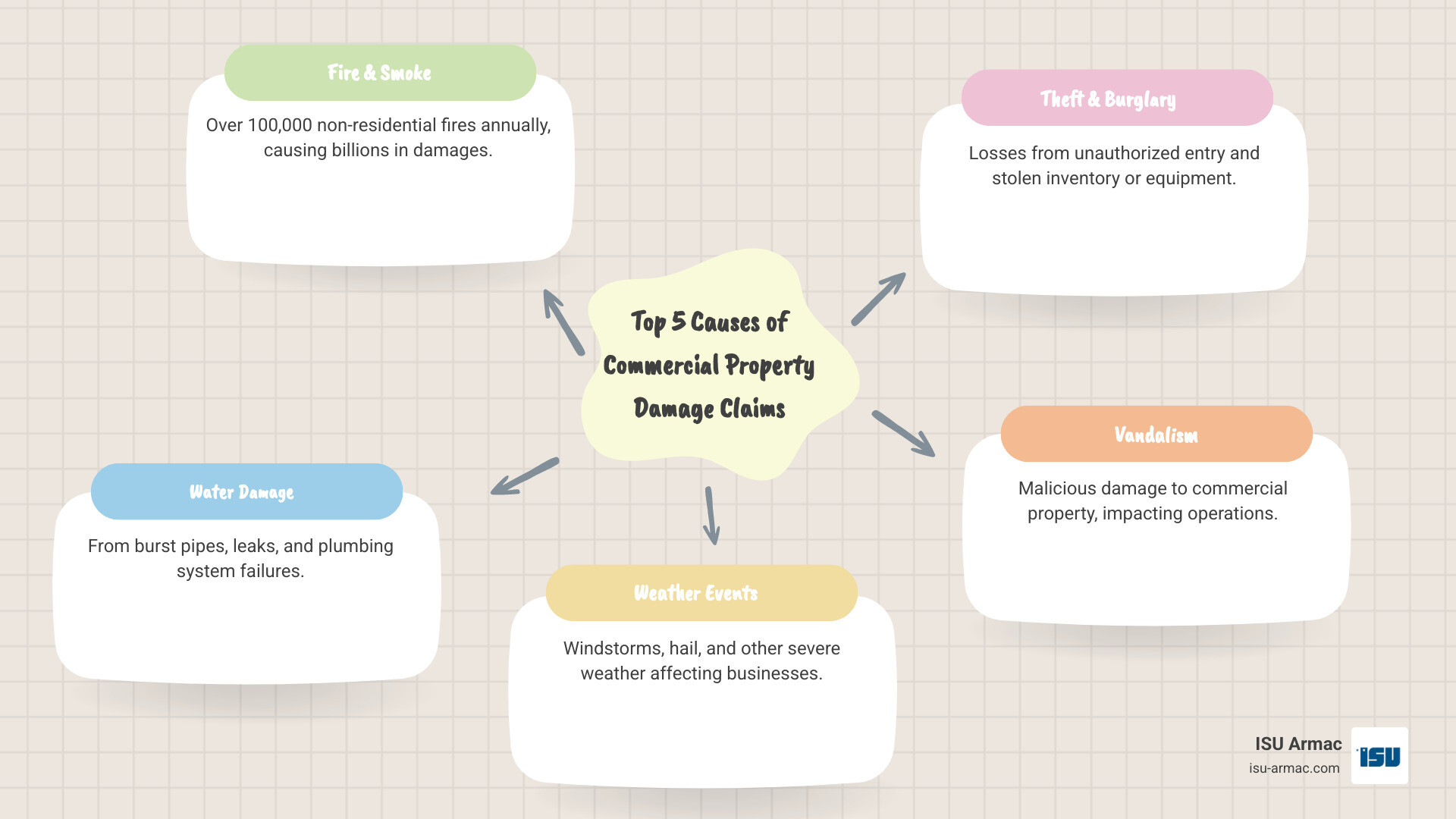
- Common Causes: Fire, water damage, theft, vandalism, weather events, and equipment failure
- Insurance Coverage: Requires commercial property insurance (not typically covered by general liability)
- Key Steps After Damage: Ensure safety, document everything, notify your insurer immediately, and make emergency repairs to prevent further loss
- Cost Impact: Businesses face an average of $3+ billion in earthquake-related losses annually in California alone, with over 100,000 non-residential building fires occurring nationwide each year
The financial impact of commercial property damage extends far beyond repair costs. According to the National Fire Protection Association, over 100,000 non-residential building fires occur in the U.S. each year, causing billions in damages. About half of all restaurant owners report that weather damage has closed their business at some point. Without proper coverage, these significant losses can easily mean the end of your business.
Many business owners don’t realize that standard commercial property policies exclude certain perils like floods and earthquakes—both significant risks in California. Others underestimate the value of their property, leaving them underinsured when disaster strikes. The difference between Actual Cash Value and Replacement Cost coverage alone can mean thousands of dollars out of your pocket.
I’m Ryan McEachron, Chief Executive Officer of ISU Insurance Services ARMAC Agency in Victorville, and I’ve spent decades helping Southern California business owners steer the complexities of commercial property damage coverage. My extensive experience, combined with my work with the Victorville Chamber of Commerce and Planning Commission, has given me a perspective on how proper insurance preparation makes the crucial difference between businesses that recover and those that are forced to close their doors for good.
Understanding Your Shield: A Deep Dive into Commercial Property Insurance

Think of commercial property insurance as the armor protecting everything you’ve built. For those of us running businesses in Southern California, it’s not just paperwork—it’s the difference between bouncing back from disaster and closing our doors for good. Understanding how this coverage works, what it protects, and where the gaps might be is essential to keeping your business safe.
What is Commercial Property Damage Insurance?
Commercial property damage insurance is your financial safety net when the unexpected happens to your physical business assets. It covers the building you own or lease, your equipment, inventory, furniture, fixtures, tools, and even some items you keep outdoors. When fire, storms, or other covered events damage these assets, your insurance steps in to help pay for repairs or replacement.
Here in Apple Valley, Victorville, Hesperia, and Oak Hills, every business faces real risks—from wildfires and windstorms to burst pipes and break-ins. Without proper coverage, a single incident could wipe out years of hard work. That’s why commercial property insurance forms the foundation of a solid Business Owners Insurance policy. It ensures that when something damages your physical space or what’s inside it, you’re not left footing the entire bill yourself.
What’s Typically Covered? (Covered Perils)
Most commercial property policies protect you against a wide range of perils—the industry term for events that cause damage. Fire is usually the first thing people think about, and for good reason. It’s one of the most devastating risks, covering not just flame damage but also smoke and water damage from putting out the blaze.
Theft and vandalism protection is crucial too, especially for retail businesses or those in high-traffic areas. Whether someone breaks in and steals your equipment or spray-paints your storefront, you’re covered. Windstorms and hail are particularly important here in Southern California, where strong winds can tear off roofing and damage structures. Your policy also typically covers explosions, burst pipes (a common culprit behind water damage), and even damage from a vehicle hitting your building.
The specifics depend on whether you have a Basic, Broad, or Special form policy. For a comprehensive look at the various types of damage your business might face, this guide on damage types offers helpful details.
Common Exclusions and the Need for Specialized Coverage
Here’s where things get tricky—and where many business owners find gaps in their coverage after it’s too late. Standard commercial property insurance doesn’t cover everything. Flood damage is almost always excluded, which matters more than you might think. Even if you’re not near a river, heavy rains can cause flooding that your standard policy won’t touch. You’ll need a separate flood insurance policy.
Earthquakes are another major exclusion that hits close to home for California businesses. Earthquake damage from ground shaking accounts for 99% of earthquake-related property damage in our state, and typical deductibles run from 10% to 20% of your property’s replacement value. The Commercial Property Owner’s Guide to Earthquake Safety from California’s Seismic Safety Commission is essential reading if you want to understand this risk.
Your policy also won’t cover wear and tear or gradual deterioration—insurance is for sudden, accidental events, not deferred maintenance. Employee dishonesty requires separate crime insurance, while government action that damages or seizes your property isn’t covered either. Your commercial vehicles need their own policy, and if you’re holding customer property, you’ll need general liability or specialized bailee’s coverage.
Equipment breakdown from mechanical or electrical failures typically needs an endorsement or separate policy for comprehensive protection. And if your business sits in one of Southern California’s high fire risk zones, you may need specialized High Fire Risk Insurance to protect against wildfires.
Understanding these exclusions isn’t about finding problems—it’s about closing gaps before disaster strikes.
Understanding Your Valuation: ACV vs. Replacement Cost
When disaster strikes and you file a claim, how your policy values your damaged property makes a huge difference in what you receive. There are two main approaches: Actual Cash Value and Replacement Cost.
| Valuation Method | Definition | How it’s Calculated | Best For |
|---|---|---|---|
| Actual Cash Value (ACV) | The depreciated value of your property at the time of loss | Replacement cost minus depreciation based on age and condition | Businesses with tight budgets or older equipment with limited remaining useful life |
| Replacement Cost | The cost to replace damaged property with new items of similar kind and quality | Current cost to buy new, without deducting for depreciation | Most businesses that want full protection and the ability to truly rebuild after a loss |
Actual Cash Value means you’ll receive what your property was worth at the time it was damaged—accounting for age, wear, and depreciation. If your ten-year-old equipment gets destroyed, you get the depreciated value, not what it costs to buy new equipment today. Your premiums will be lower, but you’ll likely pay more out of pocket to actually replace what you lost.
Replacement Cost coverage pays what it costs to replace your damaged property with new items of similar kind and quality, without deducting for depreciation. Yes, your premiums will be higher, but when you need to rebuild or replace major assets, you’ll have the funds to actually do it. For most businesses, especially those with significant equipment or inventory investments, replacement cost coverage is worth every penny.
Beyond the Building: Business Interruption Coverage
Even the best commercial property insurance only covers your physical assets. But what happens to your income when you can’t operate because of covered damage? That’s where business interruption coverage becomes crucial.
This coverage helps replace lost income and pays for ongoing operating expenses like payroll, rent, and utilities while your business is shut down for repairs. It can even cover the costs of operating from a temporary location if you need to relocate during reconstruction. The key is that the interruption must result from physical damage covered by your property policy.
Think of business interruption coverage as the other half of your protection plan. Your property insurance rebuilds your physical space, while business interruption insurance keeps your business financially alive during the recovery period. It’s typically available as an add-on to your commercial property policy or as part of a comprehensive Business Owners Policy.
At ISU Armac, we’ve seen how the right combination of property and business interruption coverage helps Southern California businesses not just survive disasters, but come back stronger.