
Why Commercial Auto Insurance Rates Matter to Your Bottom Line
Commercial auto insurance rates have climbed steadily, with premiums rising significantly in 2024 and predictions for continued growth. For businesses in Victorville, Apple Valley, and across Southern California, these increases are driven by soaring vehicle repair costs, higher bodily injury claim severity, and a surge in multi-million dollar legal verdicts. With insurers paying out more in claims than they collect in premiums, understanding these rates is crucial for protecting your business while balancing coverage and cost.
Quick Answer: Average Commercial Auto Insurance Costs
- Light commercial vehicles: $1,000–$1,500 per year on average
- Private passenger autos: $600–$2,000 per year
- Heavy trucks: $5,000–$10,000+ per year
- Overall average: Approximately $1,762 annually per vehicle in 2025
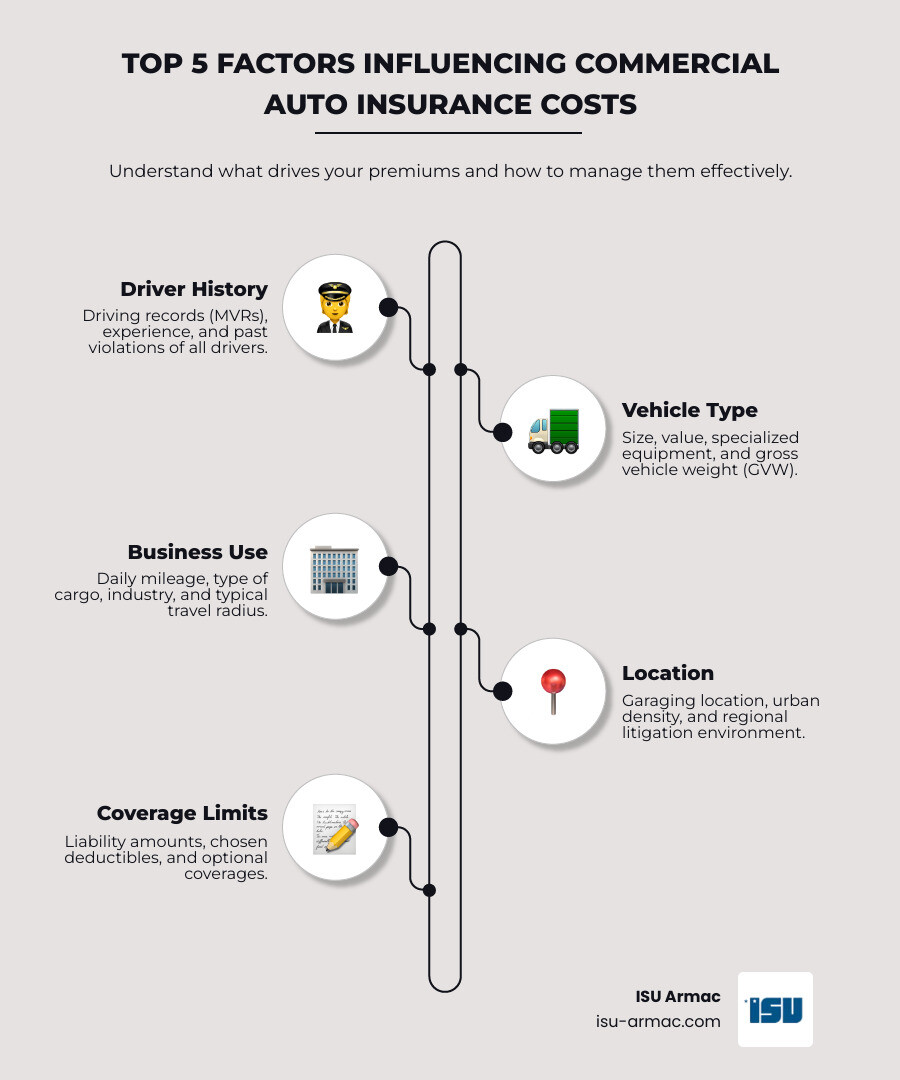
Key factors affecting your rate:
- Driver history (accidents, violations, experience)
- Vehicle type (size, value, specialized equipment)
- Business use (mileage, cargo, industry)
- Location (urban density, theft rates, litigation environment)
- Coverage limits (liability amounts, deductibles, optional coverages)
I’m Ryan McEachron, CEO of ISU Insurance Services ARMAC Agency in Victorville. Since 1995, I’ve helped High Desert businesses steer Commercial auto insurance rates and find comprehensive coverage. My experience in both insurance and local government provides a unique understanding of the challenges local business owners face when protecting their commercial vehicles.
Understanding Commercial Auto Insurance: What It Is and When You Need It

For businesses in Victorville, Apple Valley, and across Southern California, vehicles are critical assets. But a personal auto policy won’t cover business use. Commercial auto insurance is specifically designed to protect you from the unique risks that come with using vehicles for work.
Unlike a personal policy, commercial coverage offers higher liability limits to handle greater business exposure and can cover multiple employees, not just household members. You need commercial auto insurance if your business:
- Transports goods or materials: This applies to contractors, delivery services, and any business moving products or equipment.
- Transports clients: Real estate agents, shuttle services, or tour operators must have commercial coverage to protect passengers.
- Has employees using vehicles for work: This includes employees driving company cars or their own personal vehicles for business errands. A “hired and non-owned auto” endorsement is crucial in these cases.
Using a personal vehicle for business is a significant risk. In an accident, your personal insurer can deny the claim, leaving you responsible for all damages, medical bills, and legal fees. They may also cancel your policy for misrepresentation, which makes it harder and more expensive to get coverage in the future. Properly insuring your vehicles isn’t just about compliance—it’s about protecting your business from a financial catastrophe.
Decoding Commercial Auto Insurance Rates: What’s the Average Cost?
Commercial auto insurance rates are highly personalized, but it’s helpful to understand the typical costs and why they are rising. On average, a policy in 2025 costs around $1,762 per vehicle, but this varies widely. A light commercial vehicle might cost $1,000 to $1,500 per year, while heavy trucks can exceed $10,000 annually.
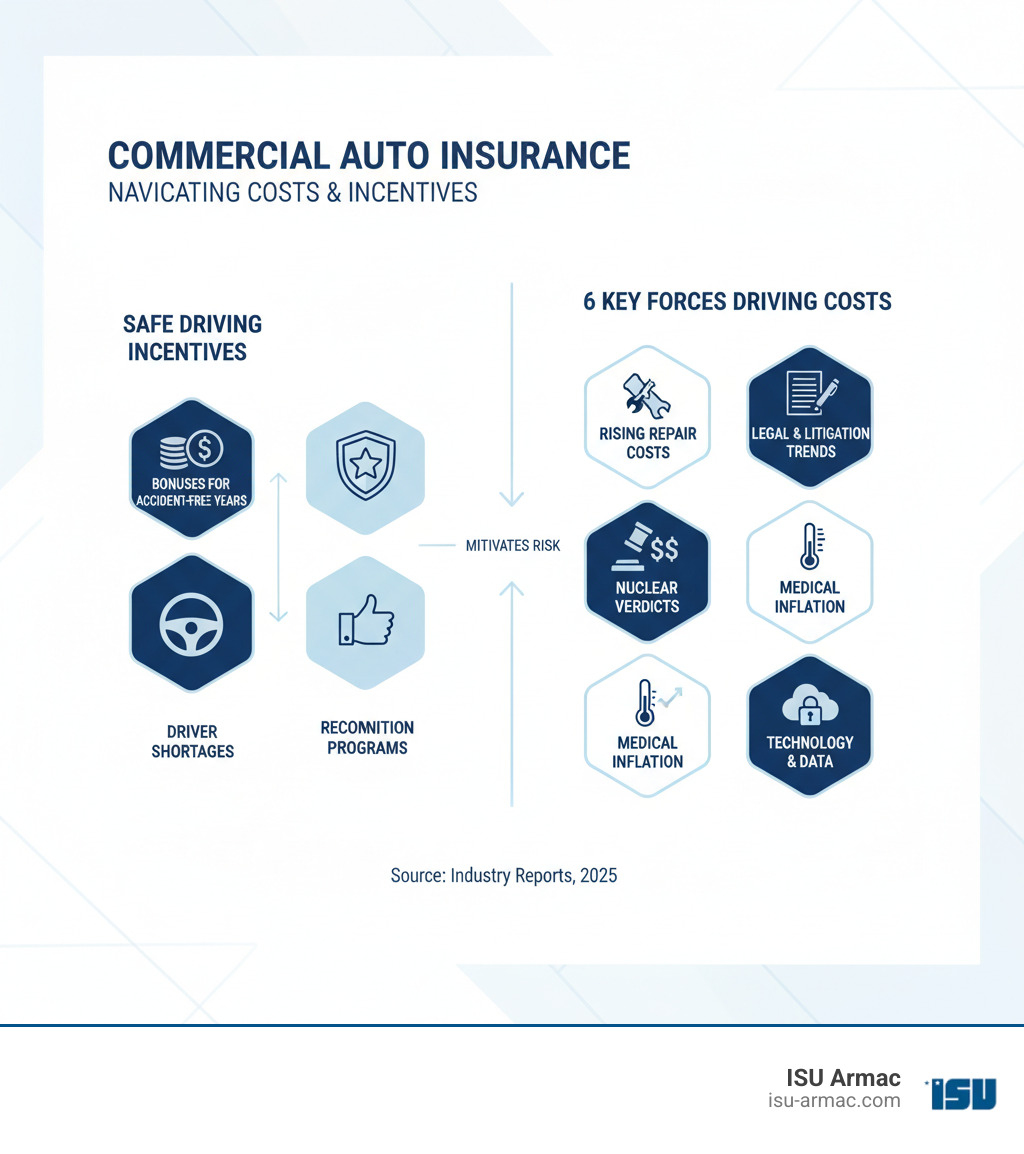
Several market forces are pushing these premiums upward:
- Exploding Vehicle Repair Costs: Modern vehicles are packed with expensive sensors and electronics, causing repair costs to jump significantly. A minor accident can now require costly recalibrations.
- Rising Bodily Injury Severity: Higher medical costs and more severe accidents have increased the expense of injury claims.
- Challenging Legal Landscape: A surge in “nuclear verdicts” (jury awards over $10 million) and increased attorney involvement force insurers to set aside larger reserves, which drives up premiums for everyone. For more on how premiums are calculated, Investopedia offers a helpful explanation.
- General Inflation: The rising cost of labor, parts, and healthcare directly impacts the total cost of claims.
For 12 of the last 13 years, insurers have paid out more in claims than they’ve collected in premiums. This unsustainable trend is a primary driver behind the steady increase in commercial auto insurance rates. Understanding these factors helps you make smarter decisions about managing your business’s risk.
Key Factors That Determine Your Commercial Auto Insurance Premiums

Insurers assess many factors to determine your commercial auto insurance rates. Understanding them can help you identify areas for potential savings.
Driver Profile: History, Experience, and Training
The person behind the wheel is a primary factor. Insurers review Motor Vehicle Records (MVRs) for all drivers, and a clean record with no accidents or violations leads to lower rates. Conversely, a history of infractions, especially DUIs or reckless driving, will increase premiums. Hiring experienced drivers and implementing driver safety programs are effective ways to demonstrate lower risk and earn discounts.
Vehicle Profile: Type, Usage, and Location
The vehicles themselves are another key piece. Factors include:
- Type and Value: More expensive or specialized vehicles cost more to insure due to higher repair or replacement costs.
- Weight: Heavier vehicles (GVW over 4,500 kg) pose a greater risk and command higher premiums.
- Usage: High daily mileage and the type of cargo (goods, equipment, or people) influence risk exposure.
- Location: Garaging vehicles in urban areas like Victorville with higher traffic and theft rates typically costs more than in rural parts of the High Desert.
How Claims and Infractions Affect Your Rates
Your claims history is a direct indicator of your risk. A pattern of frequent or severe claims, particularly at-fault accidents and traffic violations, will lead to higher premiums. Insurers calculate your company’s loss ratio (claims paid out vs. premiums paid in), and a high ratio will result in increased renewal costs. Maintaining a strong safety record is critical for keeping rates down.
Policy Structure: How Coverages and Limits Affect Your Premiums
Your policy choices directly impact your premium. Higher liability limits, while increasing cost, are essential for protecting your business from major lawsuits. Optional coverages like collision, comprehensive, and uninsured motorist protection add to the premium but fill crucial gaps. You can lower your premium by choosing a higher deductible, but this means paying more out-of-pocket for a claim. Endorsements like “hired and non-owned auto” coverage address specific risks. We can help you structure a policy that balances cost and protection for your business. For more details on our offerings, visit our commercial insurance page.
How to Lower Your Commercial Auto Insurance Premiums

While rates are rising, you can take practical steps to manage and reduce your commercial auto insurance rates without sacrificing protection.
Proactive Risk Management Strategies
The most effective way to lower costs is to demonstrate a commitment to safety. Insurers reward businesses that actively minimize risk.
- Implement Driver Safety Programs: Go beyond basic licensing with training in defensive driving and hazard recognition.
- Maintain Strict Hiring Standards: Always check MVRs before hiring and prioritize drivers with clean records and relevant experience.
- Follow a Fleet Maintenance Schedule: Keep detailed records of vehicle maintenance to prevent accidents caused by mechanical failure.
- Use Telematics: GPS tracking and telematics systems can identify unsafe driving behaviors and often qualify you for discounts.
These strategies show insurers you are a lower-risk client. For more on industry-wide cost drivers, Travelers offers insights on the 6 Forces Driving Commercial Auto Insurance Costs.
Strategic Policy and Fleet Choices
Your high-level decisions about your fleet and policy structure also have a major impact.
- Choose Safer Vehicles: Opt for vehicles with modern safety features like automatic emergency braking and blind-spot monitoring.
- Bundle Your Policies: Combine your commercial auto with general liability or other business insurance to earn multi-policy discounts.
- Qualify for Fleet Insurance: If you have five or more vehicles, fleet pricing can offer more competitive rates than insuring each vehicle individually.
- Review Coverage Annually: Ensure your policy matches your current operations and that you’re not over- or under-insured.
- Adjust Deductibles: If your business has healthy cash flow, choosing a higher deductible can significantly lower your premium.
By combining smart risk management with thoughtful policy choices, we can work together to secure better commercial auto insurance rates for your Southern California business.
Frequently Asked Questions about Commercial Auto Insurance
Business owners in Southern California often have questions about the complexities of commercial auto insurance. Here are answers to some of the most common ones.
What is the difference between personal and commercial car insurance?
The core difference is purpose and risk. Personal auto insurance covers individual, non-business driving. Commercial auto insurance is built for vehicles used for business purposes, such as transporting goods, services, or people. Commercial policies feature much higher liability limits to protect against greater business risks, and they can cover employees, not just family members. Because of the increased risk and higher limits, commercial auto insurance rates are typically higher than personal premiums.
What happens if I use my personal vehicle for business and have an accident?
This is a critical mistake with severe financial consequences. Your personal auto insurer will likely deny the claim due to a “business use” exclusion in the policy. This leaves you personally responsible for all costs, including vehicle repairs, medical bills, and legal judgments, which can be financially devastating. Furthermore, your insurer may cancel your policy for misrepresentation, making future insurance harder to obtain. It is crucial to have the correct coverage before an accident occurs.
Does a commercial auto policy cover personal use of a company vehicle?
In many cases, yes. Most commercial auto policies include “permissive use,” which means the vehicle is covered as long as the driver has permission from the owner. This coverage often extends to personal use by the business owner or an employee, such as running errands on the weekend. However, policy specifics matter. It’s essential to confirm with your insurance broker that your policy allows for personal use, especially for large or highly specialized vehicles. Open communication ensures you have the right protection whether your vehicles are on or off the clock.
Conclusion
Understanding commercial auto insurance rates is the first step toward controlling them. As we’ve seen, factors like driver history, vehicle type, usage, and your policy structure all shape your premiums. While market forces like rising repair costs and legal verdicts continue to push rates up, you are not powerless. Proactive risk management—through driver safety programs, careful hiring, and fleet maintenance—is your best strategy for earning better rates.
For businesses across the High Desert, from Victorville to Apple Valley, the right commercial auto insurance is the foundation of financial security. A single accident without proper coverage can jeopardize everything you’ve built. At ISU Armac, we’ve spent nearly three decades helping local businesses find the ideal balance of comprehensive protection and competitive rates. We shop multiple carriers to build a custom solution for your unique needs.
Don’t overpay for insurance or leave your business exposed. Let’s find the commercial auto insurance rates and protection that are right for you.