
Why Finding the Cheapest Unoccupied House Insurance Matters
Cheapest unoccupied house insurance is essential for protecting an empty property from risks like vandalism, fire, and water damage. Standard homeowners policies often stop covering a property after it has been vacant for just 30-60 days, leaving you financially exposed.
Vacant homes are prime targets for theft, arson, and undetected damage, which is why specialized insurance typically costs 50-60% more than standard policies. However, you can find affordable coverage by:
- Comparing multiple carriers to find the best rates.
- Installing security systems to earn discounts of 10-20%.
- Choosing a higher deductible to lower monthly premiums.
- Working with an independent agent who can access multiple insurers.
- Bundling policies for multi-policy discounts.
Whether you’re renovating, selling, or managing an inherited property in Southern California, you don’t have to overpay. I’m Ryan McEachron, CEO of ISU Insurance Services ARMAC Agency in Victorville. My team and I specialize in helping property owners across the High Desert find comprehensive, affordable protection for their vacant homes.

Why Your Standard Homeowners Policy Isn’t Enough

Your standard homeowners insurance is designed for an occupied home where problems are spotted quickly. Once a home is empty, the risks multiply. A small leak can cause thousands in water damage, and a broken window can become an invitation for vandals. This is why most standard policies include a vacancy clause.
This clause typically voids or severely limits your coverage if the home is unoccupied for 30 to 60 consecutive days. After this period, you could be left with a denied claim for a fire, burst pipe, or break-in. To get the right protection, you need specialized Vacant House Insurance.
Insurers worry about real risks in empty homes:
- Vandalism and Theft: Empty homes are magnets for break-ins, leading to stolen appliances, copper piping, and property damage.
- Arson: Vacant properties are common targets for arson, a risk that keeps property owners up at night.
- Water Damage: A small, undetected leak can run for weeks, causing massive structural damage and mold.
- Liability Issues: You can still be held responsible if someone is injured on your property, even a trespasser.
Relying on a standard policy for a vacant home is a gamble that can leave your investment completely unprotected.
The Critical Difference: Vacant vs. Unoccupied
To an insurer, “vacant” and “unoccupied” are not the same. Understanding the difference is key to getting the right coverage.
- An unoccupied home contains personal belongings and furniture, and you intend to return. Think of a vacation home or a property you’ve left for an extended trip. The home appears lived-in.
- A vacant home is empty of personal property, and you have no plans to live there. This includes homes for sale after you’ve moved out, inherited properties, or investment properties between tenants.
Vacant homes are considered much higher risk because they are more attractive to criminals and problems can go unnoticed for longer. While some insurers may offer an endorsement for an unoccupied home for a short period, a truly vacant property requires a specialized policy. For more details, see our guide on Empty House Insurance.
What Happens if You Don’t Inform Your Insurer?
Failing to notify your insurer that your home is vacant is a costly mistake. Your insurance contract requires you to report this change. If you don’t, you risk:
- A Voided Policy: Your insurer can cancel your coverage, leaving you with no protection at all.
- Claim Denial: If a loss occurs after the vacancy period has been exceeded, your claim will be denied, and you’ll have to pay for all repairs out of pocket.
- Personal Liability: If someone is injured on the property and your liability coverage is void, you could be sued personally for damages.
- Future Insurability Issues: A policy violation can make it difficult and more expensive to get insurance in the future.
Being upfront with your insurer allows you to get the correct cheapest unoccupied house insurance in place. The cost is a fraction of what you would face after an uninsured loss.
How to Find the Cheapest Unoccupied House Insurance
Finding the cheapest unoccupied house insurance is about smart shopping, not cutting essential coverage. While vacant home insurance costs more—typically 50-60% higher than standard policies—you can still find an affordable rate.

The most effective way to save is to shop multiple carriers. As an independent agency, ISU Armac compares quotes from numerous insurers to find the best value for you. The difference between quotes can be hundreds of dollars annually for similar coverage.
We also help you customize your policy to fit your specific needs and budget, ensuring you don’t pay for unnecessary coverage. Choosing a higher deductible is another strategy that can reduce your premium, though it means paying more out-of-pocket if you file a claim. Our goal at ISU Armac is to find you the Cheapest Vacant Home Insurance that provides real peace of mind.
Key Factors That Determine the Cost of Your Cheapest Unoccupied House Insurance
Insurers consider several factors when setting your premium. Understanding them helps you identify potential savings.
- Location: A property in an area with high crime rates or natural disaster risk (like wildfires in Southern California) will cost more to insure.
- Property Value: The cost to rebuild your home directly impacts the premium. Higher value means higher cost.
- Condition and Age: A well-maintained home with updated systems (roof, plumbing, electrical) is less risky and may qualify for better rates.
- Length and Reason for Vacancy: A short-term vacancy for renovations is viewed differently than a long-term, indefinite vacancy. Flexible 3, 6, or 9-month policies can be more affordable.
- Security Measures: This is where you have control. Monitored alarms, deadbolts, and water leak sensors can significantly lower your premium.
- Claims History: A clean claims history works in your favor, while a history of multiple claims will increase your rates.
Are Discounts Available for the Cheapest Unoccupied House Insurance?
Yes, discounts are a great way to lower your costs. Insurers reward proactive homeowners who reduce risk.
- Security Systems: A professionally monitored alarm system can cut your premium by 10-20%. Video cameras and smart home devices like water sensors also help.
- Fire Protection: Properties with fire sprinklers, advanced smoke detectors, or proximity to a fire hydrant may receive a discount.
- Bundling Policies: Combining your vacant home policy with your auto or other insurance with the same carrier is one of the easiest ways to save.
- Claims-Free History: A good track record demonstrates you are a low-risk client.
- Regular Inspections: While not always a formal discount, showing an insurer you have a plan for weekly property checks proves you are actively managing the property, which can lead to better rates. As the BC Real Estate Association suggests, regular inspections are a key best practice.
Understanding Your Coverage: What’s Included and Excluded
When searching for the cheapest unoccupied house insurance, understand what you’re buying. The goal is value and comprehensive protection, not just the lowest price.

Most vacant home policies are “named perils” policies, meaning they only cover losses specifically listed in the contract. This is different from a standard “all-risk” policy, which covers everything unless it’s specifically excluded. Your policy will also have limits (the maximum payout) and deductibles (your out-of-pocket share of a claim).
Liability protection is also crucial, as it covers you if someone is injured on your empty property. For a full breakdown, see our Vacant Home Insurance Complete Guide.
Typical Perils Covered
Even a basic vacant home policy should cover the most significant risks:
- Fire and lightning
- Windstorm and hail
- Explosions
- Smoke damage
- Vandalism (often available as an add-on, or endorsement)
- Liability for injuries on the property
Common Exclusions and Limitations
Knowing what isn’t covered is just as important. Common exclusions include:
- Water damage from frozen pipes: This is often denied unless you took preventive measures, like maintaining heat or winterizing the plumbing.
- Glass breakage: This is frequently excluded, especially if caused by vandalism.
- Theft of contents: Basic policies assume the home is empty. Coverage for any remaining belongings requires a special endorsement.
- Vandalism: While it can be added, many basic policies exclude it due to the high risk.
- Mold: Damage from mold that develops over time from an undetected leak is typically not covered.
- Wear and tear: Insurance covers sudden, accidental events, not gradual deterioration.
- Earthquakes and floods: These always require separate, specialized insurance policies.
Proactive Steps to Lower Premiums and Protect Your Property
Securing the cheapest unoccupied house insurance involves more than just shopping for policies; it’s about actively reducing your property’s risk. Insurers reward responsible owners with lower premiums.
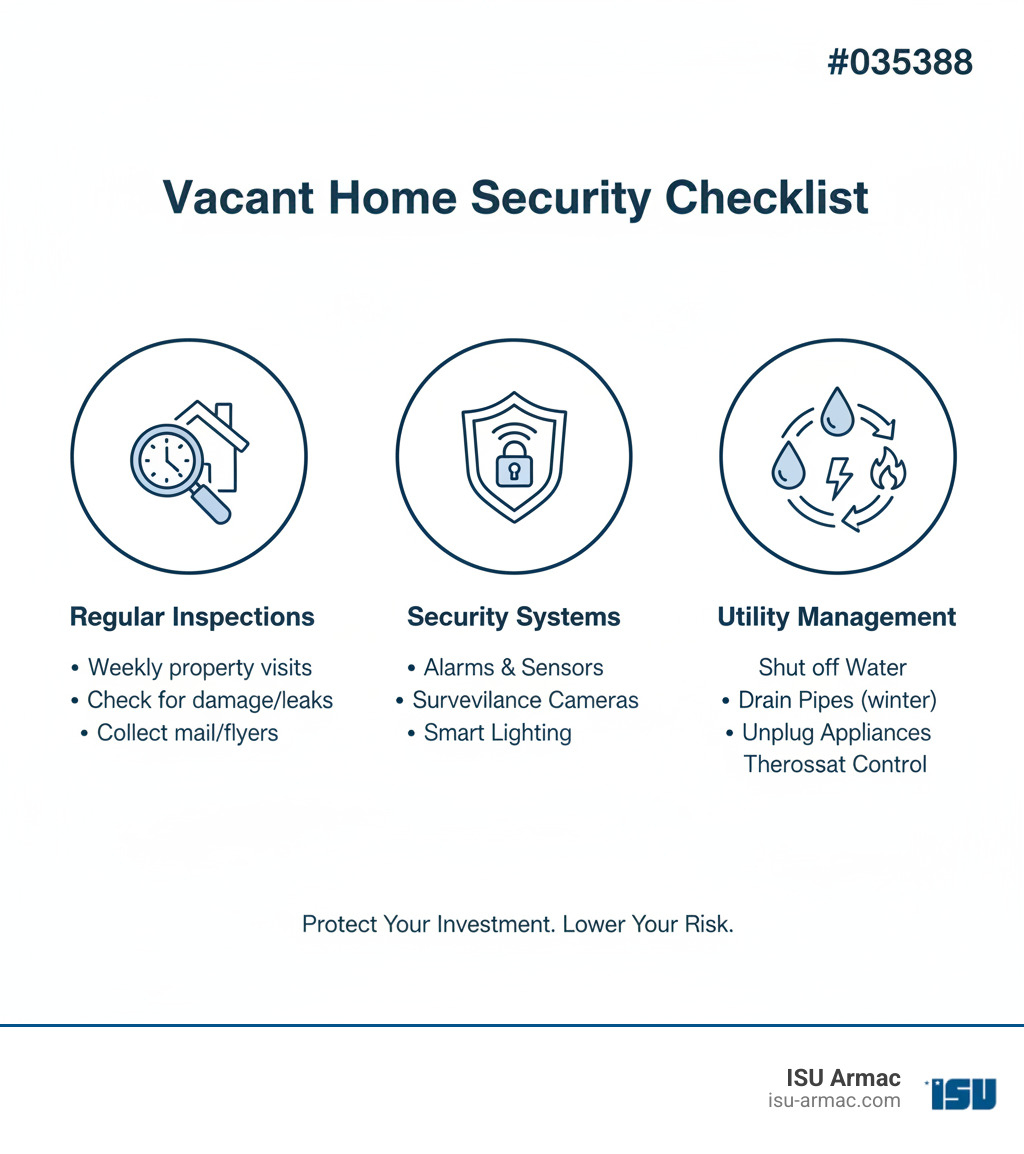
Simple, proactive measures can lead to significant savings. Regular maintenance, security upgrades, and consistent property monitoring show insurers you are serious about preventing losses. As the BC Real Estate Association notes, it’s important to follow best practices such as regular property inspections to mitigate risks.
The Role of Security and Maintenance
Security and maintenance are your first line of defense. They protect your property and directly impact your insurance costs. Key steps include:
- Secure All Entry Points: Install high-quality deadbolts on all exterior doors and secure locks on every window.
- Create the Illusion of Occupancy: Use timed interior lights and exterior motion-sensor lighting to deter criminals.
- Install a Monitored Alarm: A system that alerts a monitoring service and police can lead to major discounts (10-20%).
- Maintain the Exterior: Keep the lawn mowed and landscaping trimmed. An unkempt yard signals vacancy.
- Manage Mail: Forward your mail or have it held at the post office to prevent an overflowing mailbox.
- Prevent Frozen Pipes: In colder months, either drain the water system completely or maintain a minimum heat setting (at least 55°F).
- Conduct Regular Inspections: Have someone physically check the property every 4-7 days to look for damage, leaks, or signs of a break-in. This is often a policy requirement.
How Renovations Affect Your Coverage
Renovations are a common reason for vacancy and create unique insurance needs. It’s crucial to manage your coverage correctly during this period.
First, inform your insurer immediately that the home will be unoccupied during the project. Your standard policy’s vacancy clause could leave you unprotected otherwise.
For major projects, you will likely need a builder’s risk insurance policy (also called a “course of construction” policy). This specialized coverage protects the structure, materials, and equipment from risks like theft, fire, and vandalism during the renovation.
Finally, renovations increase your property value. Your coverage limits must be adjusted to reflect the new, higher replacement cost to avoid being underinsured once the work is complete. We can help you determine the right type of coverage for your specific renovation project, ensuring you find the cheapest unoccupied house insurance that still provides the necessary protection.
Frequently Asked Questions about Unoccupied House Insurance
Over the years helping homeowners in the High Desert, from Apple Valley to Hesperia, we at ISU Armac have answered many questions about insuring vacant properties. Here are the most common ones, with straightforward answers.
How much more does vacant home insurance cost?
Vacant home insurance typically costs 50-60% more than a standard homeowners policy. This could mean an extra $20 to $150 per month. The higher cost reflects the increased risk of an empty property, where issues like a burst pipe or break-in can go unnoticed and cause catastrophic damage. The exact price depends on your home’s value, location, and security features. This is why shopping multiple carriers is so important to find the cheapest unoccupied house insurance available.
Can I get short-term unoccupied property insurance?
Yes. Most insurers offer flexible policy terms, which is ideal for temporary situations like a renovation or selling a home. You can typically purchase policies for 3, 6, 9, or 12-month terms. This ensures you only pay for the coverage period you actually need, helping you avoid overpaying for a full-year policy.
Does a smart home monitoring system count as someone checking my home?
This is a great question. While smart home systems are highly encouraged and can lead to premium discounts, they typically do not replace the requirement for physical inspections. Most insurers still require a person to physically visit the property every 4 to 7 days.
A camera can’t spot a subtle water stain on a ceiling, and a sensor can’t fix a loose board on a deck. Smart systems are your 24/7 eyes and ears, providing an excellent layer of security between physical checks. The combination of technology and in-person visits gives you the best protection and helps you qualify for the best rates.
Conclusion
Protecting your vacant home, a significant financial asset, is achievable with the right approach. Finding the cheapest unoccupied house insurance is not about sacrificing coverage but about smart, proactive strategies. By comparing carriers, implementing security measures, and understanding your policy, you can secure your investment effectively.
Whether your property in the High Desert is empty for renovations, a sale, or other reasons, the risks are real. However, so are the solutions. Taking steps like installing alarms and scheduling regular inspections demonstrates responsible ownership, which insurers reward.
At ISU Armac, we specialize in navigating the Southern California insurance market. We shop multiple carriers to find a policy that fits your specific needs and budget in Apple Valley, Victorville, or Hesperia. Our goal is to provide comprehensive protection that doesn’t break the bank.
Don’t leave your property unprotected. Get a personalized quote for your vacant home today and let us help you secure your investment with the right coverage at the right price.