
Understanding Your Coverage Options When You Don’t Own a Vehicle
Car insurance without a car may sound contradictory, but it’s a vital form of coverage. If you have a driver’s license but don’t own a vehicle, non-owner car insurance offers financial protection when you drive borrowed or rented cars.
Quick Answer: What You Need to Know
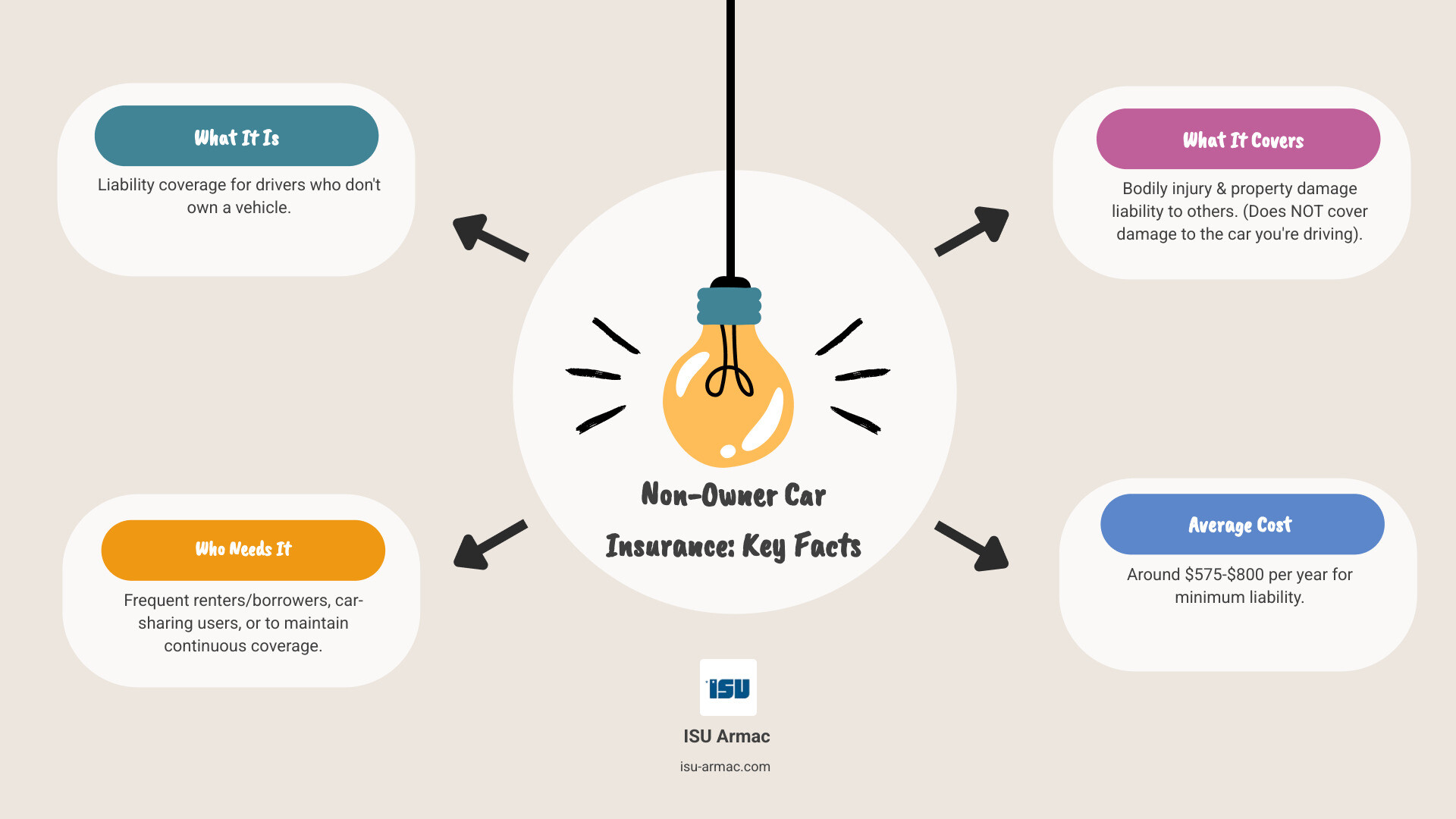
- What it is: Liability coverage for drivers who don’t own a vehicle.
- Who needs it: Frequent renters, car borrowers, car-sharing users, and those needing continuous coverage.
- What it covers: Bodily injury and property damage you cause to others. It does not cover the car you’re driving.
- Average cost: $575-$800 annually for minimum liability.
- How to get it: Contact an insurance agent directly, as online quotes are rare.
This policy acts as your personal liability shield, covering you as a driver, not a specific vehicle. When you cause an accident while driving someone else’s car, your non-owner policy can cover damages and injuries to others, often after the car owner’s insurance limits are exhausted.
Nearly every state requires liability insurance to drive legally. For those who frequently rent cars, borrow vehicles, or use car-sharing services, non-owner insurance offers affordable protection compared to repeatedly buying coverage from rental companies.
As Ryan McEachron, CEO of ISU Insurance Services ARMAC Agency, I’ve helped many Victorville and High Desert residents steer car insurance without a car options. With two decades of experience, I know that a non-owner policy can save you money and legal trouble, especially if you’re between cars or rely on borrowed vehicles.
What is Non-Owner Car Insurance?
Car insurance without a car is exactly what it sounds like—coverage for drivers who don’t own a vehicle. It’s a specialized policy designed to follow you as a driver, not a specific car. When you borrow your friend’s truck to help move furniture or rent a car for a weekend trip, this policy protects you from financial disaster if you cause an accident.
Think of it as your personal safety net. If you’re at fault in an accident while driving someone else’s vehicle, your non-owner policy steps in to cover the damages and injuries you cause to others. Insurance professionals sometimes call this “non-driver insurance,” though that’s a bit of a misnomer—you’re definitely driving, you just don’t own the car.

The Core Purpose: Your Personal Liability Shield
The core purpose of non-owner insurance is to shield you from financial liability when you’re at fault in an accident. It includes:
- Bodily injury liability: Covers medical bills, lost wages, and pain and suffering for others injured in an accident you cause. Costs can be substantial, easily reaching six figures for serious injuries.
- Property damage liability: Pays for repairs to another person’s vehicle or property, like a fence or building, that you damage.
Without this coverage, you would be personally responsible for these expenses. Your non-owner policy typically acts as secondary coverage, kicking in after the vehicle owner’s insurance has been exhausted. This layered protection is crucial because serious accidents can exceed the limits of a single policy, and for a relatively small premium, non-owner insurance provides tremendous peace of mind.
Non-Owner vs. Standard Car Insurance
The key difference is what’s being insured. Standard car insurance is tied to a specific vehicle you own. It includes a broad range of coverages like liability, collision, and comprehensive, protecting the vehicle and its listed drivers.
In contrast, car insurance without a car covers you as a driver, regardless of the vehicle. It focuses almost exclusively on liability coverage—protecting you financially if you injure someone or damage their property while driving a car you don’t own or have regular access to.
Here’s the critical distinction: non-owner insurance does not cover damage to the vehicle you’re driving or your own injuries. It’s purely about your liability to others. Because it has a narrower scope and covers a lower-risk scenario (less frequent driving), non-owner insurance is significantly cheaper than a standard policy. At ISU Armac, we’ve seen clients save hundreds annually by switching to non-owner coverage when they no longer own a vehicle, while still maintaining crucial protection.
Who Needs Car Insurance Without a Car and Who Doesn’t?
Figuring out if you need car insurance without a car comes down to your driving habits. Let’s review when this coverage makes sense—and when you can skip it.
When to Consider a Non-Owner Policy
If you regularly drive cars you don’t own, a non-owner policy is a smart financial move.

- Frequent renters are ideal candidates. A non-owner policy is often cheaper than paying for liability coverage at the rental counter, which can cost $10-$30 per day.
- Regular borrowers of friends’ or family’s cars also benefit. While the owner’s insurance provides primary coverage, their limits might be low. A non-owner policy acts as secondary coverage, offering extra protection if damages exceed the owner’s policy limits.
- Car-sharing users of services like Zipcar or Turo can add another layer of liability protection beyond the basic insurance provided by these platforms.
- Drivers needing an SR-22 or FR-44 filing due to a serious violation (like a DUI) often require a non-owner policy to reinstate their license if they don’t own a car.
- Finally, it’s crucial for maintaining continuous coverage. A gap in your insurance history—even if you don’t own a car—can lead to much higher premiums later. A non-owner policy prevents this lapse, showing insurers you’re a responsible risk and helping you secure better rates in the future.
When a Non-Owner Policy Isn’t Necessary
Not everyone needs car insurance without a car. You can likely skip it if:
- You own a vehicle: Your standard auto insurance already provides liability coverage when you occasionally drive other cars, making a non-owner policy redundant.
- You live with the car owner: If you regularly drive a car owned by a household member, you should be listed as a named driver on their policy. Insurers typically require this.
- You drive very infrequently: If you only drive once or twice a year, the annual premium may not be worth it compared to buying rental insurance on those rare occasions.
- You drive a company car: Your employer’s commercial auto policy should cover you for business use. It’s always wise to confirm this with your HR department.
Most standard auto policies include a permissive use clause, covering you for occasional driving with the owner’s permission. However, you’re limited to their policy limits. A non-owner policy provides valuable backup, but for truly infrequent use, the owner’s coverage is often sufficient.
Understanding Your Coverage: What’s Included and What’s Not
When considering car insurance without a car, it’s crucial to understand what a non-owner policy covers and what it excludes. This knowledge helps you avoid surprises and ensures you have the right protection.
What Non-Owner Insurance Typically Covers
A non-owner policy is built around liability protection. Here’s what it generally covers:
- Bodily Injury Liability: Pays for medical expenses, lost wages, and other costs if you injure someone in an at-fault accident.
- Property Damage Liability: Covers repairs to another person’s car or property that you damage.
- Uninsured/Underinsured Motorist (UM/UIM): Often available as an add-on in California, this covers your injuries if the at-fault driver has no or not enough insurance.
- Medical Payments (MedPay) or Personal Injury Protection (PIP): Some policies offer this to cover medical bills for you and your passengers, regardless of fault.
Crucially, non-owner insurance acts as secondary coverage. If you cause an accident in a borrowed car, the vehicle owner’s policy pays first. Your non-owner policy then covers any remaining costs up to your policy limits. This layered protection is why the coverage is so affordable.
Key Limitations and Exclusions
While powerful, non-owner insurance has important limitations. The most significant is that it does not cover damage to the vehicle you are driving. If you’re at fault, you’re responsible for repairs to the borrowed car. It also excludes collision and comprehensive coverage, so there’s no protection against theft, vandalism, or weather damage. Your own injuries are not covered unless you add MedPay or PIP. Other common exclusions are personal property inside the car, towing, and vehicles owned by anyone in your household.
| Covered (Liability to Others) | Not Covered (Exclusions) |
|---|---|
| Bodily injury to others | Damage to the car you’re driving |
| Property damage to others | Your own injuries (unless MedPay/PIP) |
| UM/UIM (in some states) | Collision/comprehensive coverage |
| Personal property protection | |
| Roadside assistance | |
| Household vehicles |
At ISU Armac, we help drivers in Victorville, Hesperia, and throughout the High Desert understand these coverage details. Our ability to shop multiple carriers means we can find options that match your specific needs and budget.
The Financials and Logistics of Non-Owner Insurance
Understanding the cost and process for getting car insurance without a car is straightforward. Let’s break down the numbers and the steps involved.
How Much Does Car Insurance Without a Car Cost?
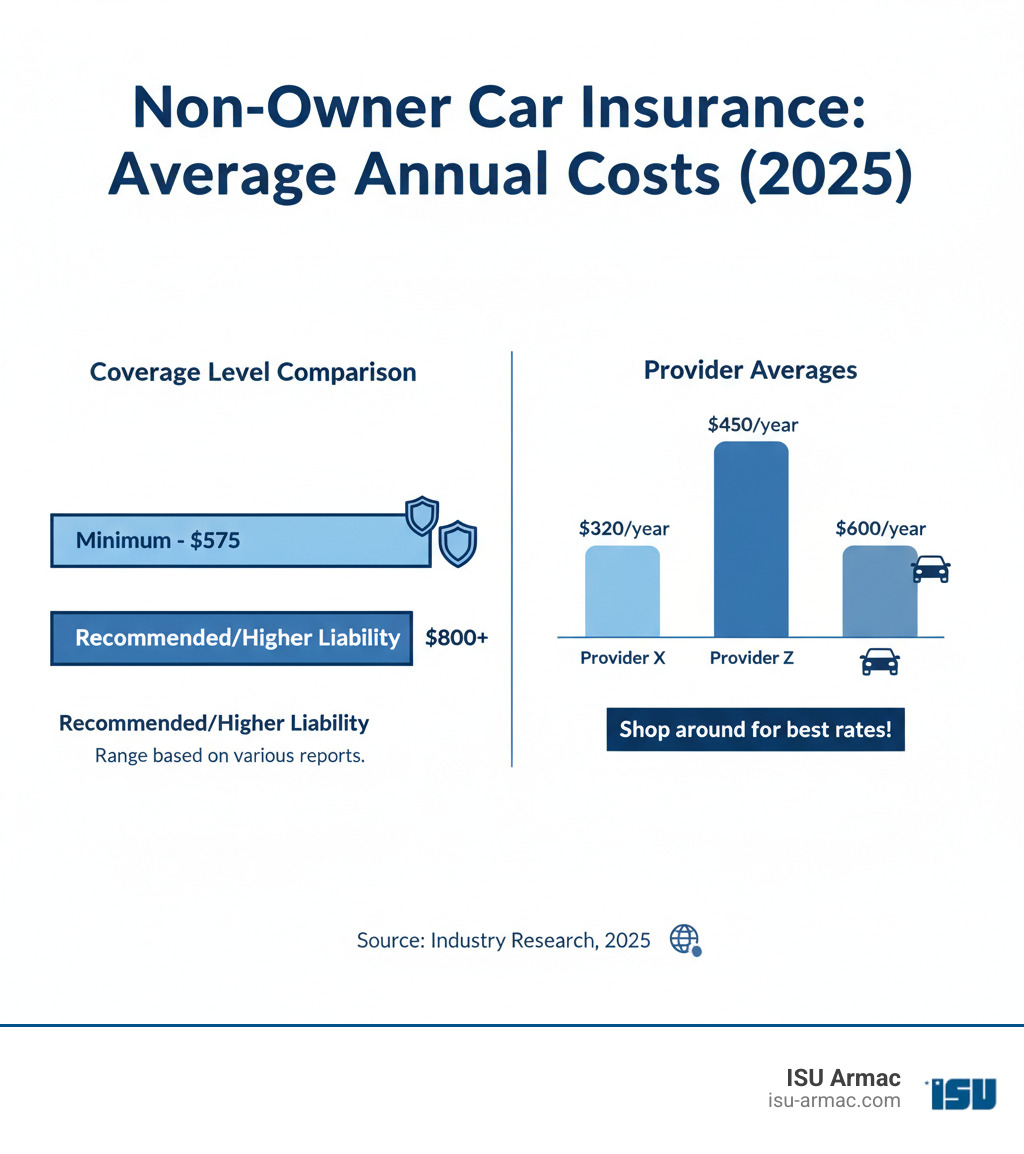
Non-owner car insurance is typically more affordable than a standard policy because it covers less risk. Your premium will depend on factors like your driving record, location (rates vary between Victorville, Apple Valley, and Hesperia), and chosen coverage limits. While state minimums are cheapest, higher limits offer better protection for a small increase in cost.
Based on market data, you can expect to pay between $575 and $800 annually for a basic non-owner policy. Costs can vary significantly, which is why it’s crucial to compare quotes.
How Does Car Insurance Without a Car Impact Future Rates?
Maintaining a non-owner policy is a smart long-term financial move. Insurance companies penalize drivers for gaps in coverage history with significantly higher premiums. A lapse, even when you don’t own a car, can mark you as a higher risk.
A non-owner policy prevents this by ensuring you have continuous coverage. It demonstrates financial responsibility to insurers, which can lead to much lower rates when you eventually purchase a vehicle and need a standard policy. Think of it as building a positive insurance track record that saves you money later.
How to Get a Non-Owner Insurance Policy
Getting a non-owner policy is different from buying standard insurance, as online quotes are rare. You’ll need to contact an agent directly. To qualify, you must have a valid driver’s license, not own a vehicle, and not have regular access to a car in your household.
The best approach is to contact a local insurance agent like ISU Armac. We can explain your options and gather the necessary information. Since not all carriers offer these policies and prices vary, comparing quotes is key. As an independent agency, we shop multiple providers on your behalf to find the best coverage at the most competitive rate in Southern California.
For more information on how we can help you with your auto insurance needs, visit our page on personal auto insurance services.
Frequently Asked Questions about Non-Owner Car Insurance
We often get specific questions from drivers in Victorville, Apple Valley, and Hesperia about car insurance without a car. Here are some of the most common inquiries we hear.
Can I Get Non-Owner Insurance if I Need an SR-22?
Yes, and it’s a very common reason to get one. An SR-22 is a certificate proving you have state-required liability insurance, often mandated by the California DMV after a serious violation like a DUI. If you don’t own a car, a non-owner policy is the easiest way to meet this requirement and get your license back. Your insurer files the SR-22 with the DMV for you. It’s critical to maintain the policy without any gaps, as a lapse will be reported to the DMV and could lead to another suspension.
Does Non-Owner Insurance Cover Rental Cars?
Yes, a non-owner policy’s liability coverage typically extends to rental cars. This is a major benefit, as the basic liability insurance included with a rental is often just the state minimum, which may be insufficient in a serious accident. Your non-owner policy provides an additional layer of protection with higher limits.
This is also more cost-effective than buying the rental company’s expensive daily liability insurance. However, a non-owner policy does not cover damage to the rental car itself. For that, you’ll need the rental company’s collision damage waiver (CDW) or coverage from your credit card. Always confirm rental car coverage specifics with your insurance agent.
What’s the Main Difference Between Non-Owner and Standard Car Insurance?
The primary difference is what is being insured.
- Standard Car Insurance: Insures a specific vehicle you own. It includes a full suite of coverages like liability, collision, and comprehensive to protect the car and its drivers.
- Non-Owner Car Insurance: Insures you, the driver, not a car. It provides liability coverage that follows you when you drive any vehicle you don’t own.
Essentially, standard insurance protects your car, while non-owner insurance protects your personal liability when you’re driving someone else’s car. This liability-only focus is why it’s a more limited and affordable policy.
Conclusion
Driving without owning a car shouldn’t mean driving without protection. Car insurance without a car, or non-owner insurance, is an essential safety net for anyone who frequently rents, borrows, or uses vehicles they don’t own. This policy follows you, providing a personal liability shield against the devastating costs of an at-fault accident.
While it won’t cover the car you’re driving, it provides the critical liability protection needed to fulfill an SR-22 requirement, maintain continuous coverage for better future rates, and give you peace of mind. It’s an affordable solution to a potentially expensive problem.
At ISU Armac, we help drivers across the High Desert—from Victorville to Apple Valley and Hesperia—find the right coverage for their unique needs. As an independent agency, we shop multiple carriers to secure competitive rates for you. Our team understands California’s insurance laws and can guide you through the process, whether you’re between cars or need to file an SR-22.
Don’t risk your financial future. Get a personalized auto insurance quote today and find how affordable car insurance without a car can be. Let us ensure you’re protected every time you get behind the wheel.