
What You Need to Know About Temporary Home Insurance
Temporary home insurance is specialized coverage for homes that are vacant, undergoing renovations, or used for short-term rentals, situations where standard homeowners insurance often falls short.
Quick Answer for Finding Temporary Home Insurance:
- When you need it: Home vacant 30+ days, renovations, short-term rentals, between tenants.
- Coverage includes: Fire, theft, vandalism, liability protection, loss of rental income.
- Key difference: Covers risks standard policies exclude, like vacancy and commercial use.
- Cost: Typically higher than standard policies due to increased risk.
- Duration: Flexible terms, from a few days up to 12 months.
Most standard homeowners policies have vacancy clauses that limit or void coverage if a home is unoccupied for over 30-60 days. If you’re renovating, traveling, renting your home short-term, or it’s empty between tenants, you could face significant coverage gaps. Unoccupied homes face higher rates of theft, vandalism, and undetected damage like water leaks. Without proper coverage, you could pay thousands out of pocket for repairs or liability claims.
I’m Ryan McEachron, CEO of ISU Insurance Services ARMAC Agency. For over two decades, I’ve helped Victorville residents steer complex insurance needs. I’ve seen how the right temporary home insurance can save property owners from devastating financial losses when standard policies are not enough.
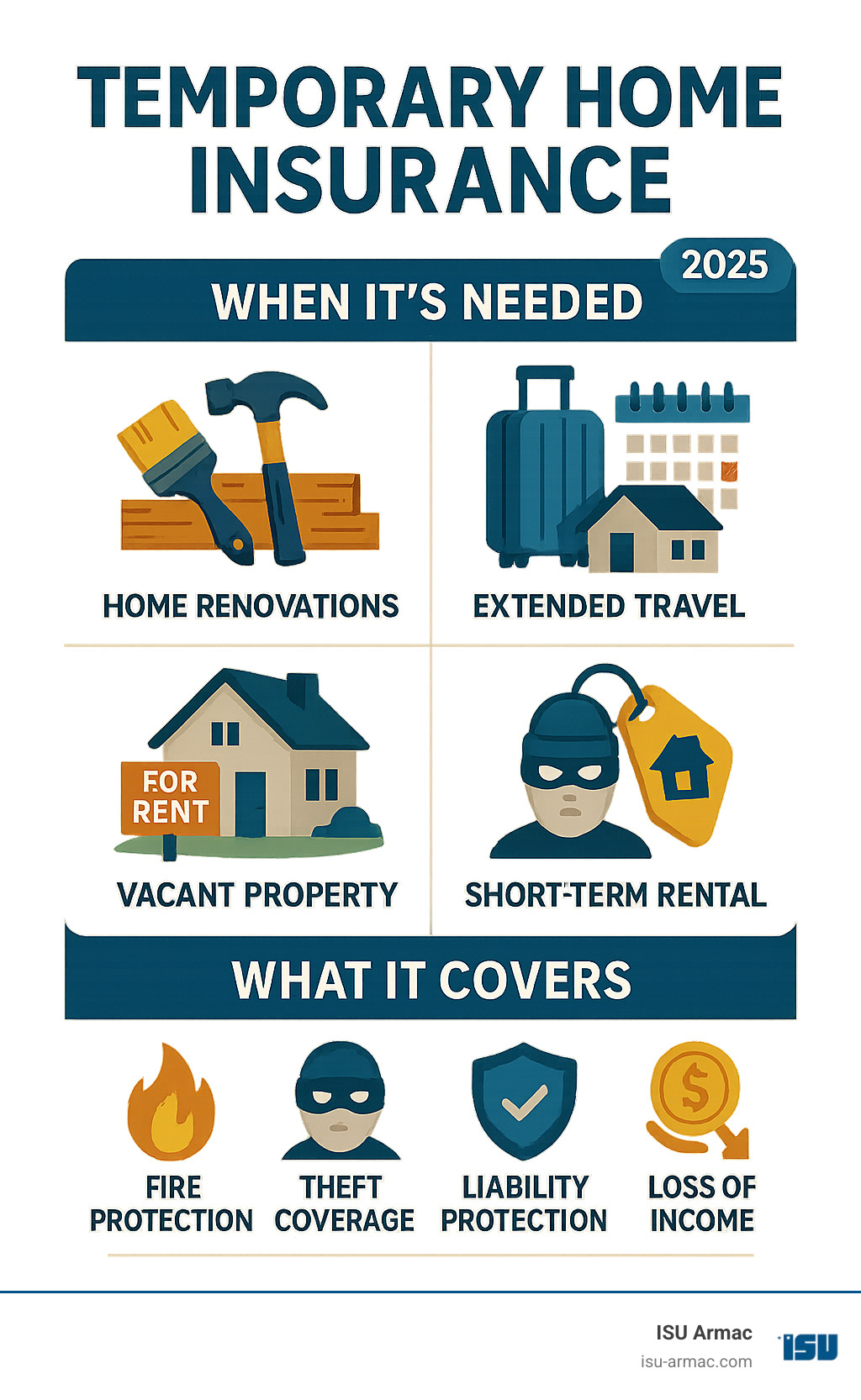
Simple guide to temporary home insurance terms:
Understanding Temporary Home Insurance and How It Differs from Standard Policies
Think of temporary home insurance as a safety net for specific situations. While your standard homeowners policy assumes you’re living in your home, temporary coverage steps in when that’s no longer the case.
The reality is that regular home insurance is designed with a key assumption: you are present to deter break-ins and spot minor issues, like a small drip, before they become major floods. When your home is empty for a renovation or between tenants, that standard policy no longer fits. Most standard home insurance policies will only cover an unoccupied home for 30 to 60 days. After that, you risk denied claims or policy cancellation.
Temporary home insurance is built for these scenarios. It’s designed for situations where your home’s risk assessment changes due to vacancy risk or commercial use like short-term rentals. It’s not a shorter version of a regular policy; it’s a different type of coverage for unique circumstances.
The coverage differences are significant. A standard policy excludes business activities and limits coverage for vacant properties, whereas temporary coverage is designed for these situations. It acknowledges that an empty home faces higher risks of theft, vandalism, and undetected damage.
Here’s how these policies stack up:
| Aspect | Standard Homeowners Insurance | Temporary Home Insurance |
|---|---|---|
| Policy Terms | Annual renewal, assumes continuous occupancy | Flexible duration from days to 12 months |
| Primary Use | Owner-occupied residence only | Vacant homes, renovations, short-term rentals |
| Typical Coverage | Full dwelling, contents, liability, living expenses | Dwelling protection, limited contents, specialized liability |
| Common Scenarios | Daily living in your primary home | Between tenants, major renovations, extended travel |
The bottom line is that when your living situation changes, your insurance must change with it. Standard policies weren’t built for the increased risks of vacancy or commercial use.
For comprehensive protection of your primary residence, explore our detailed guide on Home Insurance to understand all your options. For an independent overview of how these policies work, see home insurance.
When Do You Need Temporary Coverage? Common Scenarios
Life is unpredictable. Whether your home needs major work, you’re traveling for months, or you’re earning extra income through rentals, these normal situations can create dangerous insurance gaps that many homeowners don’t see until it’s too late.
Temporary home insurance is essential whenever your property’s use changes from the standard “owner-occupied residence” your regular policy assumes. The most common trigger is property vacancy. Most standard policies only cover an empty home for 30 to 60 days before coverage is limited or voided. This is because empty homes face higher rates of theft, vandalism, and undetected damage like water leaks.
Short-term rentals create another major gap. The moment you charge guests to stay, you’ve entered into commercial activity. Your personal homeowners policy wasn’t designed for business use and may deny claims or cancel your coverage.
Any business activity in your home can trigger the need for specialized coverage, as the increased risk goes beyond what a standard policy anticipates. Understanding these policy exclusions now can save you from financial loss later.
Insuring an Unoccupied or Vacant Home

An empty house is vulnerable. Without someone there, minor problems can quickly become major disasters. Common reasons for vacancy include:
- Renovations: If you’re remodeling and the house is unlivable, you’re not technically occupying it. Contractor’s insurance typically covers their work and liability, not your property’s structure.
- Between tenants: Landlords face gaps when one tenant moves out and another has yet to move in. During these transitions, your rental property sits empty, accumulating risk.
- Awaiting sale: If you’ve moved into a new home, your old one may sit empty on the market for months, creating a prolonged period of vacancy.
- Extended travel: A sabbatical or long vacation can leave your home empty for months, exposing it to risks your standard policy won’t cover.
Even short periods of vacancy require specialized coverage. This investment is minimal compared to potential losses from theft, vandalism, or undetected damage. Our expertise in Vacant House Insurance and Empty Property Insurance ensures your property stays protected during these transitions.
Protecting Your Short-Term or Temporarily Vacant Property
Home-sharing platforms make it easy to earn extra income, but they also change your insurance needs. The moment you accept a paying guest, your standard homeowners policy may no longer protect you.
Short-term property vacancy for rentals creates unique risks. Guests are strangers who may not report problems and have no long-term investment in your property. Even occasional rental to friends or family can create coverage gaps if money changes hands, as it’s considered a commercial transaction.
Guest liability is a major risk. A slip-and-fall injury can lead to a substantial claim. While some platforms offer host liability coverage, it often has limitations that leave you exposed. Property damage by guests is another concern. Platform-provided protection may not cover replacement costs and often has exclusions.
The biggest danger lies in policy exclusions. If you don’t inform your insurer about short-term rentals, you risk claim denials and policy cancellation for misrepresentation. Understanding What Isn’t Covered by Home Insurance is crucial before you list your property.
What Does Temporary Home Insurance Cover?
Understanding what temporary home insurance protects is crucial when your home’s risk profile changes. This specialized coverage is designed to address the unique challenges of vacant properties and short-term rentals, covering risks that standard policies exclude.
Typical Coverage for Your Temporary Home Insurance Policy
Think of temporary home insurance as a custom safety net. Most policies operate on a “named perils” or “all-risk” basis, providing protection designed for your specific situation.

- Fire and smoke protection forms the backbone of most policies, covering events like electrical issues or lightning strikes.
- Theft and vandalism coverage is especially valuable for unoccupied homes, which are common targets.
- Water damage protection is critical for vacant properties. A burst pipe in an empty house could leak for weeks before it’s found, and this coverage helps handle the damage and cleanup.
- Liability protection is key for rentals. If a guest is injured on your property, you’re covered for medical expenses and potential lawsuits.
- Loss of rental income coverage is a financial lifesaver. If a covered event makes your property uninhabitable, this coverage replaces the lost income while repairs are made.
- Dwelling and contents protection covers your home’s structure and belongings, though contents coverage may have specific limits for vacant properties.
Common Exclusions and Potential Risks
Even the best temporary home insurance has limits. Knowing these boundaries helps you avoid surprises.
- Unforced entry exclusions: Some policies won’t cover theft if thieves get in without breaking anything, such as through an open uped window. This makes proper security essential.
- Contractor damage: When renovating, contractors should carry their own insurance for their work. Always verify their coverage before a project begins.
- Wear and tear damage: Insurance covers sudden, unexpected events, not gradual deterioration or maintenance issues.
- Misrepresentation: Failing to inform your insurer about how you use your property (e.g., rentals or vacancy) is the biggest risk. It can lead to denied claims or complete policy cancellation.
The key is working with an experienced agent. Through our Personal Insurance Services, we help you steer these complexities and ensure your coverage matches your actual needs.
Navigating Insurance for Short-Term or Occasional Rentals
The short-term rental market offers a great way for homeowners to earn extra income. However, many hosts mistakenly assume the insurance provided by rental platforms like Airbnb and Vrbo is sufficient protection. The reality is that while these platforms offer some safeguards, they come with significant gaps that could leave you financially exposed.
Platform insurance should be seen as a backup, not your primary shield. It is designed to supplement, not replace, proper insurance coverage. For a deeper dive into this topic, many homeowners find it helpful to review resources on understanding the insurance implications of renting their property.
How Temporary Home Insurance Provides Comprehensive Protection
When you examine the details of platform-provided insurance, the limitations become clear. Temporary home insurance designed for short-term rentals fills these critical gaps.
- Liability limits: Platforms may offer up to $1 million in liability coverage, but a serious accident can easily exceed this amount. A dedicated policy can provide higher limits for robust protection.
- Property damage exclusions: Platform guarantees often exclude common issues like wear and tear, theft of valuables, and damage to guest belongings. They also tend to pay based on actual cash value, not the replacement cost for a new item.
- Loss of income gaps: If your property becomes uninhabitable due to covered damage, platforms typically won’t cover your lost rental income during repairs. This gap can create serious financial strain for hosts who rely on that income.
The importance of primary insurance cannot be overstated. Platform guarantees are often secondary, meaning they only apply after other options are exhausted. More importantly, they don’t excuse you from informing your primary insurer about your rental activities. Failing to disclose this can void your entire policy, leaving you unprotected regardless of platform guarantees.
Dedicated temporary home insurance from ISU Armac offers more comprehensive protection because we design coverage for the unique challenges of short-term rentals. It’s not just supplemental coverage—it’s the foundational protection your rental business needs to operate safely.
Finding the Right Policy and Mitigating Risks
Securing the right temporary home insurance is about finding the right balance of coverage and cost. At ISU Armac, we’ve helped countless Victorville homeowners make these decisions. A little preparation goes a long way in protecting your property and your wallet.
Key Factors That Influence Your Temporary Home Insurance Cost
Insurers assess your property’s risk to determine your premium. The higher the perceived risk, the higher the cost.
- Property value and location: A more valuable home costs more to insure. Location also matters; properties in areas with higher risks, like wildfires or crime, will have higher premiums.
- Security systems: Alarms, deadbolts, and security cameras signal to insurers that you are proactive about protection, which can lead to premium reductions.
- Coverage limits and deductible: Higher coverage limits increase premiums, while a higher deductible can lower them. Ensure your deductible is an amount you can comfortably afford.
- Length of coverage: The duration of the policy affects the price, though the cost doesn’t always scale proportionally with time.
- Claims history: A history of previous claims signals higher risk to insurers and typically results in higher premiums.
Steps to Mitigate Risk and Lower Premiums
You have control over your temporary home insurance costs. Smart risk management not only protects your property but also demonstrates to insurers that you are a lower-risk client.
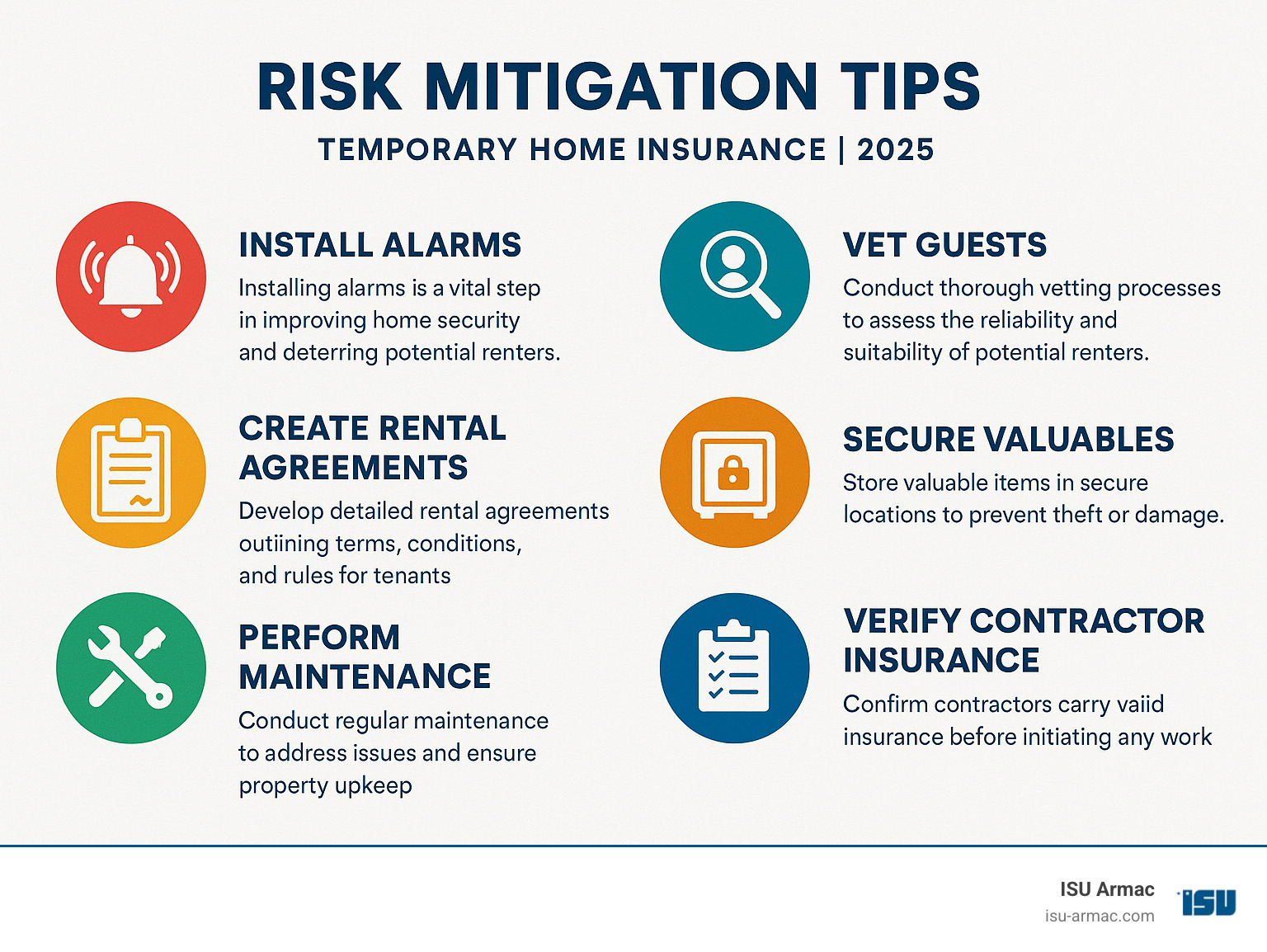
- Improve property security: Install quality locks, alarms, and exterior lighting. For rentals, these measures also provide peace of mind for guests.
- Perform regular maintenance: Preventative care can stop small issues from becoming major claims. For vacant properties, have someone check on things regularly.
- Screen guests thoroughly: For short-term rentals, use review systems and communicate clearly. Consider security deposits to buffer against minor damages.
- Secure valuables: Remove jewelry, important documents, and sentimental items to eliminate financial and emotional risks.
- Verify contractor insurance: For renovations, ensure your contractor has liability and workers’ compensation insurance to protect you from liability.
- Communicate with your insurer: Be upfront about how you’re using your property. Honesty ensures you have the right coverage and avoids denied claims.
By taking these proactive steps, you build a case for lower temporary home insurance premiums. Insurers reward responsible property management.
Frequently Asked Questions about Temporary Home Insurance
Homeowners considering renting their property or leaving it vacant often have similar questions. Understanding the answers can prevent costly surprises.
Does my standard homeowners insurance cover short-term or temporary vacancies?
No, this is a dangerous assumption. A standard policy assumes you live in the home full-time. It typically excludes business activities, which includes renting your home even once. If you file a claim related to a guest, it will likely be denied. Similarly, if your home is vacant for more than 30-60 days, your coverage may be suspended. Temporary home insurance or a specific endorsement is necessary to maintain protection.
How long can my house be empty before I need vacant home insurance?
This varies, but most standard policies have a vacancy clause that takes effect after 30 to 60 days of unoccupancy. Once you pass that threshold, coverage becomes severely limited or may be voided entirely. An empty house is a magnet for problems like undetected water leaks, theft, and vandalism. If you know your property will be empty longer than your policy allows, you need Vacant House Insurance to cover the increased risk.
Is temporary home insurance more expensive than a standard policy?
Yes, temporary home insurance typically costs more than a standard policy because it covers significantly higher risks. Insurers use data showing that vacant homes and short-term rentals have more claims for theft, vandalism, and undetected damage. The higher premium reflects this reality. While the cost is higher, it provides essential financial security that far outweighs the risk of facing a major loss without any coverage.
Protecting Your Investment with the Right Coverage
When protecting your home, knowledge is power. Temporary home insurance fills critical gaps that standard policies leave open. When your property is vacant for over 30-60 days or you host short-term guests, your traditional coverage may leave you exposed.
Think of your standard policy as a daily driver and temporary home insurance as the specialized vehicle built for the unique terrain of vacant properties, renovations, and rentals. The financial stakes are high, and we’ve seen homeowners face huge out-of-pocket expenses because they assumed they were covered.
Platform guarantees from home-sharing services are a supplement, not a substitute, for proper insurance. They often have liability limits that are too low, property damage exclusions, and no coverage for your loss of rental income.
The good news is you don’t have to steer this alone. At ISU Armac, we understand every situation is unique. Whether you’re a Victorville homeowner planning extended travel, a landlord between tenants, or a new host, we’re here to help you assess your needs and find the right coverage.
Proactive protection is always more affordable than reactive repairs. Securing the right temporary home insurance protects your property, your peace of mind, and your financial future. We shop multiple carriers to find you comprehensive coverage at competitive rates.
Ready to explore your options? Let’s find the perfect solution for your situation. Check out our comprehensive personal insurance solutions to get started, or give us a call to discuss your specific needs. Your property is too valuable to leave to chance.