
A patient calls late on a Thursday and says the temporary crown failed, the tooth now hurts, and they want their records sent to an attorney. In Victorville, that kind of call can interrupt more than your afternoon. It can pull your front office into records requests, force you to revisit charting from months ago, and put pressure on the finances and reputation you've spent years building.
That risk feels abstract until it lands on your desk. Most dentists in the High Desert aren't worried about reckless treatment. They're worried about routine care that later gets framed as a missed diagnosis, poor consent process, a complication from implants, or a sedation complaint. One unhappy patient doesn't automatically mean you've done anything wrong, but it can still trigger defense costs, carrier reporting obligations, and stressful decisions about whether to fight, settle, or escalate.
Strong risk management goes beyond chairside care. It also includes how you present treatment, document it, train staff, and protect the practice if a claim follows. If you're also working on patient acquisition and reputation growth, this complete guide for dental marketing is useful because marketing brings more new patient volume, and more new patient volume usually means you need sharper intake, consent, and follow-up systems.
For dentists evaluating malpractice insurance for dentists Victorville, the question isn't whether claims happen only to careless providers. It is whether your current coverage matches the way you practice in California's High Desert.

Table of Contents
- Introduction Protecting Your Victorville Practice
- What Dental Malpractice Insurance Actually Covers
- Navigating California and Victorville Specific Risks
- Occurrence vs Claims Made A Critical Policy Decision
- Understanding Policy Limits and Pricing Factors
- How to Secure the Right Coverage in Victorville
Introduction Protecting Your Victorville Practice
Victorville dentists run busy offices. You may be balancing hygiene checks, same-day treatment decisions, staffing issues, and collections in the same hour. Insurance often gets pushed to renewal season, then filed away once the premium is paid.
That approach works until the policy language matters. A complaint involving an extraction, implant, sedation event, or post-op complication doesn't arrive on a convenient schedule. When it does, the important details aren't the declarations page alone. They are the reporting requirements, the defense provisions, the employee coverage language, and whether the policy fits the services you perform.
Practical rule: Buy coverage for your real workflow, not the version of your practice that existed three years ago.
In Victorville and the wider High Desert, dentists often serve a broad patient mix and perform a wide range of procedures under one roof. That creates convenience for patients, but it also means your liability profile may be wider than you think. A basic policy can be enough for one office and completely inadequate for another, even when both are general practices.
The rest of this guide stays practical. It focuses on what a malpractice policy does, where California rules create blind spots, how policy structure affects long-term cost, and how to evaluate options locally without wasting time.
What Dental Malpractice Insurance Actually Covers
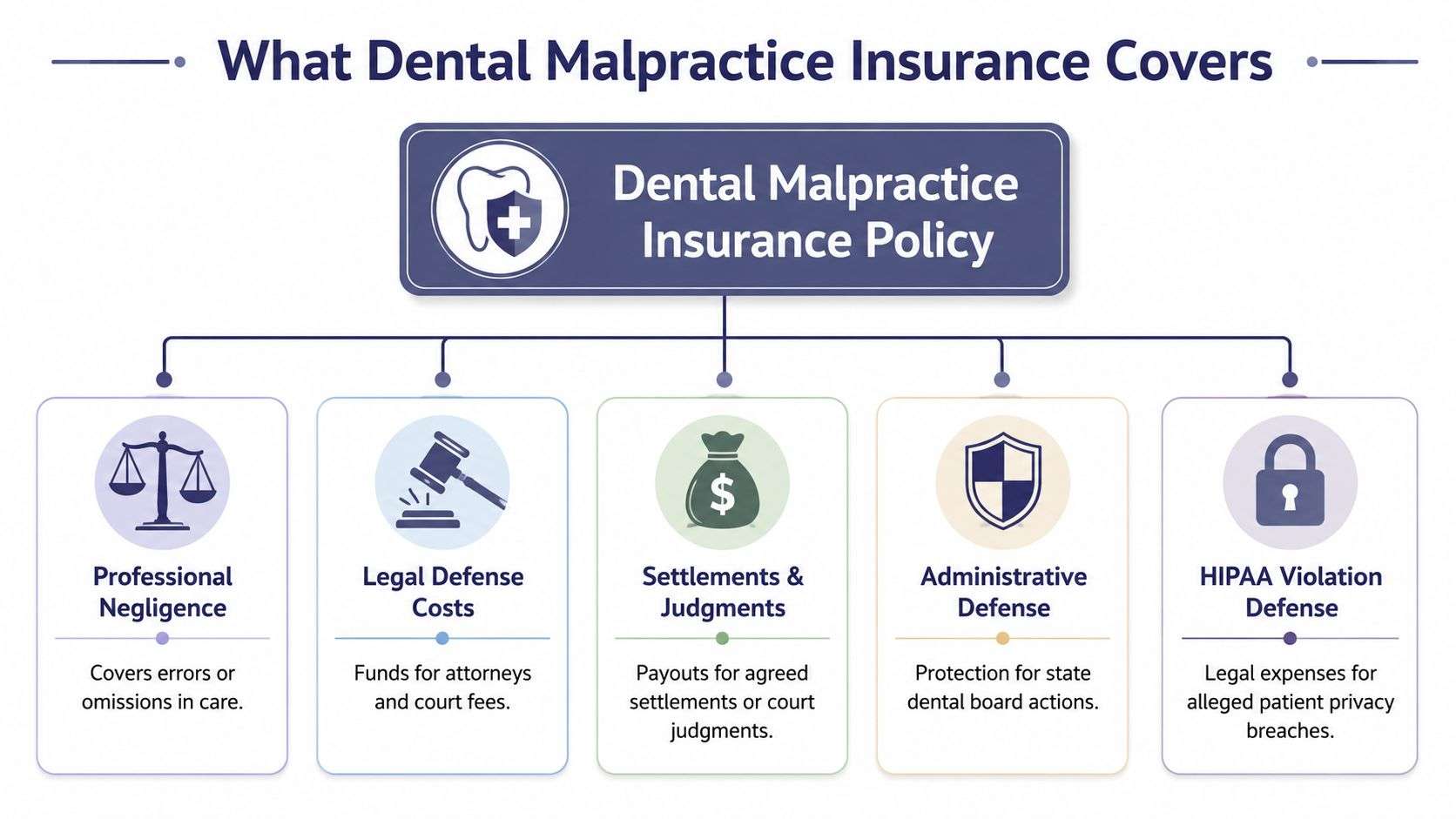
A dental malpractice policy is built to respond when a patient says your professional services caused harm. That usually means allegations tied to diagnosis, treatment, informed consent, follow-up care, referrals, record handling, or supervision connected to clinical work.
For a broader overview of practice-specific protection options, dentists can review professional liability coverage for dental practices alongside malpractice terms so the policy matches both clinical and operational exposure.
Defense costs and claim response
The first value of coverage is often legal defense. Even weak allegations can require an attorney response, records review, expert evaluation, and time away from patient care. A policy helps fund that process instead of forcing the practice owner to pay those costs personally.
The second value is payment when a claim resolves through settlement or judgment, subject to the policy terms and limits. That financial backstop is what protects the practice balance sheet and, in many cases, the owner's personal assets from taking the full hit.
Some policies also include related protections for administrative matters. These can matter when a complaint moves beyond a demand letter and starts affecting licensure, privacy issues, or regulatory review tied to patient care.
A strong policy does more than write checks. It gives you a structured response when a patient allegation starts pulling in lawyers, records, and board attention.
A point many dentists overlook is control over settlement. A White Coat Investor discussion of dental malpractice policy features notes that a key protective feature in high-quality policies is the consent-to-settle clause, which ensures the insurer cannot settle a claim without the dentist's approval, preventing settlements that could damage the practitioner's reputation or trigger future licensing board investigations. That same source also notes that many employer policies automatically cover supervised employees like dental hygienists, but some exclude them unless the supervising dentist is also named in the claim.
Where coverage usually stops
Malpractice insurance isn't the same as every other form of business protection. It generally addresses allegations tied to professional dental services. It usually doesn't replace other core policies.
Common gaps include:
- Premises injuries: If a patient slips in the lobby, that usually falls under general liability, not malpractice.
- Intentional or criminal acts: Professional liability is not designed to cover deliberate wrongdoing.
- Property and equipment loss: Damage to chairs, imaging systems, or office contents belongs in property coverage.
- Employment disputes: Staff claims involving hiring, firing, or workplace conduct need separate evaluation.
That distinction matters because many Victorville dentists assume one policy covers the entire office. It doesn't. Professional liability is the clinical shield. The rest of the practice still needs its own insurance architecture.
Navigating California and Victorville Specific Risks
A Victorville dentist can finish a difficult case on Friday, document it well, and still face a demand letter months later after the patient gets a second opinion in Rancho Cucamonga or down the hill. California does not require dentists to carry malpractice coverage, but that legal flexibility does nothing to reduce the cost of hiring counsel, responding to records requests, or protecting the practice if a claim develops.
That is the core issue in the High Desert. The question is not whether coverage is mandatory. The question is whether your practice could absorb an allegation without disrupting payroll, expansion plans, or your own income.
Local practice patterns matter here. Victorville offices often keep more treatment in-house because patients value convenience and may not want multiple referral visits outside the area. That can be good for production and patient retention. It also means the insurance policy needs to match the dentistry you are performing today, not the narrower scope you reported when the policy was first issued.
The exposure usually grows in quiet ways. A general practice adds implants. Surgical extractions become routine. Sedation enters the mix. An associate joins. A high volume of new patients increases diagnosis, consent, and recordkeeping pressure. None of that is unusual. All of it can change how an underwriter views risk and how a claim gets defended.
A few situations deserve a close review:
- Expanded procedures: Implant placement, grafting, oral surgery, and sedation can create a different liability profile than bread-and-butter restorative care.
- Multiple treating providers: Associates, hygienists, and supervised staff need to be matched correctly to the policy so there is no confusion about who is insured for what work.
- High new-patient turnover: More first visits usually mean more treatment planning decisions, more informed-consent discussions, and more opportunities for charting gaps to become a problem later.
- Tight local reputation circles: In Victorville, Hesperia, Apple Valley, and the surrounding High Desert, one claim can affect referral relationships and recruiting even before liability is proven.
California claims also do not always center on a dramatic clinical outcome. I regularly see concern around documentation, informed consent, alleged failure to diagnose, dissatisfaction with cosmetic expectations, and disputes that start as a refund request and turn into something larger. Privacy complaints and allegations tied to patient communication can add another layer, especially when an office is busy and systems are inconsistent.
That is why dentists shopping for malpractice insurance for dentists Victorville should review coverage as part of the office's full risk structure, not as an isolated purchase. For broader context on how malpractice fits with the rest of your business protection, many local owners also review Victorville business insurance options at the same time.
Occurrence vs Claims Made A Critical Policy Decision
A dentist in Victorville buys a lower-cost claims-made policy as an associate, changes offices twice, then prepares to open a practice in the High Desert. That is often when the coverage problem shows up. The annual premium looked manageable at the start, but the cost to protect prior years of treatment can arrive all at once during a job change, sale, or retirement.
An occurrence policy covers an incident that happened while the policy was in force, even if the claim is filed years later. A claims-made policy generally requires the policy to be active when the claim is made and reported, with prior acts covered only if the policy dates and reporting rules line up correctly.
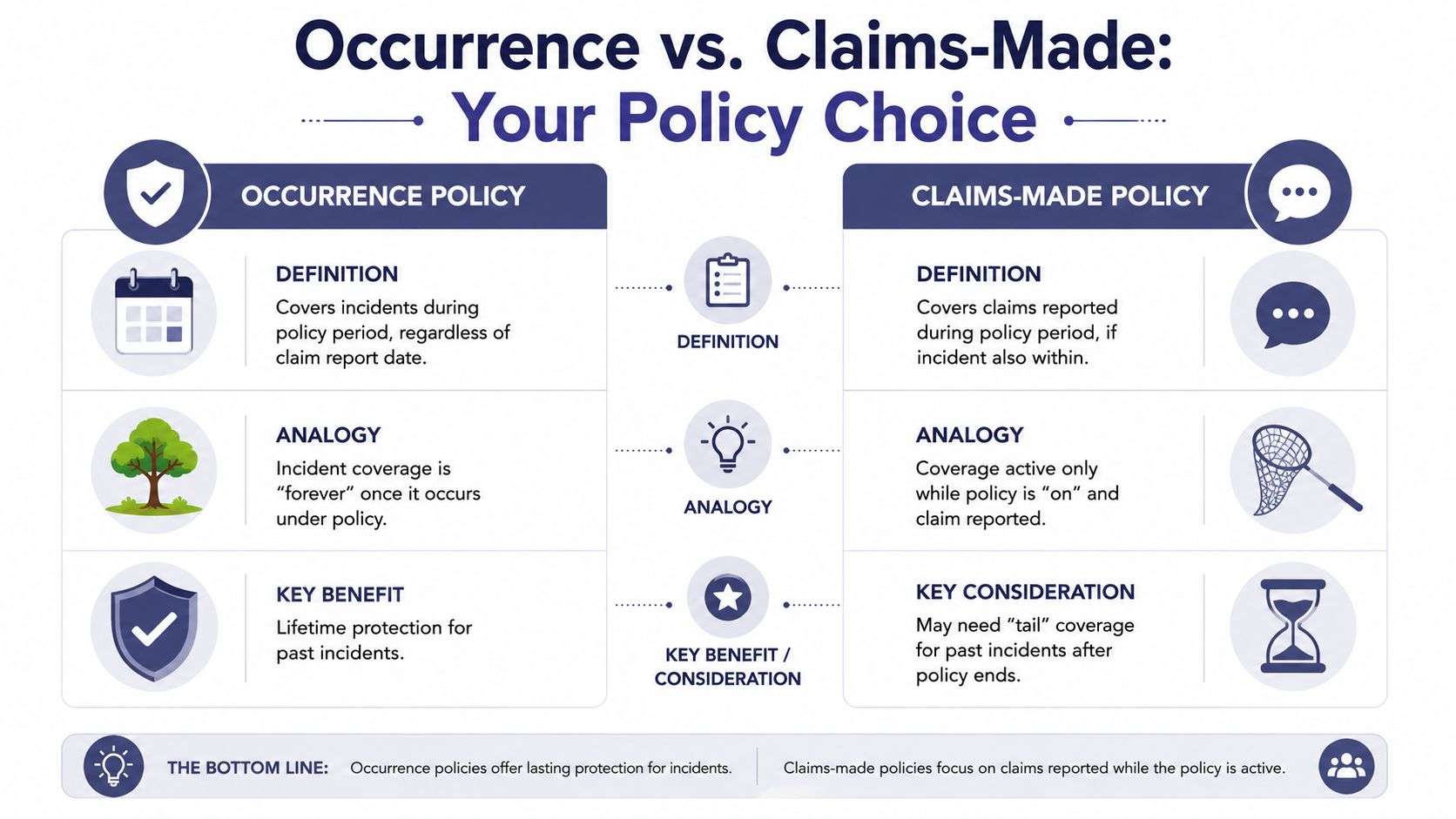
For a busy dental office, the trade-off is straightforward. Occurrence usually costs more up front, but it is simpler to keep straight over time. Claims-made often starts lower, which helps cash flow for a new associate or a younger practice owner, but it puts more pressure on future planning.
That future planning matters in Victorville because career paths here are rarely static. Dentists move between associate roles in Victorville, Hesperia, and Apple Valley. Some leave group settings to open a private office. Others sell later than expected or keep working part-time after a sale. Each of those transitions can expose a gap if the reporting period for prior work is not handled correctly.
When tail coverage becomes the bill
When a claims-made policy ends, past treatment does not automatically stay protected forever. In many cases, the dentist needs tail coverage to keep protection in place for claims that show up later from work already performed.
That expense can be substantial. A common industry explanation from professional liability carriers and brokers is that tail coverage is often priced as a multiple of the last annual premium, which is why a policy that seemed affordable year to year can become much more expensive at the exit point.
If you are considering claims-made coverage, price the departure before you price the first year.
I regularly advise dentists to make this decision based on where they expect to be in three to seven years, not just on next quarter's budget. An associate who may change employers should ask, in writing, who is responsible for tail. A practice owner who expects to sell should model the tail cost before listing the office, because that number can affect sale proceeds and retirement timing.
Another point gets missed. If you move from one claims-made carrier to another, the new policy may be able to pick up prior acts, but only if the retroactive date is handled correctly. If that date resets by mistake, you can create a hole in coverage for older treatment. That is an administrative issue, but it becomes a legal and financial issue fast when a claim arrives.
A practical comparison looks like this:
| Policy type | Best fit in practice | Main caution |
|---|---|---|
| Occurrence | Dentists who want prior work covered without worrying about a later reporting deadline | Higher initial premium can tighten short-term cash flow |
| Claims-made | Dentists who want a lower starting premium and have a clear plan for future transitions | Tail coverage or prior-acts handling can create a large later cost |
For many Victorville dentists, the right answer is less about theory and more about timing. If cash flow is tight and career changes are likely, claims-made can work, but only with an exit plan. If stability and simplicity matter more than first-year savings, occurrence often earns its higher price.
Understanding Policy Limits and Pricing Factors
A low premium can be expensive if the limit structure is too thin for the way your office practices. In Victorville, that risk shows up fast when a complaint involves implants, sedation, a referral dispute, or an allegation that turns a routine case into a demand for lost wages and future corrective treatment.
What the limit numbers mean
A policy written at $1 million per claim and $3 million aggregate will pay up to $1 million for one covered claim, with no more than $3 million available for all covered claims during the policy period. Those numbers are still a common starting point for dental offices, but they should match the size of the practice, the procedure mix, and how much personal and business income is at risk if a serious case develops.
Two policies can show the same limits on the declarations page and still perform very differently. Defense costs may sit inside or outside the liability limit. Consent-to-settle terms can give the dentist more control or hand more authority to the carrier. Coverage for staff acts, temporary providers, board complaints, and specialty procedures may also vary in ways that matter more than a few hundred dollars in annual premium.

What moves the premium up or down
Underwriters price dental malpractice based on exposure, not just specialty title. A general dentist placing occasional implants presents a different risk than a general dentist doing high-volume extractions, IV sedation, or complex full-mouth reconstruction. The annual premium usually reflects that difference.
These factors drive pricing most often:
- Procedure mix: Surgical extractions, implants, sedation, and cosmetic work usually increase risk more than bread-and-butter restorative care.
- Claims and board history: Prior paid claims, licensing issues, or repeated complaints can raise rates and limit carrier options.
- Staffing model: Multiple providers, associate turnover, and the use of temporary dentists can complicate underwriting.
- Practice size and patient volume: More encounters create more chances for an allegation, even in well-run offices.
- Location and venue risk: California pricing is generally firmer, and local plaintiff dynamics can affect how carriers view a territory.
- Coverage design: Higher limits, lower deductibles, broader defense provisions, and added endorsements usually cost more.
A California-focused review from a medical professional liability marketplace notes that dental premiums vary widely by specialty, policy structure, and practice profile, and that higher-risk procedures can materially affect cost in this state, as discussed in this California dental malpractice article.
In the High Desert, I tell dentists to look at pricing through a local business lens, not just an insurance lens. A Victorville owner with one associate, expanding implant cases, and tight margins may accept a higher premium for broader terms if that avoids a coverage dispute during a bad year. An owner nearing retirement may care just as much about keeping the policy clean and predictable so a sale, buy-in, or exit does not get hit by a claim problem that should have been addressed earlier.
Price should follow exposure. If a quote comes in far below the rest, ask exactly what procedures, provider roles, and legal costs it is built to cover.
Good malpractice buying is less about chasing the cheapest number and more about matching limits to the actual financial risk of the practice. That is where many Victorville dentists either protect years of work, or leave a gap they do not see until a claim forces the issue.
How to Secure the Right Coverage in Victorville
Buying the right policy doesn't need to be a weeks-long project. It does need a clean process.
A practical buying checklist
Start with your current services, not your license type. If your office now performs procedures that weren't part of the practice a few years ago, your insurance should be re-underwritten to reflect that reality.
Then gather the details an agent will need:
- Current procedure list including any implants, extractions, sedation, cosmetic work, or specialty-style services.
- Provider roster with owners, associates, hygienists, and supervised staff.
- Claims history with clear dates and outcomes.
- Current policy structure so you know whether prior acts or tail issues are in play.
- Business plans such as hiring, selling, retiring, or joining a larger group.
For practices that want a broader package review along with malpractice, dental office insurance options can help frame professional liability within the rest of the office's operational coverage.
Questions to ask before you bind coverage
Don't stop at premium. Ask sharper questions.
| Question Category | Specific Question to Ask |
|---|---|
| Policy structure | Is this occurrence or claims-made, and who pays for tail if I leave, retire, or sell? |
| Procedure fit | Are all of my current services clearly contemplated by the policy? |
| Staff coverage | Are hygienists, associates, and supervised employees covered as my practice operates today? |
| Settlement control | Does the policy include consent-to-settle language? |
| Claim scope | Does coverage address allegations tied to privacy, emotional distress, or board-related defense where applicable? |
| Transitions | What happens if I merge, add a location, or change ownership structure? |
A local independent agency can be useful here because it can compare policy structures and wording across multiple markets instead of forcing every dentist into one template. ISU Insurance Services is an independent agency in Victorville with access to a large carrier network, which gives dental practices another way to compare professional liability options alongside broader commercial coverage needs.
If you want a practical review of your current malpractice setup, contact ISU Insurance Services. A local conversation can help you sort out policy structure, procedure-specific gaps, employee coverage questions, and whether your current protection still fits the way your Victorville practice operates.