
A death in the family turns ordinary paper into a deadline. In Victorville, that usually means a spouse, adult child, or close relative is sitting at the kitchen table with a shoebox of mail, a folder of old policy papers, and no clear idea what to do first. Grief makes people stall, but the life insurance claim process rewards the person who gets organized fast, keeps copies of everything, and asks the right questions before signing anything.
That first move matters because the claim is not a mystery. It is a document-driven process with a clear beneficiary order, proof-of-death requirements, and a carrier review that only moves when the file is complete. In California, the difference between a smooth payout and a drawn-out mess usually comes down to whether the family knows who can file, what the insurer needs, and how to prove entitlement without creating avoidable delays.
Table of Contents
- When a Life Insurance Claim Becomes Real
- Documents You Need Before You Call the Carrier
- Submitting the Claim Step by Step
- How Long California Claims Actually Take
- Why Claims Get Delayed or Denied
- Appealing a Denied Claim the Right Way
- Your Action Plan and How ISU Armac Helps
When a Life Insurance Claim Becomes Real
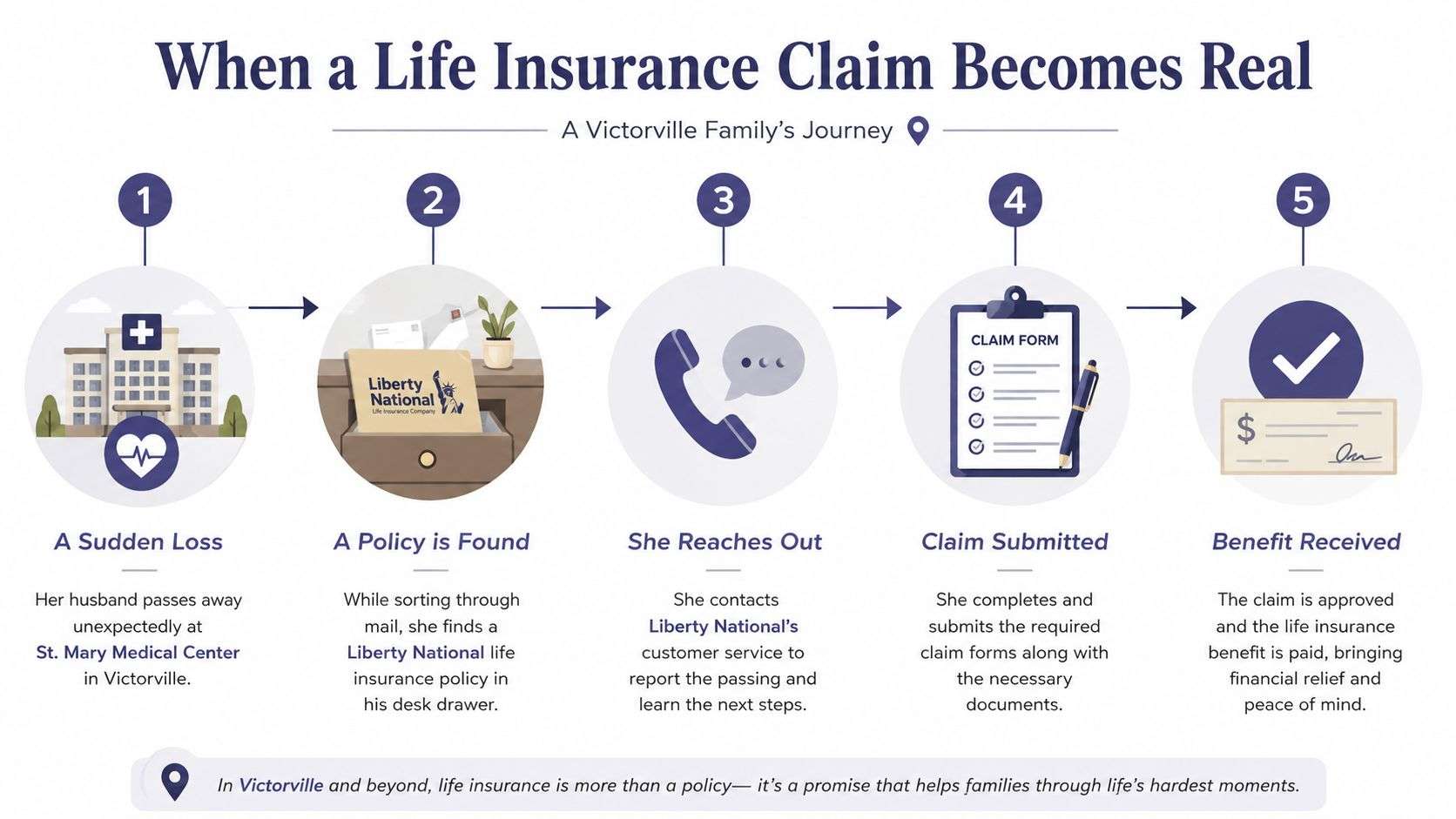
A Victorville widow can do everything right emotionally and still feel stuck on the paperwork. Her husband dies unexpectedly at St. Mary Medical Center, she comes home exhausted, and while sorting mail she finds a policy tucked in a desk drawer. That's the moment the claim stops being a theoretical benefit and starts being a real family task, one that collides with shock, funeral planning, and the plain fact that bills don't pause for grief.
The first 72 hours are where people usually lose time. They put the envelope back in the drawer, tell themselves they'll handle it after the memorial, and then spend a week answering calls instead of gathering forms. That delay is understandable, but it doesn't help. A life insurance claim process is paperwork, not guesswork, and California families get farther when they treat it like a project with a checklist.
Who can actually file
The carrier doesn't pay the loudest relative. It pays the person or entity it recognizes under the policy. That usually means the primary beneficiary first, then a contingent beneficiary if the primary beneficiary is gone, then the estate if no valid beneficiary survives. A trustee, assignee, executor, or legal guardian can also be the right filer when the policy or the legal setup calls for it.
If the policy pays a named beneficiary directly, the claim usually stays outside probate. If the policy pays the estate, or if beneficiary status is unclear, the court side of the process can take over and the paperwork shifts toward estate authority. That's where people get tripped up, because the right answer isn't always obvious from the death certificate or the mail in the desk drawer.
Practical rule: start with the policy language, not family assumptions. The carrier follows the named beneficiary chain on file, and a confident relative who isn't legally entitled can slow everything down.
A local independent agent helps here because they're not guessing from a call center script. A Victorville agency can help a family locate a lost policy, identify the carrier, and figure out whether the claim belongs to a beneficiary, a trustee, or an estate representative. If you want a deeper background on timing and waiting periods before a policy pays, the life insurance waiting-period guide is worth reading before you submit anything.
Documents You Need Before You Call the Carrier
The smartest families collect the packet before they make the first formal call. That keeps the conversation short and prevents the carrier from bouncing the file back for missing basics. In California, the core documents are straightforward, but the details matter because one wrong copy or one mismatched name can freeze the file.
You need a certified death certificate, not an uncertified photocopy. Get extra certified copies, because banks, retirement accounts, and the insurance claim itself may each want their own. You also need the carrier's claim form, the policy number or a copy of the policy, the beneficiary's government-issued ID, and the beneficiary's Social Security number. If the insurer asks for tax reporting paperwork, expect a W-9. If the policy was assigned or used as collateral, include the assignment paperwork too.
The mistakes that stall a file
Most Victorville families don't get denied because they did something malicious. They get delayed because they submit the wrong version of a document or forget to sign a page. The worst errors are simple.
- Uncertified death certificates: a photocopy often won't move the claim.
- Name mismatches: a marriage, divorce, or legal name change can make the beneficiary file look inconsistent.
- Unsigned forms: a blank signature line stops review cold.
- Missing tax forms: a W-9 requested by the carrier shouldn't be ignored.
- Incomplete authority papers: if an executor, trustee, or guardian is filing, the legal proof has to be attached.
A good way to think about this is that the carrier is not trying to be difficult, it's trying to protect itself from paying the wrong person. That's why clean documentation shortens the process and sloppy packet assembly stretches it. If you're also organizing estate records, the estate-planning document guide is useful because it shows how the claim packet fits into the larger family file.
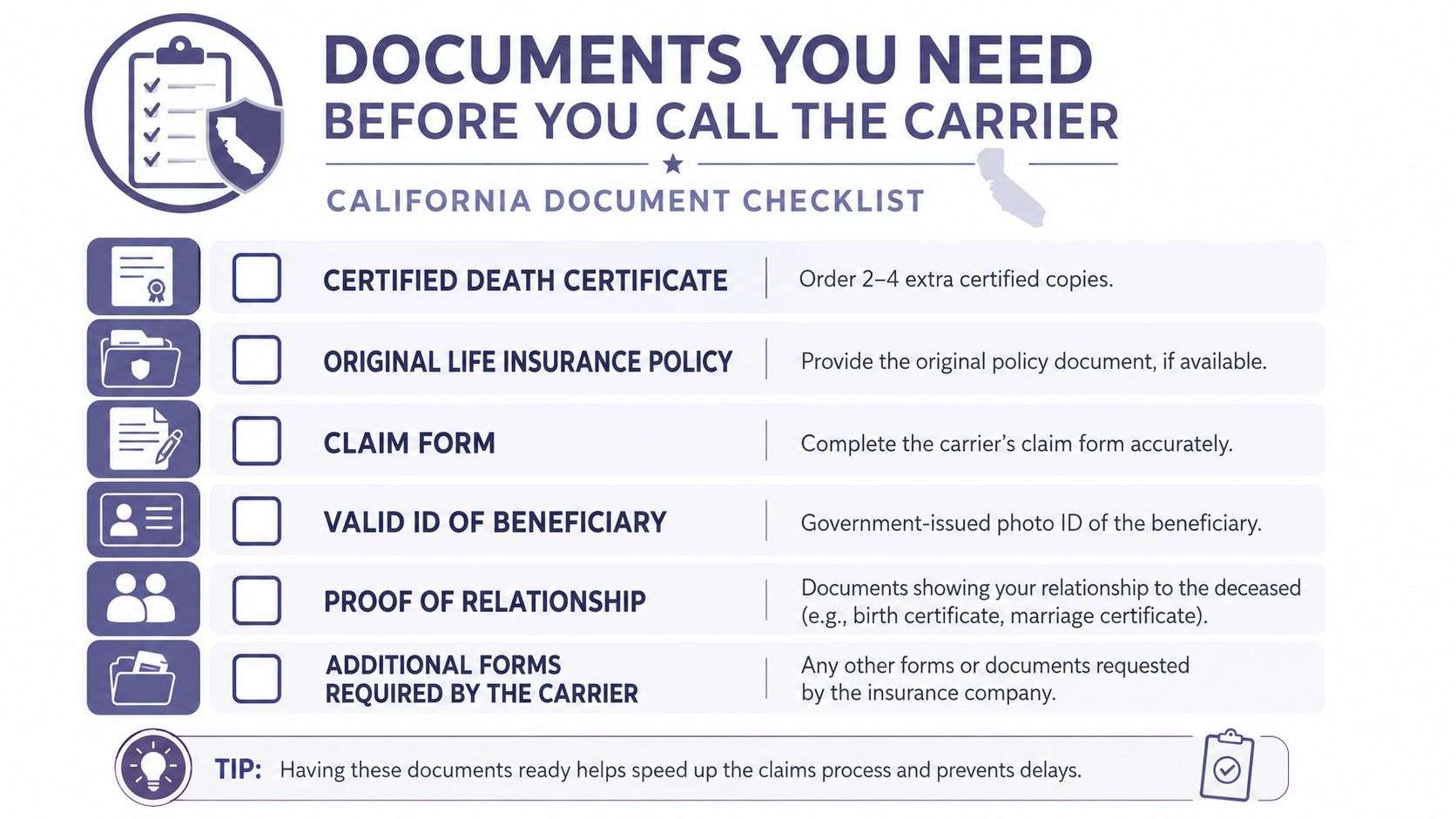
Keep the originals in a safe place and send clean copies unless the carrier specifically wants certified material. The goal is to make the reviewer's job boring.
Submitting the Claim Step by Step
Start with the carrier or the agent of record. Use the number on the policy if you have it, ask for the claim packet, and confirm the name of the claims examiner who will own the file. That one conversation sets the tone, because a real person can tell you exactly what's missing before the claim gets stranded in intake.
Then choose the submission channel with care. Many California carriers accept mail, fax, secure portals, and email uploads, but the cleanest paper trail usually comes from certified mail or a secure portal. Portal uploads are often faster when the packet is ready, while paper can give you more room to attach backup documents if the file is unusual.
Build the packet like it will be reviewed by someone skeptical
Put the completed claim form on top, then the certified death certificate, then the policy declaration page, claimant ID, W-9, and any supporting authority documents. Sign every place that needs a signature. Don't assume the carrier will call to ask for the missing page, because some files just sit until someone notices the gap.
After you submit, track the reference number and ask for confirmation in writing. If you don't hear back, follow up in writing after five business days so there's a record of your effort. That paper trail matters later if someone claims the file was incomplete or never received.
Best practice: a local independent agency can pre-review the packet before it leaves your hands, catch missing signatures, and stay on the call if the examiner asks for a second round of clarification.
For families that want another practical reference point, the insurance claims intake guide is useful for understanding how organized intake keeps the file moving instead of turning into a back-and-forth loop. If you want help with carrier contacts before you mail anything, the claim contact page is the place to start.
How Long California Claims Actually Take
California has a real legal clock behind the paperwork. Under California Insurance Code section 10169.5, most individual life insurance claims must be paid within 30 days of receiving proof of death, and any contested claim must be resolved within 92 days with written notice of the dispute. That statute is the backbone, but the actual experience depends on whether the file is clean, contested, or tied up in probate.
Three timelines you'll actually see
| Claim Type | Statutory Window | Typical Range |
|---|---|---|
| Clean beneficiary claim | 30 days after proof of death | Two to four weeks |
| Contested claim | 92 days with written dispute notice | About 60 to 90 days |
| Probate-heavy claim | Depends on estate administration | Six months or more |
A clean claim moves fast because there's nothing to argue about. The beneficiary is clear, the paperwork is complete, and the carrier doesn't need to chase old application notes. A claim during the two-year contestability period moves slower because the insurer may verify the application, medical history, or policy setup before paying.
Probate-heavy claims are the longest because the money may have to wait on the court process or on the person who has legal authority to act for the estate. That's not a carrier delay in the ordinary sense, it's an estate delay. If you want to avoid the slow path, don't let the file drift, and don't submit a packet that leaves the beneficiary relationship unclear.
The shortest path is simple: file early, include every required page, and make sure the named beneficiary is obvious from the record. Missing W-9s, unsigned forms, and parallel estate disputes are the kinds of issues that turn a straightforward payout into a long wait. For people comparing timelines to policy setup, the life insurance underwriting process guide gives useful context on how the file was built before the claim ever started.
Why Claims Get Delayed or Denied
Most delays start with paperwork, not drama. An incomplete claim form, a missing certified death certificate, an unfiled tax form, or an unsigned beneficiary update forces the carrier to go back through older records and slow the review down. If the family can't prove who should be paid, the file stops moving.
The second bucket is the contestability review. If death happens during the first two years, the carrier may look at material misrepresentation on the application, undisclosed medical history, or whether premiums lapsed before the insured died. That doesn't automatically mean denial, but it does mean the claim may need extra scrutiny before anyone cuts a check.
Beneficiary problems create the nastiest delays
Outdated designations are common. So are divorce situations where a former spouse is still listed, or a policy form that names a person too vaguely to identify without more records. Competing claimants can also show up when family members disagree about who was intended to receive the benefit.
California also adds community property questions when a policy was bought during marriage, and probate can still affect a claim even when everyone thinks the answer is obvious. That's why a denial or delay letter needs to be read closely. The carrier has to document its reason, and the family has every right to challenge it instead of treating the first answer as final.
A denial is usually a document problem, a beneficiary problem, or a coverage problem. Those are fixable categories, not a reason to stop asking questions.
If your claim landed in one of those buckets, don't panic and don't argue by phone alone. Get the reason in writing, match it against the policy record, and keep the conversation focused on the exact defect the carrier says exists. That's how you turn a vague rejection into a real response.
Appealing a Denied Claim the Right Way
The first move is simple, read the denial letter line by line. Then ask the carrier to point to the policy language and the California Insurance Code basis for the decision. If the claim relied on a contestability issue, a suicide exclusion, or a beneficiary dispute, request the full claim file so you can see what the insurer relied on.
That file should include the underwriting notes, contestability findings, and any third-party investigation material tied to the denial. Once you have that, gather counter-evidence. Medical records, physician statements, agent correspondence, and beneficiary declarations can all matter if the carrier is leaning on a misrepresentation theory or an exclusion that doesn't fit the facts.
Build the appeal like a short legal brief
Your letter should do three things. First, identify the denial reason. Second, answer it point by point. Third, attach every supporting exhibit in a clean order. Don't send a rant, send a rebuttal.
If the carrier still refuses to reverse itself, file a complaint with the California Department of Insurance and speak with a probate or insurance attorney about possible bad-faith remedies. Keep every deadline on a calendar, because appeal rights die as fast as any other deadline when nobody is watching them.
An independent local agency helps with coordination here because the family often needs one person to organize the record, keep the packet moving, and speak the same language as the claims department. That kind of continuity is hard to get from a rotating call queue.
Your Action Plan and How ISU Armac Helps
Move in order. First, locate the policy and confirm the beneficiary designation. Next, order the certified death certificates, fill out the carrier forms, and submit the packet within days, not months. Keep the originals, send copies, and write down every call with the date, the representative's name, and the reference number.
A lot of families get hung up on the difference between a policy that pays a named beneficiary and one that's tangled in estate administration. Don't guess. If the policy was bought during marriage, or if the beneficiary designation changed after a divorce, get the file reviewed before you submit a half-finished packet. That one check can save weeks.
ISU Armac in Victorville adds value because it sits in the same community as the people filing the claim. That local setup means the agency can keep household records, answer the same questions more than once without losing the thread, and act as a single point of contact while the carrier processes the file. For families that need a local insurance partner for more than one coverage issue, ISU Insurance Services can also help with broader personal and business coverage needs while keeping the claims conversation grounded in California reality.
Use the local advantage before the file goes out, not after it gets stuck. Call, confirm the requirements, and let someone who knows the process catch the avoidable mistakes while they're still easy to fix.
If you're dealing with a claim right now, contact ISU Insurance Services and get the packet reviewed before you submit it. A Victorville-based agency can help you confirm the beneficiary chain, organize the documents, and keep the carrier conversation moving so you're not fighting delays alone.